The passport on its third renewal
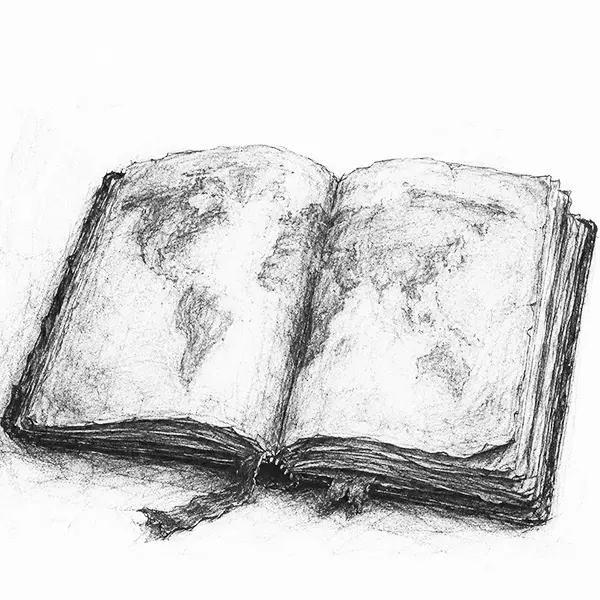
The first map I ever loved was a map of a world that no longer existed. It was my father’s school atlas, kept long after his school days were done — the paper gone soft as cloth, the colours faded to the tints of weak tea — and by the time I was nine and tall enough to spread it open on the floor, half of its countries had quietly slipped out of being. The Soviet Union. Rhodesia. East Germany and West. Yugoslavia, still whole on the page and already coming apart in the world. I would lay a thumb on those vanished names and say them under my breath like a charm. I had decided, with the great seriousness of a nine-year-old, that I would one day stand in every one of them — never mind that several had stopped existing before I had learned to spell them. It is the only ambition of my childhood I can still summon clearly, and the one I have most thoroughly failed to keep.
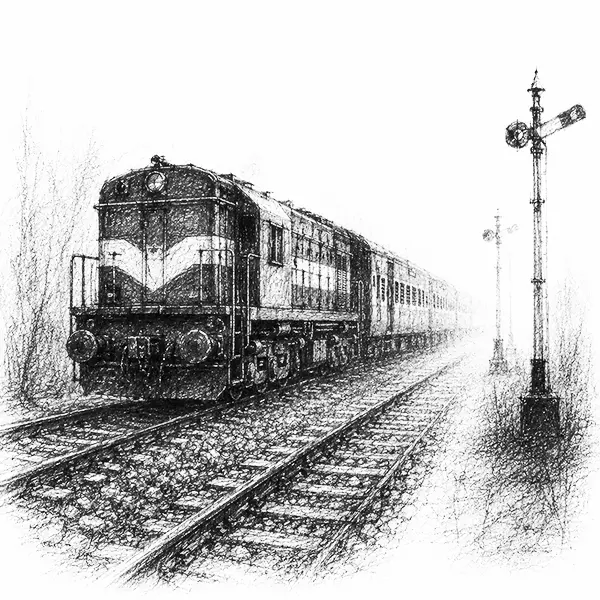
I was born on the edge of Calcutta — now Kolkata — where the city loosens into ponds and fields and a single railway line, and a river you could smell before the road ever showed it to you. The wanting came from my father. He was the traveller of the family, in the modest, magnificent way of his generation: a man who could turn a week’s work trip into a story you would ask for again at dinner, who came home from places with their light still on him. Above all he loved Mumbai, and spoke of it the way other men spoke of women they had not married — its sea, its trains, its terrible and wonderful crowd. Long before I saw it for myself, I had my father’s Mumbai by heart. I think that is where all of this began: not in any place I had been, but in the way he carried the places he had.
I left at twenty-one, for higher studies, and then for work — some thirteen years of it in the long grey sprawl of Delhi and Gurgaon, where I came to speak a Hindi as fluent as my own Bengali, and other towns and other rooms after that. And here is the joke of my life, which I have had years to learn to enjoy: I went. I kept going. I have been cold to the bone in the high reaches of Himachal and Kashmir; I have queued before dawn outside the great temple at Madurai, and been idle and happy in the old French streets of Pondicherry. I have eaten fish straight off the morning’s boat in Goa and again in Kovalam, watched the light come up over Mysore, and walked Mumbai — my father’s Mumbai — until my feet gave out. I have been a stranger in more towns of my own country than I can name, and loved nearly all of it. I simply never once did it with a passport in my pocket.
The chances came — this is the part people find hardest to believe, so I will say it plainly. More than once it was the Gulf: a good posting somewhere in the Middle East, the kind that turns into a decade and a different life. Once it was South Africa. And each time something sensible and immovable stood in the way — a stretch of work I could not hand off, a spell of poor health, money I had already promised to something waiting around the corner. None of them, alone, was a wall. Each was only a door I closed gently, for a good reason, and stayed. You can do that more times than you would think before you notice you have made it into a habit — and the habit into a fact, and the fact, somehow, into yourself.
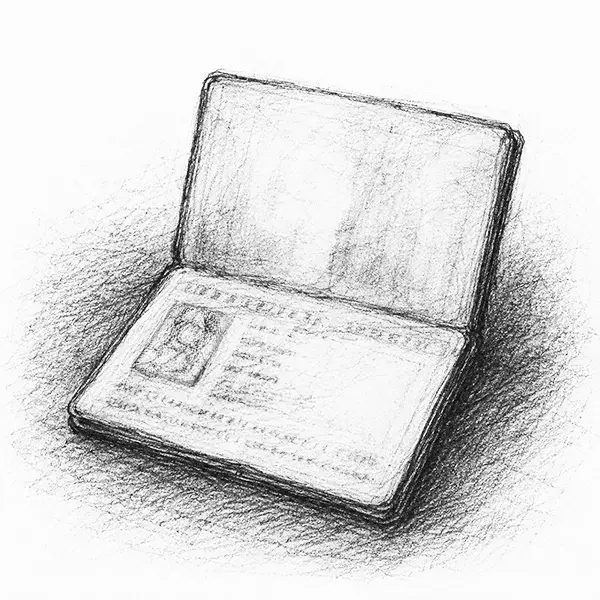
My passport is on its third renewal. I have watched myself age across three small photographs — the face a little heavier each time, the eyes trading their hope for something more patient, the set of the mouth more guarded — while the pages between them stay clean. I have a foolish tenderness for the thing. It is the most hopeful document I own, and the least used: twenty-odd years of permission to leave, exercised precisely never.
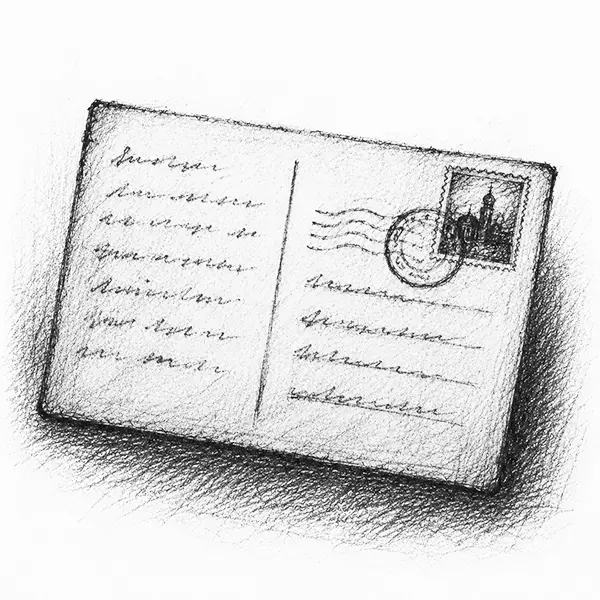
For a while it sat in me like a small stone of shame. You will know the feeling, or a cousin of it. People my age, people earning a good deal less than me, would come back from everywhere lit up, their phones thick with the same handful of sunsets, and I would ask the right questions and feel, underneath, a thin mean draught of something I was not proud of. I tell you this so you know I have not skipped the unlovely part.
And then — somewhere in my late thirties, I cannot date it — it changed. It began, I think, as self-defence, and hardened into something better. I had, after all, been travelling the whole time, only inward: I knew the tram routes of cities I had never entered, the exact grey of an afternoon in a country I had never set foot in. The places were real to me. So I decided to take them seriously, the way you take seriously anything you have loved long enough — to learn them properly, the slow way. Through books. Through other people’s photographs, studied like evidence. Through films watched twice. Through the testimony of friends who had been, and who could be gently cross-examined over a second drink.
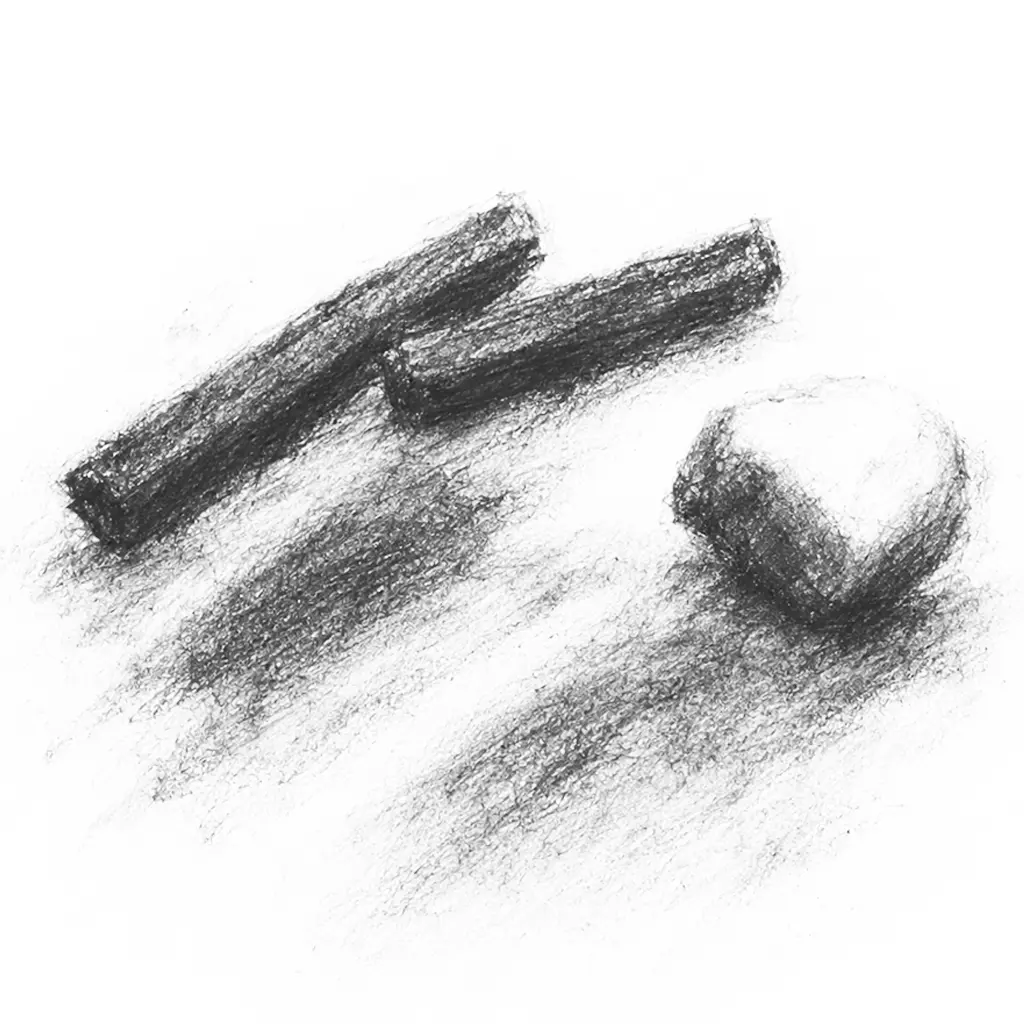
And because I cannot draw to save my life, I have them drawn for me — in charcoal, in black and grey. I do not want to make too much of it. The sketches are simply the only picture I have of these places: a memory built out of imagination, not yet coloured in by a visit. Black and grey because that is the honest temperature of a thing remembered and never seen — and because, perhaps, the day I finally go, I will be allowed to add the colour myself.
So that is what you have wandered into. A travelogue written entirely from an armchair, arranged, loosely, by distance: the far places I have only dreamt; the nearer ones, here at home, that I still mean to reach; and the few I have actually stood in, which I am permitted to describe with the smugness of a witness. I will tell you one suspicion and then we need never mention it again — that one or two of these cities may be more perfect precisely because I have never been to them. That arrival is a kind of spending. That the afternoon I finally stand on the real bridge in the real cold, the version I have carried for thirty years will fold itself quietly away, and leave me with only the ordinary place that everyone already has.
I know how all of this sounds. I have made my peace with how it sounds. None of it is meant to be sad — it is only a way of seeing, and not, I have come to decide, the worst one available to a man. The passport is in the drawer, renewed, patient, as hopeful as the day it was issued. Pour yourself something. Come and look at the places I have never been.