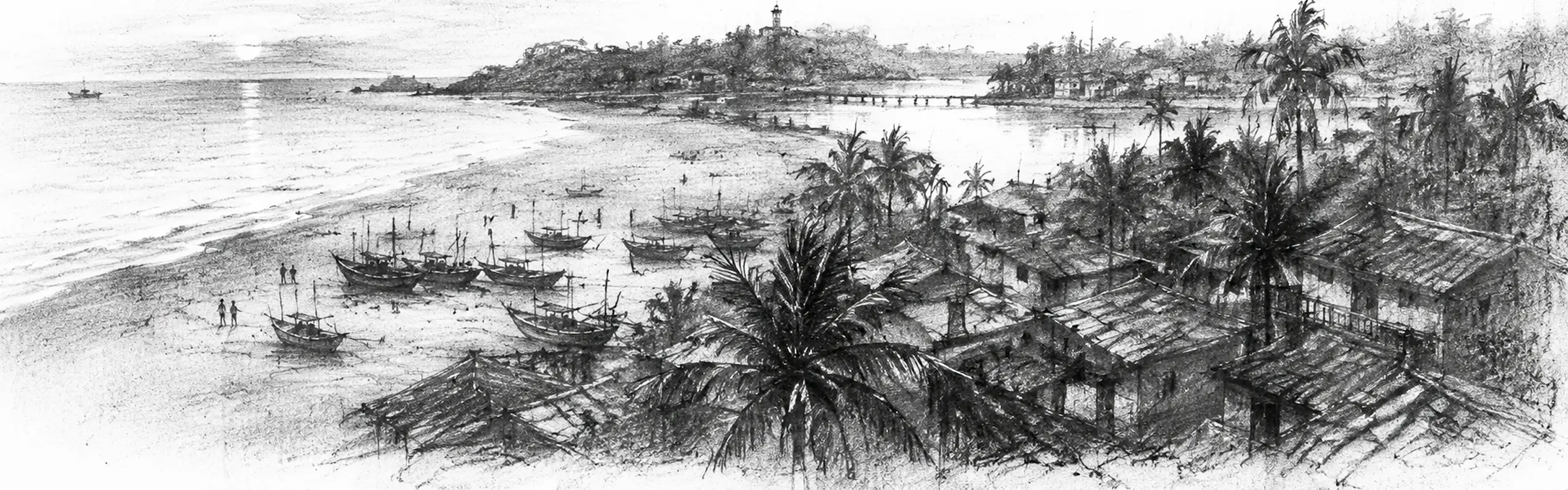
Within reach · never been
Mangalore is the one place that kept reaching for me by a side door, and never quite got me through it. Most of the cities I keep here I have simply never gone to, the way you never go to most places; the lack is general, almost impersonal. Mangalore is different. Three times in my growing up it came and stood at the edge of my life, close enough to touch, under one excuse or another — and three times, for reasons that were never quite mine to control, it withdrew. I have still never set foot in it. But I cannot pretend, as I can with the others, that it was only ever a name on a map. It very nearly had an address with me in it.
The first time I was thirteen. There was a school there my parents looked into, seriously enough that I was asked, and I said yes — I was at the age when going anywhere sounds like the answer to everything — and then, the way these things do, it came to nothing. The reasons were sensible and have not survived in my memory; what survived is the odd sensation of having said yes to a city and been quietly let down by it, before I had seen a single street of it.
Three times Mangalore nearly had me

The second time I was fourteen, and the city itself was barely involved — it was only the stage for a piece of foolishness I am still a little proud of. I told my whole class, with a straight face and a great deal of invented detail, that I was moving to Mangalore in the middle of the term. I sold it completely. I described the house, the new school, the sea I had never seen. I said my goodbyes. And then, a week later — I had fallen ill in between, which only made the thing more convincing — I simply walked back in, to a roomful of faces that could not decide whether to be relieved or furious. The best of it arrived sideways. In all the small commotion of my leaving and un-leaving, I found out that a girl I had been too shy to so much as look at straight on had minded my going rather more than she had meant to show — and that the thing I had been carrying around unsaid was, as it turned out, returned. What followed went on for years, and was the real thing — serious and formative, the first true attachment of my life and the one that taught me the most of whatever I now understand about women, and about myself. It did not, in the end, last; but I came out of it a larger person than I went into it, and I have never thought of those years as anything but a gift, nor remembered them as anything but tenderly. They are among the things that made me. And it had begun, of all the unlikely ways for such a thing to begin, in a lie I told about this city. Mangalore has kept a warmth for me ever since that it did absolutely nothing to earn.
The third time I was eighteen. There was a degree I wanted, taught there, and I set my heart on it in the way you set your heart on things at eighteen — and that too did not happen. Not for want of wanting it, and not for any of the tidy reasons a man reaches for afterwards; the why of it is mine to keep, and I have left it where it belongs. Three of my friends went instead, to study other things, and came back over the years with the city folded into their ordinary speech — a beach, a canteen, a particular fish — as if it were nothing, as if it were just where they had been. So the city that had tried three times to take me in ended up belonging, casually and completely, to other people.
A roof you would know from above
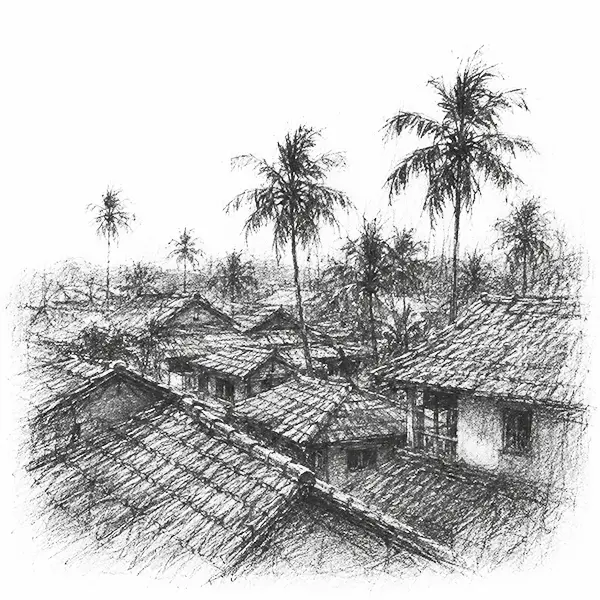
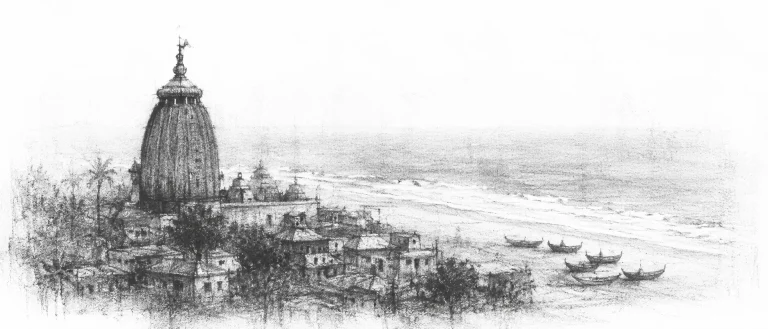
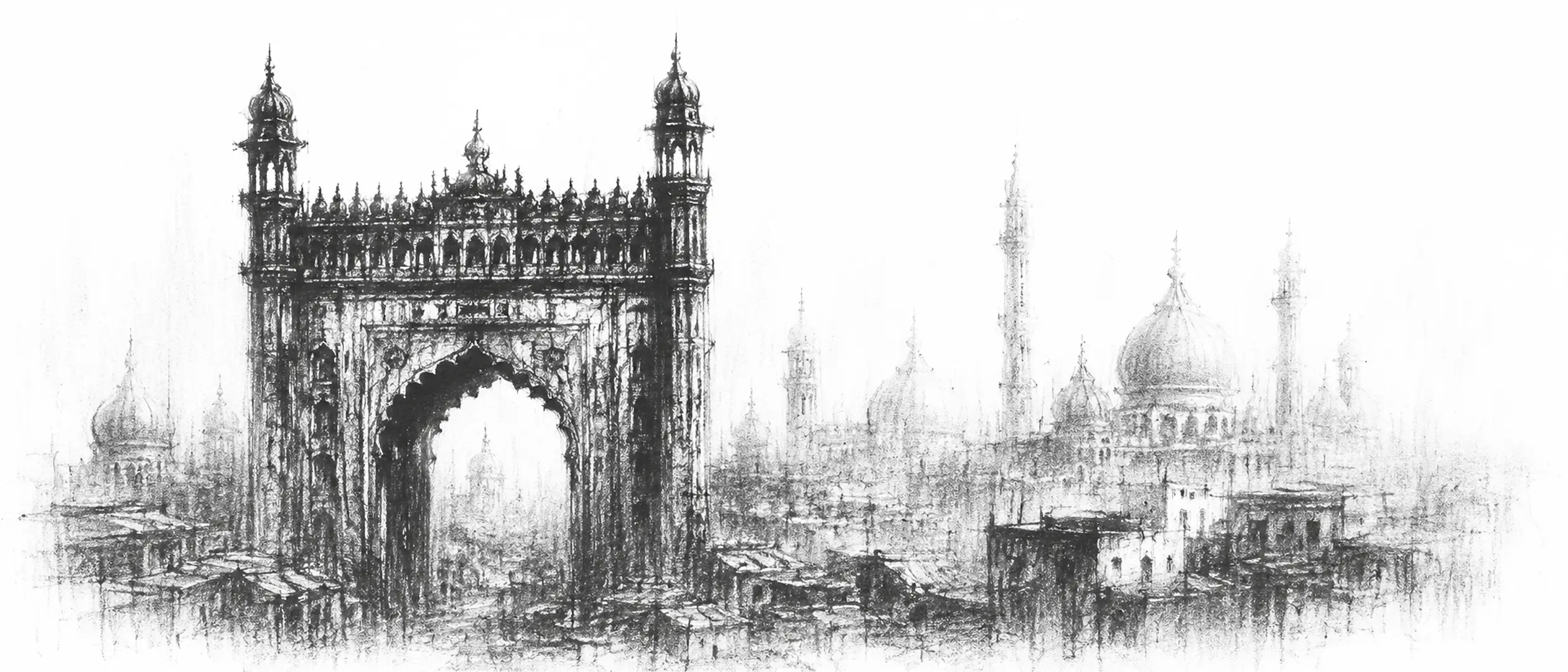
Everything else I know of it I have, like the rest, from a distance — documentaries, photographs, the long descriptions of people who have been. It sits where the Arabian Sea comes up against the red-earth hills of coastal Karnataka, a working port city, humid and green, the air thick with salt and diesel and frying. The roofs are the thing the pictures always catch first: that deep terracotta red, the famous Mangalore tile, fired from the river clay and once shipped out across half the world, so that you can stand in towns thousands of miles away and look up at a roof that began as mud on this one coast. A city you might recognise overhead before you ever reached it.
Everything the sea brought ashore
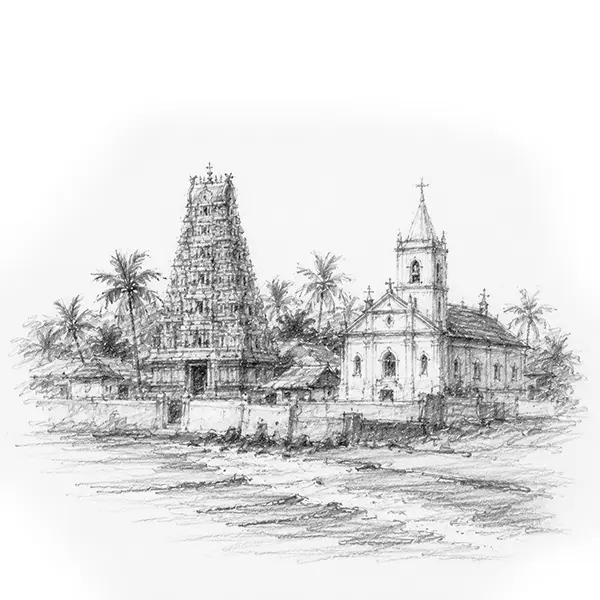
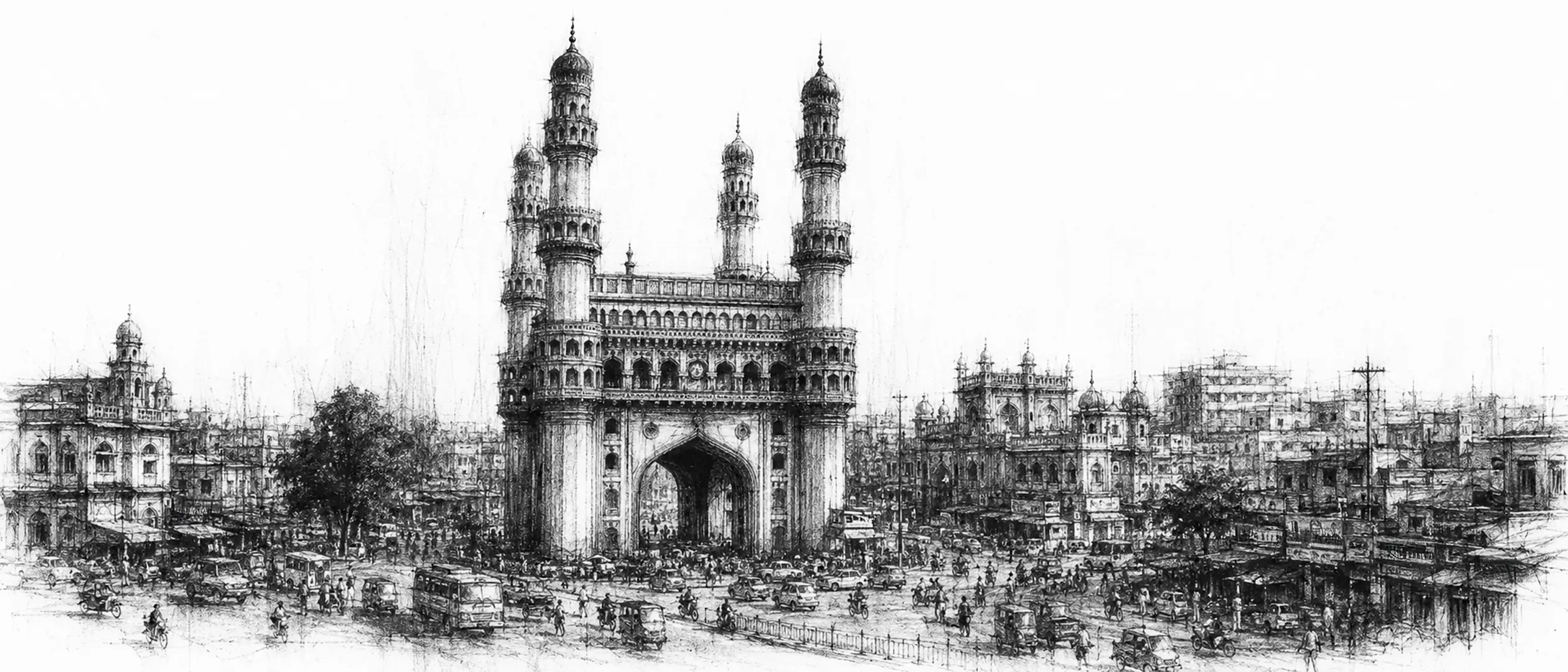
It is a coast that took in everything the sea brought it. In the same few miles there are old temples with their carved towers, churches with whitewashed fronts that would not look out of place in a much colder country, and mosques older than most of what surrounds them — set down side by side by centuries of trade, not theory. I find I like that about it from here: a place that did its mixing for the plainest of reasons, because the ships kept coming, and never seems to have made a philosophy of it. It simply absorbed what arrived and kept fishing.
A table I can recite and have never tasted
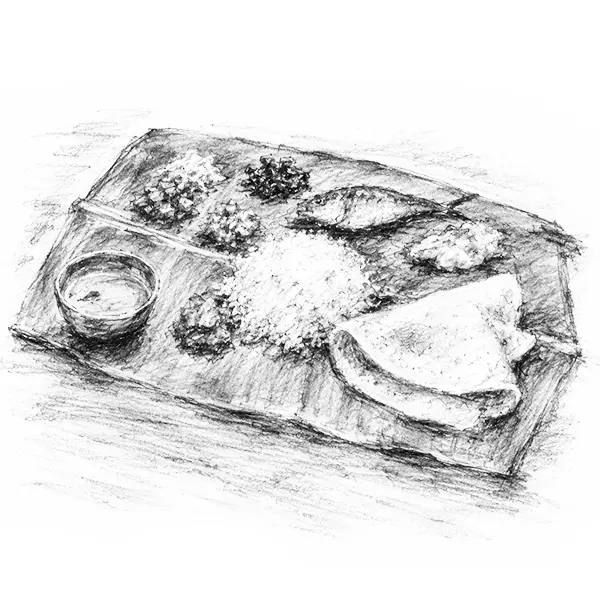
And the food. I am a greedy man and I will not pretend otherwise — this, more than the tiles or the temples, is the longing I cannot talk myself out of. I can recite the coast’s table the way other people recite poetry: the lace-thin rice pancakes you eat with a fierce red chicken curry; the fish simmered in ground coconut and tamarind until it is the colour of the evening on the cover above; the ghee-dark roasts; the soft little buns that have no business being as good as they are. I know the names. I know, more or less, what is in them. I have never once eaten any of it where it is made, off a banana leaf, with the sea three streets away. To know a cuisine that thoroughly and have never tasted it at its source is a particular kind of foolishness, and it is mine, and I have been carrying it for thirty years.
The Mangalore I built from photographs
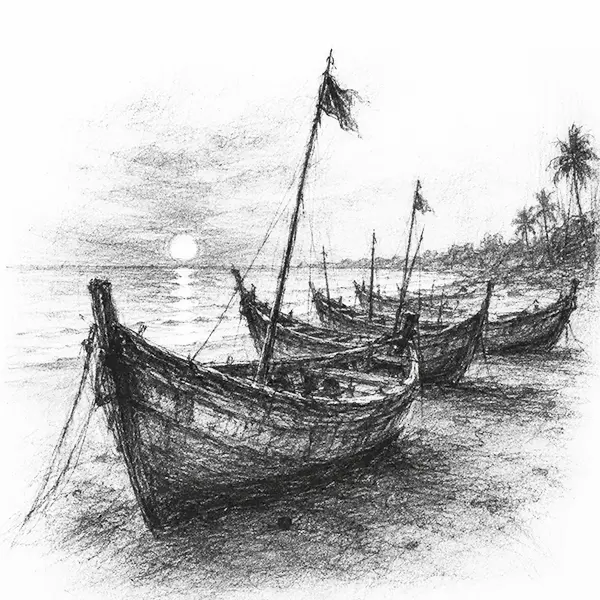
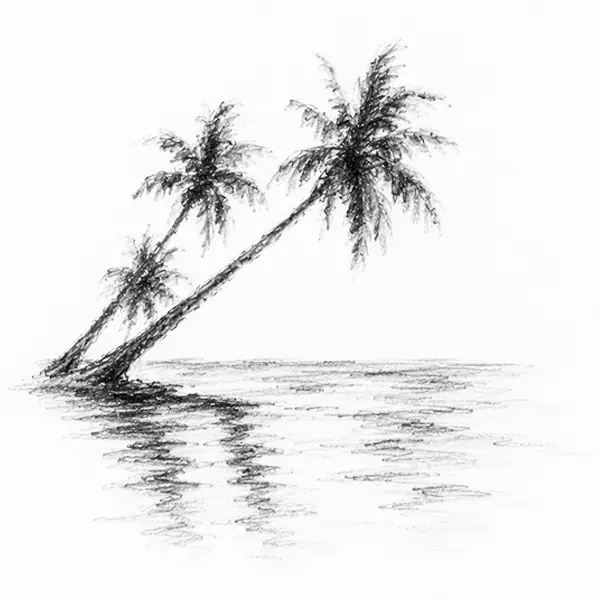
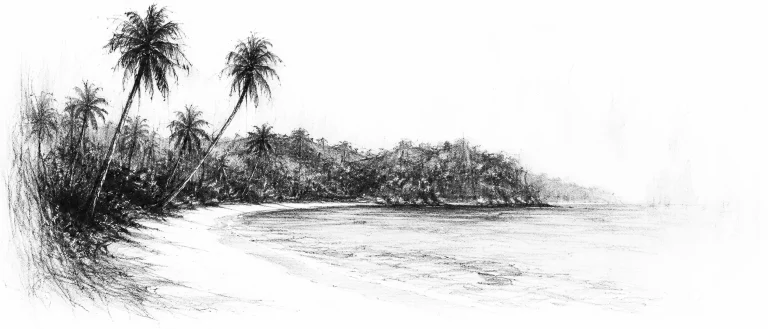
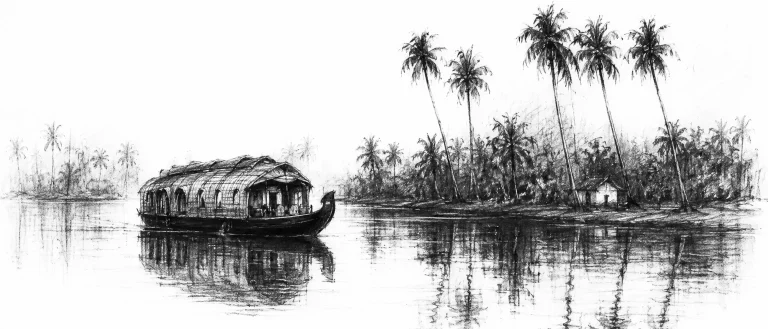
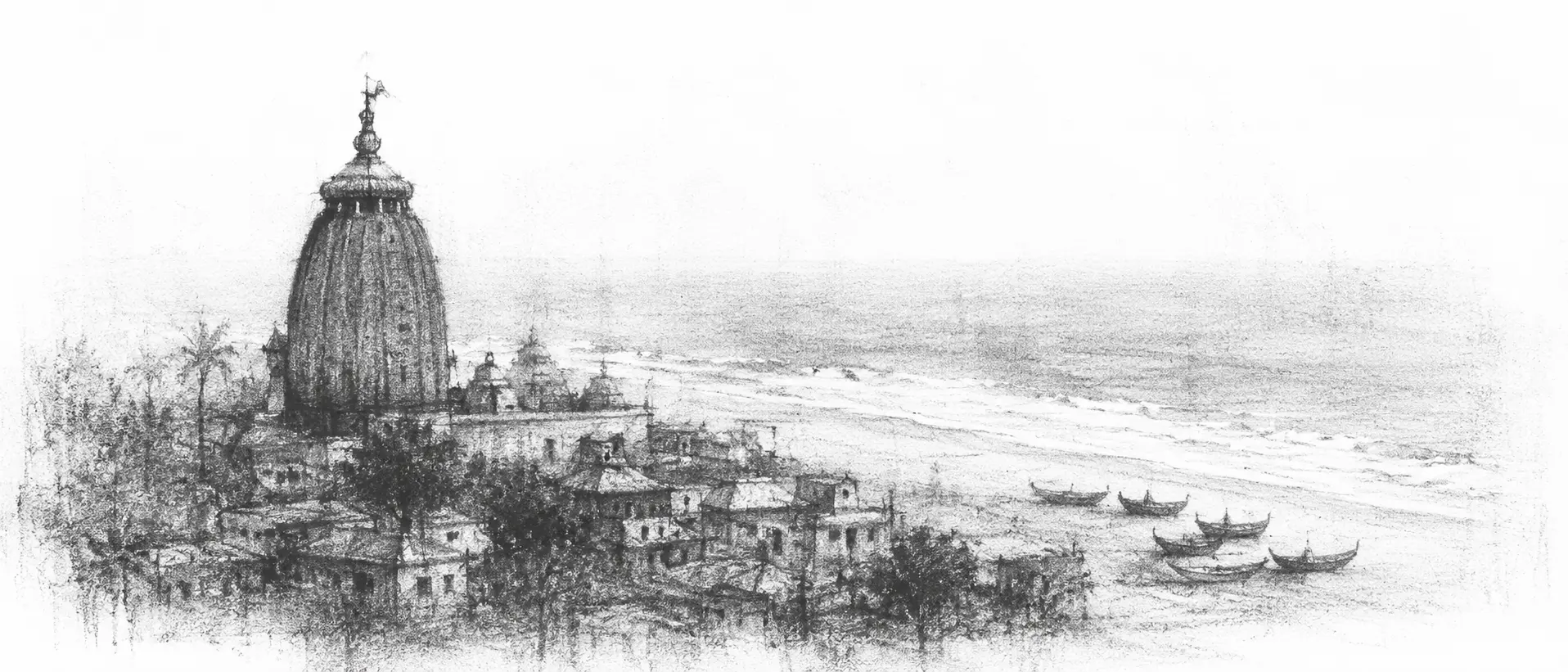
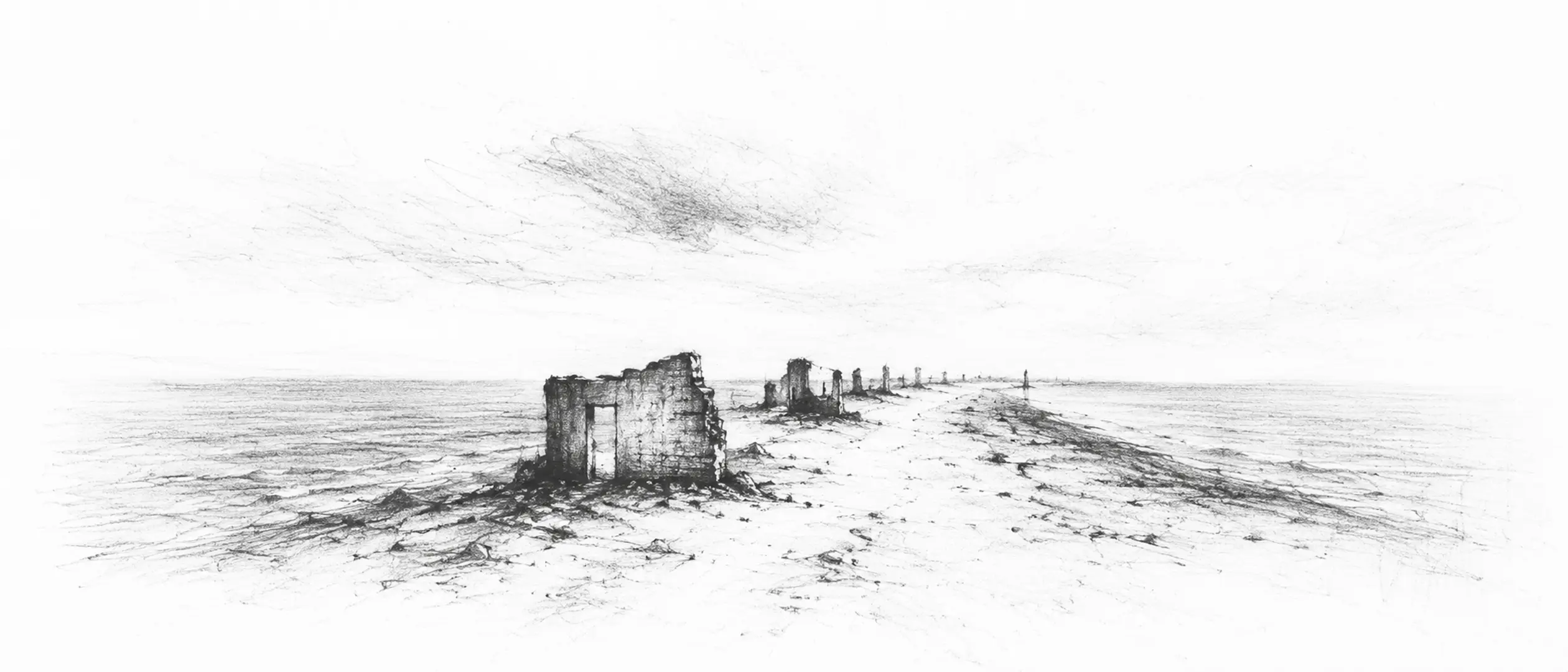
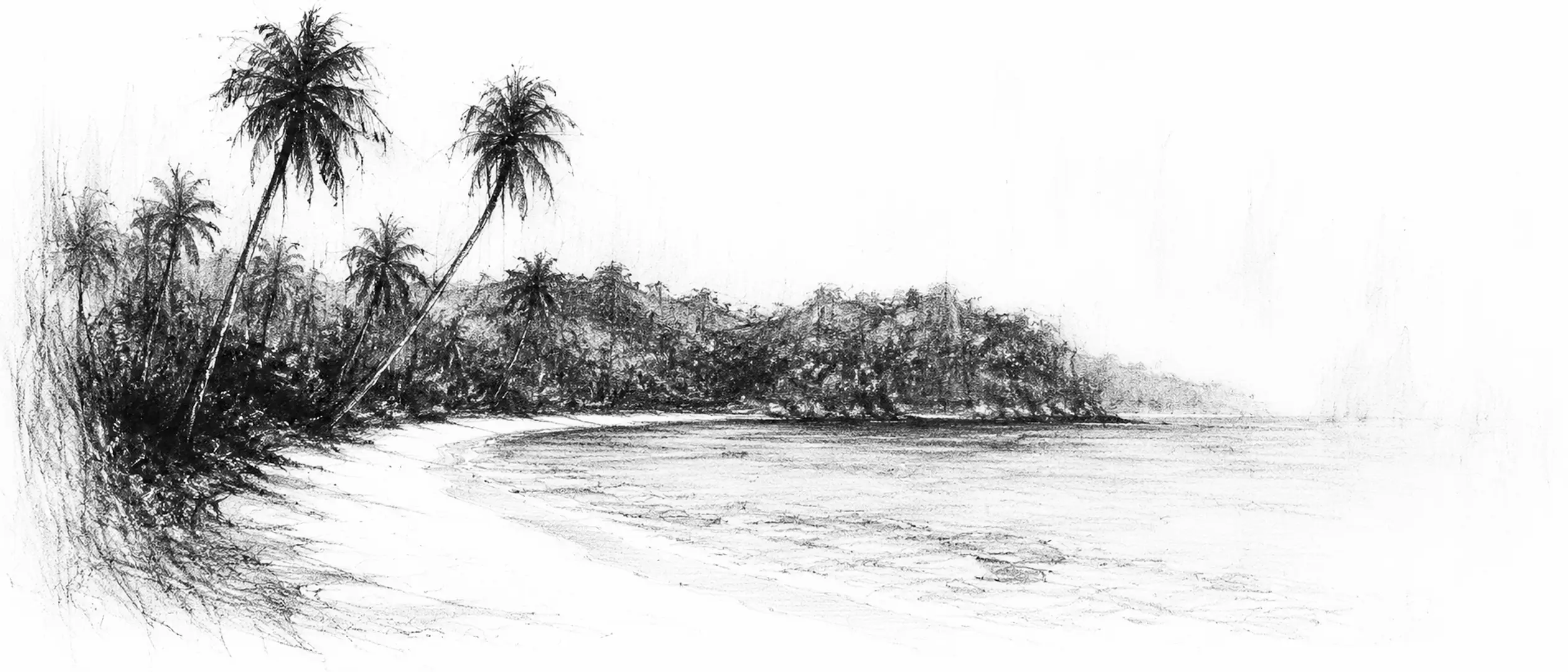
The pictures give me the rest in pieces. Boats drawn up on the sand at the end of the day, their paint gone soft, nets heaped beside them. A lighthouse on a low headland with the whole grey-gold sweep of the Arabian Sea behind it. The place where a river loses its name to the sea, brown water and blue water refusing for a while to mix. Coconut palms leaning out over the water at the angle they all seem to agree on, as if bowing to something just offshore. None of it is dramatic. That is rather the point. It is an ordinary, working, salt-stained coast that I have managed to turn, by never going, into something I think about more than places I have actually been.

Here is the thing I keep turning over. It is not far. It is in my own country, a train and a night away, no ocean and no border between us, and it tried — genuinely tried, three separate times — to make me one of its own, by school, by accident, by ambition. Each time something ordinary got in the way, and each time I let it, or it let me, and the result is the same: a coast I can describe to you in detail and have never smelt. Most of my unreached places I can blame on distance or money or the simple inertia of a life. Mangalore I cannot even blame on those. It came to the door three times. I was the one who, in the end, was never quite in when it called.
So I keep it the way I keep the others, except this one has a key cut for it that never turned. A red-roofed town in the evening, boats on the sand, a lighthouse going round, the smell of frying fish I have only ever imagined, and somewhere in it three versions of a younger me who was, for a moment, almost about to live there — and then, each time, simply did not. I will go one day, probably, and eat the fish at last, and it will be very good, and it will not be any of the three arrivals I missed. Those have sailed. You cannot, it turns out, catch a boat you have already, three times over, watched leave without you. I have never been abroad; I could not even board the boat that idled, three times over, at home.
“Mangaluru (Mangalore): port city on the Arabian Sea coast of Karnataka, at the meeting of the Netravati and Gurupura rivers; long a centre of trade in coffee, cashew and tile, and known for its distinctive red roofing tile fired from local clay.”
— from an old almanac, somewhere between the tide tables and the kings


Leave a Reply