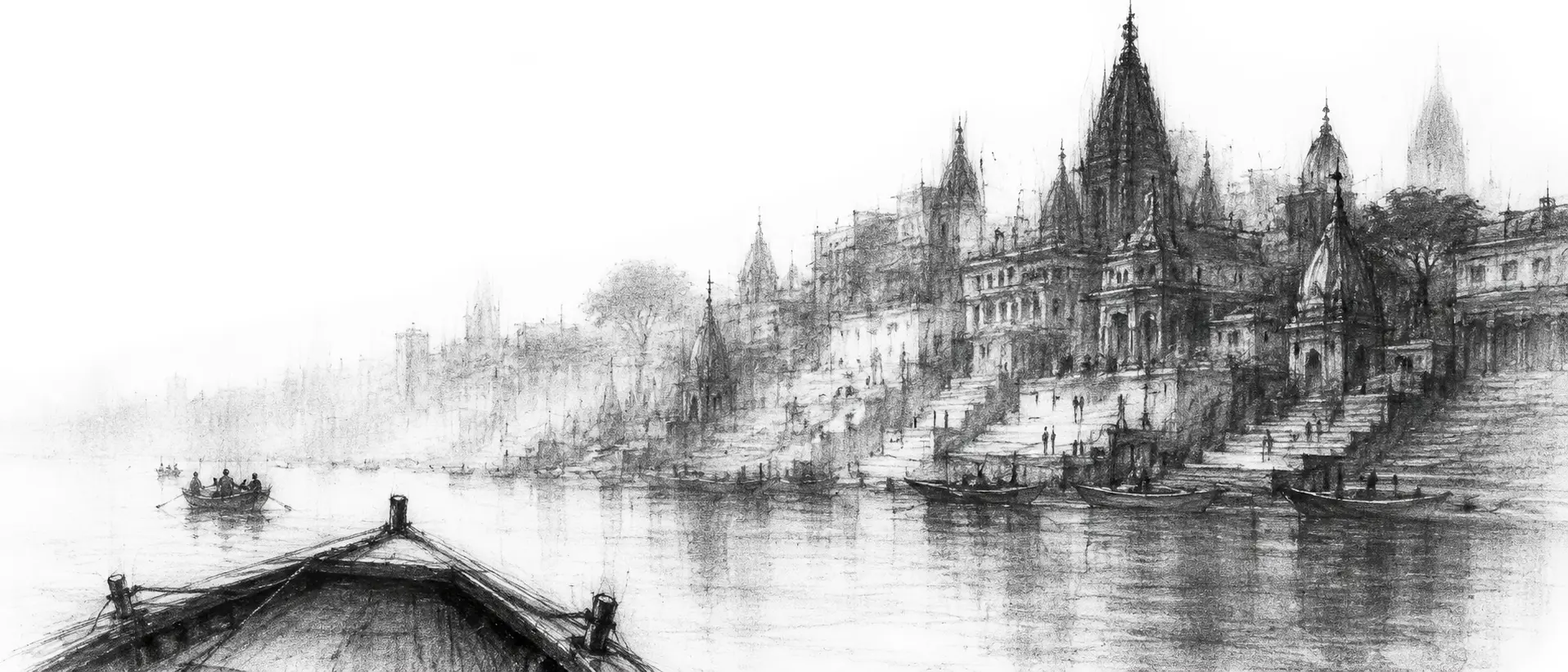
Within reach · never been
Of all the places I have not been, Varanasi is the unforgivable one, because it has never been far. A night on a train out of Calcutta, less than that now, and I would step down into the oldest living city anyone can name. Bengalis have always gone — it is half pilgrimage and half homecoming for us, the one westward errand a Bengali means to make at least once in a life — and I, with the trains running and the fare in my pocket, have managed in forty-odd years to not once make it. There are dreams that distance excuses. This is not one of them.
Varanasi has more names than any place should: Kashi, the city of light; Banaras; Benares as the British wrote it; Varanasi for the two rivers that hem it. A nineteenth-century American traveller came through and left the line everyone still quotes — that Benares is older than history, older than tradition, older even than legend, and looks twice as old as all of them put together. I have repeated that sentence to people as if I had earned it, as if I had stood on the stones and felt the age come up through my feet, instead of reading it in a book in a room a thousand kilometres away.
The Varanasi I reached sitting down
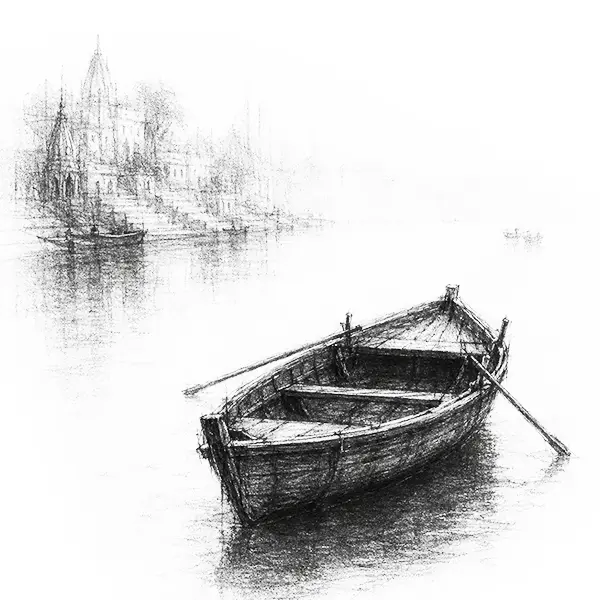
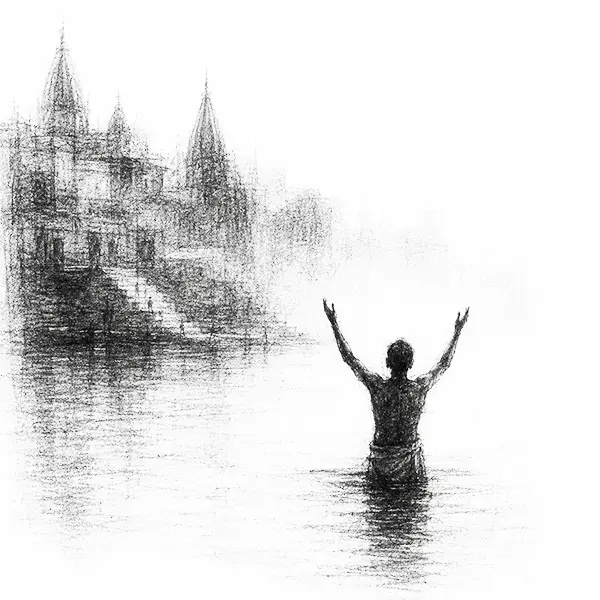
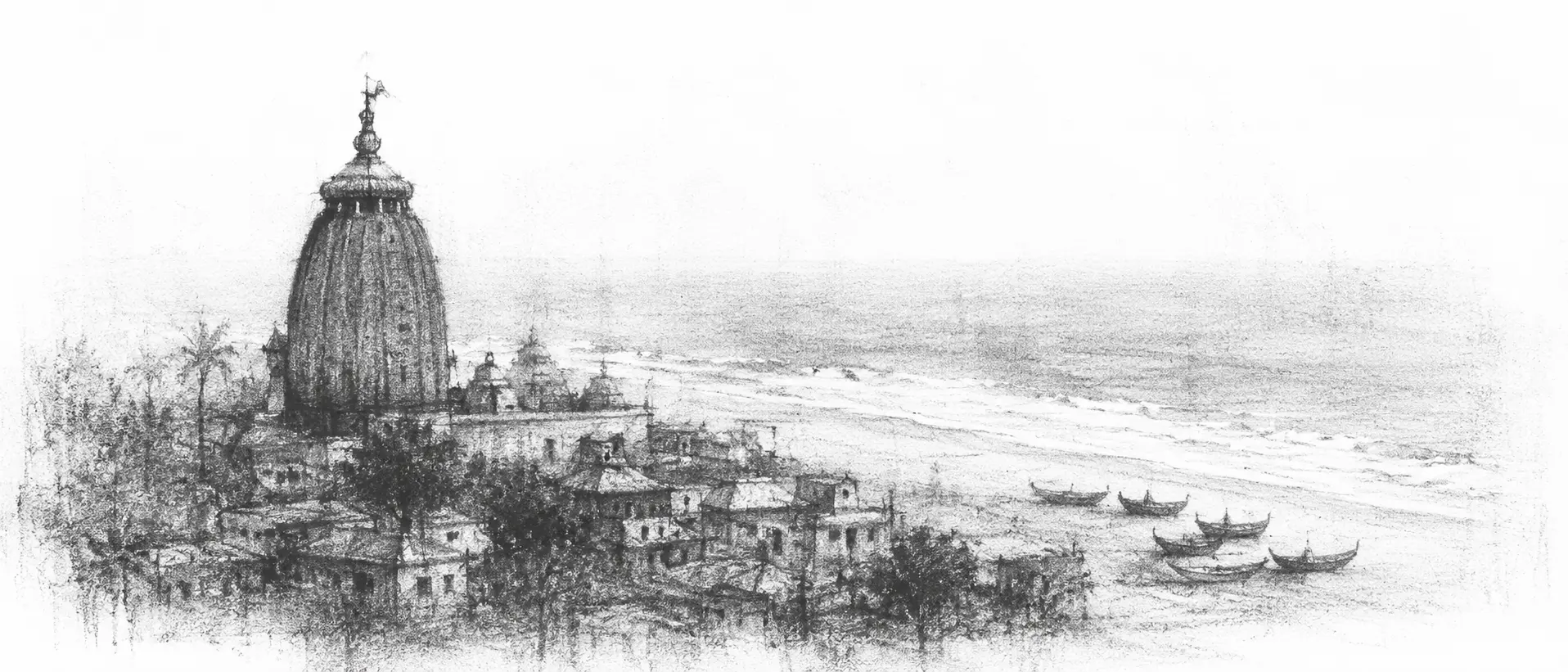
My truest Varanasi has come to me in photographs — the black-and-white ones above all, which seem to suit the place better than colour ever has: the ghats stacked steep with small figures, the heavy boats nosed into the steps, a lone bather standing waist-deep with his arms flung up at the light, the smoke going up thin and straight on a windless morning. I have pored over those frames the way other men study maps before a journey, until I could tell you where the shadows fall at six o’clock on stairs I have never climbed. It is the closest I have come to standing on the ghats, and I got there sitting down, turning pages.
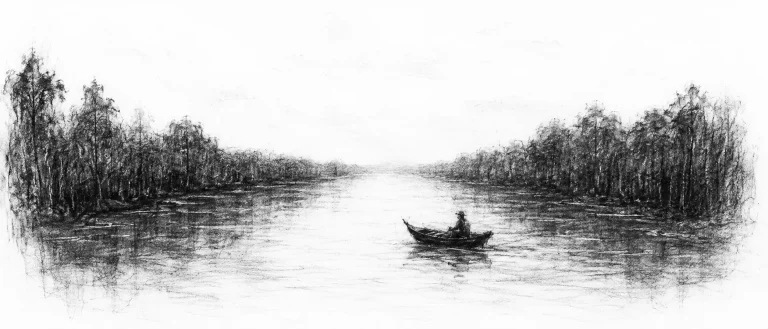
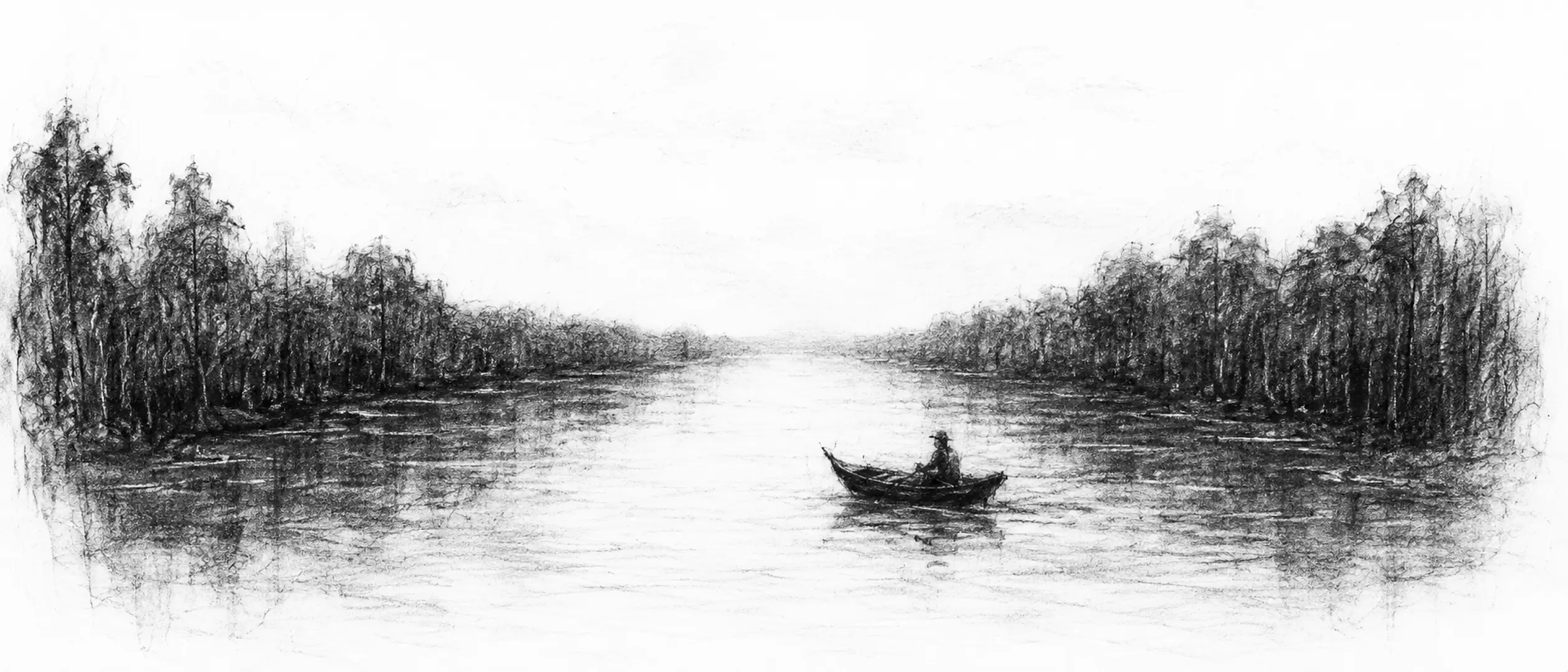
The thing everyone tells you to do is hire a boat before light and let the boatman row you out while the sun comes up behind the ghats — that long stepped wall of the city going down to meet the Ganga, temple after palace after temple, the stone the colour of weak sun. I have heard it described by enough people, in enough words, that I have built the ride without ever sitting in the boat: the creak of the oar, the bells starting somewhere up the steps, the smell of river and smoke together, the whole rosy improbable face of the city turning to meet a morning it has met some unguessable number of times before.
Lanes too narrow for the sun
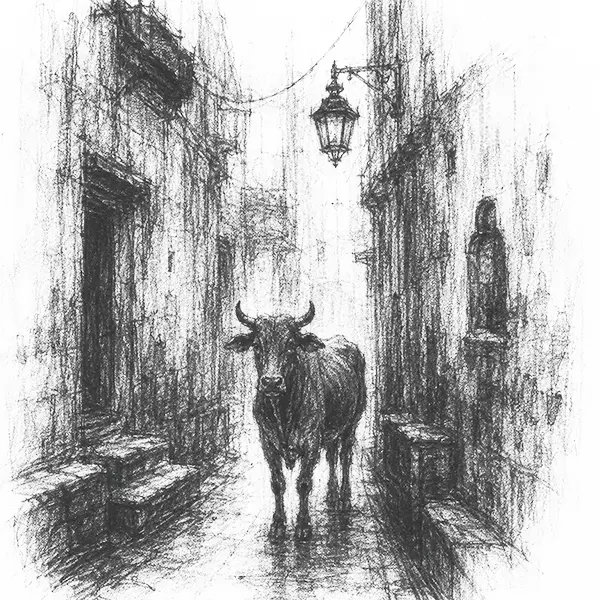
The scholar Diana Eck called her book on it *City of Light*, and the phrase is right, but the city I am told about is also a dense, difficult tangle — lanes too narrow for the sun, a bull planted in the middle of the road, the smell of marigold and drains and frying all at once, the silk weavers bent at their looms, the paan-red walls. Premchand’s clerks and Kabir’s loom and Tulsidas writing his Ramayana are all soaked into the same few square miles. It is not a calm place. It is the opposite of the orderly cities I also dream — and perhaps that is exactly why a Bengali keeps it in reserve, the one pilgrimage that is owed.
The city that arrives as cloth
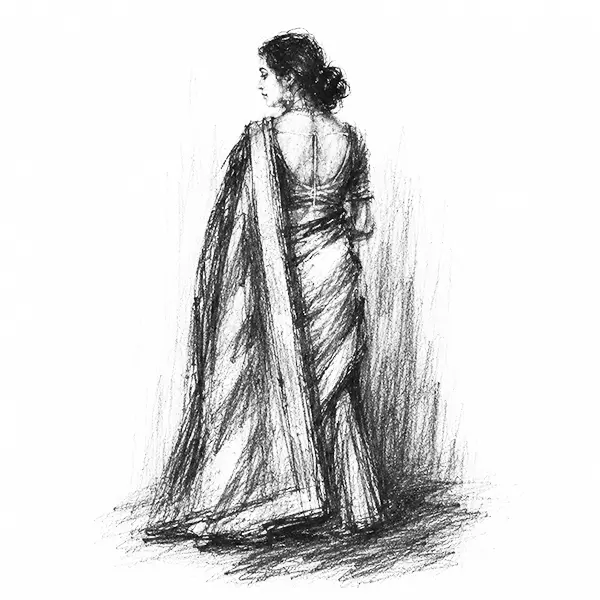
There is one way the city has already reached me, and it is through cloth. There is hardly a Bengali wedding without a Banarasi sari somewhere in it — the heavy silk shot with gold thread, woven on those same looms in those same airless lanes, carried halfway across the country to be worn for a single day and then folded away in a steel almirah for the next thirty years. So I have stood a few feet from Varanasi a hundred times without ever knowing it, in crowded wedding halls, the city present in the room as a length of cloth. The weavers who make it are mostly Muslim, working patterns sacred to a Hindu city, in a quiet daily arrangement the news prefers to forget exists. A whole economy of patience and failing eyesight, sending its finest work out to the weddings of strangers who, like me, will praise the cloth and never once think to go and see the loom.
Brass lamps and leaf-boats of flame
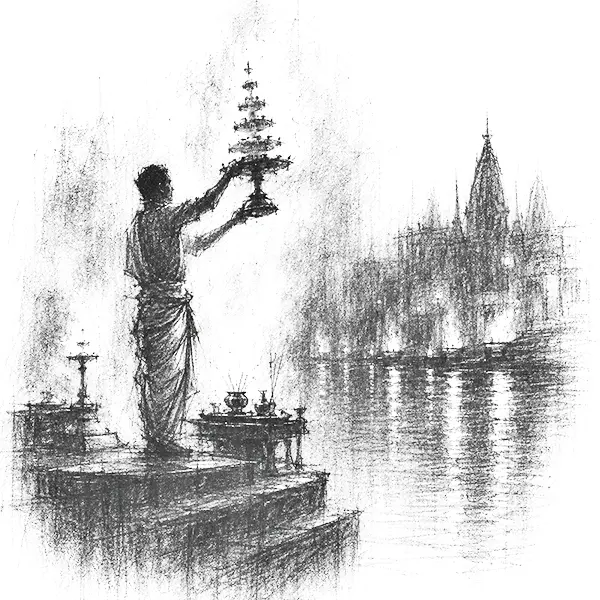
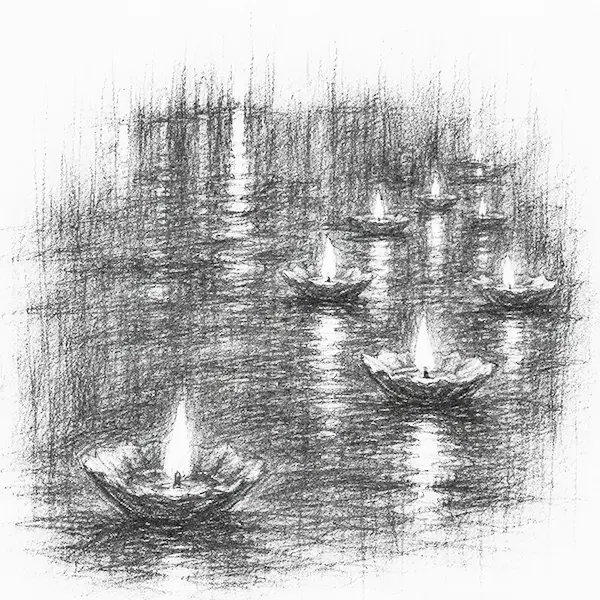
What I can see most clearly is the evening. At Dashashwamedh, every nightfall, the young priests perform the Ganga aarti — standing in a row in their saffron, swinging great tiered brass lamps in slow figures against the dark, the fire doubling on the black water below; and all around them the little leaf-boats of marigold and flame that people set adrift, each one a wish, or a dead name, sent downstream into the current. I have a clean, lit picture of all of it and no memory of the heat, the noise, the crush, the touts working the steps. That is the dishonesty of a place you have only dreamt: it arrives pre-edited, with the inconvenience taken out.
Where Varanasi keeps its fires
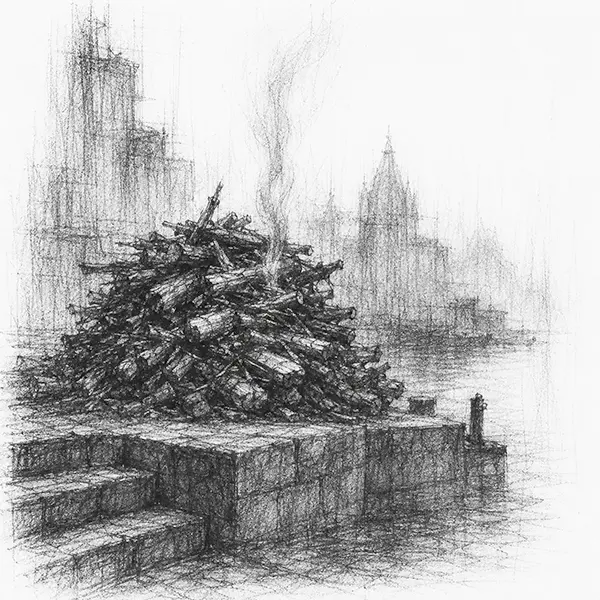
And then the part I cannot pretty up. Varanasi is where Hindus come to die, or to bring their dead — to be burned at Manikarnika within sight of the river and so, it is believed, to step off the wheel of returning for good. The fires there do not go out; people say they have not gone out in centuries. For generations the old and the widowed have come to Kashi simply to wait — to spend their last days in the one city that treats death as the appointment worth keeping. They at least arrive, even if only at the very end. I cannot seem to manage even that. I mean to. I have always meant to.
Distance is the alibi I use for the far places, the ones across oceans. Here I have none. Varanasi is not a film or a book; it is a train I have not booked, a thing I could fix this very year, and the not-fixing of it is the most honest mirror I own. I tell myself I am waiting to be ready — that you do not go to the city of death and light casually, on a long weekend, between meetings. But I suspect that is just the best-dressed of my excuses. The plainer truth may be that I am keeping it the way I keep the far ones: unspent, unspoiled, mine precisely because I have never yet had to set it beside the real thing.
So the boat waits at the bottom of the steps in the grey before light, the lamps are stacked for the evening, the fires keep their patient work upriver, and the oldest city anyone can name goes on without me — a night’s journey away, exactly as old tomorrow as it was when I first decided, and went on deciding, not yet. Never been abroad, and somehow not even here.
“Benares is older than history, older than tradition, older even than legend, and looks twice as old as all of them put together.”
— a nineteenth-century American traveller’s line about the city, copied into the back of a notebook years ago

Leave a Reply