Abroad · never been
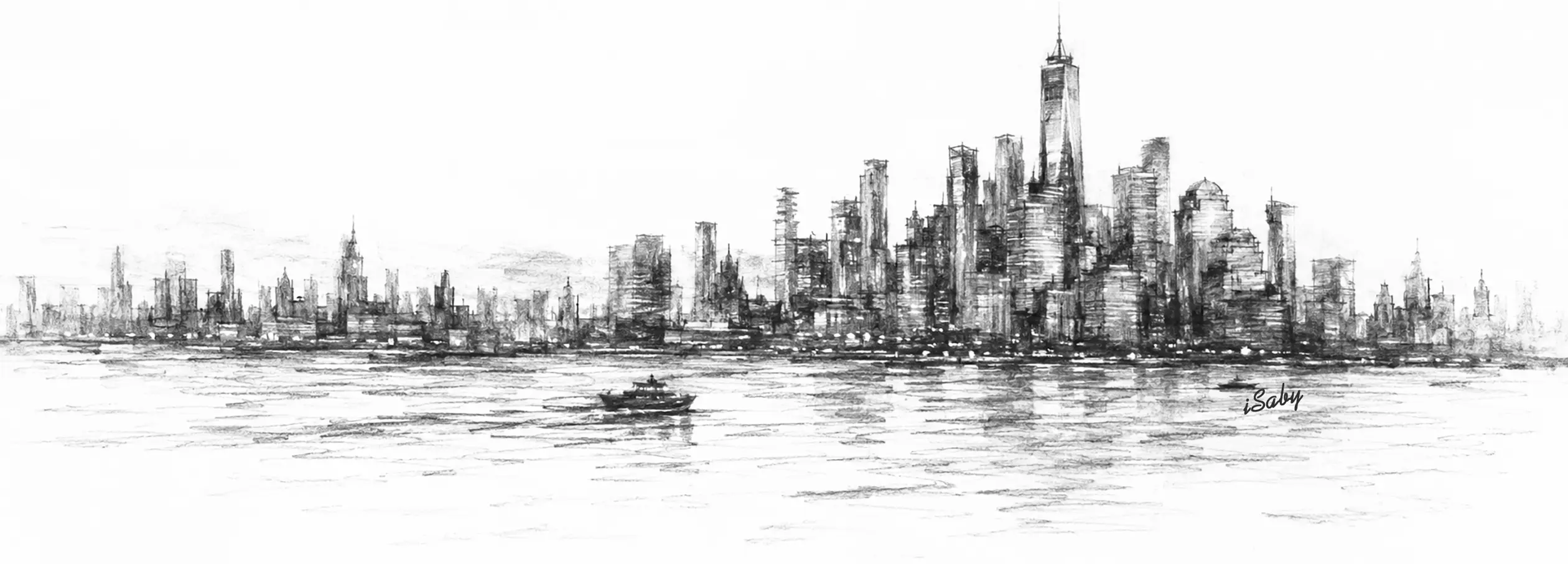
Of all the cities I have never seen, New York is the one I have seen the most. That is not a riddle. I have walked its streets for forty years at twenty-four frames a second — in films whose names I have kept and films I have lost, in the establishing shot that every story set there is required by law to open with: the skyline at dusk, the slow push in over the water, the music swelling as if a city were a person about to speak. I know the steam coming up out of the street. I know the sound the manhole makes when a cab goes over it. I have been there so often, and so completely, that I am no longer sure there is anything left to go and see. This is the peculiar trouble with New York. It has been dreamed on my behalf, in advance, by everybody.
The New York issued to everyone
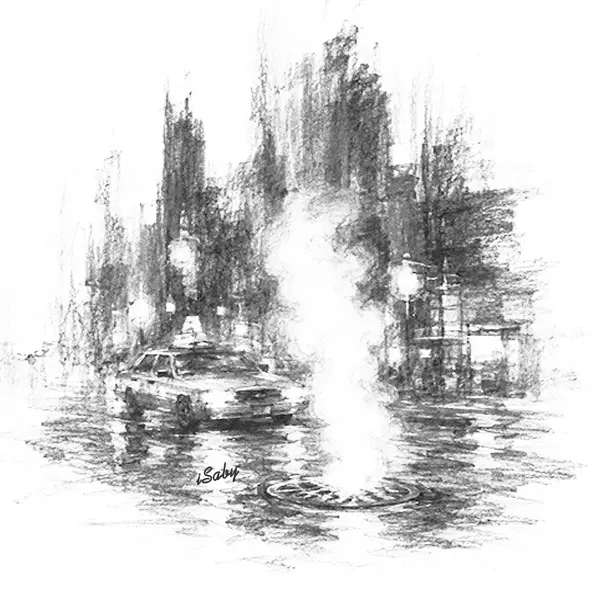
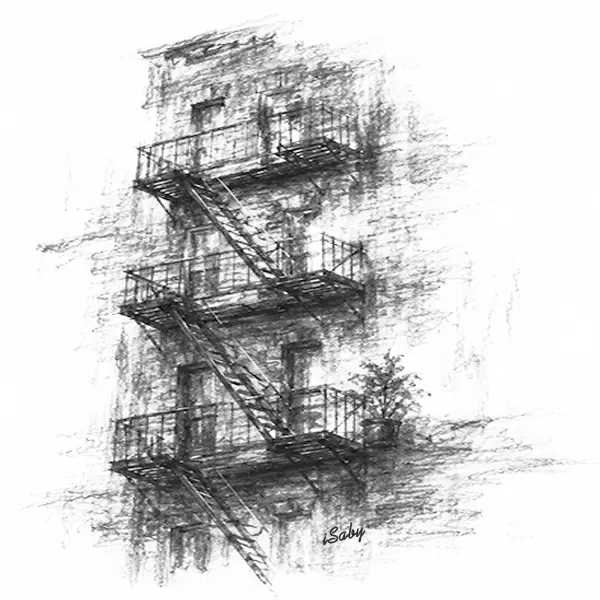
Most of my far cities I had to build for myself out of scraps — a documentary here, an encyclopedia entry there, a magazine left in a waiting room. New York came pre-assembled and gift-wrapped, delivered to my door a thousand times over before I was old enough to know I was being sold anything. The yellow cabs. The grid, that flat American logic of numbered streets crossing lettered avenues, a city you could navigate by arithmetic. The fire escapes running down the front of the brick in iron zigzags, somebody’s washing or somebody’s flowerpot on a landing. The diner open at four in the morning with the coffee that never stops coming. I did not have to imagine any of it. It was issued to me. And a thing issued to everyone is hard to hold as your own.
Built upward, the way coral is built
What the films never quite prepared me for, the still photographs did. There is a kind of picture taken looking straight up between two towers, the brick and glass running away to a thin ribbon of sky, and it tells you the truth the movies hide inside their music: that this is a city built the way coral is built, upward, because there was nowhere left to go but up, on a hard sliver of rock between two rivers. They bought that rock, the story goes, from the people already living on it for a sack of goods worth almost nothing, which is either the greatest bargain in history or the oldest swindle, and the city that grew on it has been arguing about the price of everything ever since. I find I trust the photographs more than the films. They are not trying to make me feel anything. They just show me the canyon and let me stand at the bottom of it.
The lamp held up for arrivals
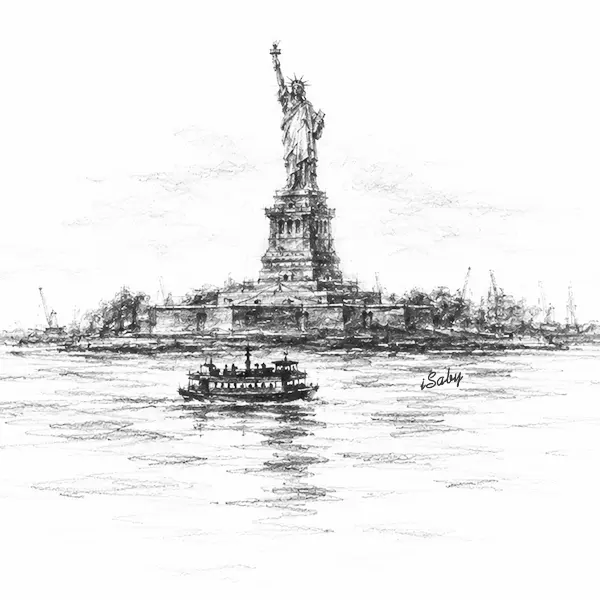
But here is the thing that catches in me, and it is in none of the famous shots. New York is a city made almost entirely of people who came from somewhere else. There is a green figure standing in the harbour, a gift from one republic to another, holding a lamp up over the water at the precise spot where, for years, the ones who had crossed the ocean were brought ashore, counted, renamed, let in or turned back. A whole city of arrivals. And I, who have arrived nowhere — whose passport is on its third renewal and as clean as the day it was printed — I dream of the one place on earth where being from somewhere else is not the exception but the entire population. Where my foreignness would not even be remarked upon, because everyone’s grandmother was foreign once. A man who has never crossed a border, longing for the great city of crossings. I notice the joke. I have not found the bottom of it.
Rudeness, or honesty in a hurry
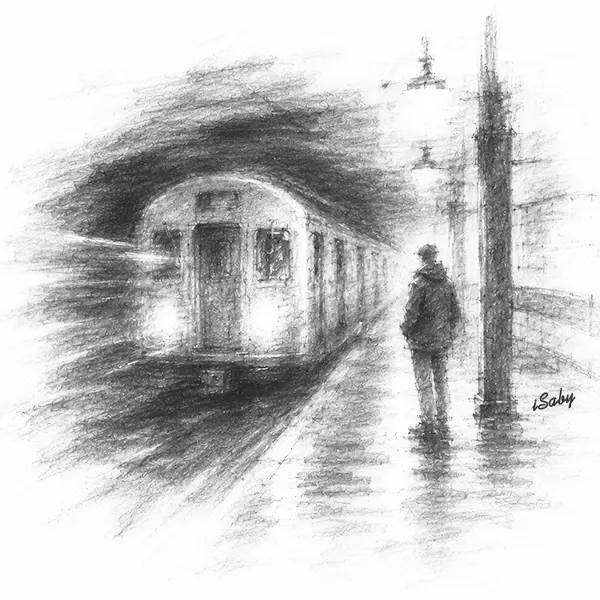
People who have gone tell me the city is rude, and they say it the way you would warn someone off a place. I have never understood the warning. From everything I have watched, the rudeness sounds like honesty in a hurry — a man telling you to move because you are, in fact, in the way; a cook sliding a plate across a counter without a word because the word is not the point, the food is. I think I would manage. I have spent my whole life being courteous in three languages, and I would not mind, for a week, a city that let me skip the preamble. Underneath the towers there is a railway that never stops, a hot wind coming up the stairs ahead of every train, and a few million people agreeing not to look at one another, which in a place that size is its own kind of manners.
The lit windows of a winter New York
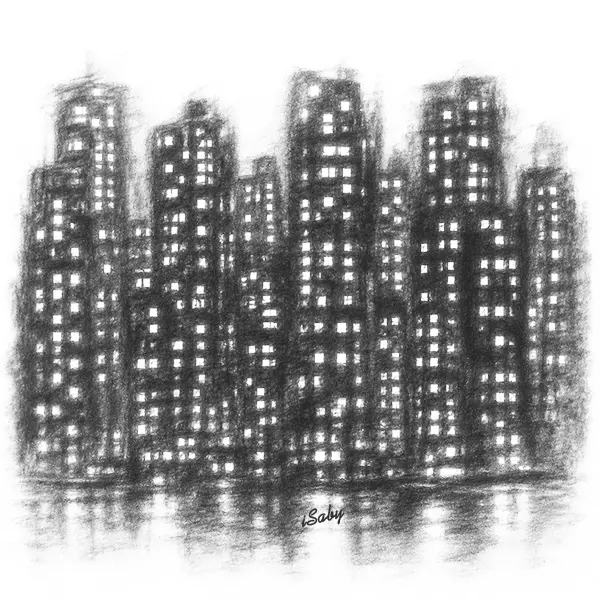
The New York I keep for myself is a winter one, and quiet, which I am told is the one New York you can almost never get. Snow coming down under the streetlights and going orange in the glow. The avenues for once nearly empty. A man with a paper cup of coffee, his breath showing. And above him the windows — that is the image I cannot put down — thousands of lit windows stacked into the dark, each one a room with a life in it I will never know, the whole tower a honeycomb of other people’s evenings. There is something in that I find almost unbearable and cannot fully explain: not loneliness exactly, but the sheer arithmetic of all those lives going on at once, indifferent, lit up, none of them mine, and the city not minding in the least that you are only passing through it on the way to somewhere, or nowhere.
Could I go? Yes — it is a long flight and an expensive one, but it is only a flight, and there is no wall around that country a form and a fee will not open for a man like me. So why is the ticket never bought? Part of it is the old failure, the one I have stopped dressing up: I simply never do. But part of it is particular to this city, and it is closer to fear. I am afraid the real New York could not compete with the one I was handed, and I am afraid that it could — afraid I would stand at the bottom of the actual canyon, with the actual steam coming up, and feel nothing but recognition, the dull click of a thing matching its picture. Forty years of borrowed dreaming, and the prize is déjà vu. I would rather not find out. So I keep not finding out, which is at least a decision, even if it is the same one I make every year.
So I let New York stay where it has always lived, which is everywhere and nowhere — in the opening shot, in the steam, in the iron stairs and the lit windows and the green woman holding up her lamp for the arrivals, of whom I will never be one. It is the most crowded empty place I own. A whole city, in perfect detail, built for me by strangers, waiting on a man who already knows every street and has never once set a foot on any of them. I could correct that with a phone and a free afternoon. I have had a great many free afternoons. I have never been abroad, and not one of those afternoons has yet become the one where I go.
“New York: largest city of the United States, at the mouth of the Hudson River on the Atlantic coast; its central borough, the island of Manhattan, was acquired from its native inhabitants in 1626 for goods valued at a few guilders.”
— copied into a notebook from something I have long since forgotten reading

Leave a Reply