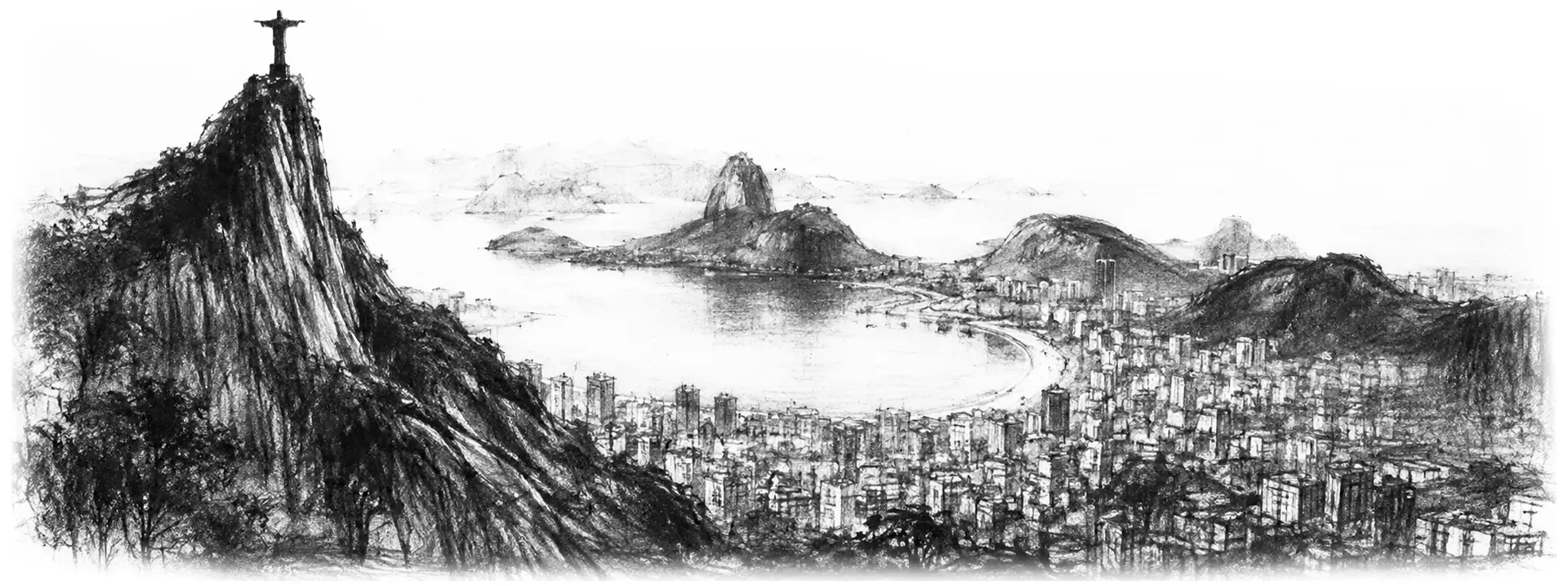
Abroad · never been
I have wanted, for most of my life, to stand somewhere in Rio de Janeiro during Carnival and watch what a city looks like when it decides to hide nothing at all. They say there is nowhere on earth so committed to living out of doors — that the beach is the living room, the street is the stage, and once a year the whole place turns itself inside out and dances in the road for the better part of a week — and every photograph and every clip I have chased down agrees with them. It is a long flight and a dear one, and I keep not taking it. And here is the joke I turn over: of all the cities I keep, Rio de Janeiro is the one built most completely on the outside, on skin and sun and noise, and I am a man who keeps almost everything folded away on the inside, in a drawer, unspent. I am drawn to it the way you are drawn to your opposite — to the one place that is all exterior.
The Rio de Janeiro that stands with its arms open
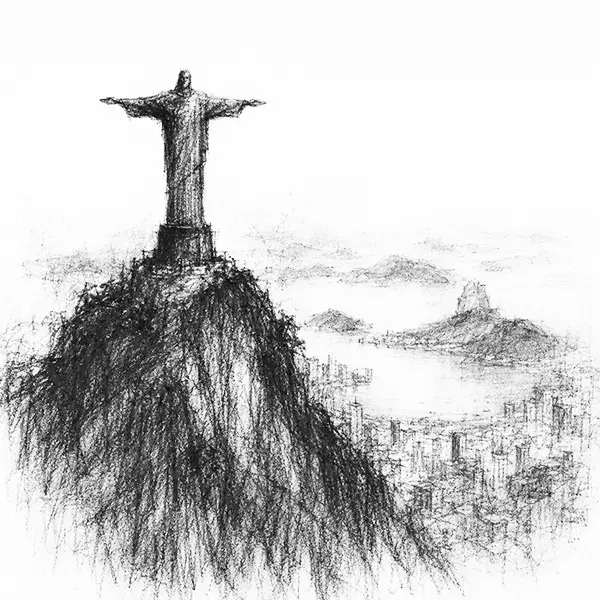
What everyone shows you first is the figure on the mountain. I have known it since before I could have found the country on a map — a great stone man on the highest peak above the city, arms held straight out to either side, standing there in all weather with the patience of something that has decided not to come down. I used to think it was blessing the city. Now I think it is doing what the whole place does: standing with nothing hidden, arms wide, holding nothing back, letting the wind and the cloud and everyone’s camera have all of it. A documentary once caught the cloud moving across its shoulders so that the arms came and went in the mist and the whole enormous thing seemed to breathe. A city that puts its largest gesture on its highest hill and makes it an act of pure opening — that was the first thing I understood about the place, and I have never quite got past it.
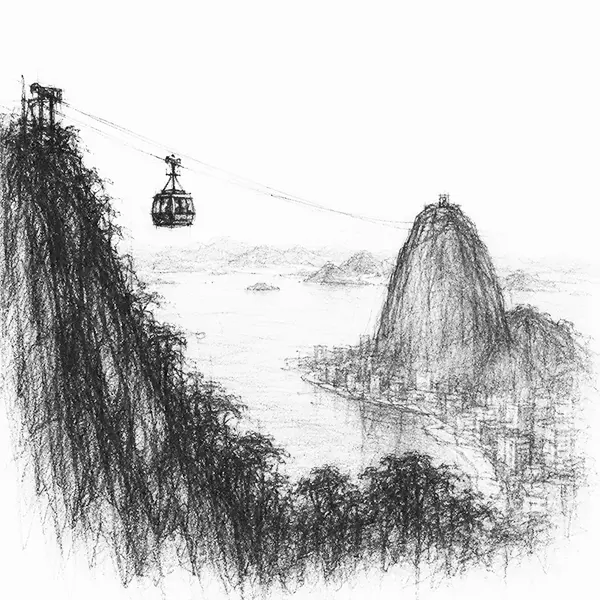
You climb the bare rock at the mouth of the bay in a little glass car on a wire strung between the peaks, and from the top, they say, you hold the whole city in a single glance — the mountains walking down into the sea, the beaches laid white along the edge, and nothing hidden from that height, not the grand avenues, not the crowded hills. I have watched the footage of that crossing more times than is decent and taken the description and worn it thin. It is a place that lets you see all of it at one go, which is the opposite of how I have arranged my own life, where a person is shown one careful room at a time.
The beach as a living room
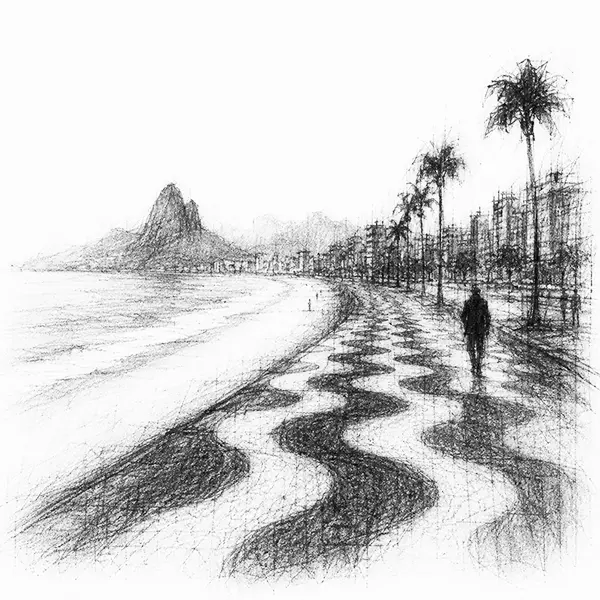
But the true centre of the place is not up a mountain; it is down on the sand. I have read it and been told it and watched it, over and over — that the beach in Rio de Janeiro is not somewhere you visit but where the city actually lives: that people come down not to lie in a quiet row as we do at a hill station, but to work, argue, court, exercise, sell, sleep, and pass the whole day half-dressed in full public view. Even the ground plays along — someone laid the long promenade in a rolling wave of pale and dark stone that runs the length of the beach, so that the pavement is doing an impression of the sea beside it. I keep a photograph of that pattern flowing off to a vanishing point with a single figure walking on it. A place so at ease in the open that it made its most crowded public ground its living room — and I, who conduct my life mostly indoors and mostly in my head, cannot stop looking at it.
What Rio de Janeiro does for a week
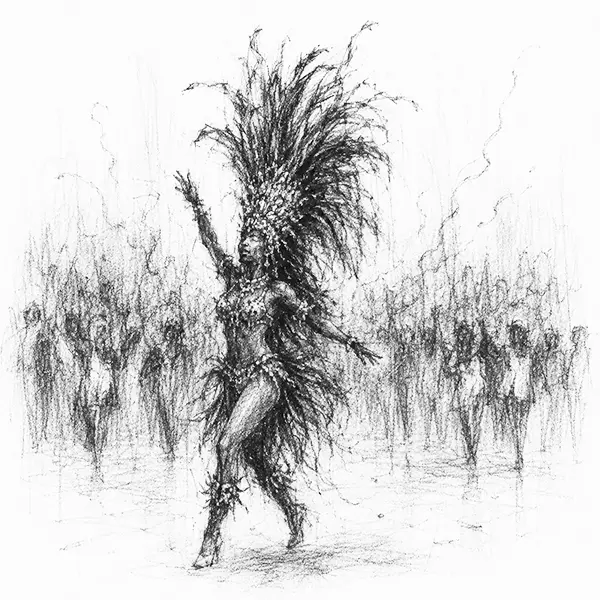
And then, once a year, the whole apparatus of ordinary life is folded up and the city spends itself. I have only ever half-seen Carnival, in bright unsteady clips and magazine spreads, and I have decided that is the right amount for a man like me. A dancer mid-step in a headdress of feathers taller than she is, one arm thrown up, a whole street behind her dissolved into drums and motion. I understand it is a thing the city builds toward all year and then burns through in a handful of nights — the saving, the sewing, the rehearsing, all of it poured out at once and gone by Ash Wednesday. It is the most extroverted act I know of in any city on earth. A place that works all year in order to lose itself completely for a week, in the road, in the open, in front of everyone. I come from a temperament that has never once lost itself in front of anyone, and I watch it the way the shy watch the dancing at a wedding — with real longing, from a chair near the wall.
A game on the sand
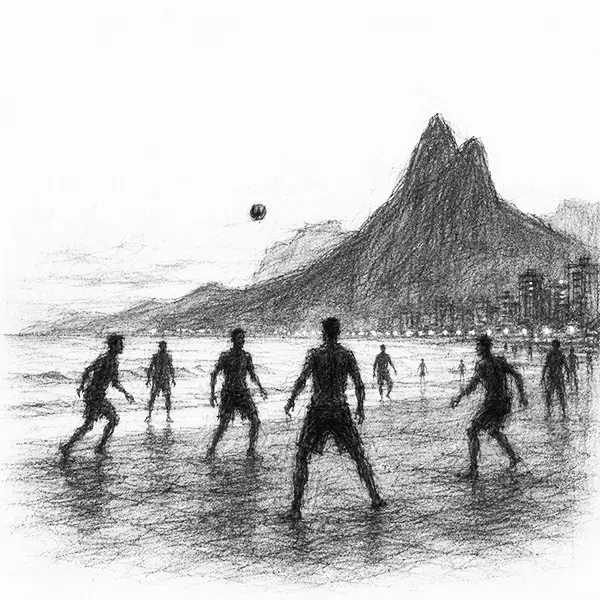
The other thing always happening on that sand is the game. Even in the clips meant to be about something else, there it is in the background — a knot of people, barefoot, keeping a ball in the air or driving it along the beach in the last of the light, the whole business conducted with a seriousness that has nothing to do with the score. I know that seriousness. I come from a country that hands a different ball the same devotion. But we mostly watch ours; here they seem to play, on any flat surface, all the time, for the plain animal pleasure of it, out where anyone can see. A place that turns its beach into a pitch at dusk and asks no one’s permission is doing, without a thought, the thing I have always found hardest — being at ease, in public, in its own body.
The hills that hide nothing
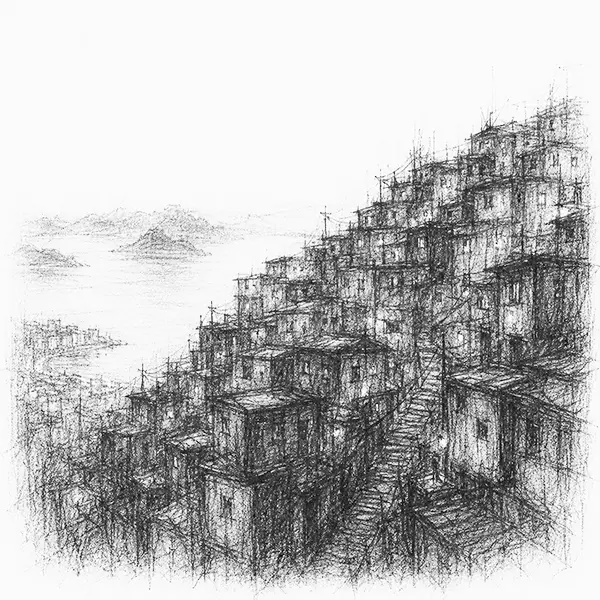
And then the hills, which the postcards would crop out and cannot, because the hills are half the view. Whole neighbourhoods of small houses stacked up the steep green slopes, box balanced on box, climbing to where the road gives up and only the stairs go on. The documentaries handle them nervously and the magazines look away, and yet there they are in every wide shot, thousands of rooms hung on the mountainsides looking down on the same bay the great statue looks down on, from higher up and for nothing. I have no business romanticising a hardship I know nothing of. But I notice that Rio de Janeiro does not manage to hide its poverty the way flatter, richer cities do; it is up on the hills, in full view, holding the finest sightline in town. Even the part a city would most like to keep out of the picture is, here, out in the open with all the rest.
The roar that is all of Rio de Janeiro
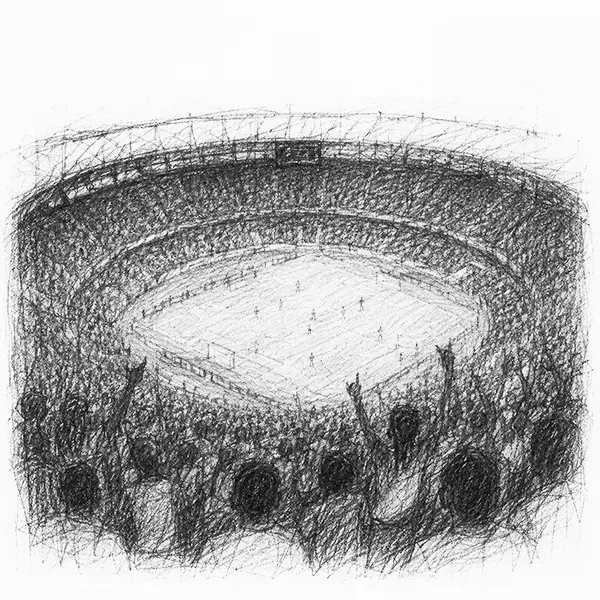
And when the city wants to be loud together, it goes to the great round bowl of the stadium — a temple to the game so large that a crowd inside it becomes weather, a single roar you can feel through a screen and forty years of distance. I have watched grown men in those stands weep without a trace of embarrassment, at a game, in front of a hundred thousand strangers, and I have envied them something I cannot quite name. It is the same openness as the beach and the feathers and the arms on the hill — the whole of Rio de Janeiro agreeing, again, to feel a thing all the way through and out loud, together, with the roof off. I have spent my life feeling things quietly, with the door mostly shut. No wonder I keep circling the one city that does the exact opposite of that.
Could I go? Yes — it is one of the long flights, and one of the dear ones, a visa and a fortune and a full day in the air, and none of that is the true reason, which is the same threadbare reason as always. But Rio de Janeiro carries a particular version of my usual fear. I am afraid I would fly all that way to the most open city on earth and stand at the edge of it exactly as I stand at the edge of everything — notebook out, half-dressed at most in spirit, the one man on the beach who came only to watch. That I would carry my folded-away self to the one place with nothing folded, and it would not fit, and I would feel the mismatch in my whole body.
So I keep it where it is, out in the sun on the far side of the world, hiding nothing. The figure stands with its arms open on the hill, the pavement is doing its impression of the sea, a ball is going up in the dusk, and somewhere a hundred thousand people are feeling the same thing at the same volume. Rio de Janeiro is the most open city I have never gone to, and I am the most folded-away man who ever loved the look of it from a long way inside. Never been abroad, and never, I suspect, more comfortably a spectator than I would be there.
“Rio de Janeiro: city of Brazil on Guanabara Bay, on the Atlantic coast; its name means ‘River of January’, from the month a Portuguese fleet first entered the bay, mistaking its wide mouth for the mouth of a river.”
— from a book of the world’s great harbours I stood and read in a shop, and never bought

Leave a Reply