Within reach · never been
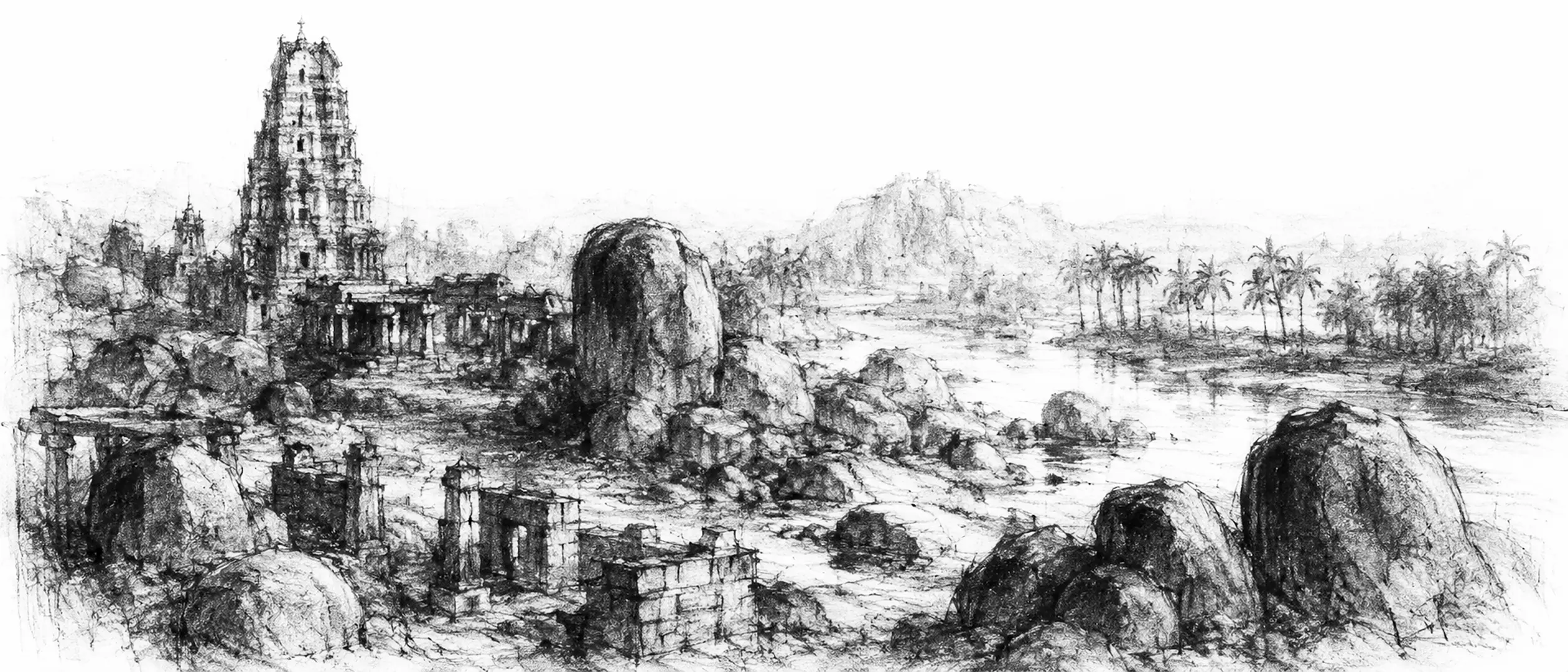
I have wanted to walk the ruins of Hampi for years, and it sits a few hundred miles from where I have lived much of my life. Five hundred years ago, give or take, Hampi was one of the richest cities on earth: the seat of a great southern empire, a place of markets where they sold diamonds by the measure, of temples and palaces and a population to rival any city then alive. Then it was sacked and burned and abandoned in a season or two. The people left, and the centuries came down over it. What is there now is the strangest ruin I know — not a tidy field of broken columns but a vast scatter of temples and gateways and fallen halls flung across miles of boulders, half-swallowed by a landscape that was always going to outlast them. It is in my own country, reachable by an ordinary train. I have never once gone.
The boulders of Hampi are the first thing, and the thing that makes it unlike anywhere else. The whole country there is heaped with them, colossal rounded granite stones, smooth and pale, piled and balanced one on another as though a child-god had been stacking them and wandered off mid-game. Some are perched so improbably you cannot believe the wind has not had them over by now. They are older than the empire by an unimaginable margin, older than almost anything. They were there long before the city and are quietly still there long after it. That is the joke the place keeps telling. The men built their temples among the boulders thinking the temples were the permanent thing, and it is the boulders that remain.
Hampi’s chariot, going nowhere
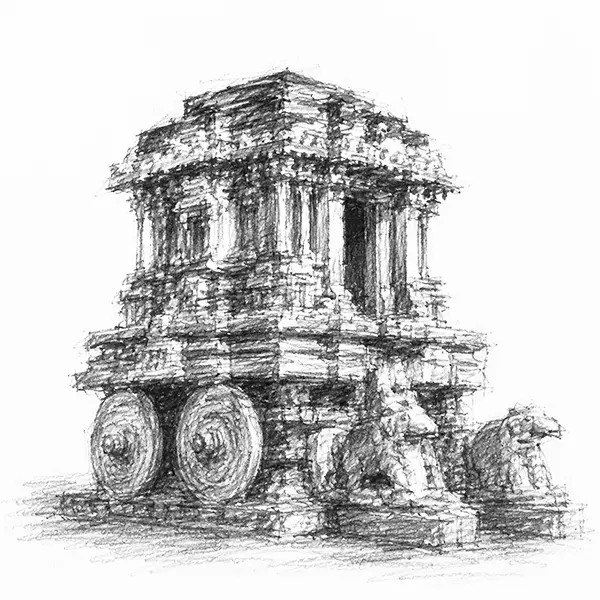
Everyone has seen one thing from Hampi even if they do not know where it is from: the stone chariot. It is a small, perfect temple cut in the shape of a wheeled chariot, standing in a courtyard, its stone wheels carved as though they might turn. A thing made of the heaviest material there is, shaped to look as if it were about to roll away. It has become the emblem of the whole site, printed on tickets and notes and posters, and I have looked at it a thousand times in other people’s photographs. Something in it catches exactly what the place does to me: stone pretending to move, permanence pretending to be a journey. A vehicle that has been going nowhere, beautifully, for five centuries. I feel I know it.
Older than the empire
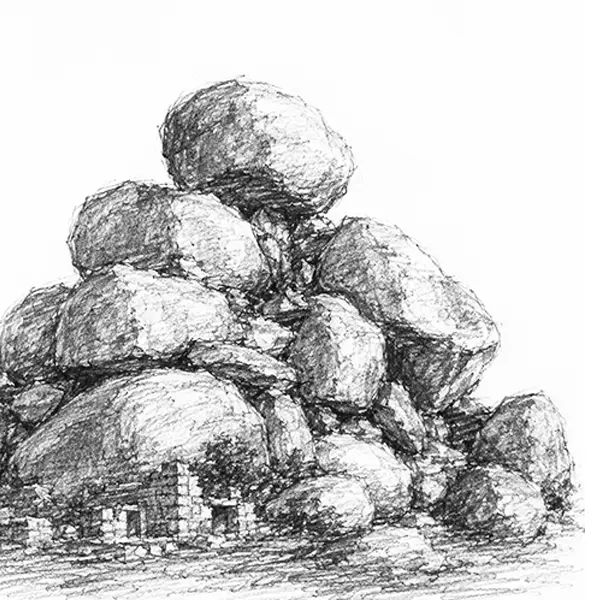
I said the boulders were the first thing; they are also, I think, the real subject. In the photographs the ruins are almost incidental to them — a doorway here, a row of pillars there, dwarfed by these great smooth heaps of stone going gold and grey as the light moves. People climb them at evening to watch the sun go down over the whole broken city, and every account I have read describes the same thing: an enormous quiet, the heat going out of the day, the boulders holding their warmth, and the sense of sitting in a place that has comfortably outlived its own importance and is in no hurry about anything. I have wanted to sit on one of those rocks at dusk for most of my adult life.
The lamp that never went out
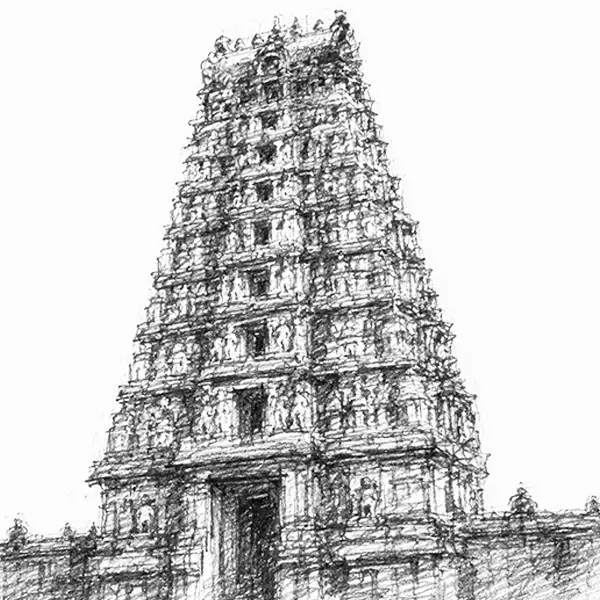
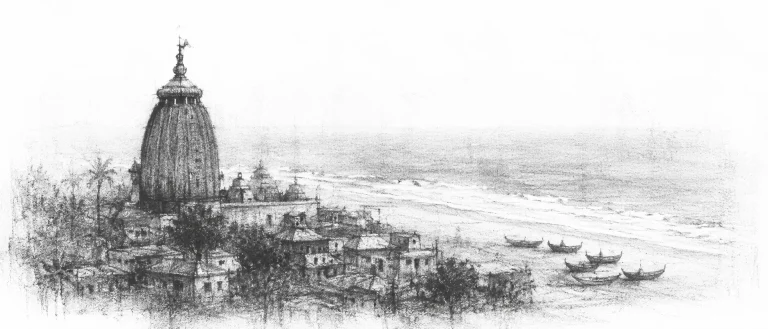
Not all of it is dead, which is the part that moves me most. One great temple still stands and still works — a tall tiered gateway-tower rising over the bazaar, crusted with carved figures, with priests and pilgrims and, famously, a temple elephant, going about the morning as they have without a break for longer than the empire that built it has been gone. The city around it fell; the worship in it never stopped. I find that almost unbearable in the right way: that in the middle of the largest ruin in the land, one lamp was simply never allowed to go out, and ordinary devotion has been carried on under that tower every single day across five hundred years of everything else collapsing. I should like to stand in that courtyard early, before the heat, and watch the most ordinary thing in the world happen in the most extraordinary place.
Hampi’s grand stone, and a man in a basket
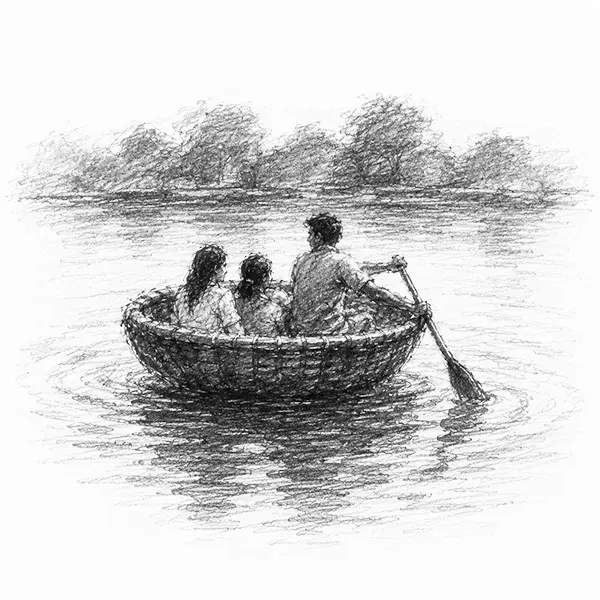
And the river, which is the other living thing. A wide slow green river runs through the boulders, and people cross it the way they have forever, in coracles — round basket-boats like floating bowls, spun across the current by a man with a single paddle, carrying two or three passengers and sometimes, in the photographs that delight me most, a motorcycle balanced absurdly in the middle. There is something perfect about a city of imperishable stone served by the most fragile, temporary boat imaginable, a craft that is essentially a large basket, twirling across the water below the ruins. The grandest ambitions of an empire, and a man in a basket. I would get in the basket gladly.
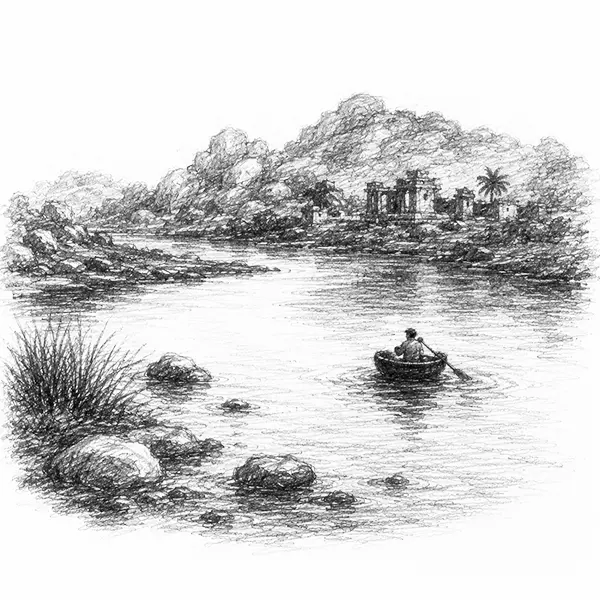
A former colleague of mine went to Hampi, years ago, and came back changed in the small way that place seems to change people — not babbling about it, just quietly certain it was the best thing he had done in years, and unable quite to say why. He showed me his photographs: the green river curling away between hills of boulders, ruins standing up out of the scrub on the far bank, a coracle small on the water, the whole thing washed in that thick gold south-Indian light. I remember thinking, with the particular sourness reserved for things that are entirely your own fault, that I could have been standing exactly there, that there was nothing on earth stopping me, and that I had once again not gone.
Because that is the whole shape of it, and it is the shape I keep running into in this room of the collection. Hampi is not abroad. There is no ocean to blame and no border to cross and no visa to fail to apply for. It is a train — a long, ordinary, entirely bookable train, the kind I have taken a hundred times to duller places — and at the end of it, the largest and strangest ruin in my own country, the dead capital lying out among its deathless boulders, waiting with the patience of stone. The empire could not last and did not. The boulders will outlast all of us. And somewhere in between, for one more year, is a man who means to go, and keeps not going, and is running out of the one thing the rocks have in such endless supply. A man who has never been abroad, and who cannot even reach the ruins in his own backyard.
“Hampi: village in Karnataka among the ruins of Vijayanagara, capital of a powerful south Indian empire of the fourteenth to sixteenth centuries; sacked in 1565 and never rebuilt, its temples and palaces scattered across a landscape of granite boulders beside the Tungabhadra river.”
— from a magazine cutting I have kept for no reason I can name

Leave a Reply