Within reach · never been
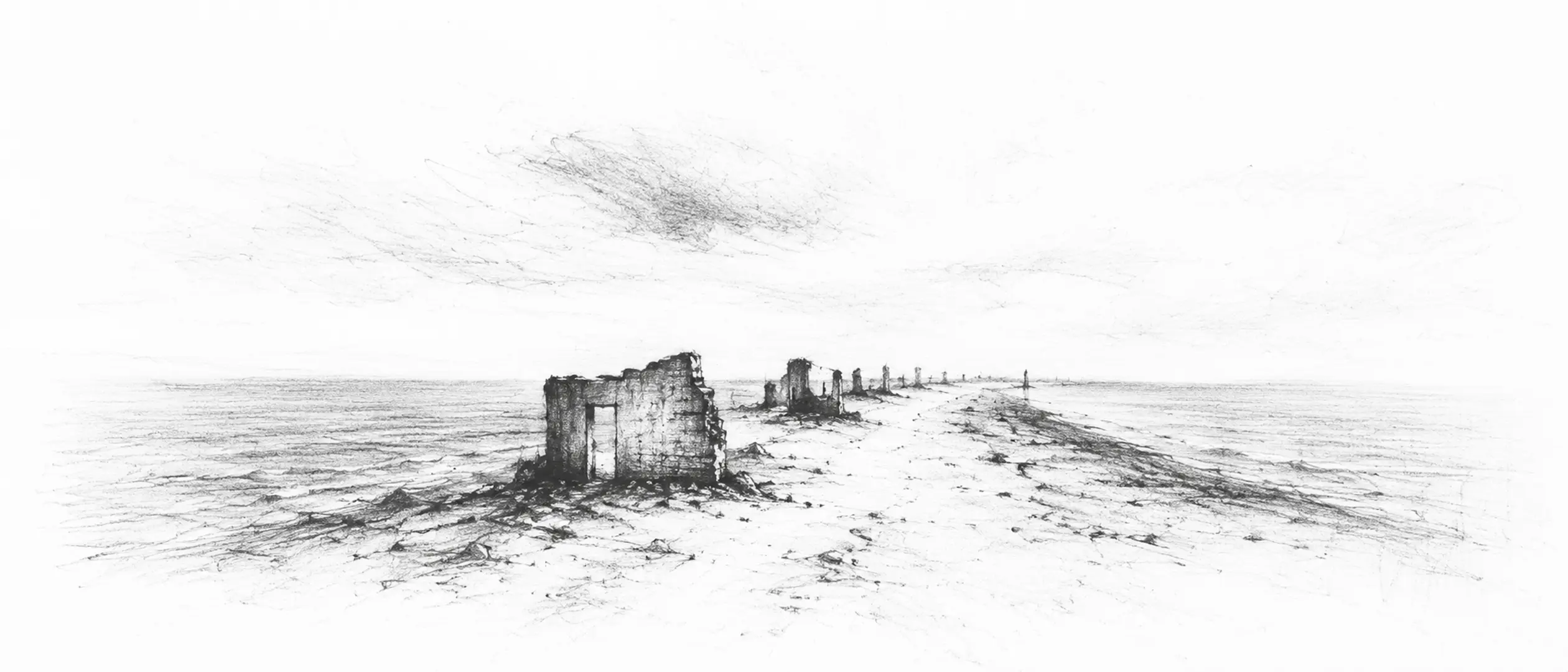
I have never been to Dhanushkodi, the place where my own country runs out. Dhanushkodi sits at the tip of a long thin tail of land reaching south toward the island across the water, where a whole town once stood and then, in a single night sixty years ago, was taken by a cyclone and the sea and never rebuilt. It is the furthest you can go and still be on the mainland, a ghost town on a finger of sand, sea on both sides, the broken bones of a railway and a church and a row of houses half-buried in the dunes. Past it the land narrows into a chain of sandbanks that the old stories call the beginning of a bridge to another country. It is not far, in the way this book means far. It is simply at the end. And I have stood in the same southern state more than once and never gone the last stretch to where the country gives out.
That is what holds me about Dhanushkodi, that it is an ending, a place that is itself about stopping. I have been to that deep south. I have stood in its temple towns and on its beaches and felt I knew it. But I always turned back before the very tip, before the road thinned to sand and the buses stopped and the land gave out. There is something almost embarrassing in that, to have come so close to the end of your own country so many times and never once gone all the way to it, to have always had somewhere nearer to be. The place pulls at me precisely as a destination that is also a full stop, the last sentence of the land, which I have left unread.
I have it the way I have all these near places: documentaries, photographs, the encyclopedia, and the strange double story the place carries. The cyclone that erased the town in a night and the train that went into the water, and the older, mythic tale that this is where the legendary bridge to the island was begun. Between them they have built me a place of wind and salt and ruin, of pale sand and grey sea and broken walls, of the particular silence that settles where a town used to be. I have never heard that silence. I think it would be unlike any other.
Dhanushkodi, stopped mid-sentence
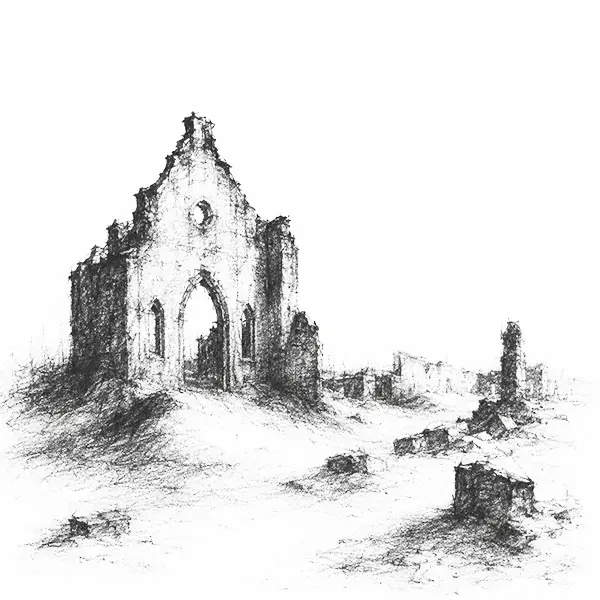
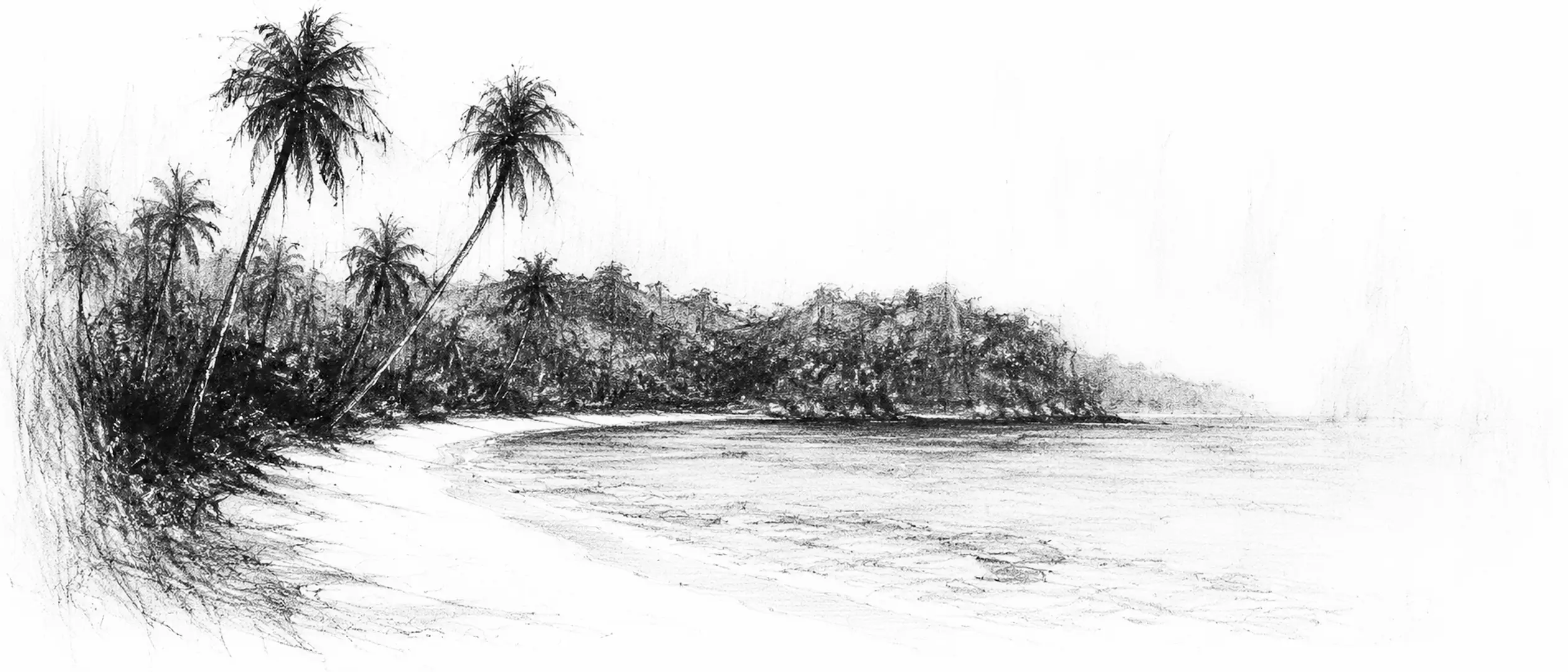
The town that was is still there, after a fashion — the roofless shell of a church, the bones of a railway station, low broken walls standing in the dunes where streets used to run, all of it half-taken by the sand, bleached by sixty years of sun and salt. Not ruins made grand by age, like the ancient ones, but ruins made recent and raw by a single night of weather, a modern town stopped mid-sentence. I am drawn, as I always am, to the places history has finished with, but this is a sharper kind of finished — not a slow fading but a sudden erasure. I would walk among those low salt-bleached walls in the wind and feel how thin the line is between a living town and a field of stumps in the sand.
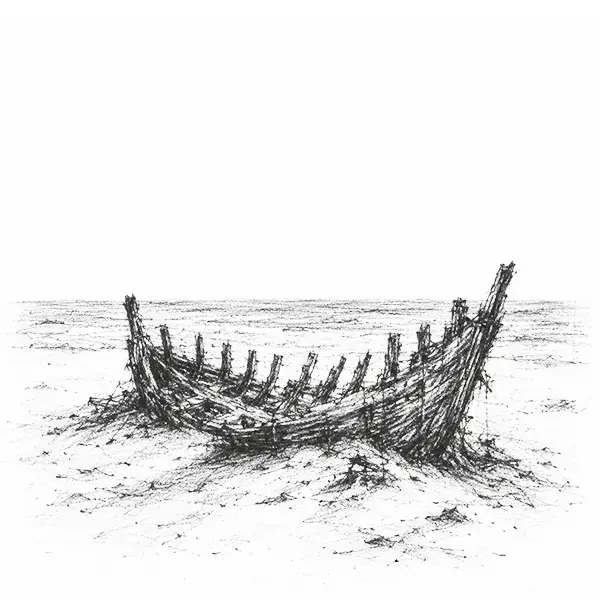
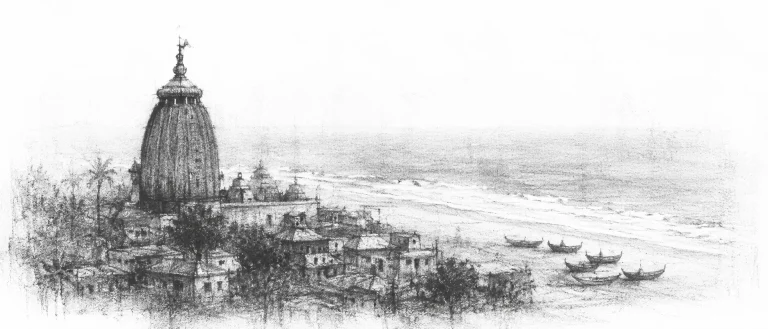
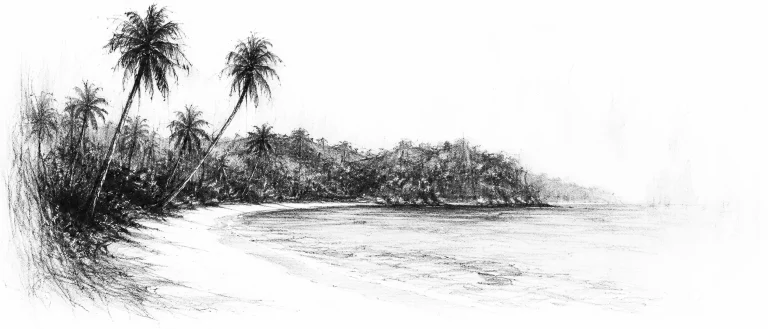
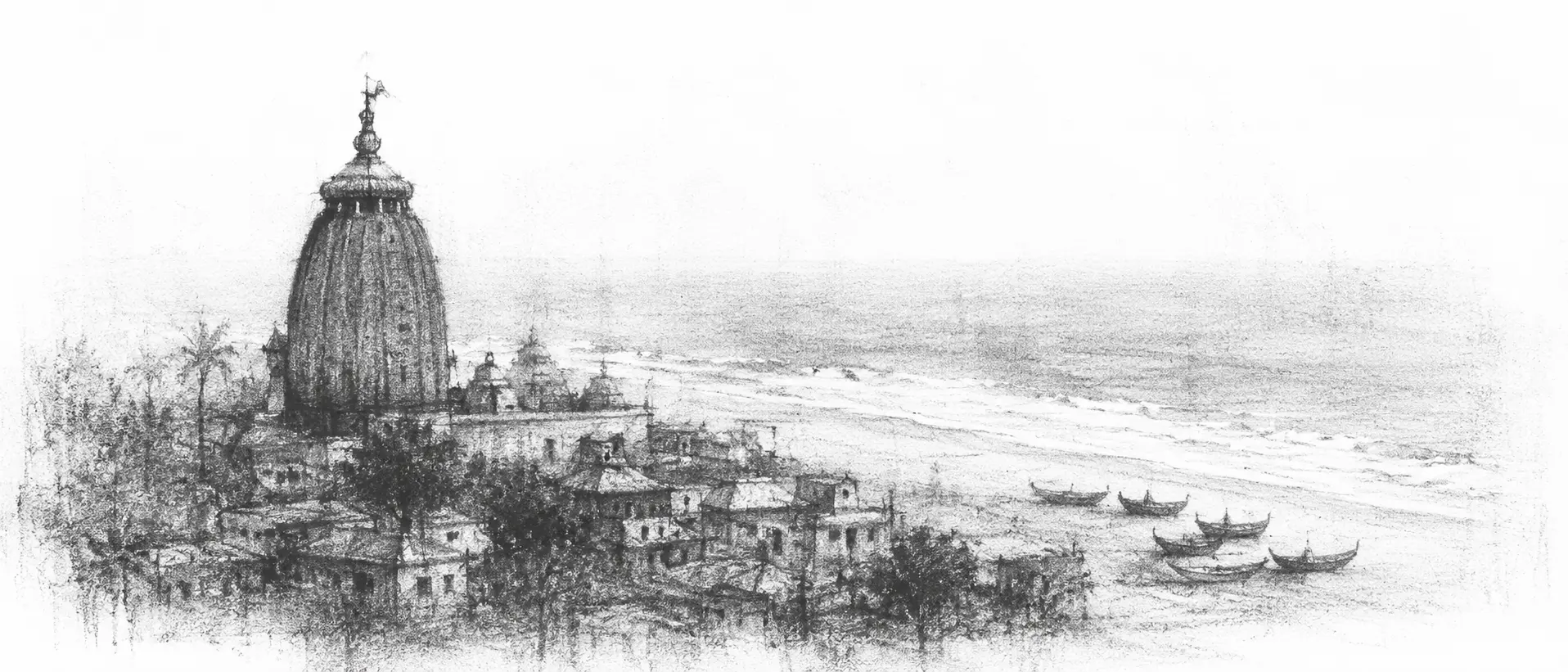
Down on the shore, the boats — some still working, drawn up by the few fishing families who live on at the world’s end, and some long wrecked, the timber ribs of an old hull standing half-buried in the sand where the sea left it, slowly going to grey. A wrecked boat on an empty beach is almost too obvious an image for a place like this, and I do not care; it is the true one. I am moved by the litter the sea leaves and forgets, the worked wood given back half-rotted to the sand. I would stand over the ribs of one of those old hulls with the wind coming off both seas at once, and not need it explained to me.
The bridge the train went under
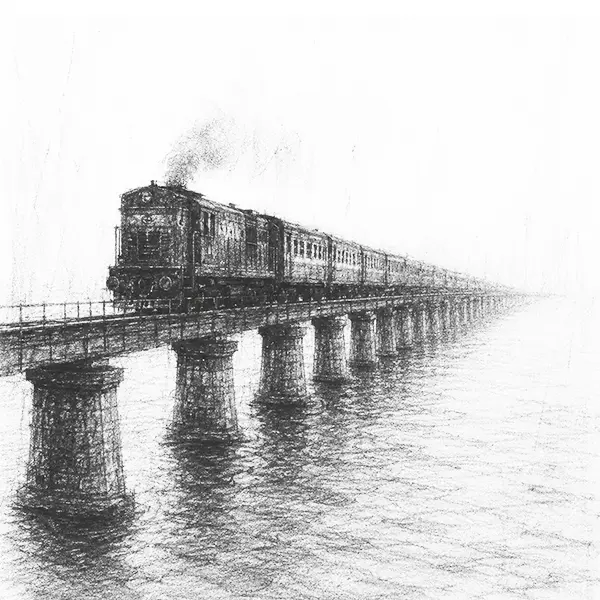
And before the spit even begins, the way onto the island is itself across the sea — a long low railway bridge carried on a row of stone piers straight over open water, where the train comes off the mainland and runs for a couple of miles with nothing but sea on either side and the waves close beneath the sleepers. It is the kind of picture that needs no caption: a train crossing bare ocean as if the rails had simply decided to keep going. And it carries a darker weight here, because this is the line that once ran on past the bridge and down the spit to Dhanushkodi itself — until the night in 1964 when the sea the trains crossed so calmly rose up and took the town, and a passenger train with it, and everyone aboard. So the bridge holds two things at once: the plain marvel of a train riding over the water, and a quiet memorial to the one that went under. I would stand on the shore and watch a train cross all that blue, and think about the one that never reached the other side.
A path that is not a path
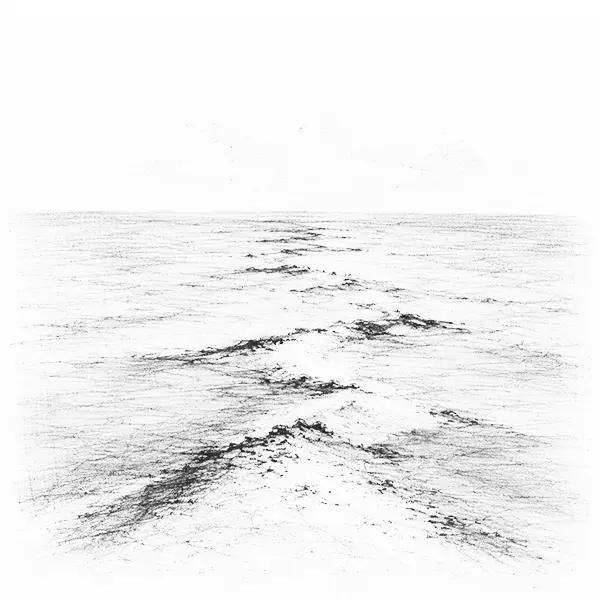
And then, past the last of the land, the thing the place is most dreamed about for — the chain of low sandbanks and shoals that runs on out across the shallow sea toward the island country on the far side, a broken dotted line of pale shapes just under or just above the water, which the old story holds to be the remains of a bridge built across to rescue a stolen queen. Myth or sandbar or both, it is a line of almost-land pointing at another nation, a path that is not quite a path. I am undone by the idea of standing at the end of my own country and seeing, faint on the water, the suggestion of a way across to another. I would stand at the tip and look along that dotted line as far as the haze allowed, and want, badly, to keep going, and not be able to.
The few who stay at land’s end
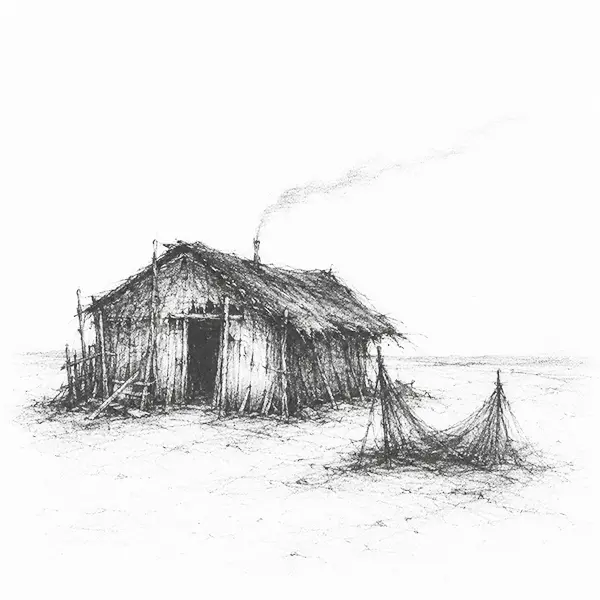
People do still live here, a few — fishing families in low huts of thatch and salvaged wood scattered on the dunes, holding on at the very end of the land where a whole town could not, drawing a hard living from the two seas. A single hut on an empty spit, smoke from a cooking fire bending flat in the wind, is to me one of the loneliest and most admirable images there is. I am always drawn to the people who stay where almost everyone left, who make an ordinary daily life in a place defined by an ending. I would want to see the smoke of one of those huts going sideways in the salt wind and understand that even the end of the country is, to someone, simply home.
Dhanushkodi from the air
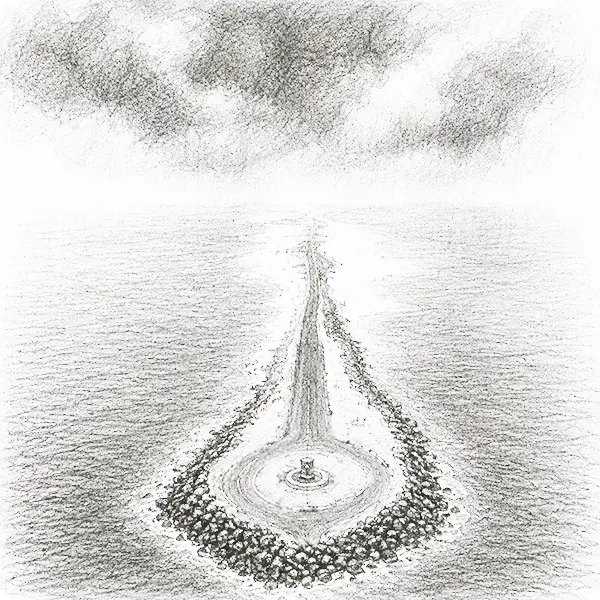
And the view I have only ever had from above — because this is a place that truly explains itself from the air, in the drone footage that turns up in every film about it now. Seen from overhead, the whole shape of the ending goes suddenly plain: the land thinning to a thin causeway barely wider than the road that runs out along it, the two seas pressing in from either side in their two different colours, the causeway fraying at last into the broken dots of shoal that trail off toward the other country and stop. From the ground you can only ever stand at the end; from the air you see that it is an end — the exact point where a country gives out and turns into a guess. I have watched that slow descending shot more times than I can count. I would like, once, to be the small figure it finds at the very tip, and not just the eye that hovers above it.
So Dhanushkodi sits at the very furthest reach of the near room — not abroad, not hard, the end of my own country down in a state I have visited more than once, and never gone all the way to. There is a real distance here, a real remoteness, the genuine end of the road, which almost excuses me — except that I came so close, so many times, and always turned back with somewhere nearer to be. It is a ghost town on a finger of sand with the sea on both sides and a dotted line of almost-bridge pointing off at another country, and I have left my own country’s last full stop unvisited. One of these years I should drive the thinning road to where it gives out, and walk among the salt-bleached walls, and stand at the tip looking along the broken bridge toward the island I am not going to reach — and find out what it is to stand, at last, at the very end of the land I am from. I have never been abroad; it would be something, at least, to have stood at the very end of the one country I have never left.
“Dhanushkodi: a town at the south-eastern tip of Pamban Island in Tamil Nadu, at the end of a long sandspit reaching toward Sri Lanka; destroyed by a cyclone in 1964 and left largely abandoned, near the chain of shoals known as Adam’s Bridge or Ram Setu.”
— from a set of travel books once sold to the house, door to door

Leave a Reply