Within reach · never been
I know the south of my country reasonably well: its coasts and its temple towns, its big easy cities, a fair scatter of places I have actually stood in. And right in the middle of it, on the dry Deccan plateau, there is a great old city I have circled for years and never once entered: Hyderabad, the city of a vanished sultanate, of pearls and minarets and the most famous rice in India. Hyderabad sits on its granite among its own boulders, a few hours by train or an hour in the air from places I have been more than once. It is the near-miss kind of longing again, the most ordinary and most annoying kind — not a far city across an ocean but a near one I kept not turning aside for, a gap right in the middle of a region I would otherwise claim to know.
It comes to me the usual way — documentaries, the encyclopedia, photographs, a former colleague who is from there and speaks of it the way people speak of a first language. Between them they have built me a city quite unlike the temple-and-coconut south I do know: a Muslim south, a Deccan grandeur, domes and arches and four-fold symmetry, a faded courtly elegance laid over a hard grey landscape of granite hills and balancing boulders. It is the south turned a different way, toward the sultanates and the desert kingdoms rather than the sea, and that difference is most of what draws me. I would like to stand in the part of my own south that does not look like the rest of it.
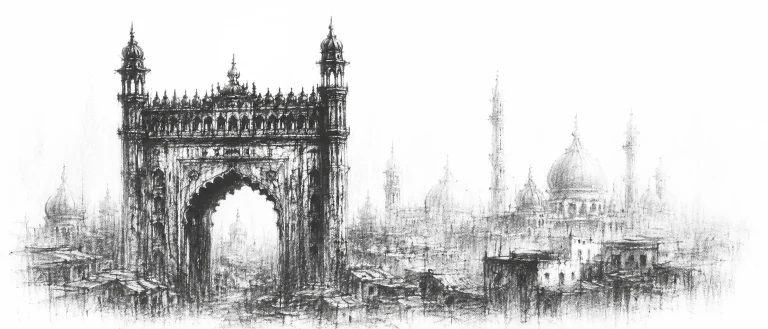
Under the Charminar, the heart of Hyderabad
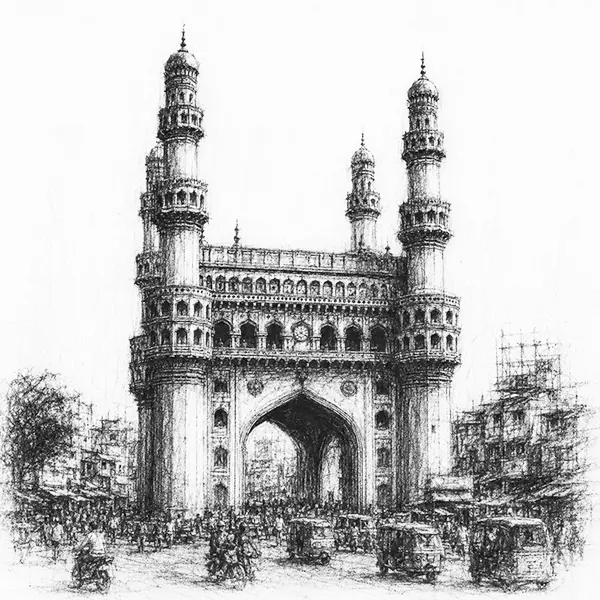
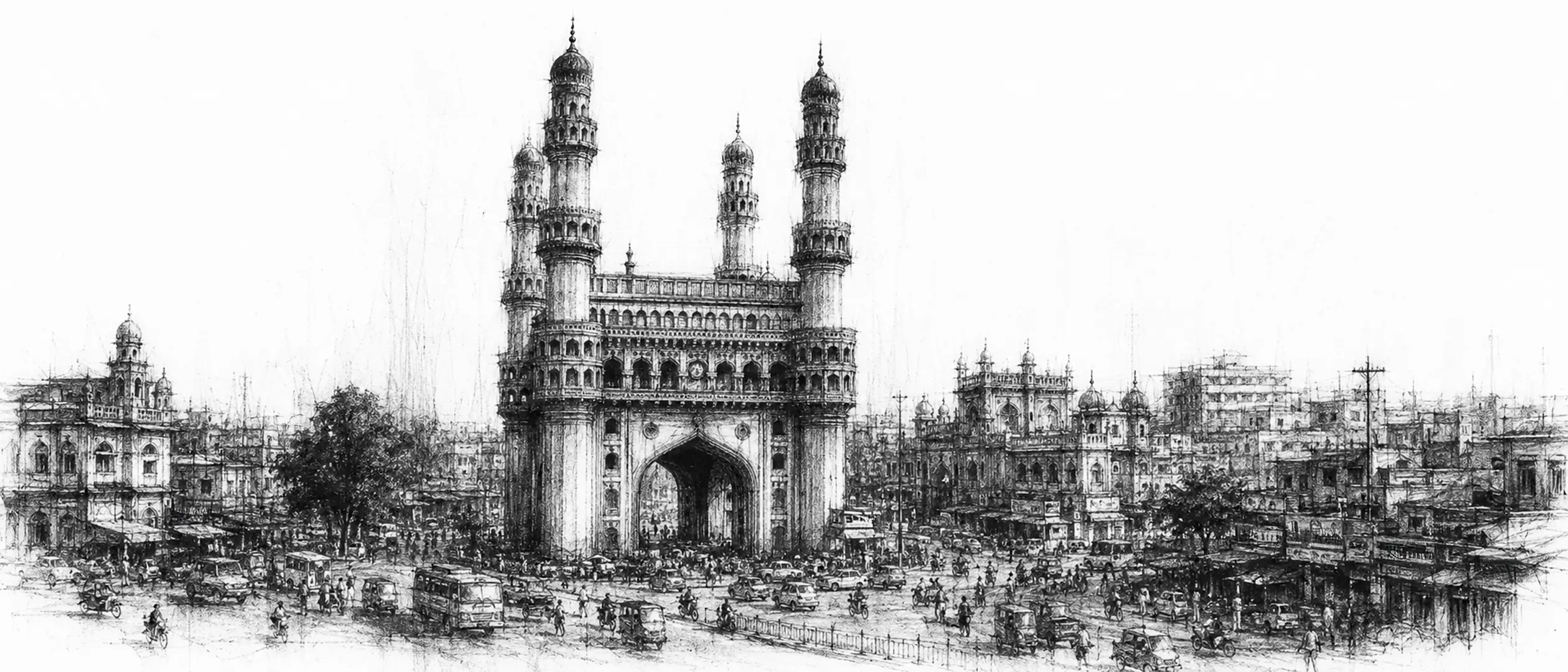
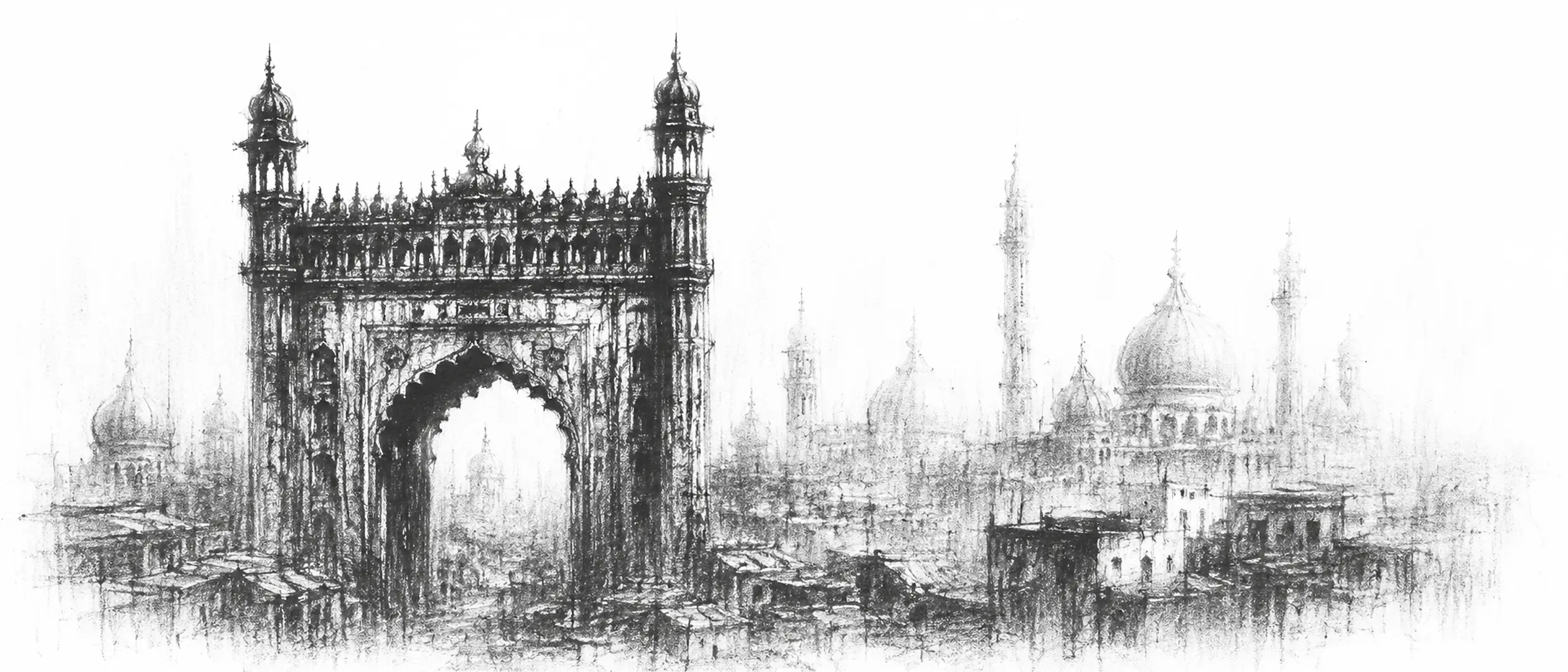
The heart of it, the thing on every postcard, is the four-arched monument at the centre of the old city — a great square gateway with a slender minaret rising from each corner, built four centuries ago to mark the founding of the city. It stands now in the middle of a roar of bazaar, traffic going through its arches, the whole market wrapped around its feet. I love a monument that has not been put behind a fence and hushed, that still stands in the thick of the ordinary day with people buying and selling and eating around it. I would like to stand under its arches in the noise and the heat and feel four hundred years of a city carrying on, uninterrupted, around the stone someone laid to start it.
Golconda, the fort that listens
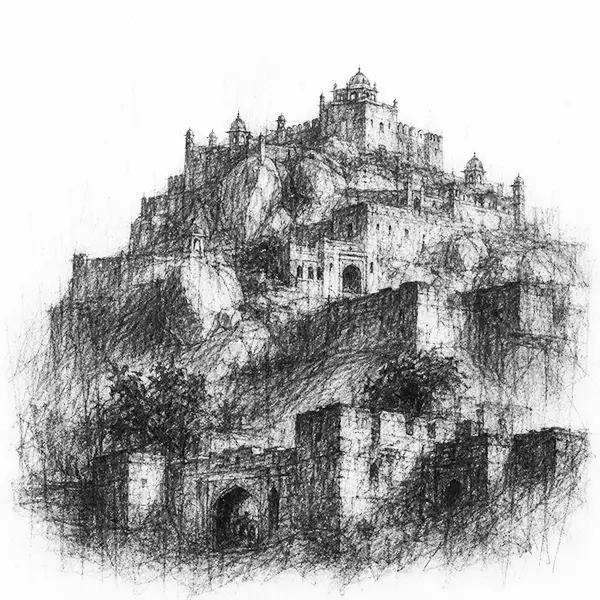
And above the city, on its hill of granite, the old fort — a great ruined citadel climbing a boulder-strewn rise, walls and gateways and domed pavilions, the seat of the kingdom before the city spread below it. It is famous for a trick of its building: that a hand clapped at the gate far below can be heard, they say, at the pavilion on the very top, a whole fort engineered so that a warning could travel up it by sound alone. I am charmed by that beyond reason — a fortress designed to listen, to carry a clap up a hill of stone. I would climb it in the morning before the heat and clap once at the bottom and listen, like every visitor before me, for the city’s oldest echo.
Where the sultans sleep
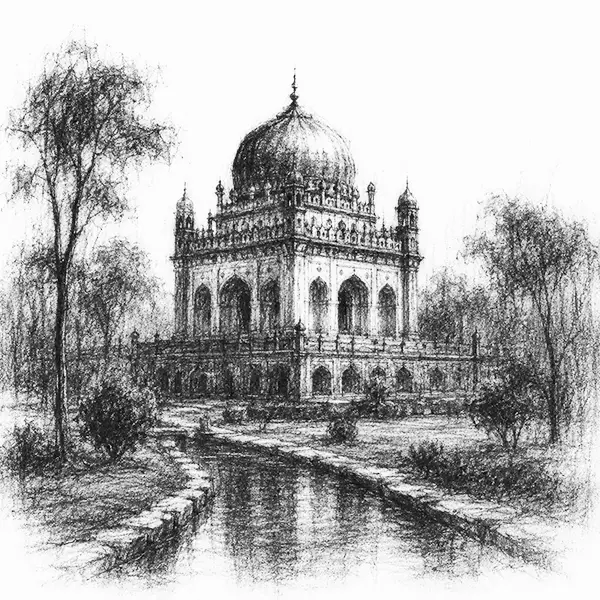
Below the fort stand the tombs of its kings — a quiet field of domed garden-tombs, grey stone and pale plaster, set among trees and old water channels, where the sultans of the vanished kingdom lie under their domes in a calm that the loud city never reaches. I am drawn, as I always am, to the quiet leftover places at the edges of busy ones — the gardens of the dead, the disused tanks, the corners history has finished with. To walk among those domes in the late afternoon, the city’s roar a distant thing, the kings asleep under their stone, is the kind of melancholy I find restful rather than sad, and I would seek it out.
Haleem, once a year
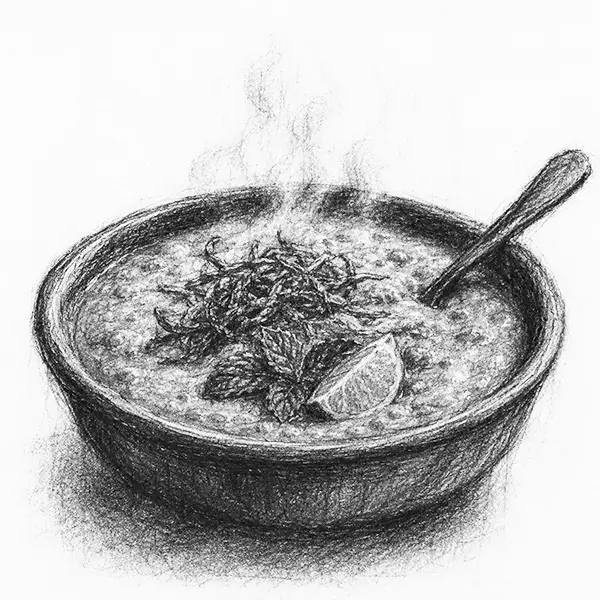
And the other thing the city loses its head over, which comes round only once a year — haleem, a thick slow stew of meat and wheat and lentils pounded together and cooked for the better part of a day in great vats, until the meat gives up entirely and the whole turns to a rich smooth paste, scented with fried onion and lime and mint. It belongs above all to the fasting month, ladled out at dusk to break the day’s hunger, a food of patience and of crowds — long cooking, long waiting, a whole city queuing in the evening for a bowl of something that took since morning. I have eaten the travelled, year-round imitations of it in other places, far from the month and the meaning. To have it where it belongs, at sundown, in the fasting month, in the city that pounds it best, is the kind of thing I file under “one day” and never quite reach.
The biryani of Hyderabad, at its source
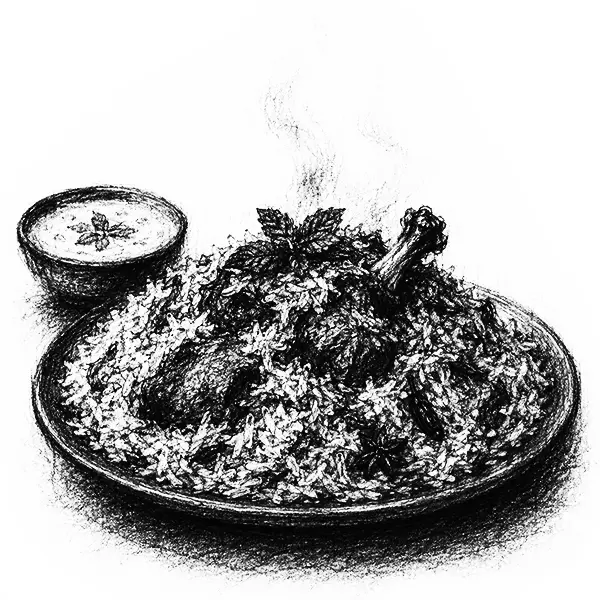
But I will be honest, as I always am about this: the thing I most want in Hyderabad I want with my stomach. It is the home of the most famous rice dish in the country, a slow-cooked biryani of meat and long rice and saffron and a hundred quiet spices, sealed and cooked in its own steam, argued over and adored across the whole of India, imitated everywhere and, they all insist, never quite right anywhere but there. I have eaten a great many versions of it, in a great many cities, all my life. I have never had it at the source, in the city that perfected it, from a kitchen that has been making it since the sultans. For a greedy man, that is not a small gap. It may, if I am truthful, be the single thing most likely to finally put me on the train.
Among Hyderabad’s old boulders
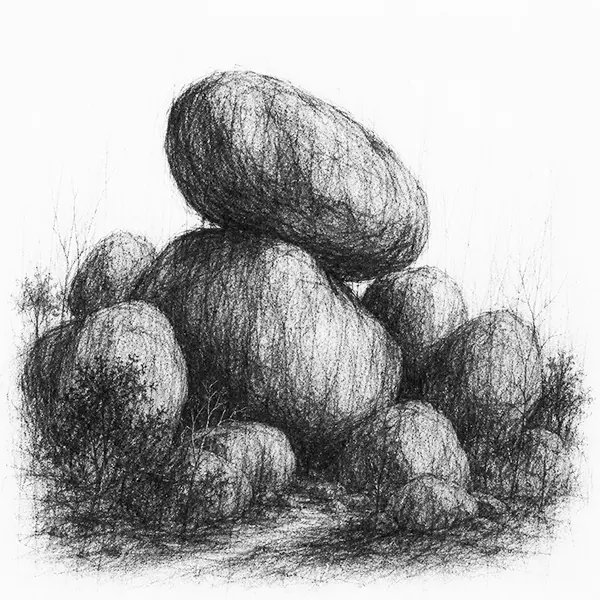
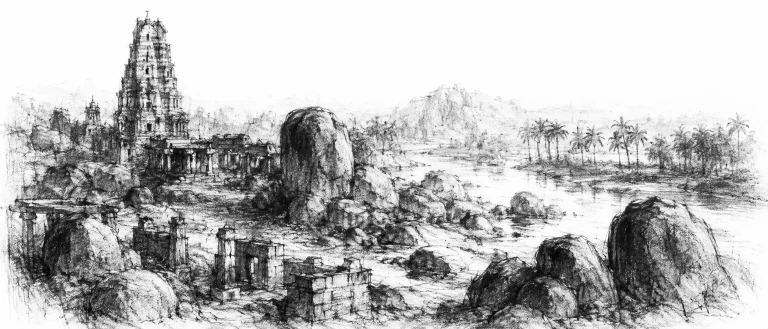
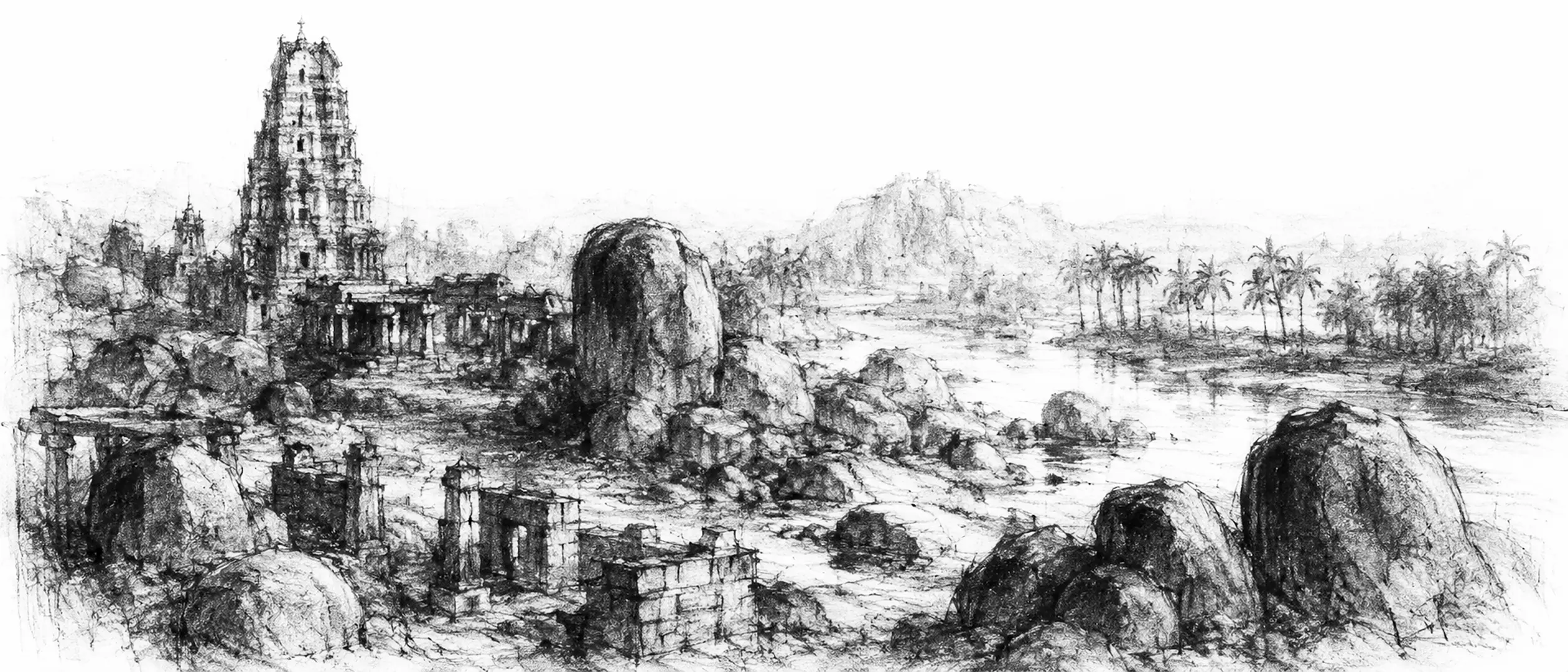
And under all of it, the granite — for the city is built on and around great heaps of rounded grey boulders, the same balancing stones that I have written about wanting to sit among at Hampi, a few hundred kilometres east, here left standing in parks and gardens and traffic islands, ancient rock the city simply built around rather than blasting away. I love that the place kept its boulders, let the oldest things in the landscape stand in the middle of the newest, a billion-year-old stone on a roundabout. It is the Deccan’s signature, that grey rounded rock, and to see it holding its ground in the middle of a modern city would tell me something true about the patience of the land my whole restless country sits on.
So Hyderabad is the near one I never turned aside for — not far, not hard, not abroad, a city right in the middle of a south I know, that I have circled on the way to other places more times than I can count and never once entered. There is no ocean to blame and no border and no real failure of nerve, only the small steady habit of going past, of meaning to and not. One of these years I should finally turn aside, stand under the four arches in the noise, climb the listening fort, walk among the kings’ domes — and eat the rice, at last, in the one city that is allowed to say it makes it best. A man who has never been abroad, and who will not even turn aside for the rice in the middle of a south he knows.
“Hyderabad: capital of Telangana, on the Deccan plateau; founded in the late sixteenth century by the Qutb Shahi sultans, noted for its Charminar gateway, the hill-fort of Golconda, the tombs of its kings, and its biryani and Ramzan haleem.”
— from the one-volume encyclopedia I have had since school



Leave a Reply