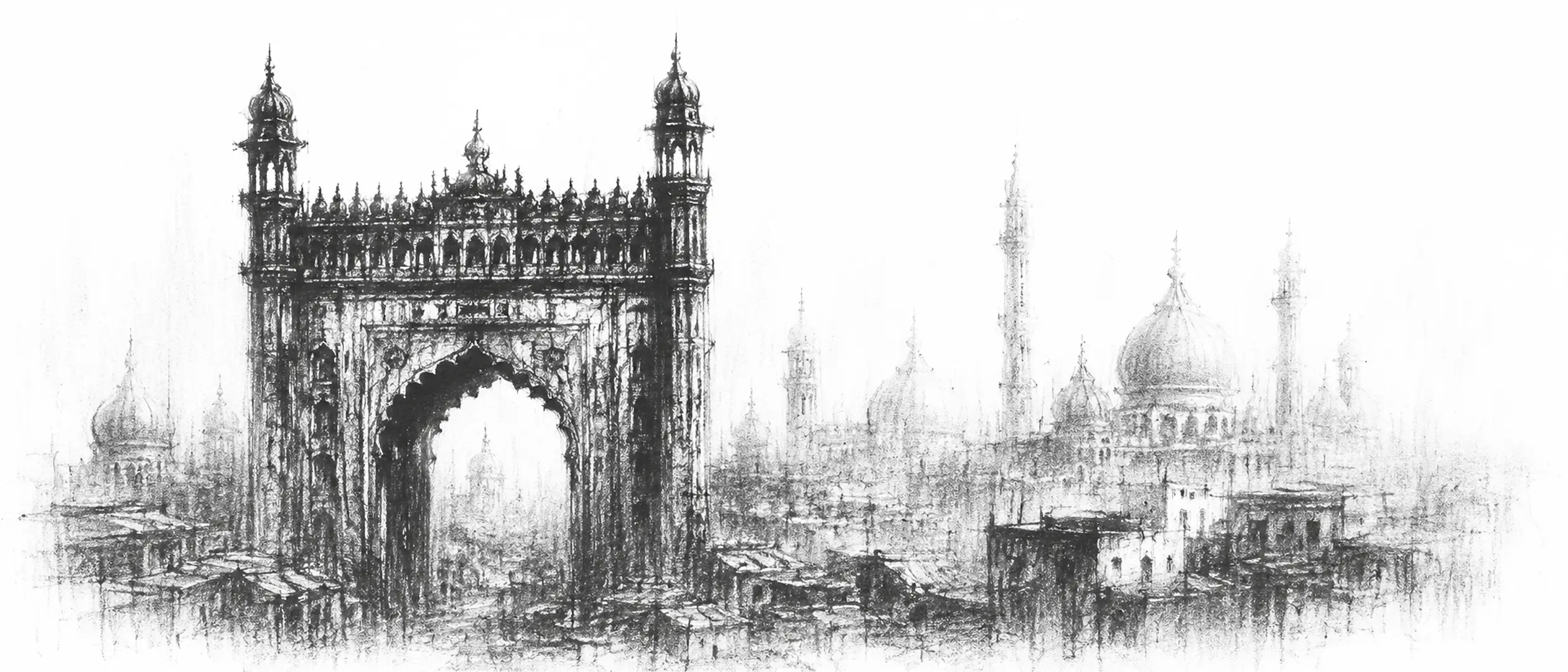
Within reach · never been
I have meant to go to Lucknow for most of my adult life and have somehow never once turned aside for it, a single night’s train from places I have lived for years. The old capital of a courtly little kingdom, a place of elaborate manners and ruined palaces and a way of speaking so polite it is almost a performance, and, above all, of food I can describe in detail and have never tasted where it is made. Lucknow is not far. That is the whole trouble with it. It sits squarely inside the near room of this book, a train away, no ocean and no border and no paperwork between us, and I have spent thirteen years of my life in its general neighbourhood and never made the short hop across.
What draws me is its particular flavour of decline, the grandeur of a vanished court gone gently to seed. This was the seat of nawabs who, when their real power was taken from them, poured everything they had left into refinement instead: into poetry and manners and architecture and, famously, into the kitchen, until the city became a byword for a slow, mannered, decadent elegance. There is something I find very moving in that, a ruling house that answered the loss of everything important by perfecting everything unimportant, and left behind a culture of pure civility. I would like to walk in the ruins of that and feel how a place can make an art form out of having time on its hands.
I have Lucknow the way I have all these near places: documentaries, the encyclopedia, films that love its faded courtyards, and the food talked about endlessly by people who come from there or have been, in the reverent tone usually kept for religion. Between them they have built me a city of twilight and old plaster, of long courteous sentences and longer cooking, of grandeur slightly out at the elbows. I have never been handed a plate in one of its lanes. I have wanted to for so long that the wanting has become its own small embarrassment.
Lucknow’s gateway, pure manners
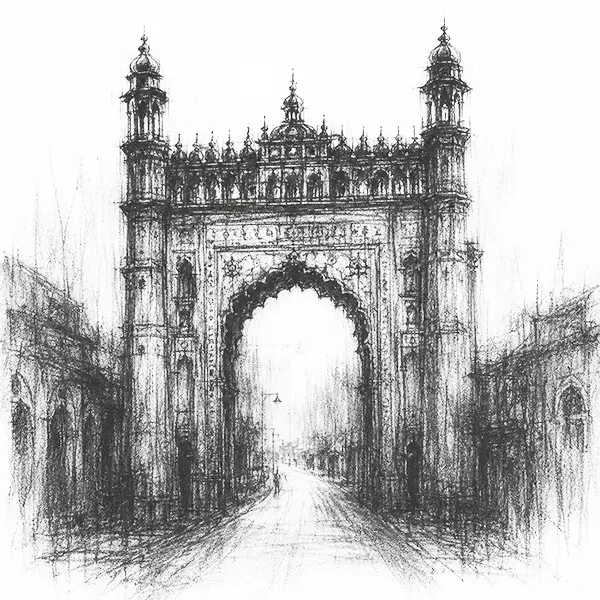
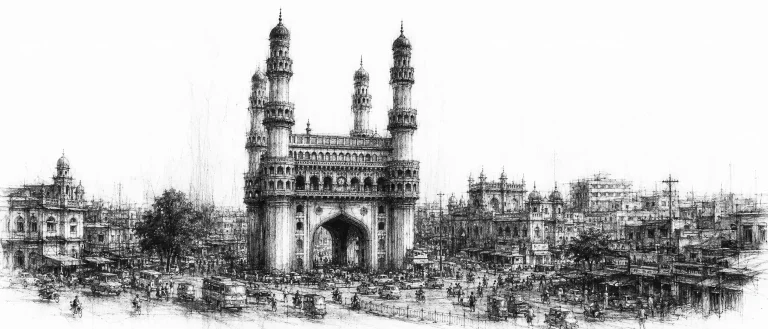
The sign of the city, on every cover, is the great gateway — a tall, deep, ornately carved arch straddling the road, far more elaborate than any gate needs to be, built by a court that had the time and the longing to make even a doorway a flourish. A gate that is pure manners, a way of saying welcome at a volume no practical purpose requires. I am charmed by it precisely because it is excessive, because it is a doorway treated as an occasion. I would stand under its deep arch in the low evening light and feel the particular grace of a place that decided the way in to a city was worth this much trouble.
A building that is also a riddle
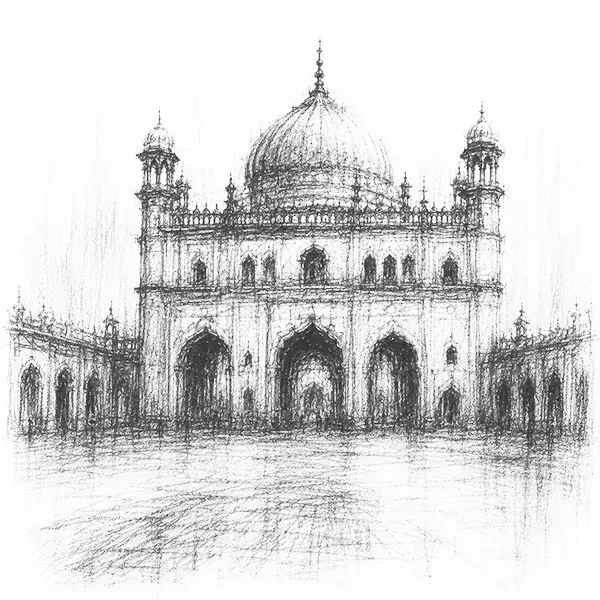
And the great halls — the domed imambaras the nawabs built, vast assembly buildings with one of them famous for a hall so wide it stands with no pillars at all, and for a maze of passages hidden in its upper walls that a person can lose themselves in for hours. A building that is also a riddle, grandeur with a puzzle folded into it. I am always drawn to a structure that has a secret in its construction, an architecture that plays a game with you. I would climb up into those blind passages and let myself get properly lost for a while, the way you are meant to, and come out not quite sure how, and count it a good afternoon.
Follow the smoke to the kebab in Lucknow
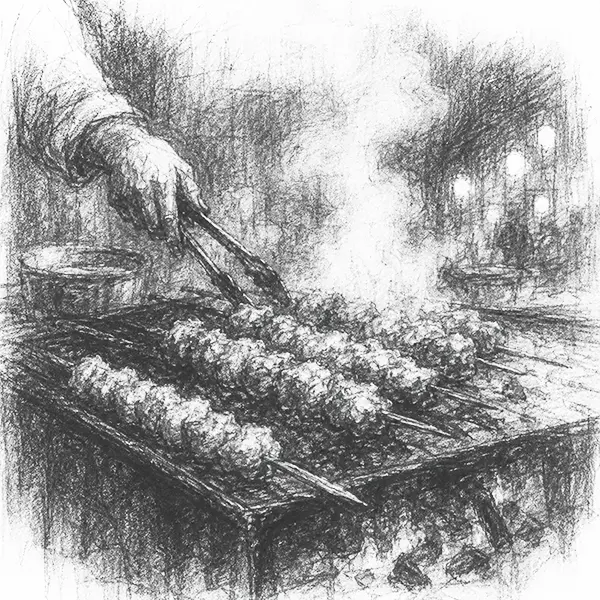
But I will not pretend the buildings are the real reason. The real reason is the food, and it begins with the smoke — the kebabs cooking on flat iron griddles in the old lanes in the evening, the smell of them reaching down the street before you see them, a whole quarter of the city given over to the slow craft of spiced meat over heat. I am, as I have admitted before, a greedy man, and a city with a kebab on every corner and four hundred years of practice behind it speaks to me directly. I would follow the smoke to its source the way other people follow a famous view, and stand at the griddle’s edge in the warm evening, waiting.
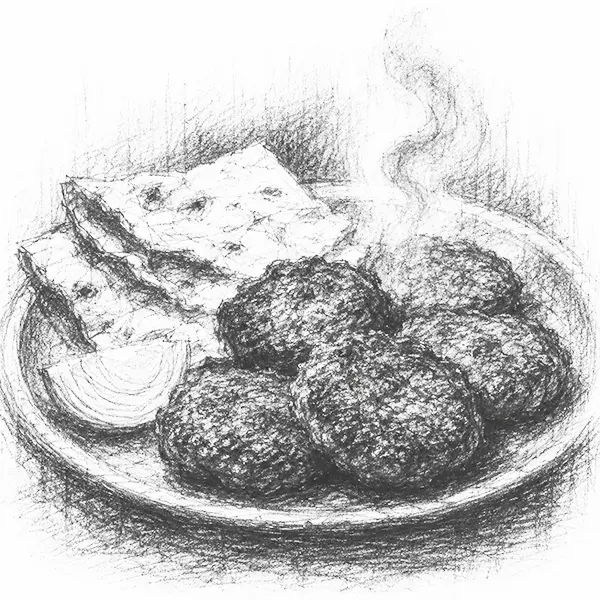
And then the thing the city is most worshipped for — the kebab that is barely a kebab at all, a soft round patty of meat pounded and spiced until it has no resistance left in it, said to have been invented for a toothless old nobleman who still wanted his meat, so tender it is meant to dissolve on the tongue before you have properly begun to chew. A whole dish built around gentleness, around making something melt. I have eaten the imitations far from here and understood that they were trying to describe something I had not met. To have the real one, in the city that invented it, in the lane where it has always been made, eaten with a piece of thin soft bread, is exactly the small specific reason that ought to have put me on the train years ago, and never quite did.
The ruin left honestly ruined
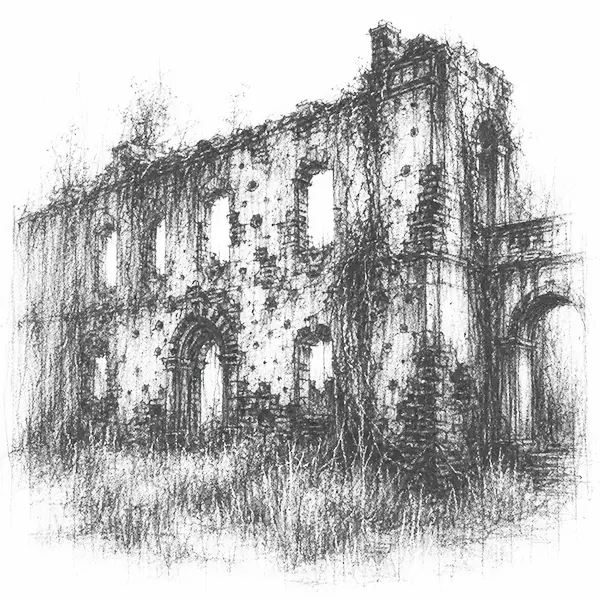
There is a harder ruin in the city too — the shattered shell of an old colonial residency, its walls left pocked and broken and overgrown exactly as a long siege left them, kept deliberately as a wound rather than repaired, a green and silent place of bullet-scarred brick in the middle of the town. After all the courtly grace, a blunt reminder of the violence that ended the courtly world. I am drawn to a ruin that has been left honestly ruined, that refuses to be tidied into something prettier than it was. I would walk the quiet of that broken compound in the late afternoon and let the city’s hard history sit alongside its soft one, which is the only honest way to hold a place.
Lucknow, worked white on white
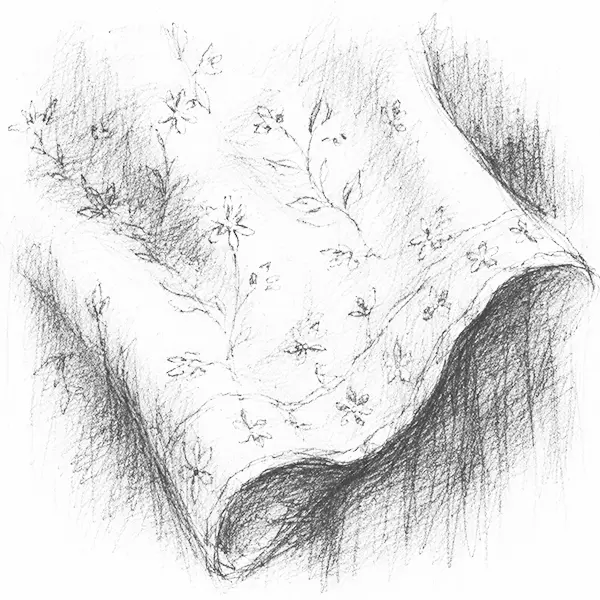
And the city’s quietest art, the white-on-white embroidery it is known for — fine pale thread worked into fine pale cloth in patterns so subtle you have to turn the fabric to the light to see them, flowers and vines barely raised from the surface, a whole craft of near-invisible delicacy. It is of a piece with everything else about the place: refinement for its own sake, beauty pitched so low you must pay attention to find it. I am moved by an art that asks you to come close and look carefully, that does not shout. I would hold a piece of it up to a window and tilt it until the hidden pattern showed, and think about a city that put its genius into things this fine.
So Lucknow sits in the near room with the sharpest reproach of all — not far, not hard, not abroad, a single night’s train from where I have lived for years, and I have simply never gone. There is no ocean to blame and no border and no failure of nerve, only the small steady habit of going past, of a near thing always being possible later and therefore never done now. It is a courtly, decaying, delicious city that I can describe dish by dish and street by street, and I have never set foot in it. One of these years I should finally take the short train, and stand under the excessive gate, and lose myself in the blind passages, and eat the kebab that melts — and learn whether the most mannered city in the country is as gentle, up close, as it has always sounded from a night away. A man who has never been abroad, and who cannot manage even the single night’s train to the gentlest city in the country.
“Lucknow: capital of Uttar Pradesh, on the river Gomti; once the seat of the nawabs of Awadh, noted for its imambaras and gateways, its courtly Urdu culture and refined manners, its chikan embroidery, and its elaborate Awadhi cuisine.”
— copied into a notebook from something I have long since forgotten reading

Leave a Reply