Within reach · never been
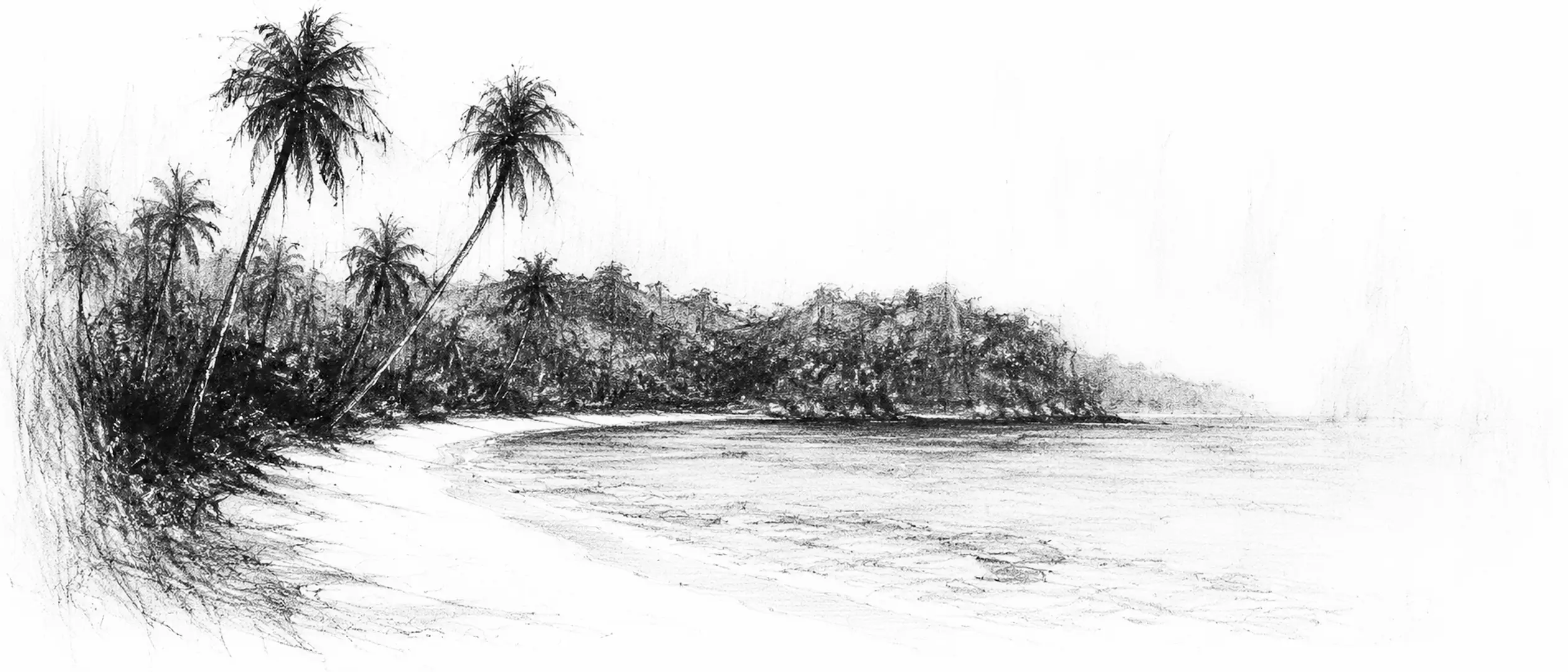
I have never been to the Andaman and Nicobar Islands, the part of my own country that lies a thousand miles out in the sea. They are India‘s furthest-flung corner, a long scattered chain of jungle islands in the Bay of Bengal, closer to Burma and Thailand than to the mainland. Turquoise water over coral, white sand, forest coming down to the tideline. They barely feel like India at all, a tropical, oceanic, almost foreign world that happens to fly my country’s flag. Of all the places I keep in the near room of this book, this is the one that least resembles home. And, for a reason I will come to, the one that most sounds like it.
Andaman & Nicobar Islands reach me as a postcard with something darker behind it. The photographs are all paradise: impossible blue water, empty beaches the travel pages rank among the best on earth, the jungle and the reef. But the islands’ older story is a prison. This is where the British sent the people they most wanted gone, the freedom-fighters and the convicts, across the black water to a jail at the end of the world that no one came back from. The place holds both at once, the holiday brochure and the long memory of exile. I find I cannot want the one without taking the other.
The bright face of the Andaman & Nicobar islands
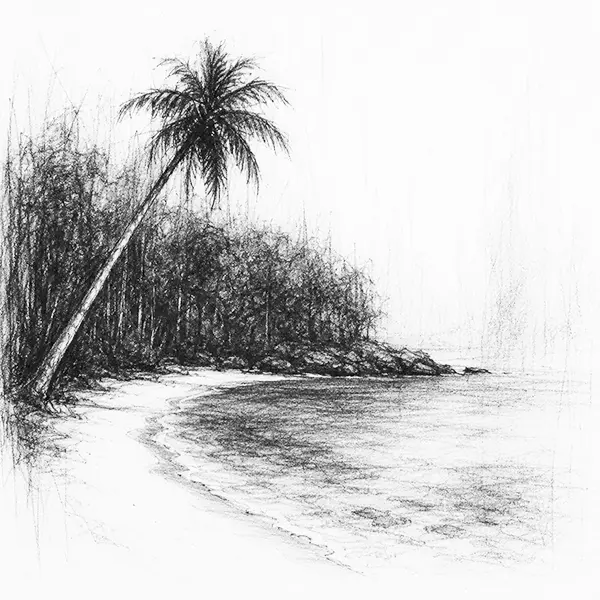
The water is the first thing, and by every account almost unbelievable, a turquoise so clear and so bright over the white sand and the coral that the photographs look corrected until you are told they are not. I come from the muddy brown water of a great river’s mouth and the grey-green of the northern bay. The idea of water you can see your own feet through chest-deep, water the colour of a gemstone, lapping an empty curve of white sand under a leaning palm, is exotic to me in the most basic, childish, postcard way. I refuse to be embarrassed about wanting it.
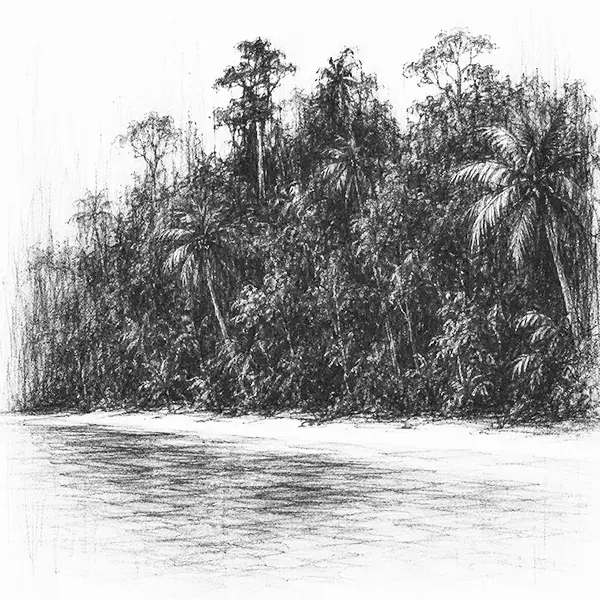
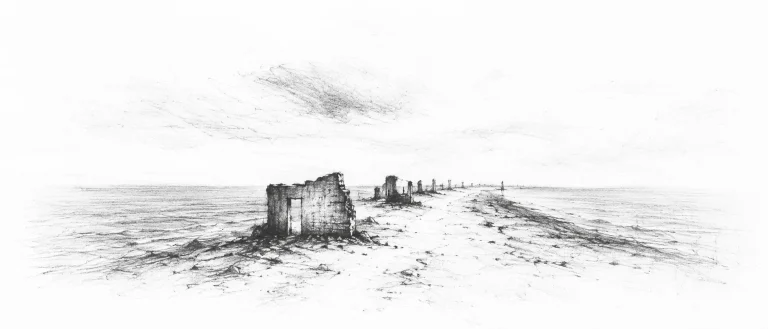
And behind the beaches, the jungle — thick, wet, ancient forest that comes right down to the sand, so that the islands are really mountains of dense green standing in a bright sea, the line between forest and beach as sharp as a drawn one. Most tropical beaches I have seen have a town behind them, or at least a road. The idea of a beach with nothing behind it but miles of untouched forest, of stepping off the white sand straight into deep green, gives the place a wildness the brochures rather understate. I would want to stand exactly on that line, the sea at my back and the jungle wall in front, and feel how thin the inhabited strip of such an island really is.
Radhanagar, the postcard within the postcard
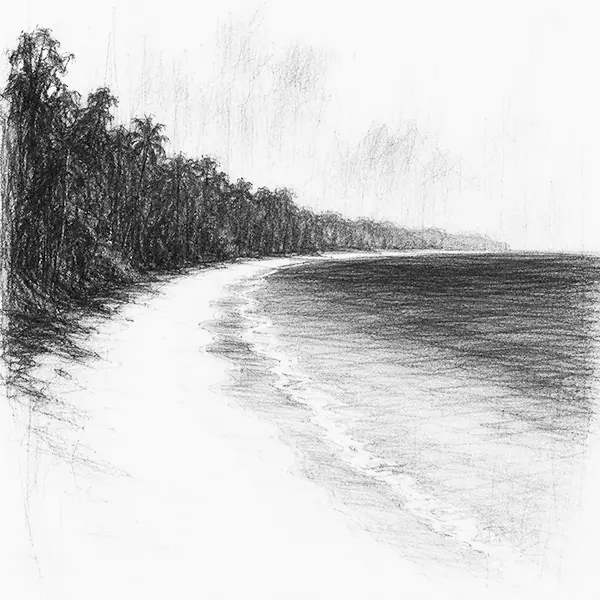
One island and one beach the whole world seems to know — Havelock, and its long sweep of Radhanagar sand, regularly named among the finest beaches anywhere, a great pale curve of fine sand running for a mile or more under the forest, the water shading out from clear to deep blue. It is the postcard within the postcard, the one image that has done most to put these islands on the map. I have looked at it so many times that I could draw the curve of it from memory, the forest at the back, the long empty pale arc, the absurd clean blue. I have never put my feet in it. It is, depending on the day, either a flight and a boat away, or as far as the moon.
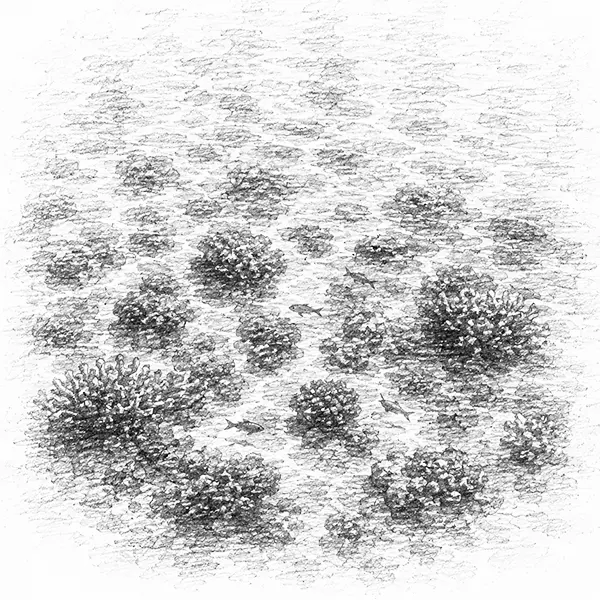
And under the surface, the reef — for these are coral islands, ringed with it, and the same clear water that makes the beaches famous makes the shallows a window onto a whole second world of coral and fish, close enough in places to see from a boat or a few strokes out. I have never put my face under tropical water and looked. The thought of floating, warm, over a reef, a foot above a city of coral and colour I would have to imagine in colour because my charcoal cannot give it, is one of those simple wonders that I somehow let a whole life go by without arranging, and would put right first.
Across the black water
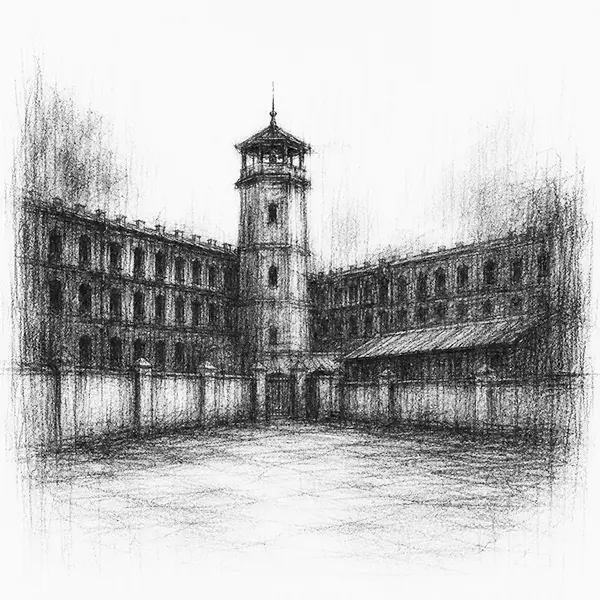
But I would not skip the prison, and I do not think the islands would let me. The great cellular jail still stands above the main town — a grim spoked building of long cell-blocks radiating from a central tower, built so that every prisoner could be watched and none could speak to another, where men were sent across the “black water” for wanting their country back, and many did not return. It is a national memorial now, and rightly so. To go to these islands purely for the beaches and not climb the steps of that jail would feel, to me, like a discourtesy to the place — and so I would stand in one of those narrow cells, with the bright impossible sea visible through the bars, and hold the two truths of the islands together in one uncomfortable hand.
The secret watery back of the islands
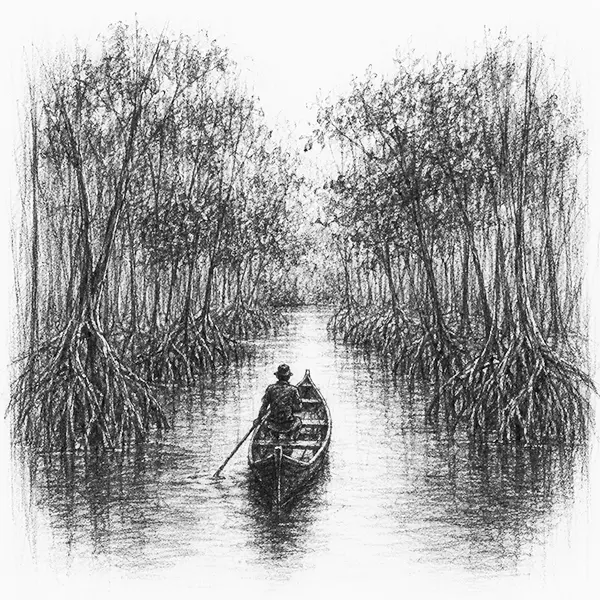
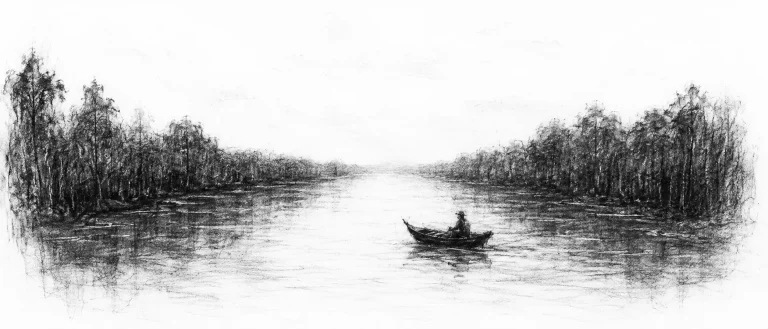
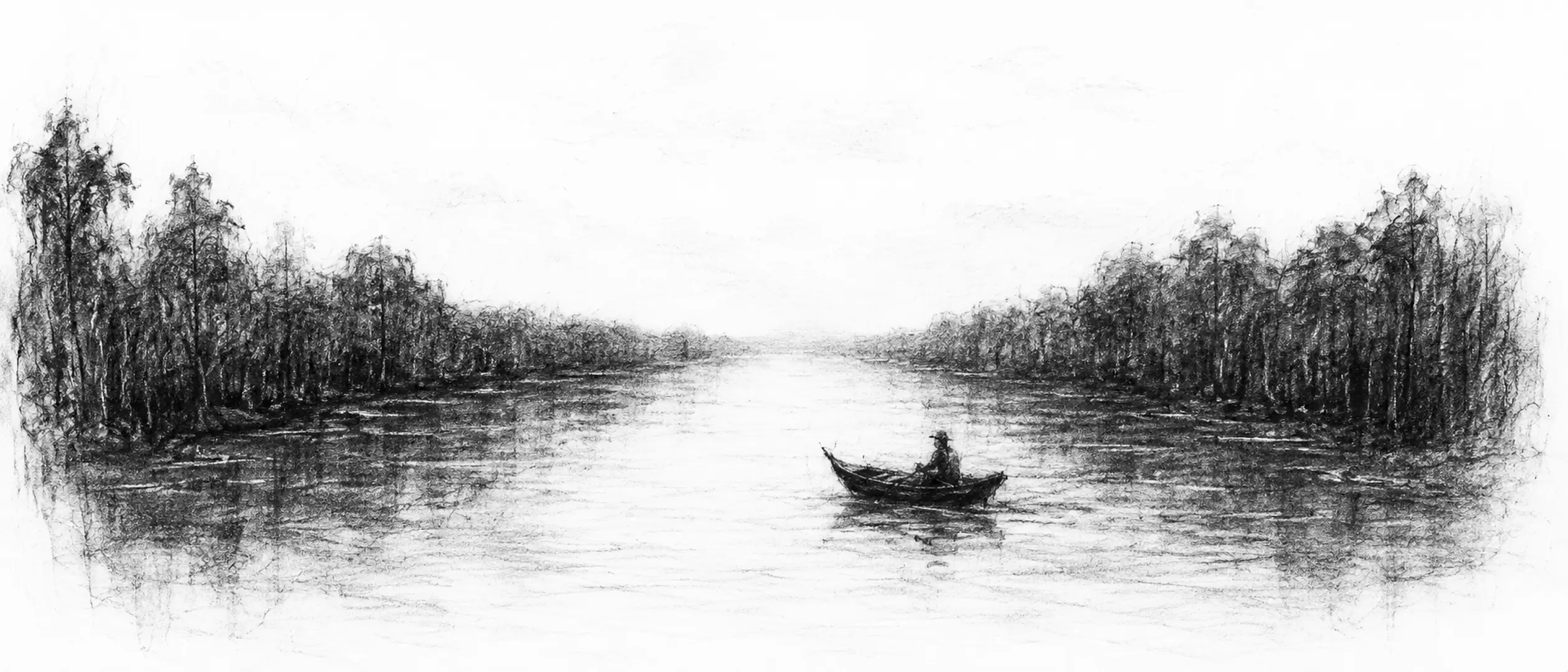
Away from the beaches the islands turn secret and watery — long inlets and creeks running back into the forest through dense mangroves, their roots standing in the tide like a thousand thin legs, navigated by narrow country boats that slip up the green channels into the quiet. That is the part I think I would love most, more than the famous sand: the slow boat into the mangroves, the forest closing over the water, the islands showing the wild, unphotographed face behind their bright public one. I am always drawn to the back of a place, the working watery edges the postcards skip, and an island chain is all edge.
At the lit edge of Andaman & Nicobar islands
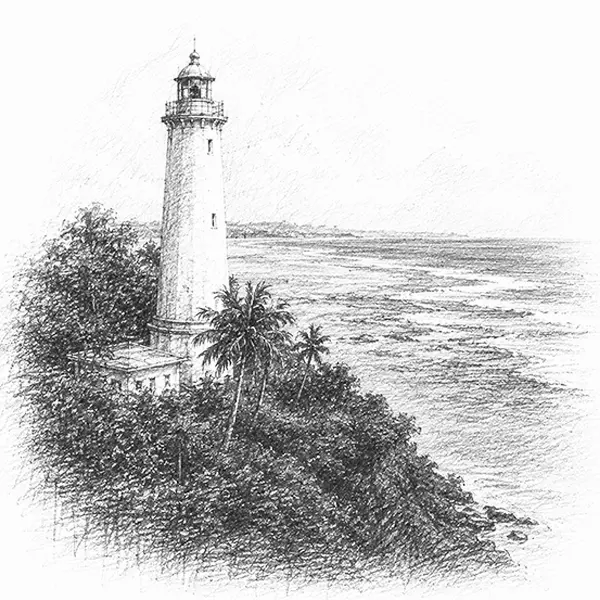
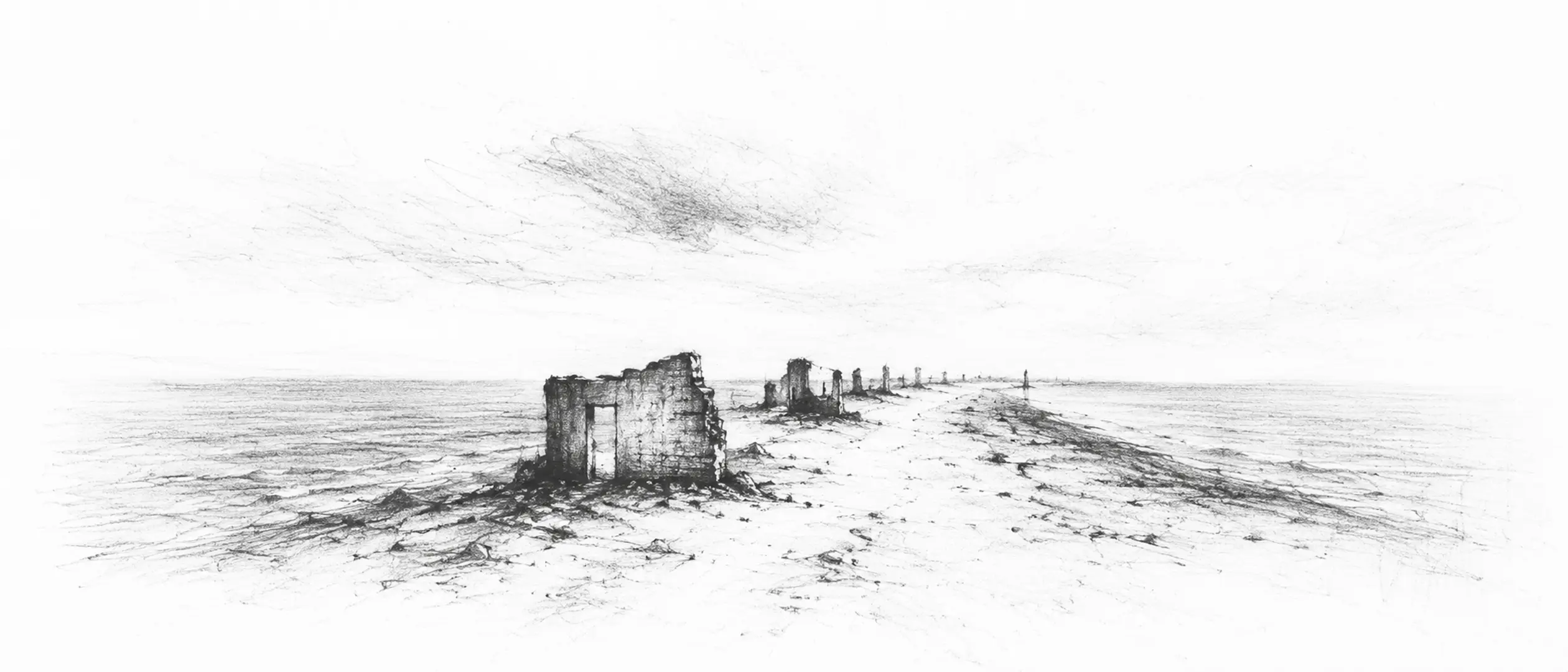
And here and there on the headlands, the lighthouses — white towers standing on jungle points above the reef, marking the channels through all those scattered islands, the same far-edge-of-the-world markers I find myself drawn to everywhere. On a chain of islands this remote, a lighthouse means something it does not on a mainland: the true outer limit, the last lit thing before a great deal of open sea. I would climb one and look out at the islands trailing off into the blue and feel, pleasurably, very near the edge of my own country, which out there is mostly water.
And then the thing that undoes me about the place, the reason I said it sounds like home. For all that these islands are the least Indian-feeling part of India, when the country resettled them in the last century it sent, among others, a great many people from my own corner of it — and so out there, a thousand miles into the sea, on islands nearer to Burma than to Bengal, the language spoken in many a village is Bengali. My own mother tongue, carried across all that water by people starting over, growing coconuts and rice on jungle islands at the far edge of everything. I find that almost impossibly moving: that the most remote, most foreign-looking place my country owns is also, in the ear, unexpectedly home — that I could stand on a beach at the end of India and hear, of all the languages on earth, the one I was born into. It would be the strangest homecoming imaginable, to a place I have never been.
So the Andaman & Nicobar islands sit at the very far end of the “near” room — not abroad, but the most abroad-feeling place that is not; reachable only by a flight over open sea or a long slow ship, and so, of all my home places, the one with the best excuse and the one I have most completely failed to use. There is real distance here, the actual ocean, which almost lets me off — except that people make the trip every season for a holiday, and I never have. One of these years I should cross that water at last, and stand on the white curve of Radhanagar, and climb the steps of the jail, and take the slow boat into the mangroves — and, on some small island at the end of my country, hear my own first language come across a fence, and not know whether I had gone to the furthest place of all or simply, somehow, come home. And I have never been abroad: here, at my country’s far edge, I cannot even claim the distance as the reason.
“Andaman and Nicobar Islands: a chain of over five hundred islands in the Bay of Bengal, a union territory of India lying far nearer to Myanmar and Sumatra than to the Indian mainland; known for their forests and coral reefs, and for the colonial-era Cellular Jail at Port Blair.”
— from a guidebook I bought for a journey I never made

Leave a Reply