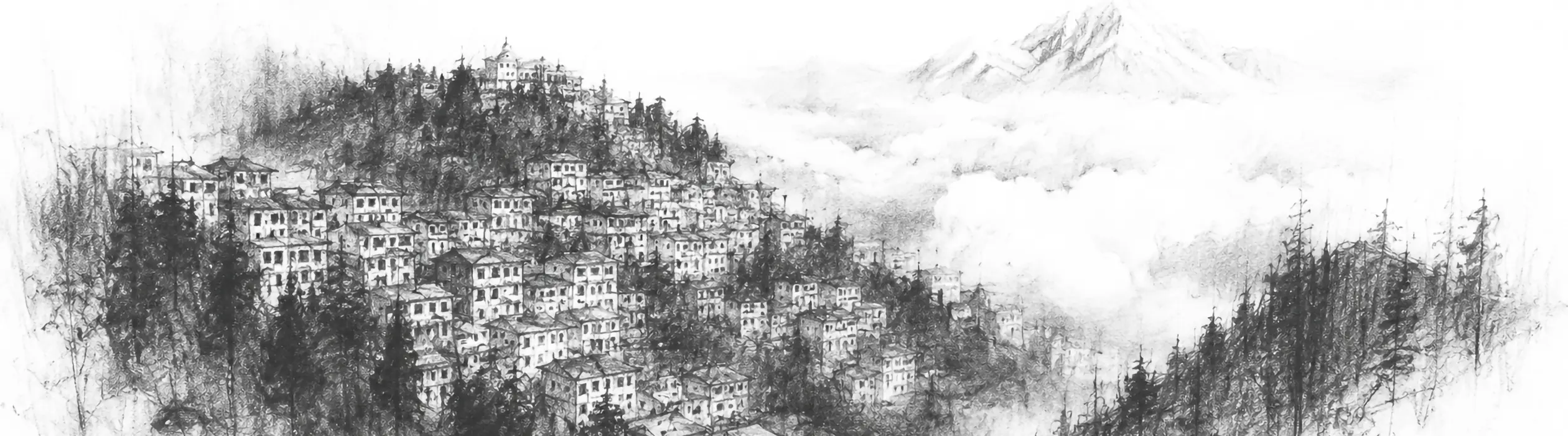
Within reach · never been
I have never been to Sikkim, the small, wet, intensely green mountain state at the top of my own corner of the country. It was its own kingdom, its own crowned, Buddhist, mountain kingdom, within my own lifetime, before it folded itself into the rest of the nation. Sikkim is not far from where I am from. From the Bengal I was born in you go north until the plain runs out and the hills begin, and there it is, a journey rather than an expedition. It belongs squarely in the near room of this book, no ocean and no border and no paperwork between us, and I have never gone, never once made the run up from the flat hot south of my own region into the green vertical north of it.
What pulls me towards Sikkim is that it is a different Himalaya from the two everyone pictures. It is not the bare brown cold-desert of the far western mountains, all rock and thin air, and it is not, despite sitting right beside it, the tea-and-toy-train hill station its famous neighbour is. It is the wet one, the green one, a place of monsoon cloud caught in deep forested gorges, of cardamom growing under the trees, of orchids and rhododendron and waterfalls, of monasteries with great sloping roofs standing among pines rather than perched on bare crags. A kingdom of rain and green and prayer, steep and soft at once. I would like to stand in that particular green and feel how unlike the mountains’ other faces it is.
I have it the way I have all these near places: documentaries, photographs, the encyclopedia, the accounts of people who have made the trip up from the plains I share with it. Between them they have built me a state of vertical green and low cloud, of stacked hill-towns clinging to ridges, of bells and water and mist. I have never climbed up into that wet green from the flatland I know so well. It is almost absurd, how near it is, and how completely I have failed to go.
Monasteries in Sikkim in the pines
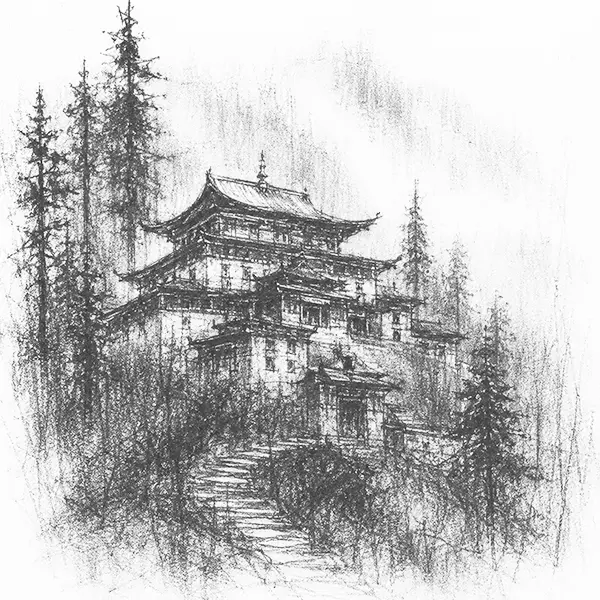
The heart of the place, for me, is its monasteries — not the small white boxes stacked on a bare cliff that the western mountains have, but big, broad, many-roofed halls standing in dark pine forest, their tiered roofs curling up at the corners, painted and carved and set among the trees rather than against the sky. A monastery you come to through a wood, in the damp, with the smell of pine and butter-lamp, rather than one you climb a desert to reach. This was a kingdom run, in part, from places like these, and they still hold the centre of things. I would walk up to one through the wet trees and stand in the dim hall among the lamps, and feel the particular calm of a faith that settled in a forest.
The high country that runs with water
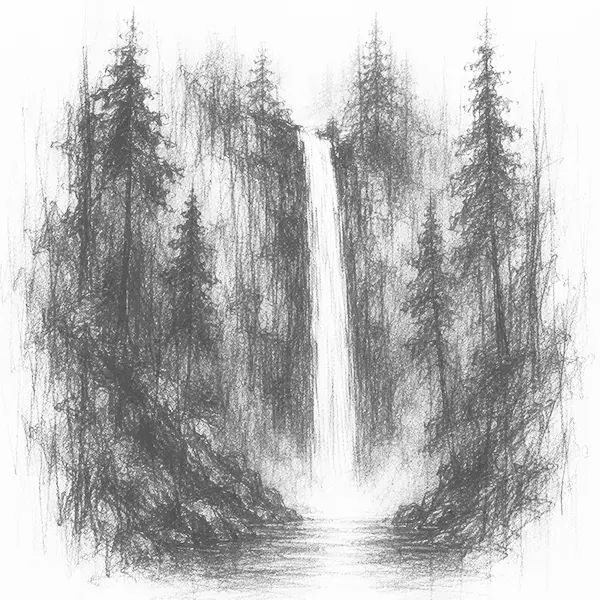
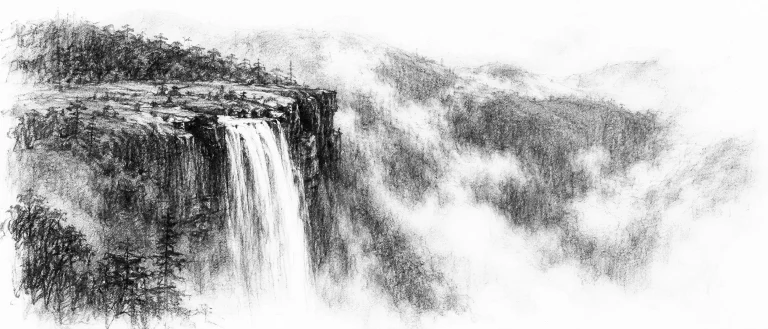
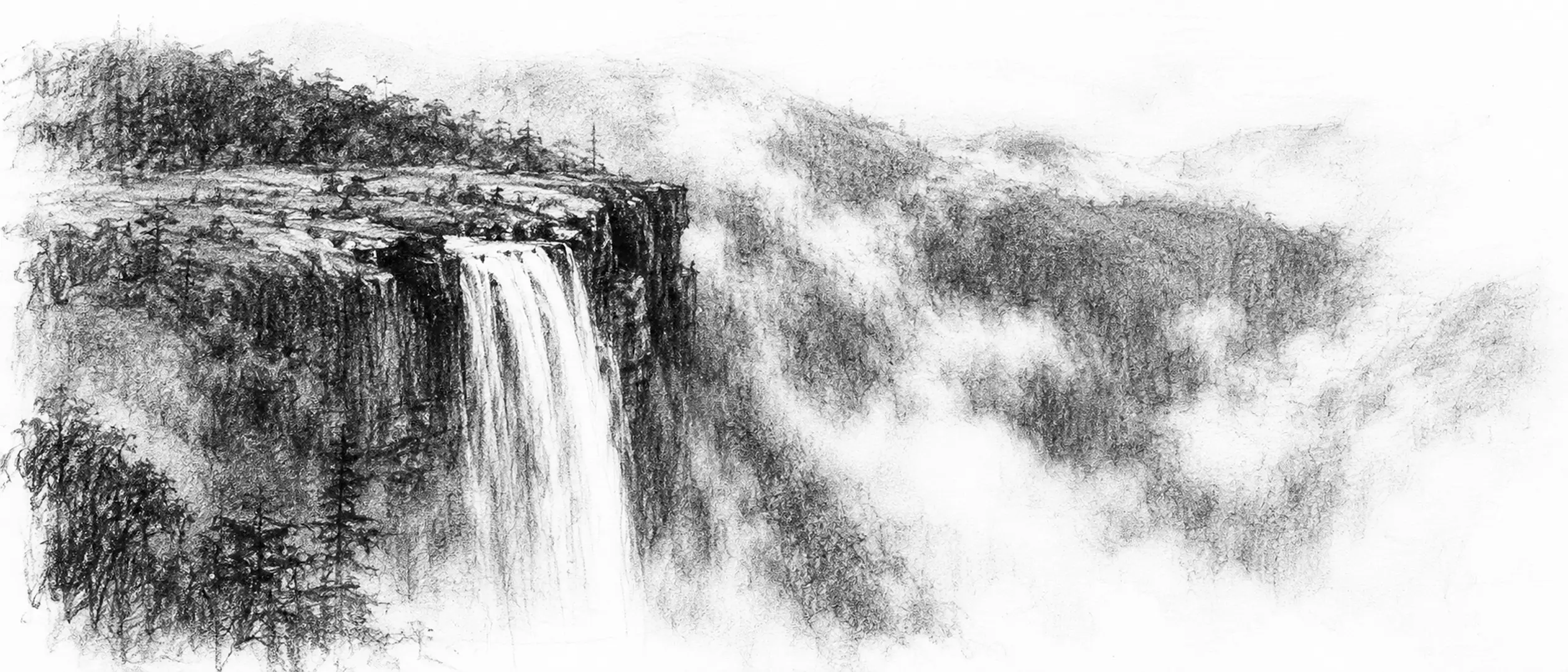
And the water, everywhere the water — the state is so steep and so wet that waterfalls come down the green cliffs at every turn, tall ribbons of white falling through the forest, fed by the cloud that sits in the valleys half the year. After the dry mountains I picture elsewhere, this is the opposite kind of high country, one where the problem is never thirst but abundance, where the hills run with water the way the dry ranges run with dust. I am drawn to the sheer green liquid life of it. I would stop on a mountain road beside one of those falls, in the mist of its own spray, and just listen to a mountain that has too much water rather than too little.
Cardamom, and the smell of home
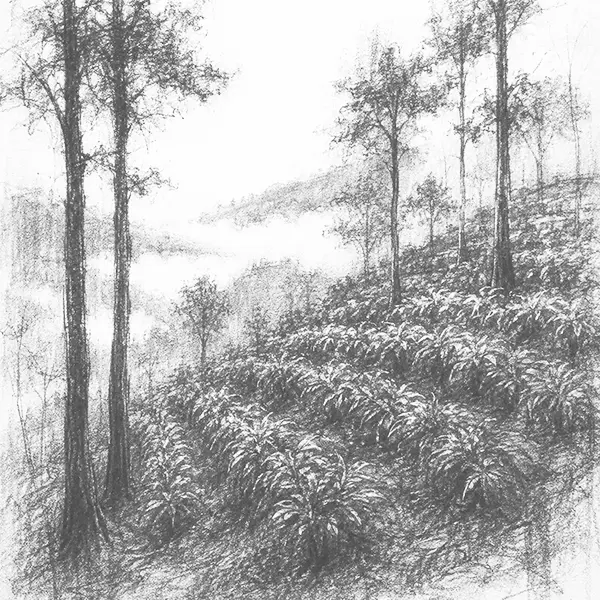
On the lower slopes, the cardamom — for this small state grows a great deal of it, in shaded terraces under the forest canopy, a crop that likes exactly this wet, green, half-shadowed world, scenting the hillsides and the kitchens. I am charmed by the idea of a spice I have used my whole life, dropped into rice and tea without a thought, growing on a particular wet hillside a day’s travel from where I grew up. It makes the far thing suddenly near, the everyday thing suddenly placed. I would like to walk one of those shaded terraces and crush a green pod between my fingers and recognise, on a mountainside, the smell of my own kitchen.
A bridge that prays as you cross
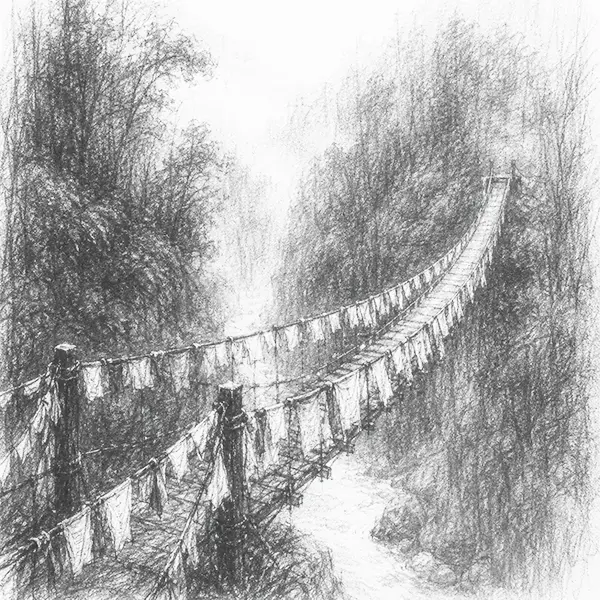
The land is cut by deep river gorges, and crossed by long footbridges strung from side to side, hung thick with prayer flags so that you walk across a swaying span of weathered cloth high above green water churning far below. A crossing that is also an offering, a bridge that prays as you go over it. I am drawn, as I always am, to the high narrow places where you are suspended over a drop with only a thread of human nerve between you and it — and here that thread is strung with faith, the flags fading to grey as they give their blessings to the wind. I would cross one slowly, holding the cable, the gorge roaring below, the flags snapping overhead, and feel both kinds of height at once.
Setting Sikkim’s prayer wheels turning
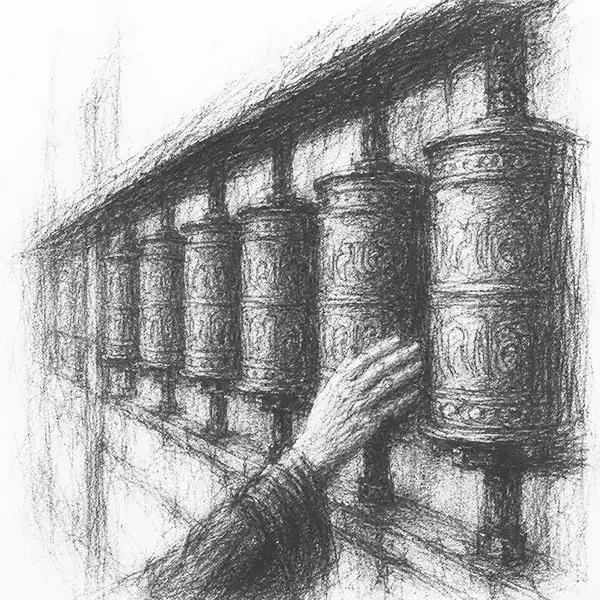
At the monasteries and along the paths, the prayer wheels — long rows of carved metal cylinders, each one spun with a touch of the hand as you pass, sending its rolled-up prayers turning into the world, a wall of them you walk along trailing your fingers so they all turn at once. I love the gentle mechanism of it, devotion made into a thing you do with your body almost without thinking, a blessing released by the simple act of walking by and reaching out. I would walk the length of a row of them and set them all spinning with my hand, the way everyone does, and feel oddly lightened by a piece of faith that asks so little and gives the day a small turning rhythm.
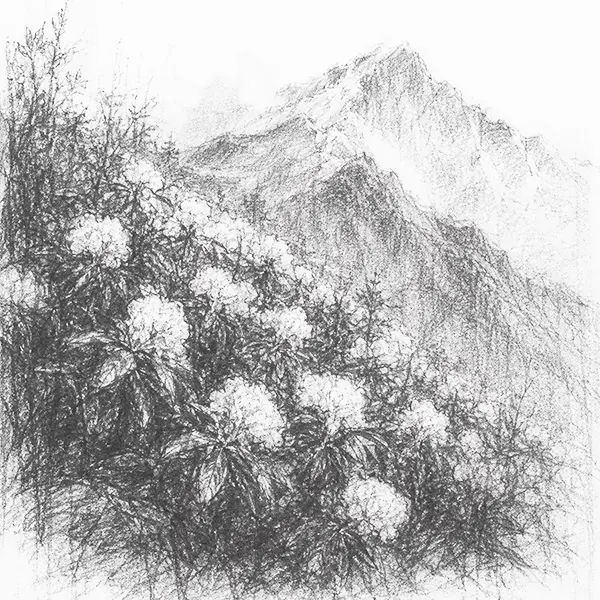
And higher up, where the forest thins toward the snow, the rhododendrons — whole hillsides of them flowering in the spring, great banks of blooms in colours my charcoal will have to leave to your imagination, the mountains breaking briefly into flower before the bareness above. After all the green and grey and cloud, a sudden extravagance of blossom on a cold slope, the high country’s one flamboyant gesture. I am moved by a flower that chooses to be that lavish that high up, in that thin air, for so short a time. I would time a visit badly and miss them, almost certainly, and go up the slope anyway to stand where they had been, which is the kind of thing I do.
So Sikkim sits in the near room with the particular ache of the close thing never done — a former kingdom of wet green mountains at the top of my own region, reachable by an ordinary journey from the plains I was born on, and never once visited. There is no ocean to blame and no border and no paperwork, only the steady habit of the near thing always being possible later. It is a green, rained-on, praying mountain state that was a crowned kingdom in my own lifetime, a day’s travel up from country I know in my bones, and I have never climbed into it. One of these years I should finally go up out of the flatland into that vertical green, and stand in a forest monastery in the lamp-smoke, and set a wall of prayer wheels turning, and find out what the mountains of my own corner of the country look like from inside their wettest, greenest face. A man who has never been abroad, and who has not even climbed into the green kingdom at the top of his own corner of the map.
“Sikkim: a small, mountainous state in the eastern Himalaya, formerly an independent Buddhist kingdom until it joined India in 1975; known for its monasteries, its steep forested gorges and waterfalls, its cardamom, and its rhododendron forests.”
— from a set of travel books once sold to the house, door to door

Leave a Reply