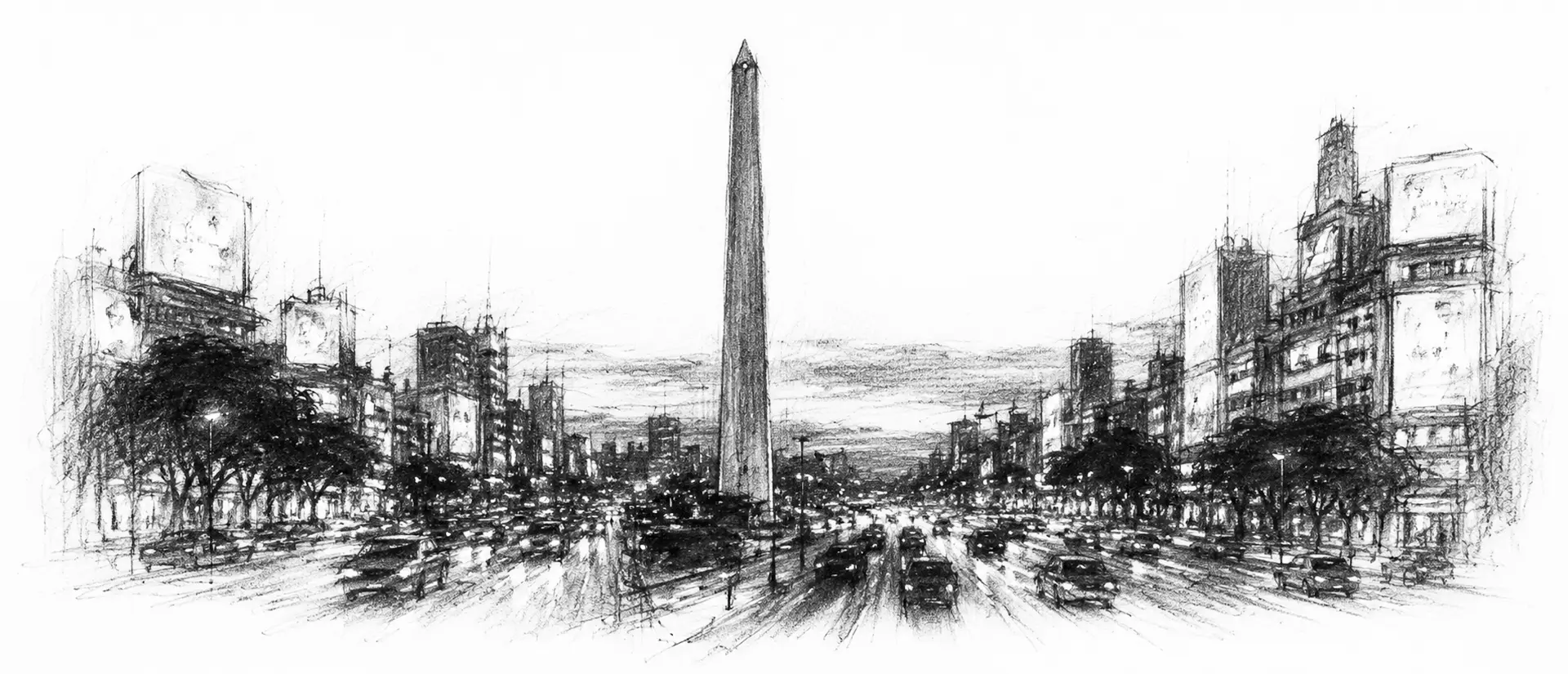
Abroad · never been
I have wanted, for as long as I have known where it is, to fly the whole length of the earth and walk out into Buenos Aires — which sits, more or less, at the far antipode of me: sink a line straight down through Calcutta and you would come up not far from it. They say it is a piece of Europe stranded at the wrong end of the world, and every photograph I have hunted down agrees with them. It is the longest journey I could possibly make, and the one I keep promising myself and never book. And the more I gather, the more I suspect Buenos Aires is the foreign city I would understand the fastest — the one where I would step off the plane into a stranger’s version of the place I already come from, and feel, before I reached the taxi rank, the small vertigo of a home I had crossed the whole planet to find.
The Buenos Aires that looks like home
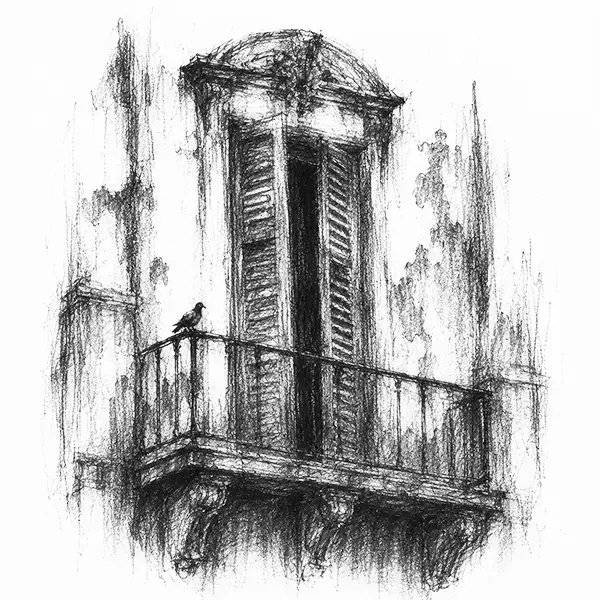
Everything I have gathered about Buenos Aires says the same unlikely thing: that they built, at the bottom of the Americas, a city that badly wanted to be in Europe, and were then left holding it after the money that raised it had drained away. Wide boulevards laid out in imitation of a grander capital, opera houses and arcades, apartment blocks with ornate iron balconies and tall shutters — all of it thrown up in a burst of wealth by a country that was briefly among the richest in the world and then, slowly and in full public view, was not. What the photographs hand me now is grandeur worn soft: the fine stone streaked, the paint surrendering, the balconies rusting gently over streets that have plainly seen better decades. And I know that exact texture in my body, because I come from a city that did the identical thing — a grand imported front raised on trade, then left to the damp when the empire that paid for it went home. I have spent my whole life among magnificent buildings politely pretending not to notice they are peeling. To find another one an ocean and a hemisphere away does not feel like discovery. It feels like recognition.
A sadness you can dance to
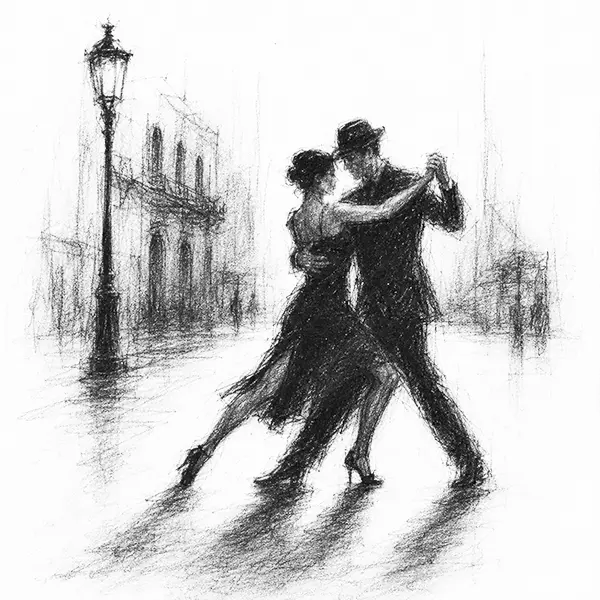
Then the dance, which everyone hands you first and which I have held back to second on purpose. I have watched it in grainy clips with the sound kept low — two people locked close and unsmiling, moving with a gravity that looks less like romance than like grief being kept very exactly in step. Someone once described it to me, and I have never been able to improve on the line, as a sad thought that is danced. I understand that better than I can quite account for. I am not a melancholy man, not really, but I have a certain talent for holding an unhappy fact still and turning it over and over until it stops being unhappy and becomes merely interesting — and here is Buenos Aires, a whole city that appears to have taken that small private habit and made it a public art, that gathered up its disappointments and its long elegant decline and set them to a music you can cross a floor to, in a pair. A place that decided, somewhere along the way, that the method for surviving the things you miss is to make missing them beautiful. I would not need that grammar explained. I have been speaking it under my breath for years.
The café that keeps the light on
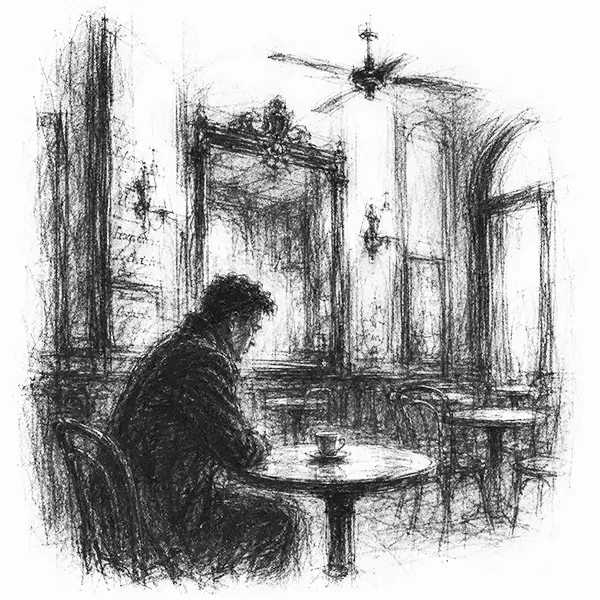
What I would actually cross the world for, if I ever went, is the talking. They are, by every account, a city of monumental talkers — tall old cafés with marble tables and slow fans where a man may buy one small coffee and hold a chair for four hours, arguing about everything, settling nothing, and coming back the next afternoon to argue it again, because the settling was never remotely the point. I know this creature intimately. Where I come from we have a word for precisely it — the long, aimless, passionate sitting-and-talking that counts as its own reward — and we are, if I am honest, the worse offenders. So the single habit that most defines Buenos Aires turns out to be the one I was raised inside.
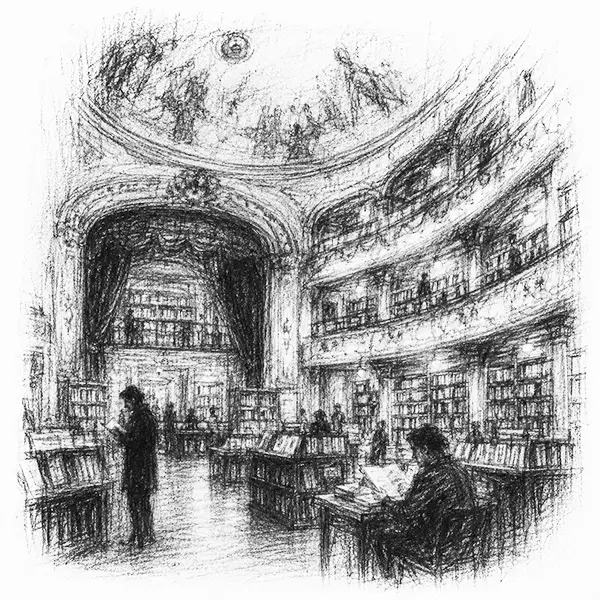
The talking has a written form here too, and one photograph of it undoes me a little. The grandest of these rooms was a theatre once — tiers of boxes curving up around a stage, a painted heaven on the dome — and when its performing days were done the city could not bring itself to knock the thing down, and filled it with books instead. The boxes are shelves now; people sit and read where an orchestra used to tune up; the painted sky still presides over the browsing. A city too fond of its own grandeur to lose the old theatre, and too fond of reading to leave it dark. I would be through that door before I had set my bags down, and I would know, again, precisely what I was looking at.
How Buenos Aires keeps its dead
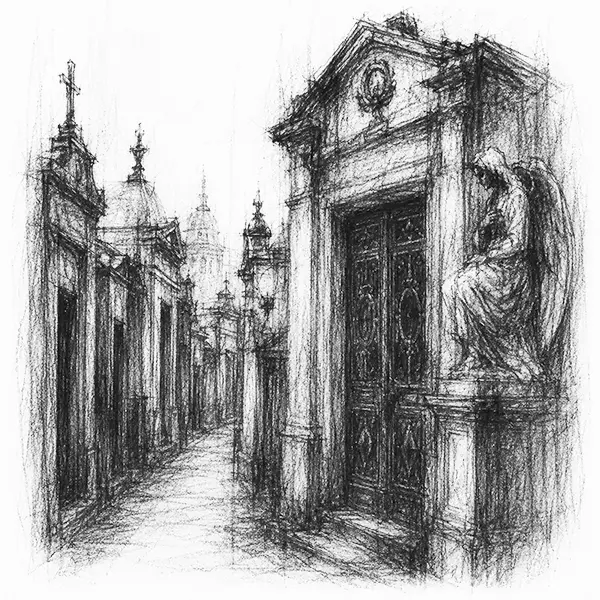
The detail I keep going back to is the one Buenos Aires keeps for the dead. There is a walled quarter near the centre that is nothing but tombs — narrow lanes of marble mausoleums crowded shoulder to shoulder, tall enough to walk among with your head tipped back, a small silent stone city set down inside the loud living one, where the great families of the good years lie in stone houses finer than most of the living will ever afford. People go simply to walk there, among the angels and the shut bronze doors, reading off the names of a country’s illustrious dead. I find that neither morbid nor strange. A city that keeps some of its most beautiful streets for the departed, and strolls them on a Sunday for pleasure, has arrived at something I keep circling myself — that the past is not gone, only gone quiet, and worth the visit, and far better company than it has any right to be.
What Buenos Aires does with a Sunday
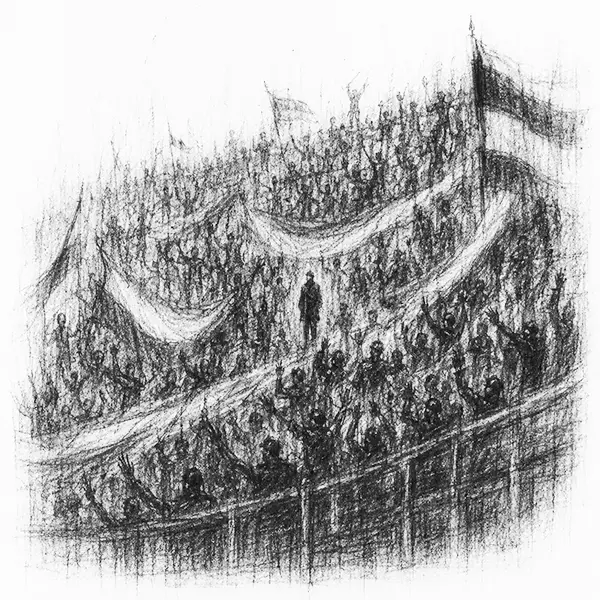
And then, set against all that gentle sadness, the noise. For one afternoon a week the whole melancholy apparatus is folded away and the city goes, in a body and clean out of its mind, to watch grown men kick a ball — a devotion so total and so unembarrassed that a good player is not admired but loved, and a great one, when he is finally lost, is mourned in the streets like a saint. I recognise this too, and rather better than I would like. I come from a country that hands a bat and a ball the same lunatic seriousness, where a single match can empty a road and a defeat can spoil a working week. I have given up more of my own Sundays to a game than I will defend to anybody. So even the way Buenos Aires loses its head turns out to be a way I lost mine long ago. Everywhere I look at this city I find another mirror, held up at the wrong end of the earth, showing me a slightly stranger arrangement of what I already am.
Could I go? Yes, and it is the going I can least excuse and least picture. It is the longest flight there is, and the dearest, a visa and a small fortune and the better part of two days in the air — and none of that is really the reason, any more than it ever is. The reason is the one I have given up dressing up. But this city carries a second fear the others do not. I am half-afraid that I would travel to the far end of the world, to the one place I was sure would be most foreign of all, and find it so familiar — the peeling grandeur, the endless talk, the beautiful sadness, the mad Sunday devotion — that the whole enormous journey would fold shut into a homecoming I never asked for, and I would have crossed the planet only to be handed back my own city with the labels changed. I am genuinely not sure what a man is supposed to do with that.
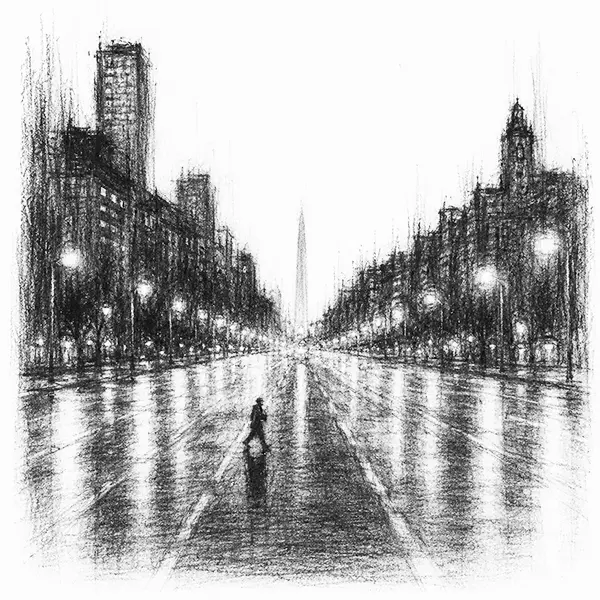
So I keep it where it is, on the underside of the world, its lights coming on as mine go out. The balconies are rusting quietly over the wide grey avenues, two strangers are keeping a sad thought in step in an empty street, the coffee is going cold over an argument nobody wants to win, and somewhere a whole city is losing its voice over a ball. Buenos Aires is the farthest place I have never gone, and the one I am most afraid would feel, the moment I arrived, like the home I never left — a strange fear, surely, for a man who has never been abroad to carry all the way to the far side of the earth.
“Buenos Aires: capital of Argentina, on the southern shore of the Río de la Plata; its people are called porteños — those of the port.”
— a gazetteer I once read standing up in a library, and kept nothing from but the word porteño

Leave a Reply