Abroad · never been
I have wanted, for most of my life, to stand at the foot of the pyramids at Giza and feel in my own body how small a span a life is against a thing that has stood for four and a half thousand years. They say there is a line, older than most countries, that everything is afraid of time — but time is afraid of the pyramids; and every photograph I have ever hunted down seems to prove it. Cairo is a long flight and a dear one, and I keep not making it. And here is what I turn over: I am a man whose whole method is delay, who lets the years carry things off with a shrug and a “not yet,” and Cairo is the one city on earth built by people who refused, absolutely, to let time carry anything off at all — who spent whole lifetimes making certain that some part of them would not pass. I keep circling the place that beat the very thing I keep losing to.
The Cairo that was built to beat time
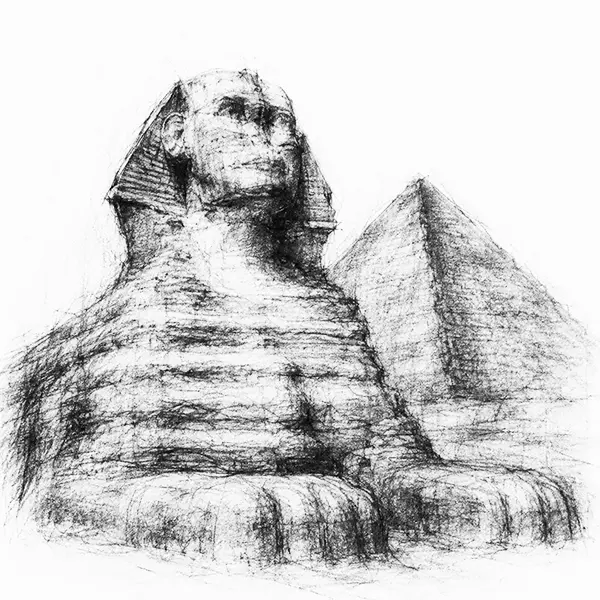
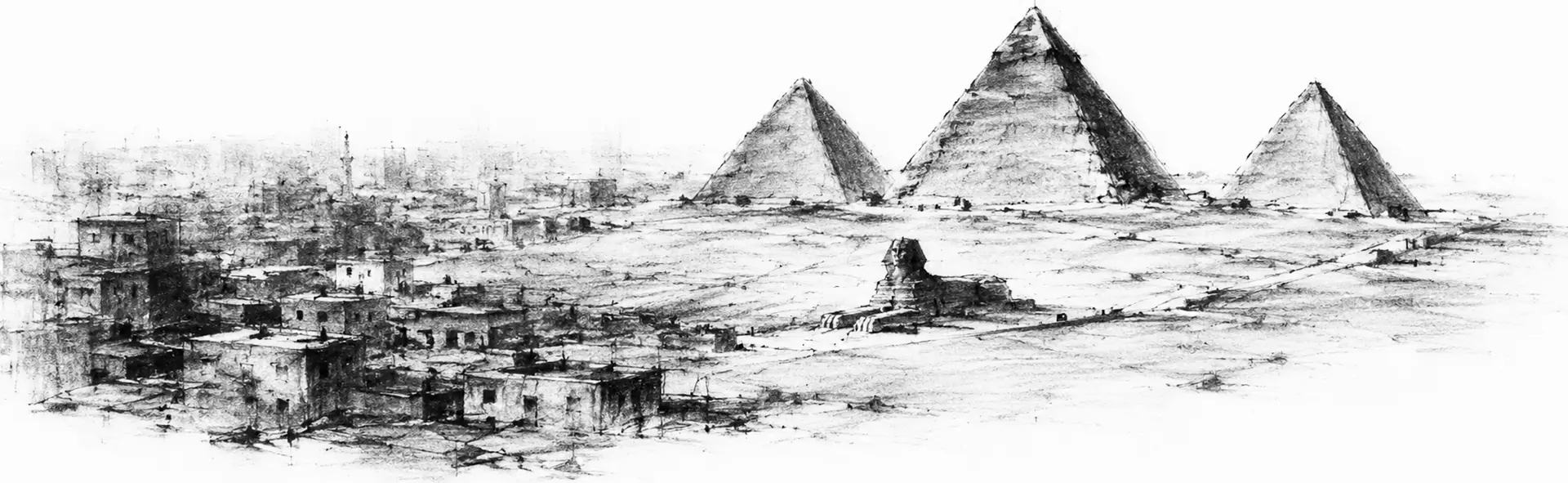
What I knew before I knew anything else were the three great triangles on their bank of sand — they turn up everywhere, on a matchbox, in the corner of a stamp, behind the shoulder of a man in a documentary explaining something else. The encyclopedia is stern about them up close: not smooth at all — the shining casing was carried off centuries ago to build the ordinary city below, so what stands now is the rough core, a mountain of blocks each the size of a small room, raised in a way no one has fully settled. They were built for a single purpose, which was to refuse to end — a king spending the whole of his reign and the labour of a generation to make certain that he, at least, would outlast the desert. And the strange, level joke of it is that it worked. Everything that ever came to gawp at them — every empire, every faith, every certainty — has since packed up and gone, and the triangles are still standing there, watching the next lot arrive.
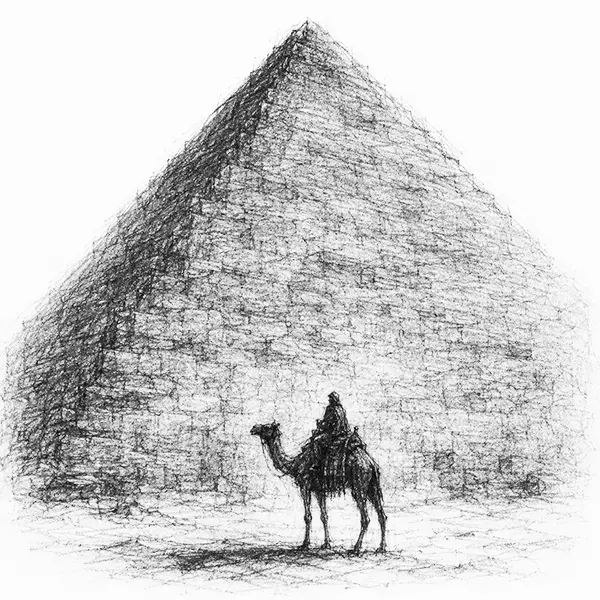
There is always, in the photographs, a camel and a man in a headscarf waiting at the base, dwarfed to nothing by the slope of stone behind them, offering a ride nobody needs across a distance nobody must cross. I have looked at that arrangement many times. The oldest finished ambition of the human race, and a patient animal chewing in its shadow, waiting to be paid for the afternoon. Everything alive in the frame is small and temporary and getting on with its day; the one dead thing towers over all of it and does not care. That, I have decided, is the true Cairo photograph — not the monument alone, which is a lie the postcard tells, but the monument with the living, ordinary, doomed little present going on at its feet.
The river that will not run dry
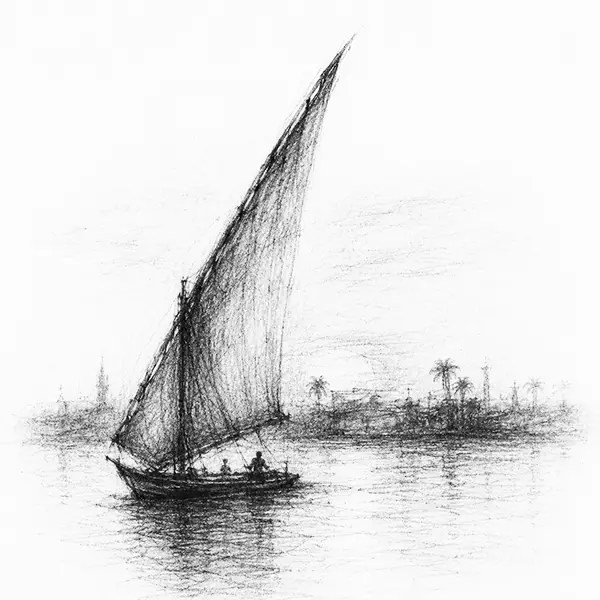
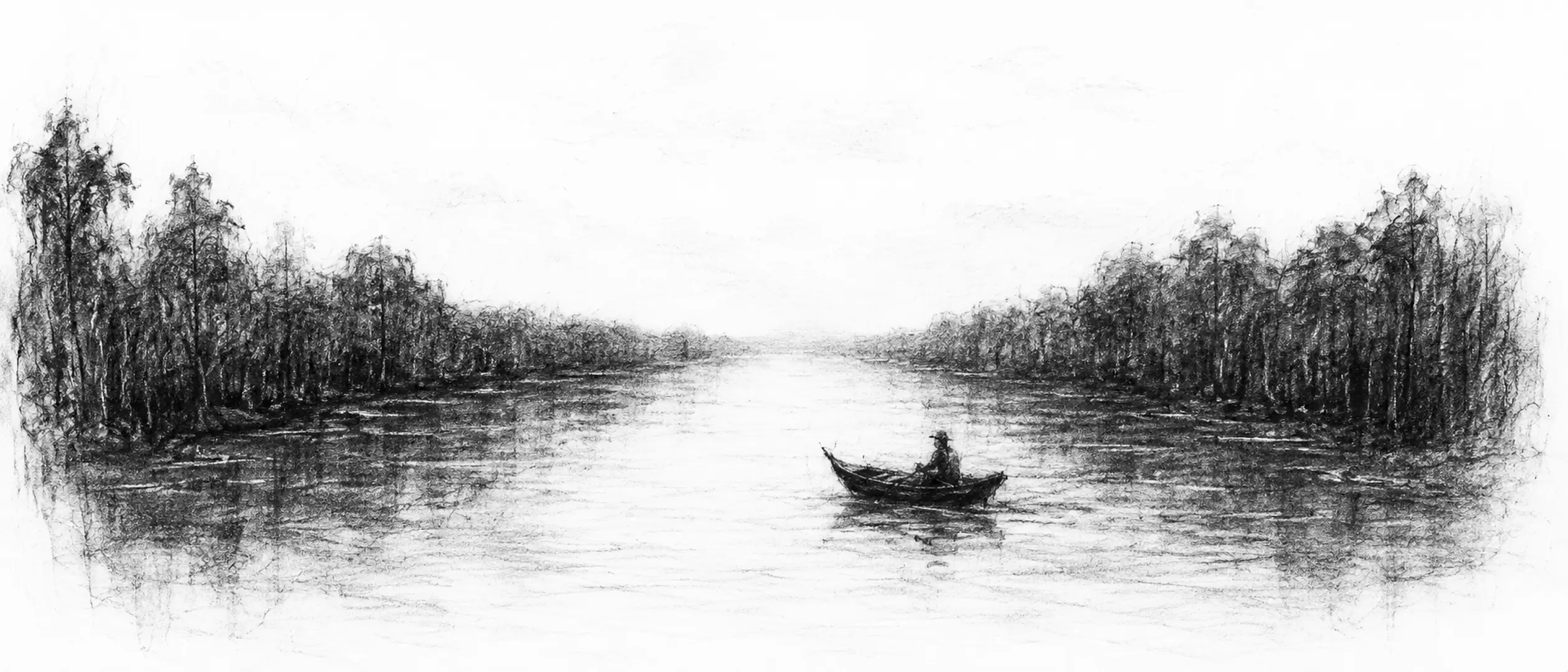
Then the river, which I forget and am always startled to be reminded of, because the pyramids photograph as pure desert and you lose the water behind them. But the water is the whole reason any of it exists. A green thread laid down the middle of a brown country, the encyclopedia says, so that the fields and the capital and the tombs and the very idea of the place are strung along it like washing on a line, and a short walk from either bank there is nothing that is not sand. In the evening pictures a single boat comes down it under one tall triangular sail, leaning with the wind, no engine, moving exactly the way boats moved four thousand years ago — because the river has never once changed its mind about how it wants to be crossed. I come from a city laid out along its own wide brown river, and I understood that about Cairo faster than I understood anything else: that a whole civilisation can be, at bottom, the gift of one stretch of water that agreed to keep coming.
The Cairo of a thousand minarets
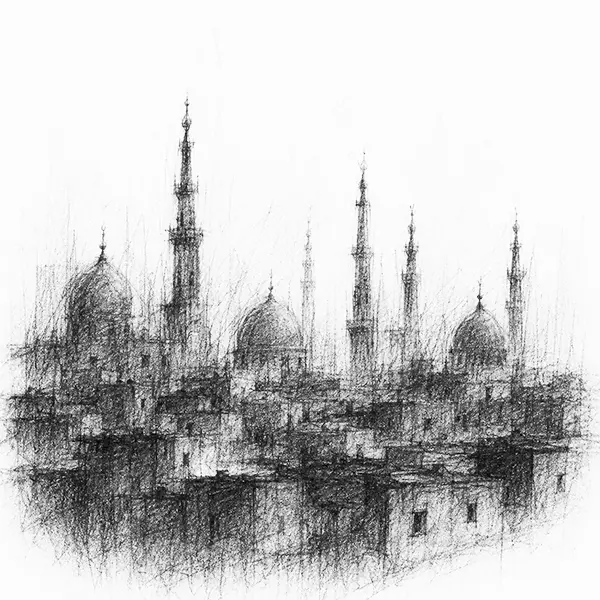
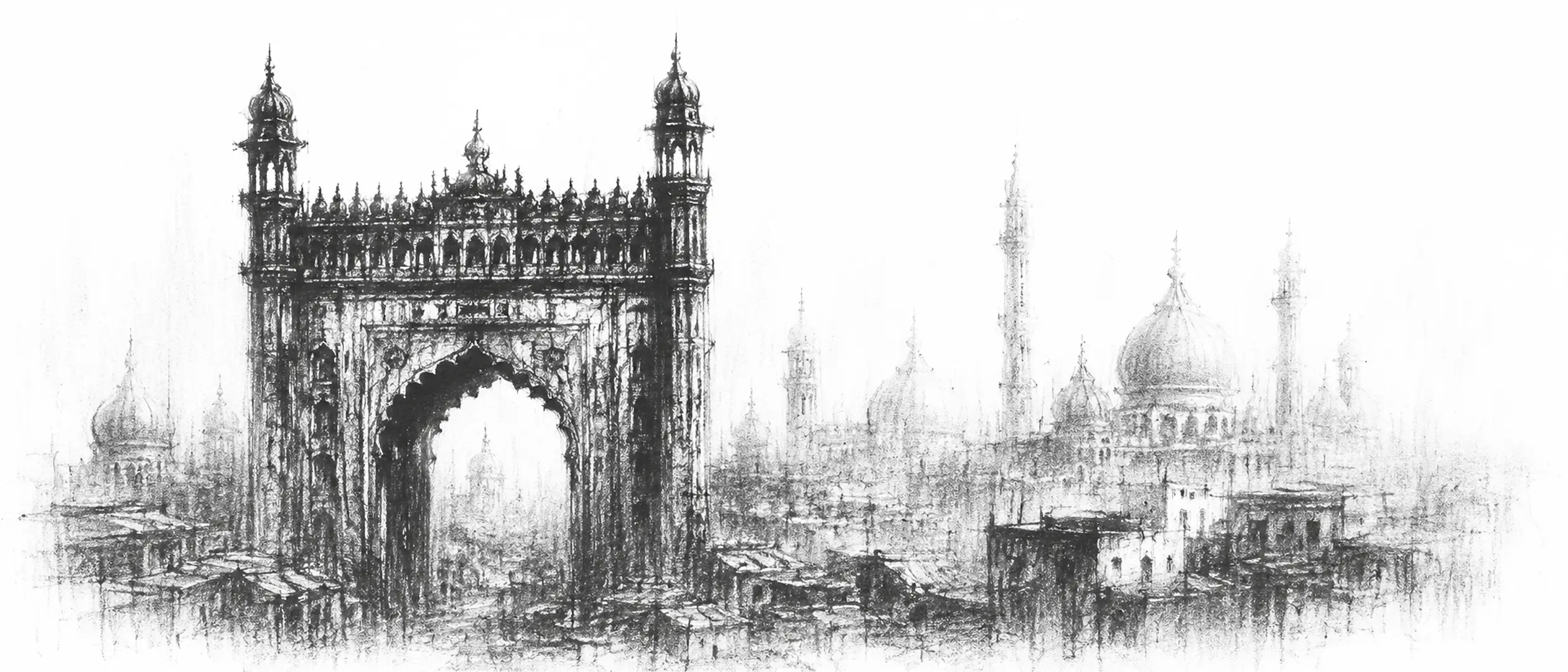
The Cairo I know least is the one that came long after the pharaohs, and it is by far the larger part of the story. Somewhere between the tombs and today the place filled up with mosques — so many slender towers standing over the rooftops that a phrase attached itself and stuck: the city of a thousand minarets, and by every account the count was no exaggeration. In the photographs the domes and pencil-thin towers crowd the dusk until the skyline looks stitched, and from the right roof, someone told me, the calls to prayer go up from every direction at slightly different moments, so the sound arrives in overlapping waves rather than all at once. That is one of the few things about Cairo I cannot get from a picture, and I resent the pictures a little for it.
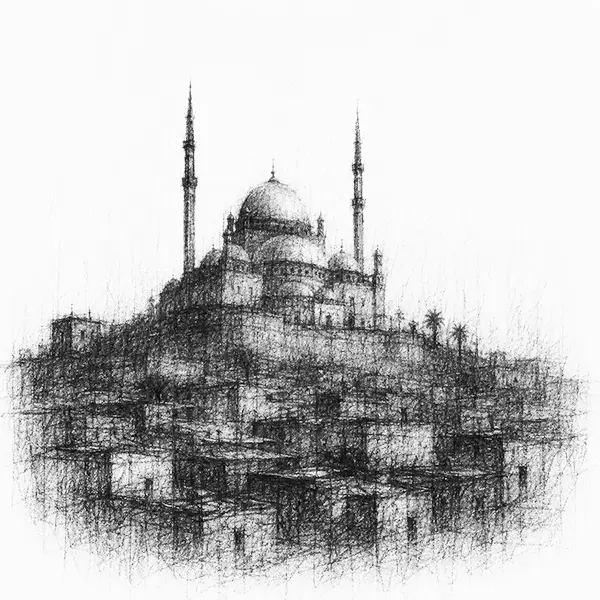
Higher than all of them, in every wide photograph, sits the pale mosque they raised on the old hilltop citadel, so that its dome and its two slender minarets stand over the whole crowded town and take the light before the streets below do. The stone is called alabaster and the pictures make it seem lit from within, a soft milk-coloured thing floating above the brown city. It was put there, the encyclopedia says, by a ruler who wanted a mosque grand enough to be taken for far older than it was — and it worked, because I read it as ancient until a caption corrected me. Even here, in the one city that really did outlast time, the newer grandeur is busy dressing up as the older, and fools a stranger in another country, from a photograph, exactly as intended.
A thousand years of the same afternoon
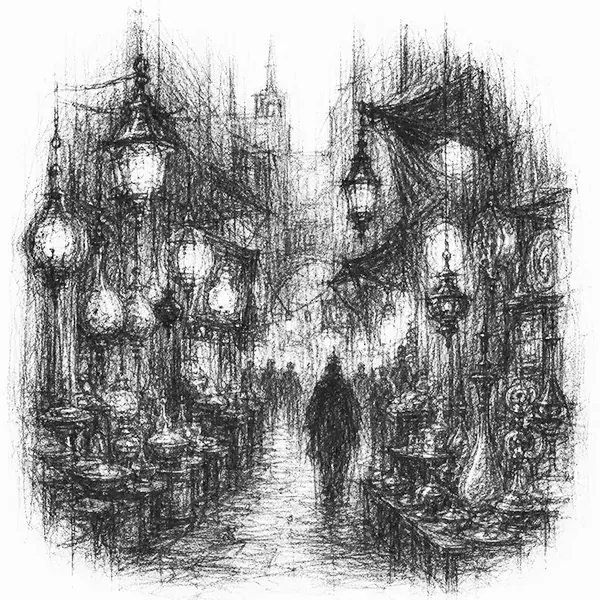
The other place the documentaries always go is the old bazaar, a warren of covered lanes that has been the same kind of place — buying, selling, haggling, the tea going round — for the better part of a thousand years, which is to say it was already old when half the cities I dream of were still mud. The footage is always shot in the evening, when the lamps are lit and the light comes down warm and broken through the hanging lanterns, and the alleys narrow to a shoulder’s width and turn and turn again until you could not say afterward how you got in or out. A former colleague who passed through for a single afternoon told me he remembered none of the pyramids and all of the bazaar — the smell of it, dust and spice and something burning sweet, and a man pressing tea on him that he had not asked for and could not refuse. That, he said, was Cairo; the stone giants were for the postcard, but the lane was for him. I have kept his one afternoon more carefully than I have kept most of my own.
What Cairo keeps in the dark
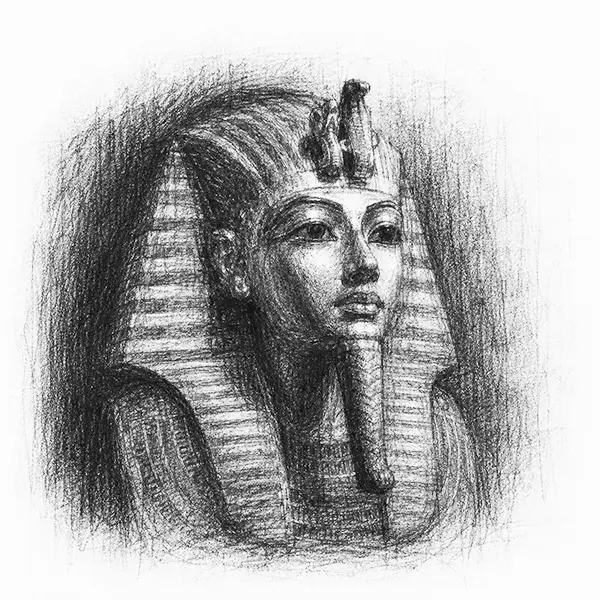
And then the room I have circled longest without entering. The city keeps, in a museum, the face of a boy who was king for a handful of years and died before he was properly a man, and whose small, forgotten tomb happened to be the one the robbers missed — so that everything he was buried with came up out of the ground whole, while the great kings all around him had long since been stripped bare. Chief among it a mask of solid gold laid over his face, calm and wide-eyed and utterly untroubled, three thousand years old and in better condition than any of us will manage at forty. The documentaries drop their voices for it the way they drop them for the sacred. A civilisation that could not keep its greatest kings from the robbers, and preserved instead, entirely by accident, the golden face of one of its least important — there is a lesson in that about what actually survives us, and how little say we have in which part, and I have never managed to make it sit comfortably.
Could I go? Yes — a long flight and a dear one, a visa and a fortune, and the place has welcomed visitors for longer than most nations have had names. None of that is the reason, which is the same threadbare one as ever: I delay, I let the year go by, I say not yet. And I feel the full size of that habit at the foot of the one thing built by people who would not say not yet to anything. It is a little absurd — a man who cannot manage a fortnight’s trip, moved almost to awe by a people who managed eternity.
So I keep it where the photographs keep it: the great stones at the edge of the traffic, the one sail on the old river, the pale mosque floating over the town, the calm gold face waiting in its case. Everything afraid of time, and time afraid of these. Cairo is the city that beat the very thing I keep losing to, and I have still not found the week to go and stand in front of the proof — which is, I suppose, the whole of me in a line: never been abroad, and in no visible hurry to change it.
“Cairo: capital of Egypt, on the Nile near the head of its delta; close by, at Giza, stand the three great pyramids and the Sphinx — the last surviving wonder of the ancient world.”
— from an old school geography, the page gone soft at the corner from turning
Leave a Reply