Abroad · never been
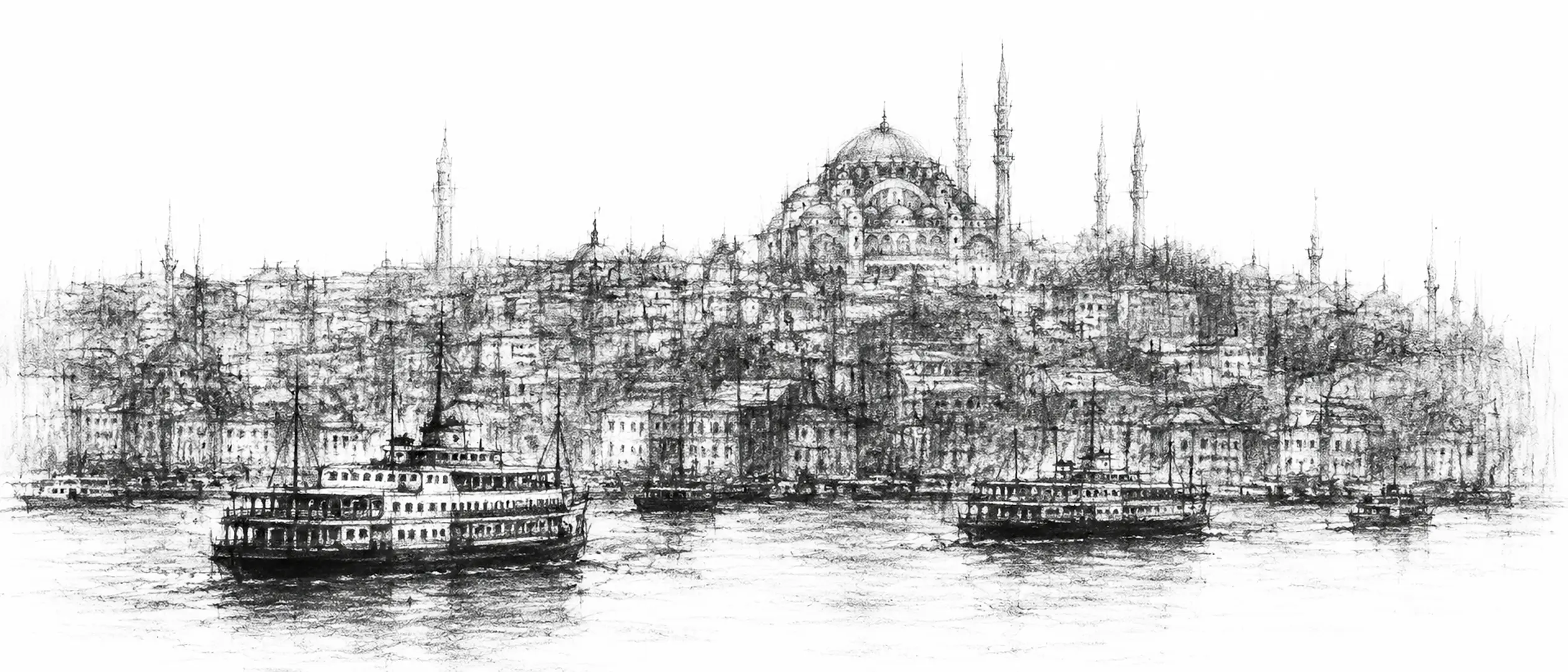
Istanbul is the one city I dream of for a reason I can state plainly: it is a border you can live in. Most cities sit squarely in one country, on one landmass, and stay there. Istanbul does not. It is laid across the seam where Europe ends and Asia begins, split down the middle by a strip of moving water, so that an ordinary person with an ordinary errand can begin the morning on one continent and end it on another and think nothing of it. And I — a man whose passport is on its third renewal and has never once carried him over any border at all — find that I dream, more than of any single monument, of that: a place where you change continents in the time it takes a glass of tea to cool, and no one looks up.
Istanbul’s ferry between two continents
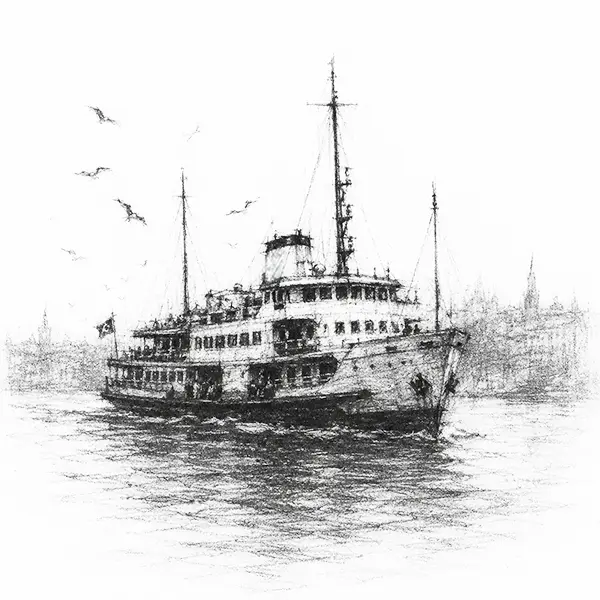
The ferry is the heart of it, in everything I have ever seen of the city. Not a tourist’s ferry, a commuter’s — a stout boat crossing and recrossing the strait all day, full of people going to work, gulls hanging off the stern for the bread the passengers throw, a man with a tray selling tea between the benches. You step on in Europe. You step off in Asia. You do it again on the way home. I have watched that crossing in a dozen films and documentaries and have never been able to get over the ordinariness of it — that the most exotic thing I can imagine, the changing of one’s continent, is for the people of this city simply the commute. I would ride it back and forth, I think, the way I once said I would ride the harbour ferry in another city I have never reached. I seem to dream, repeatedly, of boats that go across and come straight back.
A city built from old films
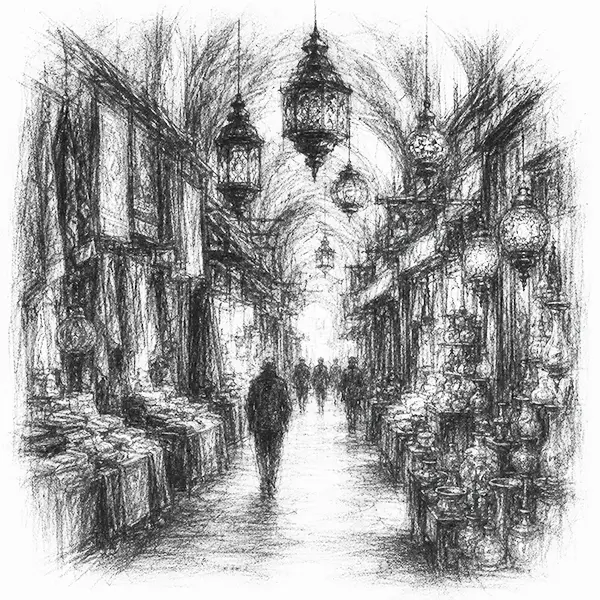
My Istanbul, like the others, is built secondhand, but the materials are a little disreputable and I will own up to them. Documentaries on the old city, yes, and magazine spreads of the covered bazaar shot from above. But also, and mostly, the cold-war spy films I watched far too young — the kind where the city was always the place where east met west under one roof, where someone in a good coat was always being followed across a bridge or onto a night ferry, where every deal went wrong in a bathhouse or a back room hung with carpets. I understood almost none of the plots. What I kept was the conviction those films left in me that Istanbul was the great in-between of the world, the hinge, the place you went when you needed to pass from one half of the map to the other and not be seen doing it. It is a child’s idea of the city, and I have never entirely grown out of it, and I am not sure I want to.
Under the Hagia Sophia’s dome
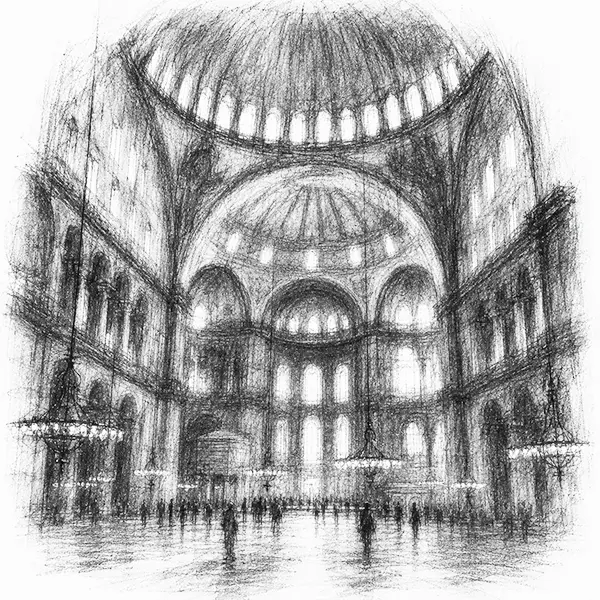
And at the centre of it, the building that has done with faith what the city does with continents. A great domed hall that began as the grandest church in the world, became the grandest mosque, became a museum where both histories hung on the walls at once, and is a mosque again now — the same stone, the same impossible floating dome, changing its name and its prayers down the centuries the way the city changes shores. The pictures that move me are not of the outside, which everyone has seen, but of the inside: the enormous dome riding on its ring of windows so that the light comes in low and gold and the whole vast space seems to hang from nothing. A room that has heard four different certainties and outlived all of them, and just goes on holding up its dome. I would like to stand under it and say nothing, which seems to be the only honest thing to do in a room like that.
Tea in a tulip glass
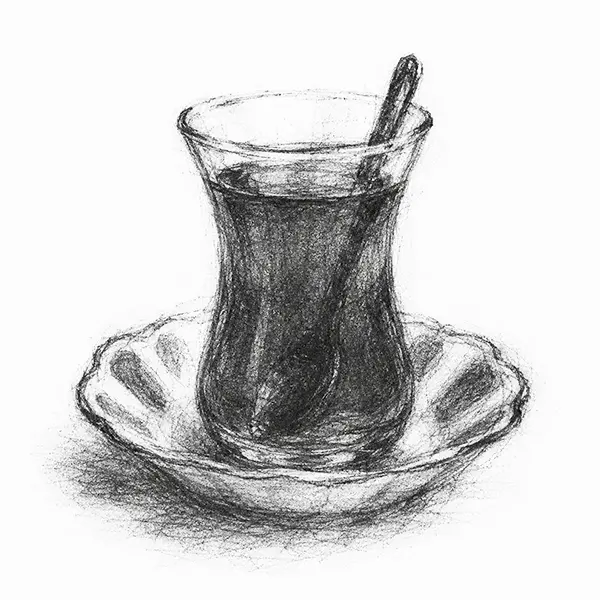
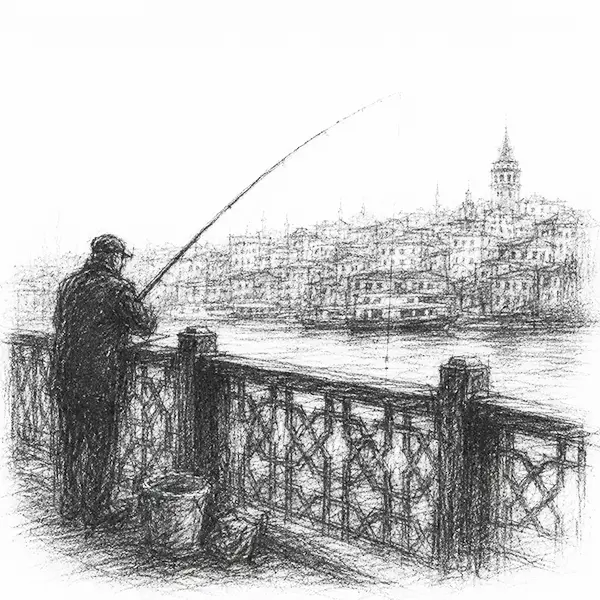
The smaller things I have collected are the ones I would actually cross for. Tea, first — served everywhere, all day, in those little waisted tulip glasses you hold by the rim so as not to burn your fingers, two lumps of sugar and a tiny spoon, handed to you whether you are buying anything or not. The call to prayer rolling out over the rooftops from a dozen minarets at slightly different moments, so that it arrives in waves and overlaps with itself. The bazaars, roofed and lamplit and going back for miles. The men who line the Galata bridge at all hours with their rods over the rail, fishing the same crossing the ferries churn through, indifferent to all of it. A whole civilisation, it sometimes seems to me, arranged around the pleasures of sitting down with a small hot drink and watching the water move.
The cats of Istanbul
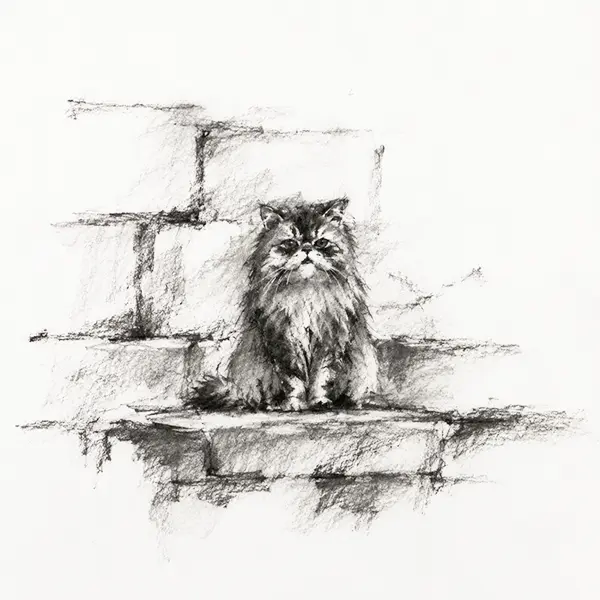
But the thing I did not expect to love, and love most, is the cats. Istanbul, it turns out, half belongs to them. They are everywhere in the pictures and the films — sitting in the middle of café tables as if they had ordered, dozing in shop windows among the goods, occupying park benches with the air of ratepayers, stretched along the warm stone of buildings older than most countries. And the city has simply made room. People leave out food and water at their doorsteps without fuss; a shopkeeper shares his lunch with the cat that has decided his threshold is hers; a whole street will know one animal by sight and temperament. The cats do not perform for anyone. The locals greet them and step around them; the tourists crouch and photograph them; the cats accept both as their due and go back to sleep. There is something in that arrangement — a great hard ancient city that has decided, collectively and without ceremony, to be gentle with the small lives sharing its stones — that undoes me a little. I think a place is told most truly by how it treats the creatures that cannot pay it back.
I should be honest about one more thing, because it sits between me and the place just now. These are not the easiest of times between my country and that one; there is a season of politics in which a traveller with my passport is not, at the moment, especially welcome there, and is made aware of it. I have turned that over and set it down again. A city is not the politics of its season. It is older than any government that currently claims it and will outlast the one after that; it is built, in the end, of its history and its stone and — most of all — its people, the ferry man and the tea seller and the woman who feeds the street cats, none of whom signed the quarrels their leaders are having. I am not naïve about it. I simply decline to let a row between two capitals quietly repossess a city I have loved from a distance since I was a boy. The argument is real. So is the tea.
So I keep the in-between city, the hinge of the world, where the ferries cross and recross between two continents all day and the gulls ride the wind off the stern and a cat watches it all from a warm step that was old when half the world was young. The call goes up in overlapping waves. The fishermen do not turn round. Somewhere a glass of tea is being carried across a deck from Europe to Asia and will be finished, still warm, on the other side of the world. I have never crossed a single border in my life. I dream, harder than I dream of almost anywhere, of the one city built so that crossing is nothing at all — and I have still, somehow, not managed the far simpler crossing of actually going. I have never been abroad; of course the city of crossing is the one crossing I have never made.
“Istanbul: largest city of Turkey, uniquely set on two continents, divided by the Bosphorus strait that links the Black Sea to the Sea of Marmara; capital, under earlier names, of both the Roman and Ottoman empires.”
— from a battered atlas, in the gazetteer at the back

Leave a Reply