Abroad · never been
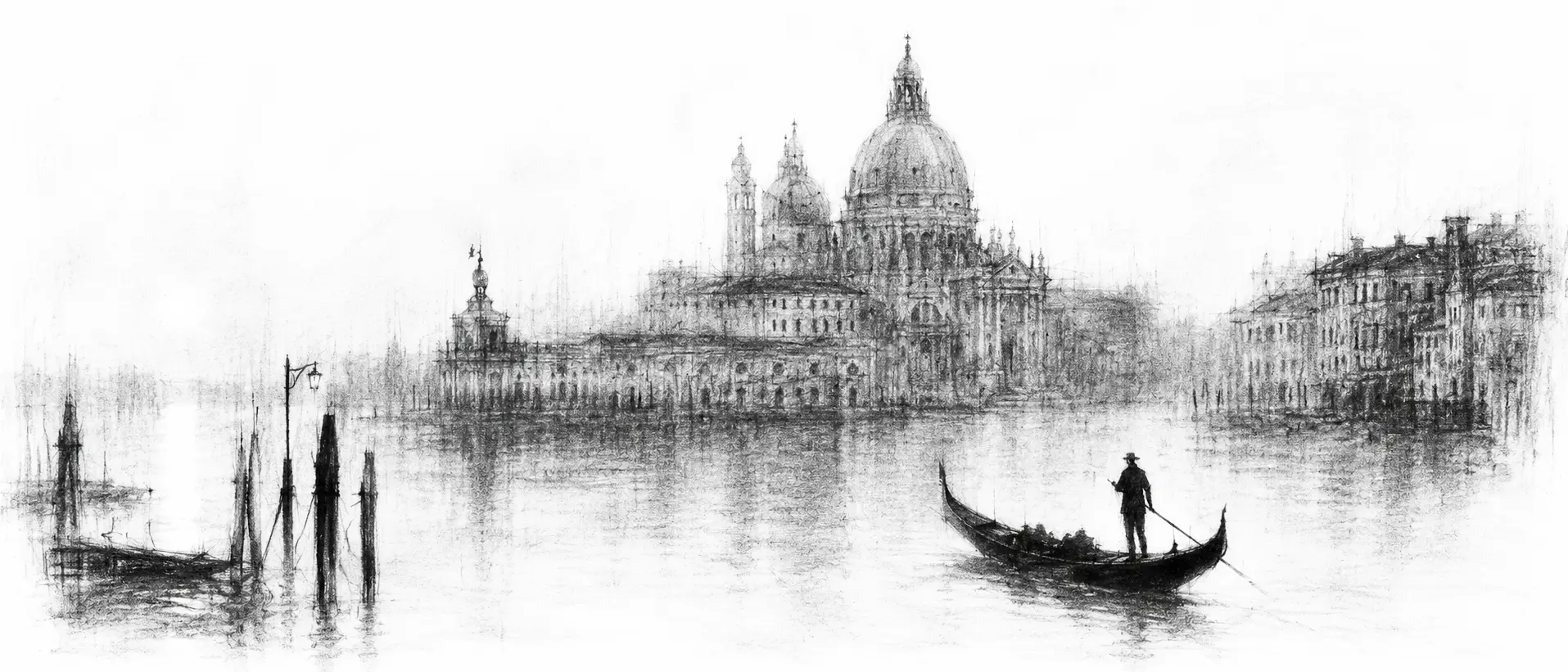
There is no place I have been given more often, and gone to less, than Venice. It arrives unasked, the way a tune you did not choose follows you out of a shop. My first Venice came from a film I saw far too young and can no longer name — I have lost the story, the actors, the title, everything but the look of it: wet alleys going dark, water the colour of old coins, a small figure in a red coat hurrying away down a passage that surely led nowhere good. I understood none of the plot. I understood the city at once — a place where every turning could lose you, and seemed to want to. I have been trying to remember the rest of that film for thirty years. I have given up. The city stayed; the film went.
You cannot come to Venice clean. No one can. It has been photographed and filmed and printed until the real place must feel, on its bad days, like a copy of its own postcard. Mine was assembled in instalments, the way most of my far cities are: a double-page spread in some magazine in a waiting room, the canals shot from above; a Sunday-afternoon documentary with a low, certain voice walking me down alleys I would mute and watch again; the long Venice entry in a one-volume encyclopedia I have had since school, with a single small grey photograph of the same square everyone photographs. None of it was mine, exactly. I have built the place out of other people’s looking.
Venice has no roads
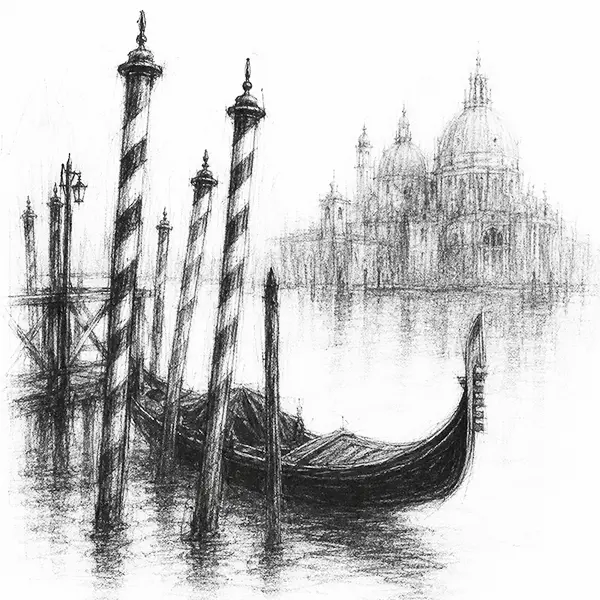
Still, I have collected the hard facts, the way a man saves coins he cannot yet spend. A city with no roads. An ambulance that is a boat, a hearse that is a boat, a rubbish truck that is, of course, a boat. The gondola, kept black by a sixteenth-century law so that no rich fool could out-glitter another. Those leaning striped poles — the *pali* — that the boats are tied to, standing in the water like a drunk man’s idea of a forest. Cars stop at the edge of Venice the way the known world once stopped at the edge of the map. You arrive, and then you walk, or you float, and there is something in me that has wanted that particular helplessness for as long as I can remember.
The republic that ran the sea
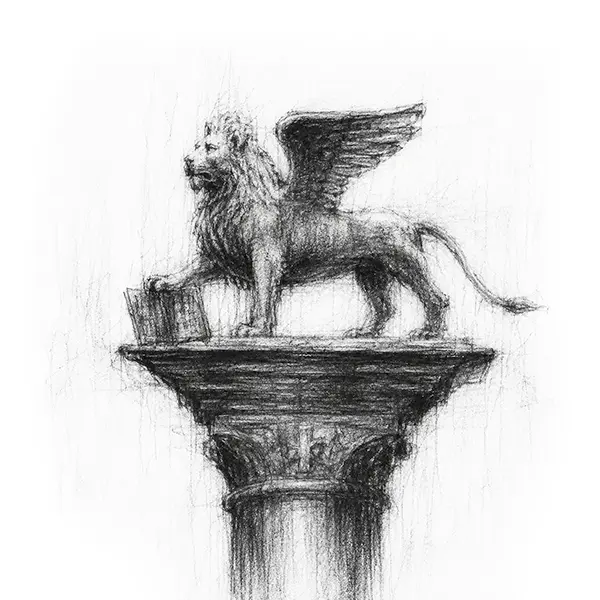
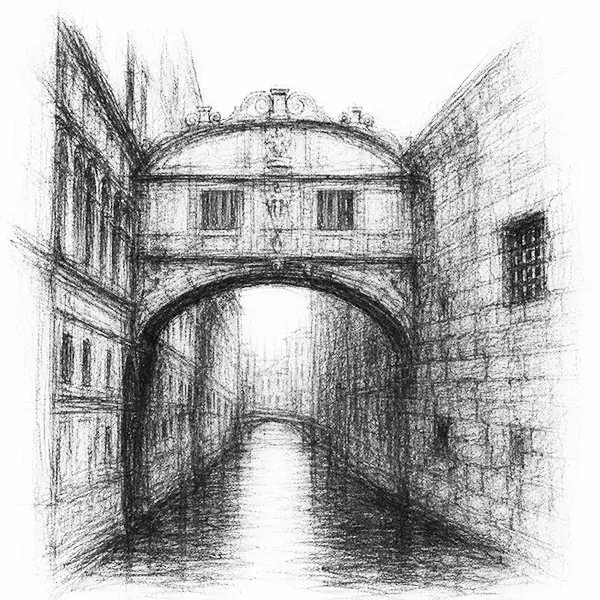
And the lion — everywhere the winged lion, on the columns and the gates and the rubbed stone, the badge of a republic that ran a thousand years and treated the sea as a private corridor. They took the four bronze horses of St Mark’s from Constantinople and set them over the door without embarrassment, the loot of an empire mounted like a hunting trophy. Near the palace there is a small covered bridge a condemned man once crossed for his last look at daylight and the lagoon, and someone long ago gave it the name it still carries — the Bridge of Sighs. The whole city is like that: unbearably lovely, and underneath it all business and salt and the long memory of money.
The beauty of the rot
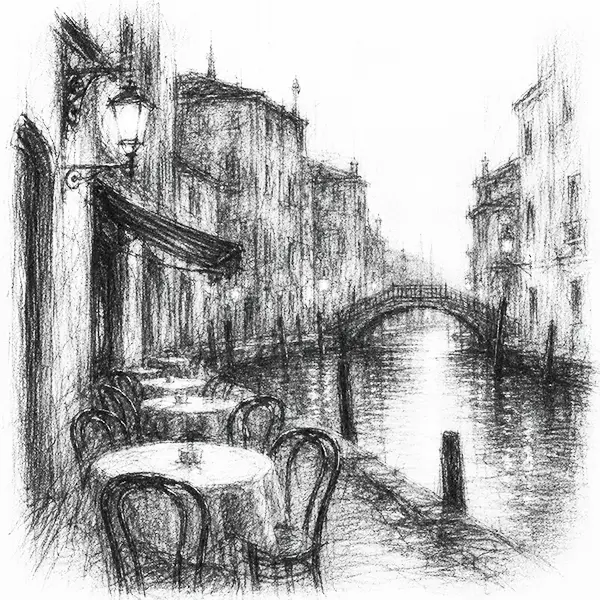
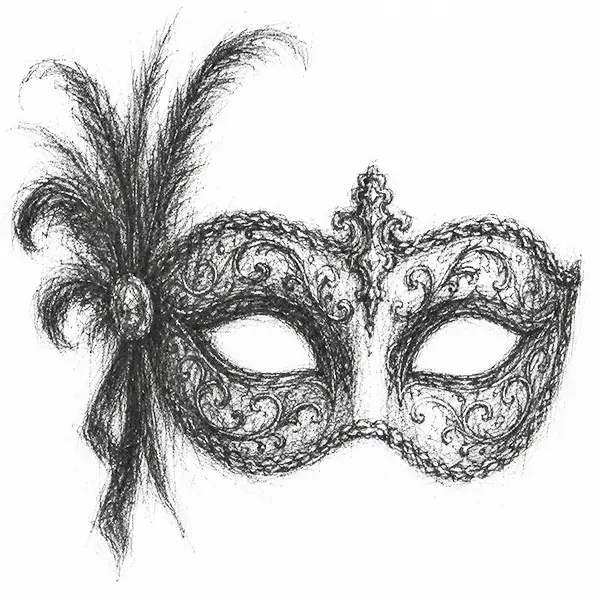
What the pictures all seem to agree on is the decay, and how well the place wears it. Palace fronts the colour of wet sand, standing straight up out of the water, the marble stained and blistered where the lagoon has been licking at it for five hundred years. Shutters hanging loose. Washing strung across a canal too narrow for the sun to reach. In one documentary I have watched more than once, the camera simply drifts at water level along a back canal at dawn with almost nothing happening — a closed door, a moored boat, a cat, a café’s chairs set out for no one, the green water folding over on itself — and it undid me more than any cathedral could. And then, in the carnival pictures, the whole sinking, peeling thing puts on a white mask and a tricorne hat and pretends for a fortnight to be immortal.
Venice, going under
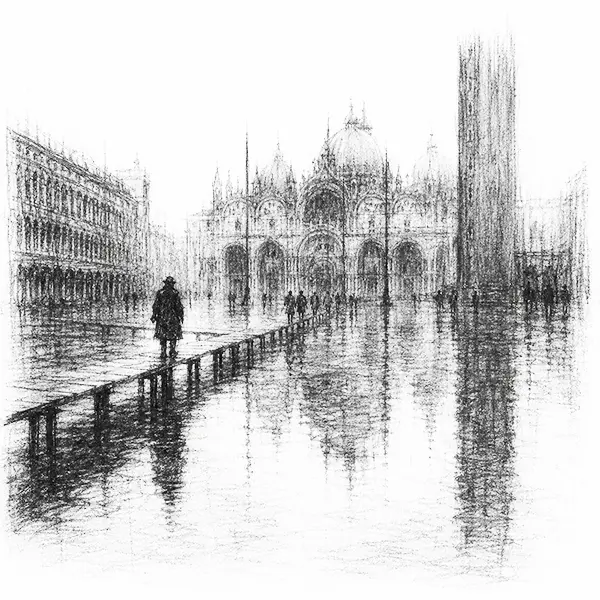
Here is the fact I turn over most. The city is going under. Not as a figure of speech — the water comes up through the stones, and in November of 2019 the *acqua granda* put St Mark’s square waist-deep and floated the café chairs, and the Venetians did what they always do, which is lay down their wooden duckboards and queue along them in their good shoes as if nothing were the matter. There is a vast machine of barriers in the lagoon now, raised against the worst tides, buying the city time at a price no one likes to say aloud. So Venice, of all my dreamt places, is the one with an actual deadline — and it is not mine. For once I am not the one running out of time; the city is. That ought to frighten me into booking a ticket. It mostly just makes me quiet.
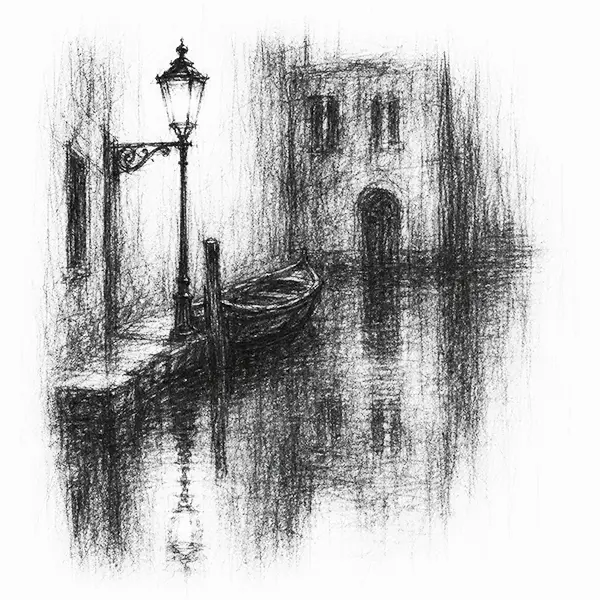
The most useful Venice I own came from a man I worked under years ago — a gruff sort who softened exactly once, telling me how he had got himself magnificently, irretrievably lost there on a long-ago holiday. No phone, no map worth the name, just bridge after bridge until a turning opened with no warning onto a square full of evening. He showed me one photograph, crooked and underlit, of a canal at night with a single lamp doubling in the water. It was a bad picture. It has done more to me than any film I have forgotten, any documentary, any magazine. I have been steering by that blurred lamp for fifteen years.
Because I could go. You have heard this confession from me before, and you will hear it again: the passport is in the drawer, third renewal, clean as a fresh sheet, and Venice is a known and unheroic number of hours away. No wall, no war, no permission withheld. The honest reason is harder to hold. Part of it is fear of the copy — that I would shoulder through the cruise-ship crowds and pay nine euros for a bad coffee and find that my slow green Venice, the one with the red coat and the empty alley, had been quietly repossessed by the real one, which belongs to everybody. And part of it, if I am truthful and not merely clever, is no philosophy at all. It is the same small failure I dress in fine clothes each time: I did not book the ticket. Again. And then I wrote a paragraph about why.
So I keep the Venice I can afford. It is always just before dusk and just above the waterline. The lion is on his column, the horses are over the door, the duckboards are stacked and dry against the next high tide, and a single black boat is tied to its leaning poles, waiting for a passenger who has had thirty years to come down to the water and has not yet managed it. One more line in the account of a man who has never been abroad.
“Venice: city of north-eastern Italy, built on 118 islands within a lagoon of the Adriatic Sea, threaded by some 150 canals and joined by about 400 bridges.”
— copied into a notebook from something I have long since forgotten reading

Leave a Reply