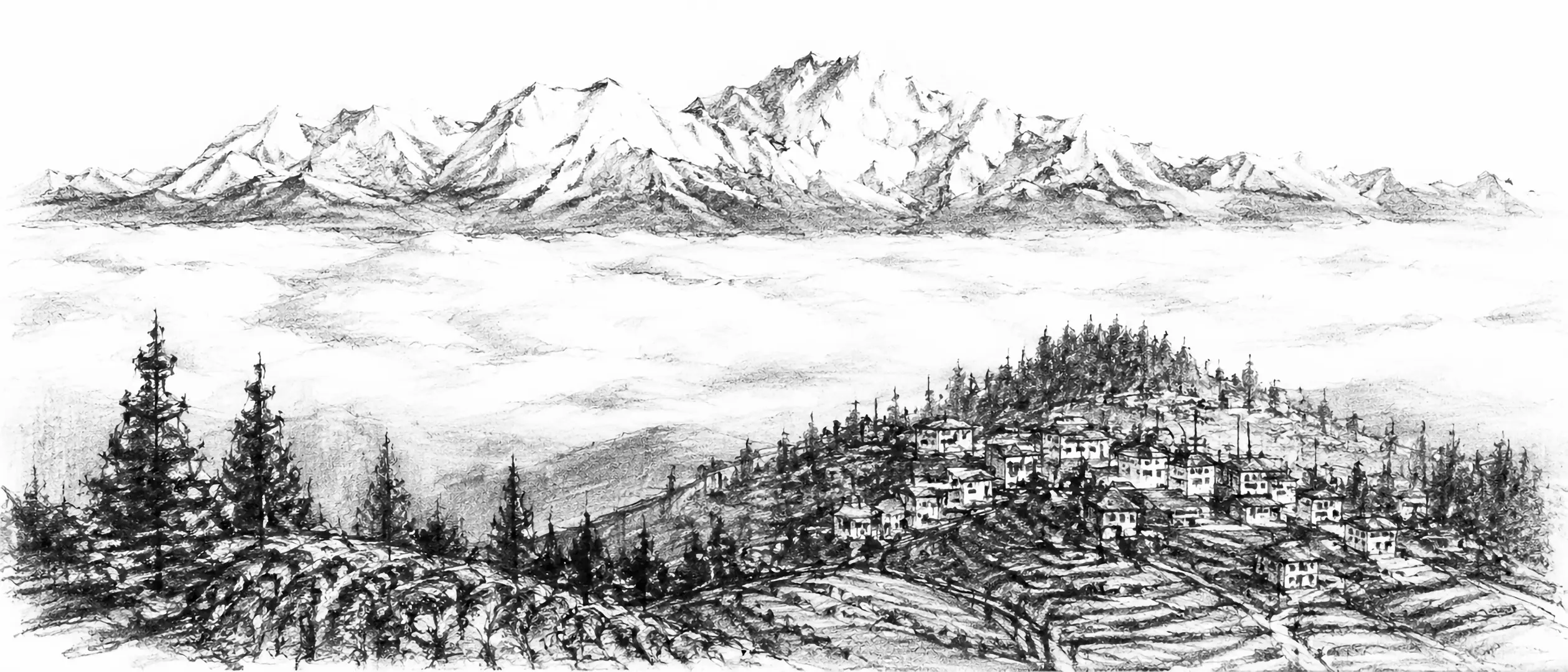
Within reach · never been
There is exactly one time, in the whole history of my family, that a trip to Darjeeling was real — booked, paid for, all but begun — and I am the reason it did not happen. This is not a figure of speech. Some forty years ago my father, who loved a journey the way other men love a drink, decided to spend his office travel concession — the LTC, that small annual grace of the salaried Indian — on taking my mother up to Darjeeling and the hills around it. The tickets were bought. The dates were fixed. And then, before they could go, they learned that my mother was carrying me; and the long cold climb into the thin air of the high hills is not a thing you put an expecting woman through; and so the trip was quietly unbooked and folded away, and what could be salvaged of the leave was spent, later, on somewhere lower and warmer and kinder to her condition. They went to that other place instead. They never went to Darjeeling. And in the forty-odd years since, through every good intention, neither they nor I have ever managed it.
So I have the rare distinction of having cancelled a holiday before I had a face. I undid the one trip to Darjeeling my family ever came close to taking, by the simple act of beginning to exist — no opinion offered, no malice intended, just my arrival, which was apparently incompatible with the high Himalaya. There is a cosmic cheekiness in that I have never quite got over: that the very first thing I ever did in this world, before I could see or speak or want a single thing, was to keep two people I love from the most beautiful hills in their own state. I have spent the decades since failing, in slower and more deliberate ways, to go to places. It seems only right that my opening act was to stop a journey — and that the journey it stopped was this one.
And it is the cruellest of all my unreached places to have missed, because Darjeeling asks for nothing. It is not abroad. It is not far. It is not hard. It is in my own state, a night’s journey from where I was born — the hill station every Bengali grows up half-owning, the cool green ledge the whole flat sweating plain runs to in its imagination when the heat becomes a punishment. I grew up with it in the air the way other children grow up with the name of a grandmother’s village: a place I had never seen and somehow already knew — in the tea we drank without thinking, in the songs, in the soft proprietary way the grown-ups said its name, as if it belonged to all of us and would keep.
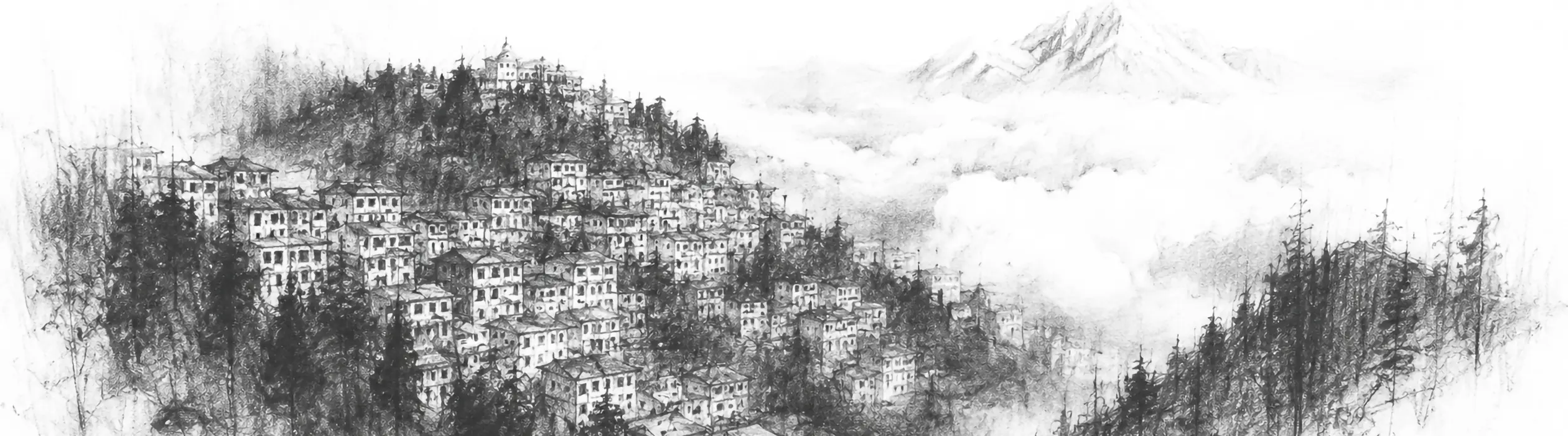
Darjeeling mountains, at first light
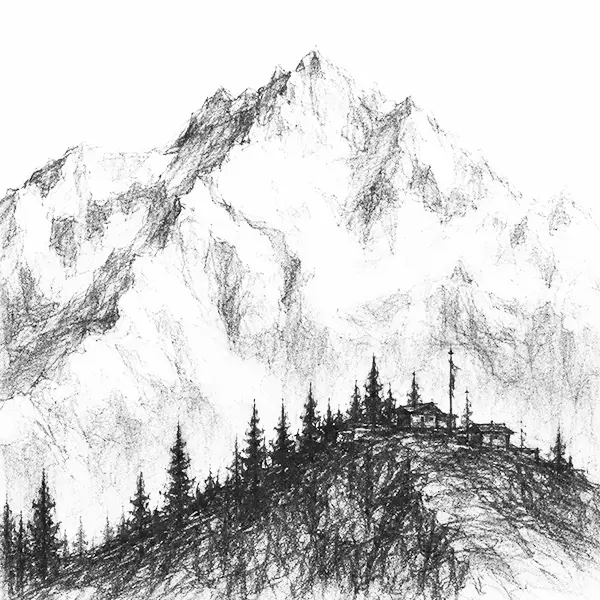
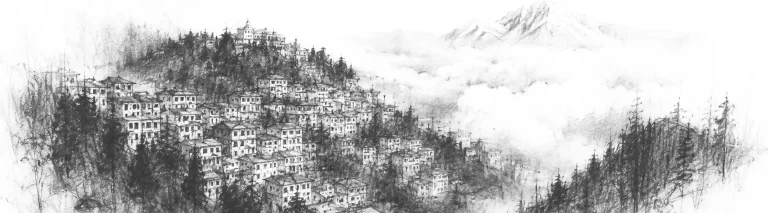
The mountain is the first thing, always. Not the little one near the town but the great one beyond it — a vast wall of snow that the whole place arranges itself to look at, that hides for days in cloud and then, on a clear winter dawn, simply is there, impossibly high, catching the first light and going from grey to rose to a white that hurts, while the town below is still in shadow. Everyone who has been describes the same ritual: rising in the black cold, climbing to some viewpoint with a hundred strangers and a flask, and waiting, breath showing, for the sun to find the peak. Half the time, they say, the cloud wins and you see nothing and go down again. I find I love that too — a view you queue for in the dark and are not guaranteed. It is the most honest kind of beauty, the kind that might not show up.
The little train that climbs at a walk
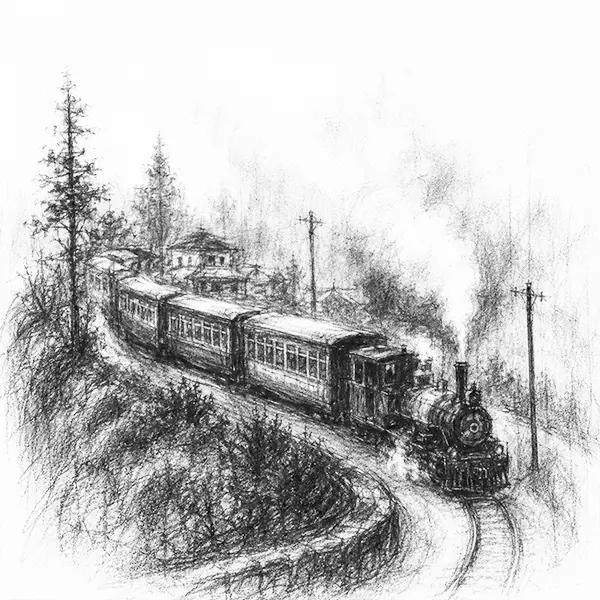
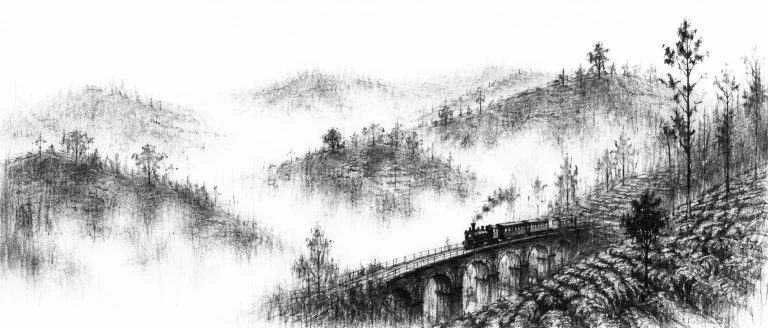
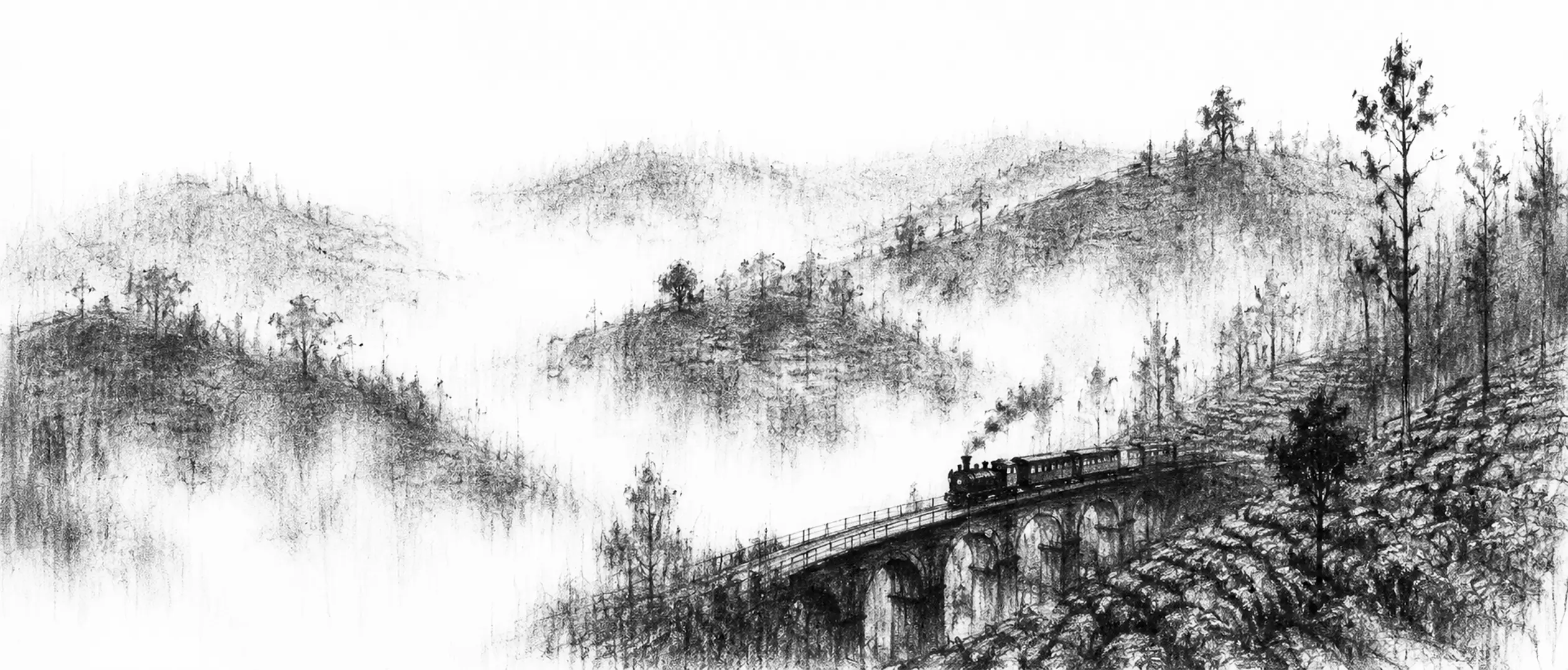
And the little train, which I have loved since before I understood what it was. A toy of a thing, narrow-gauged, more than a century old, that hauls itself up to the town on a thread of track so steep and so cramped that in places it loops over its own path and doubles back, and runs for a stretch straight down the middle of the road with the traffic, ringing its bell, close enough to touch the shopfronts. It climbs at the pace of a brisk walk. People who are not in a hurry get off and walk beside it for the fun of it. A whole engineering of patience, built to do slowly and beautifully a thing a bus now does in half the time — and kept running anyway, because some things are the point and not the means. I would take it up at that ridiculous pace and not mind a minute of it.
The tea, three hundred miles from my cup
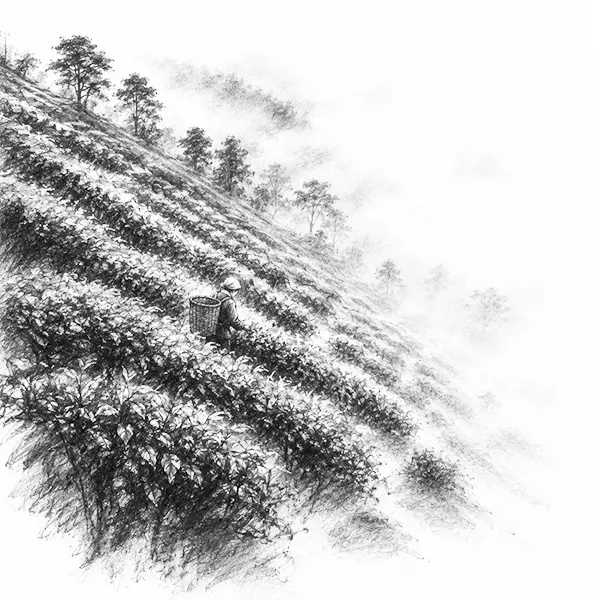
Then the tea, which is the thing my plains and those hills have always had between them. The slopes fall away from the town in long combed rows of low green bushes, impossibly steep, terraced by hands over a century and a half, women moving through them with baskets on their backs and the mist coming and going so that the whole hillside appears and disappears as you watch. The leaf off those particular slopes is famous over half the world, sold by the name of the hills it grew on. I have drunk it my whole life. I have never stood in the gardens it comes from, three hundred miles from a kitchen where it has been steeping every afternoon for forty years.
A whole town up in the sky
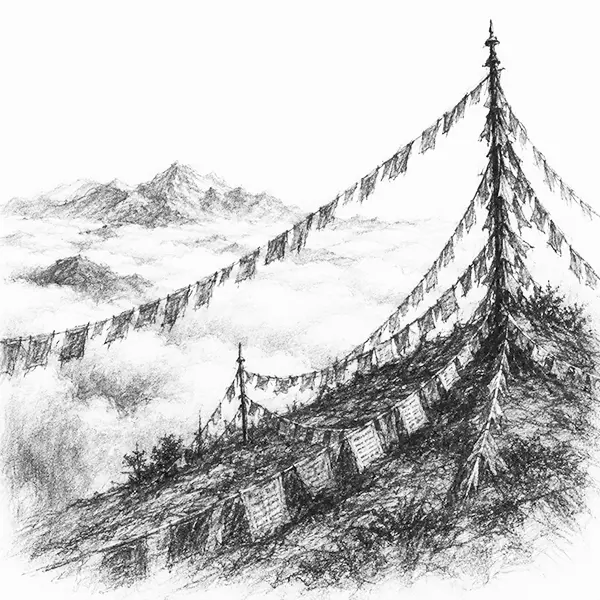
The rest comes to me as a cold, bright, crowded jumble, the way a place does when you have assembled it from a thousand other people’s afternoons. A flat open square at the top of the town where everyone ends up, ponies and tea and old colonial bones. Prayer flags strung from every high point, faded to threads, the way they are all across these hills, sending their printed words out over valleys full of cloud. Steep lanes of stacked houses with tin roofs. The particular thinness and chill of the air, which everyone mentions, and the way the cloud does not sit above the town but below it, so that you look down onto the weather. A whole town up in the sky, and I have only ever looked up at it.
A cup of tea, in Darjeeling, at last
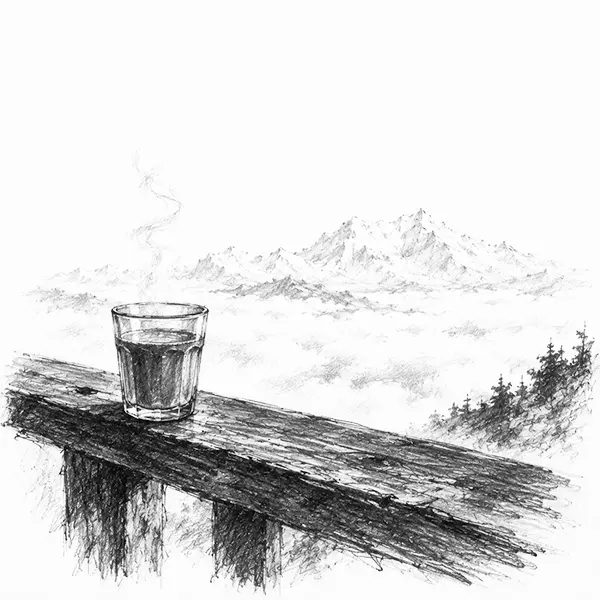
What I want there is almost embarrassingly small. Not the trek, not the monastery circuit, not the viewpoints at dawn, though I would do all of that. What I want is to sit on some cold verandah with a glass of the local tea going cold in my hands, a blanket over my knees, and the great mountain doing nothing in particular across the valley, and to be, for one morning, a Bengali who finally came to the hills his whole people borrow their summers from. That is the entire ambition. A cup of tea, in the cold, in the right place at last.
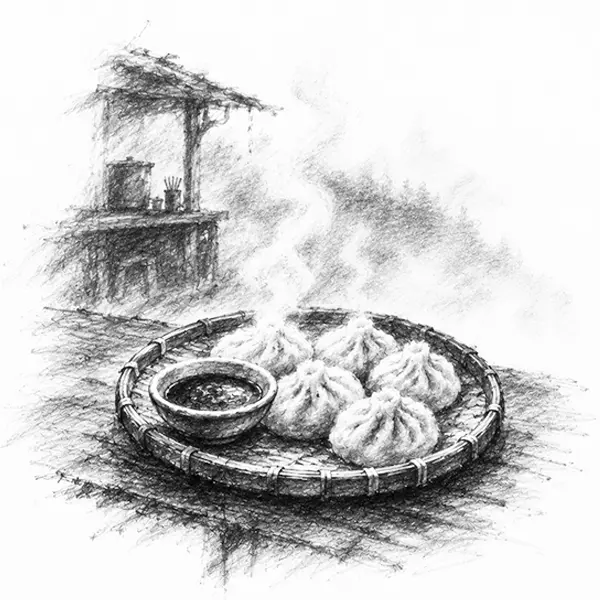
And — I am a greedy man, I have admitted it before — the food, which up there turns away from the plains and toward the mountains beyond: the little steamed parcels, the momos, eaten scalding from a roadside stall with the fog coming down; the bowls of noodle soup that are mostly steam; the things the hills make to keep the cold out. I can taste all of it, more or less, having eaten the lowland imitations my whole life. I have never had the real thing in the real cold with the real mountain somewhere behind the mist.
Here is where I usually reach for the ocean or the visa or the cost, and find I have none of them to reach for. Darjeeling is the most reachable place in this entire collection, and the most personal, and somehow the one I have most thoroughly failed to get to. It is my own state’s crown. It is a night on a train. It was, once, actually booked — and I cancelled it myself, in the only way a person can cancel something before they are born. There is no ocean to blame and no border to blame and, this time, not even quite the usual failure of nerve. There is only the strange long joke of it: that the first journey I ever prevented was the one I would most have liked to take, and that I have spent forty years not quite rebooking it.
So I keep the town in the sky where I keep the rest, except this one has my fingerprints on the cancellation. The great mountain comes up rose out of the dark for the people who climbed in the cold to see it. The little train loops over its own track and rings its bell at the shopfronts. The tea I have drunk all my life grows on slopes I have never stood on, three hundred green miles from my cup. And somewhere in the unwritten history of my family there is a set of tickets to Darjeeling, bought and never used, postponed on my account and never quite renewed — the first thing I ever undid, and the one I am least able to forgive myself for, and still, after all these years, mean to set right. I have never been abroad, and the first journey I ever cancelled never even left the country.
“Darjeeling: hill town in the north of West Bengal, about 2,000 metres up in the Himalaya, long famous for its tea and its narrow-gauge mountain railway, and for the view it commands of Kanchenjunga, the third-highest mountain on earth.”
— from a school geography text, already out of date when I read it

Leave a Reply