Abroad · never been
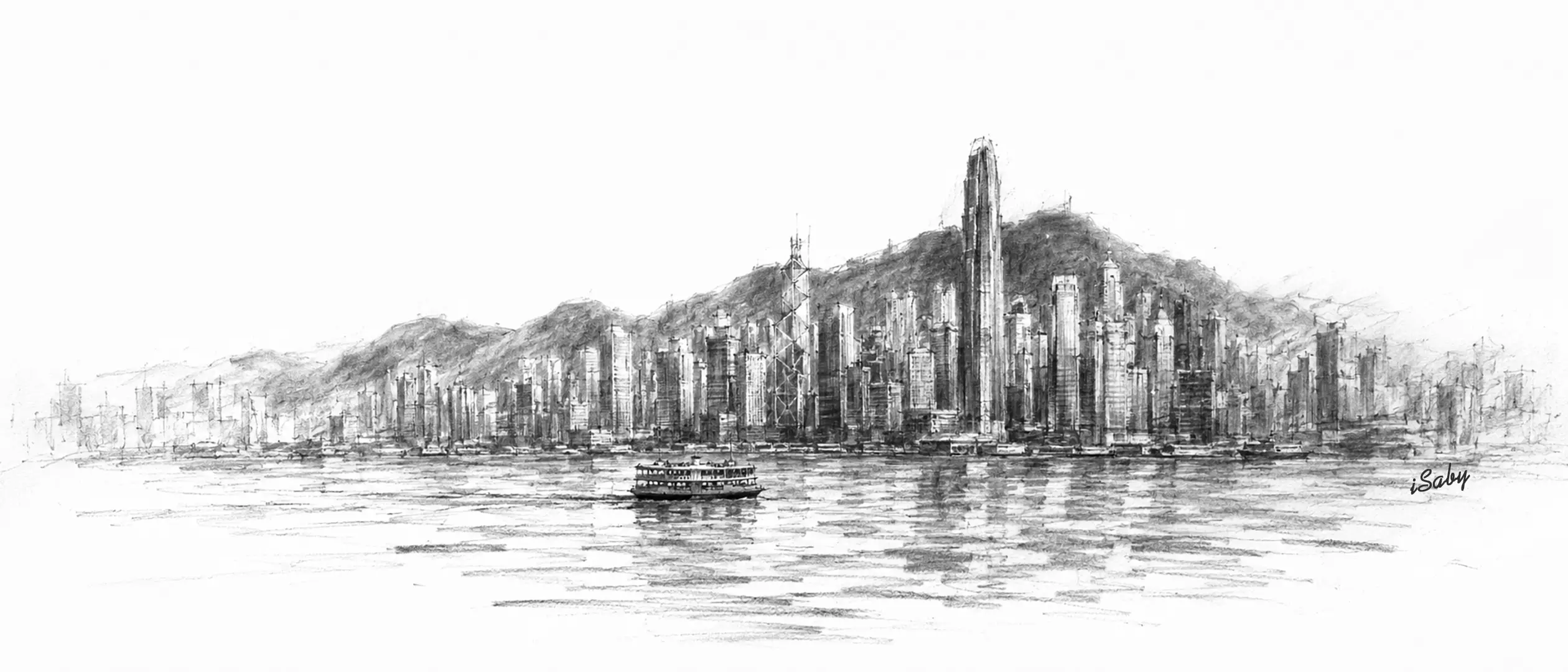
Hong Kong I dream of vertically. Every other city in this book I picture along the ground — a street, a canal, a harbour at eye level — but Hong Kong I can only ever see going up: towers stacked on towers up the side of a green hill until the hill gives out, lights climbing into a wet grey sky, washing strung from a window forty floors above the water. It is, they say, the most vertical place on earth, a whole city of millions folded onto a few scraps of land between the mountains and the sea, with nowhere to expand but the air. I have never stood at the bottom of it and looked up. I have only ever looked up at photographs of people looking up. But the angle has lodged in me. When I think of arriving somewhere and feeling small, this is the city I think of.
The ferry across Hong Kong harbour
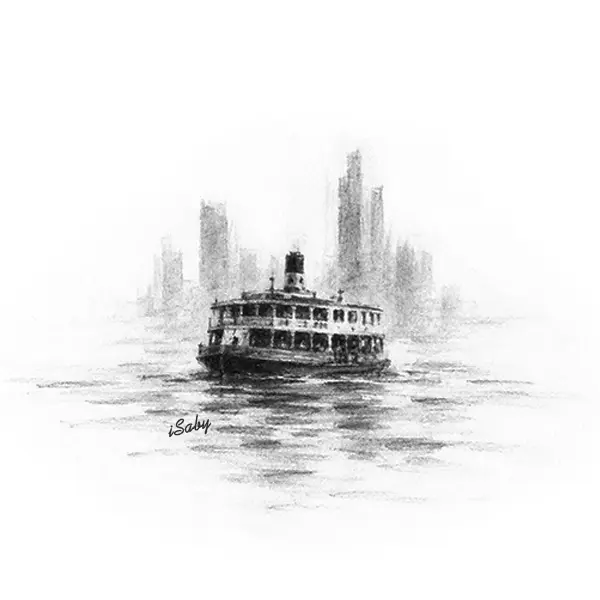
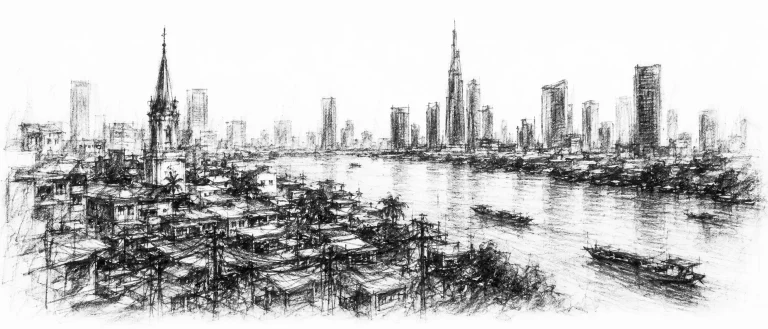
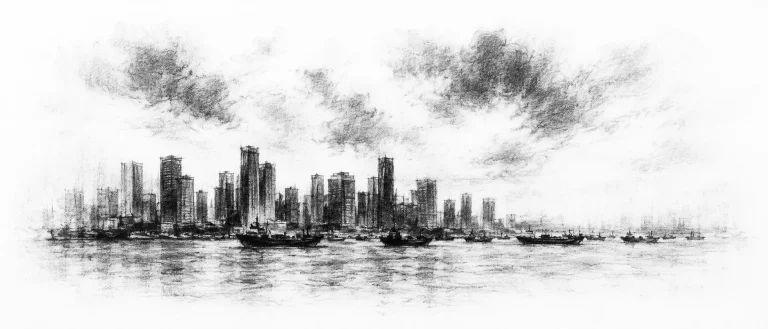
It came to me, like most of them, in pieces and at a slant. Action films I half-watched for the chases and kept for the backgrounds — the neon, the rooftops, the rain on a fire-escape at night. A documentary on how human beings live packed that tight, families in rooms the size of a parked car, and somehow a city that works, that hums, that feeds itself at every hour. A former colleague who had a single night’s stopover there once and spent it, sensibly, riding a green-and-white ferry back and forth across the harbour because it cost almost nothing and showed him everything: the wall of lit towers on one shore, the dark hills behind, the black water crossed by boats, and then the same thing again in reverse, as many times as he liked. He could not stop talking about a ferry. I understood completely. I have wanted to ride that ferry, pointlessly, all the way across and straight back, for most of my adult life.
Signs disappearing on a schedule
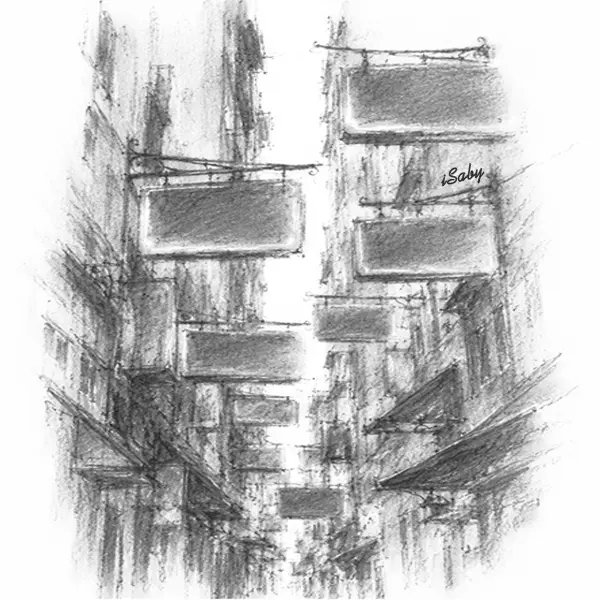
Down at street level — in the photographs, always in the photographs — the city closes over your head. Signs in two scripts hang out over the narrow lanes on iron arms, layer over layer of them, advertising things in a glow of red and blue and green until the sky is just a bright crack far overhead and the whole street is roofed in light. They are taking those signs down now, I am told, a few thousand a year, too old and too heavy and a danger in a storm, and a certain kind of person flies in just to photograph what is left before it goes dark. I have a great tenderness for things that are disappearing on a schedule.
Ride, eat, look up: my Hong Kong
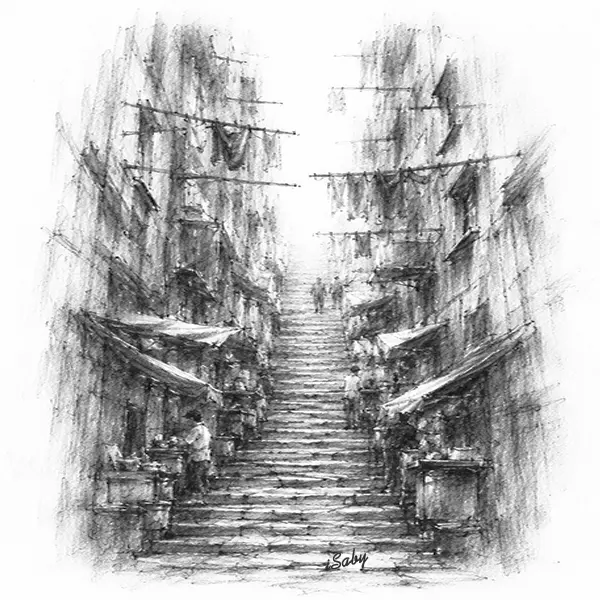
There is also a stair-street somewhere, going straight up the slope in stone steps too steep for any wheel, with stalls down both sides and laundry poles sticking out overhead like flags, and I have decided, on no evidence at all, that I would have lived near the top of it. And the trams — I nearly forgot the trams, which is unforgivable, because they may be my favourite part. Tall, narrow double-deckers, among the oldest still running anywhere, grinding along the flat of the island at the pace of a determined walk, ringing a small bell at the crossings that everyone there stopped hearing years ago and that I, from here, can hear perfectly. You sit up top at the front, I am told, and the city scrolls past at the exact speed a city should. And the food — I am a greedy man and will not pretend otherwise — pushed out of doorways and trolleys and corner shops at every hour, eaten standing up, eaten on the move, small hot plates handed across counters with the same wordless efficiency I have admired in every crowded place I have ever loved from a distance. I would do very little in Hong Kong, I think. I would ride, and eat, and look up.
Hong Kong is full of vanishings, and I think they are half of why I love it. There was an airport, once, dropped right into the middle of the city, where the planes came down so low between the apartment towers that the people inside could look up from their dinner and see the rivets, and the people on the planes could look in and see the dinner — a thing so improbable it sounds invented, and it ran for fifty years before they closed it and moved the whole business out to a flat island in the sea. There was a block of buildings grown so dense and so tangled that daylight never reached the lowest lanes, a city packed inside the city with its own unwritten rules, and they pulled the entire thing down in a single decade and laid a quiet garden over the ground. The place keeps demolishing its own most astonishing pages. It was always, even at its height, a borrowed city living on a borrowed clock — and I, who spend my whole life in the tense of not yet, recognise something of myself in that.
The one image I keep returning to is from the top. There is a hill above the city — the Peak, they call it, with the flat plainness the British left lying around the place like dropped luggage — and a little tram that hauls itself up the slope at an angle that looks like a mistake, and from the top you see the whole impossible arrangement at once: the towers crowded down to the water’s edge, the harbour, the boats, the hills of the mainland beyond, and on a bad day the whole thing softened and half-erased by a warm wet haze the photographs cannot decide whether to apologise for or celebrate. I am told the air there is thick enough to wear. I have lived my whole life in thick air. For once that would not be the strange thing about a place; it would be the one familiar thing, and I would be quietly grateful for it.
And could I go? Of course. It is a flight I could make and a city that, for now, still lets a man like me in with the right stamps. The honest obstacle is the usual one, worn smooth from handling: I keep not going. But there is a second thing, particular to this place, and it has sharpened these last few years. The Hong Kong in my photographs is already partly gone — the signs coming down, the airport long closed, the rules redrawn, the very mood of the place shifted in ways I only half follow from this distance. I am not certain the city I have been dreaming of is still entirely there to be visited. Which means I am doing the thing I always do, only more so: longing for a place across both distance and time, wanting an evening that may already have ended, in a harbour I have never crossed.
So I keep the vertical city where I keep the others, except higher up. The ferry going back and forth across the dark water for the price of almost nothing. The signs still lit, for now, over the narrow lanes. The stair-street climbing past the laundry into the haze, and a flat near the top of it with my name on it in a life I did not live. A plane coming in impossibly low over the rooftops, into an airport that has not existed for years. It is a city assembled almost entirely out of things that are leaving, and I have never once been there to wave any of them off. I could still go. Some of it is still standing. I keep meaning to see what is left before the rest of it goes quietly dark. I have never been abroad, and the vertical city is busy leaving without me.
“Hong Kong: territory on the southeastern coast of China, comprising Hong Kong Island, the Kowloon peninsula and the New Territories; among the most densely populated places on earth, built around one of the world’s great natural harbours.”
— from a documentary I have watched more than once

Leave a Reply