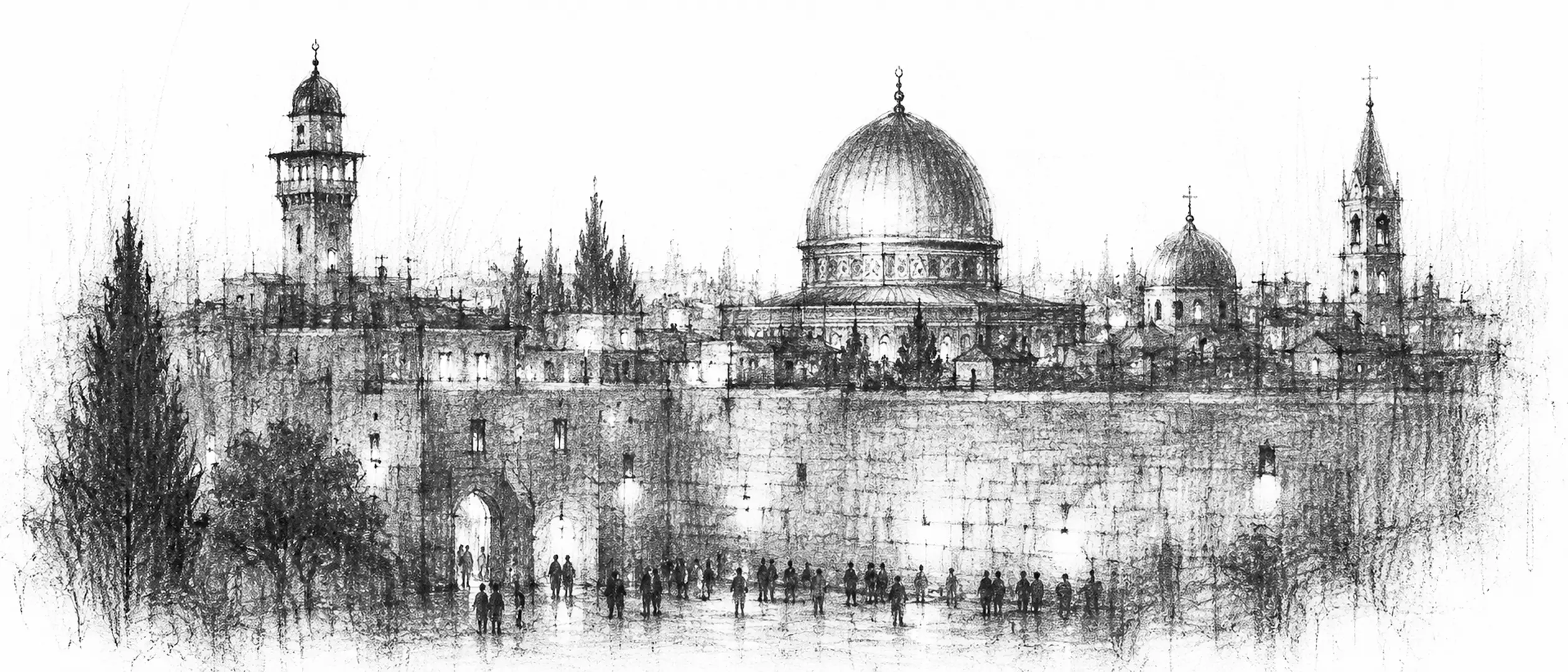
Abroad · never been
Jerusalem is the oldest stone I know how to dream of. Most of the places I keep here I want for their light or their water or their strangeness; this one I want for its weight. A single walled hill, not large, that three of the world’s great faiths each trace back to the same root, the same handful of names, the same few hundred yards of rock — and have spent the better part of recorded history claiming, losing, retaking, and grieving over. There are cities older. There is none, I think, that so many people have wanted so badly for so long. I have never been within two thousand miles of it. Jerusalem sits on me anyway, the way a thing does when you cannot quite work it out.
Coming to Jerusalem from outside
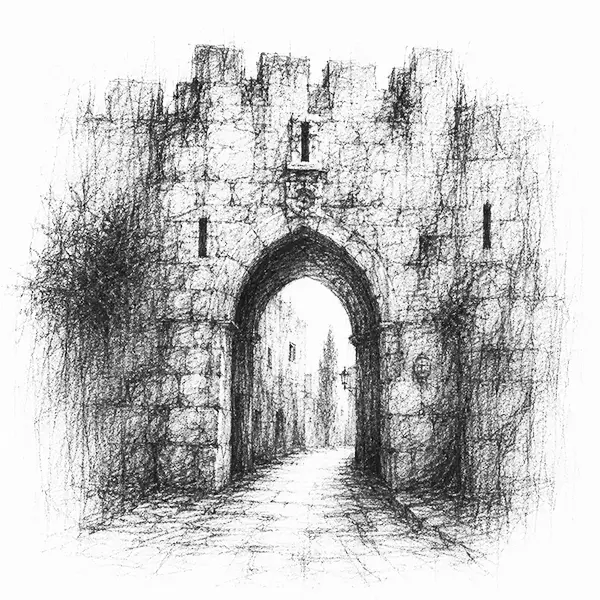
Because I cannot work it out, and I should say from the start that I come at it from the outside. I was not raised inside any of the three. I grew up in a country that, for all its own quarrels, settled long ago on a strange and generous idea: that the truth is one, and that people simply call it by many names, and that the roads to it are therefore many and none of them need be the only one. You take that in with the air, where I am from. So when I look at this hill — where three faiths that share a father and half a library each insist, with total conviction, that theirs is the one true road and the others are wrong turnings — I am genuinely, helplessly puzzled. Not superior. Not amused. Puzzled, the way you are puzzled by a thing you were never given the key to. And part of what I want, if I am honest, is to go and stand where all of it began and feel, in the stone itself, why it has been so impossibly hard.
All of it cut from one stone
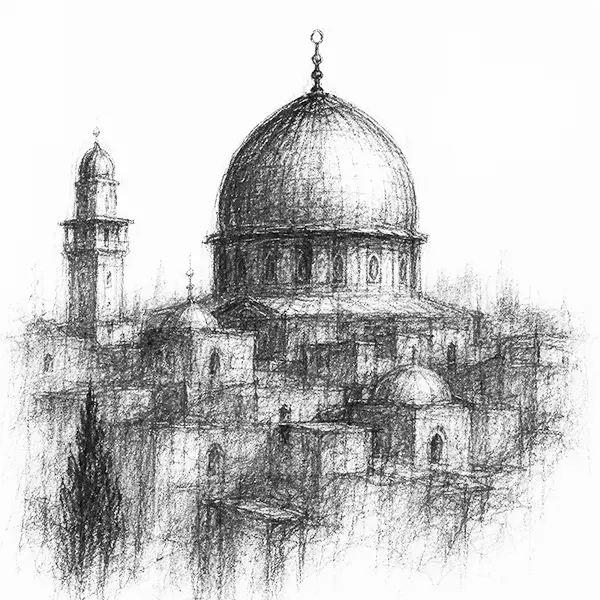
What I have is the city everyone has: the one that arrives through other people’s lenses. Documentaries that pan slowly across a skyline where a golden dome, a grey one, and a bell-tower share the same few inches of horizon. Photographs of stone worn satin-smooth by the hands and feet of a hundred generations. Films and series that use the place as a backdrop and cannot help making it a character. A friend’s holiday photographs, passed across a screen — a market, a lit lane, a wall. The stone is always the same colour in them, a pale gold that the evening turns to honey, a single quarried limestone that the whole old city is built from by law, so that mosque and church and synagogue and shopfront are all cut from one rock and lit by one sun. I find that detail unreasonably moving. Whatever else divides the place, the stone, at least, is shared.
Prayers folded into the wall
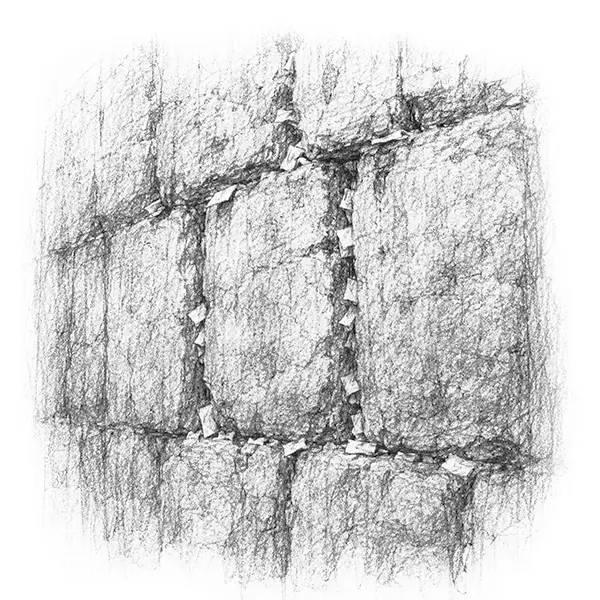
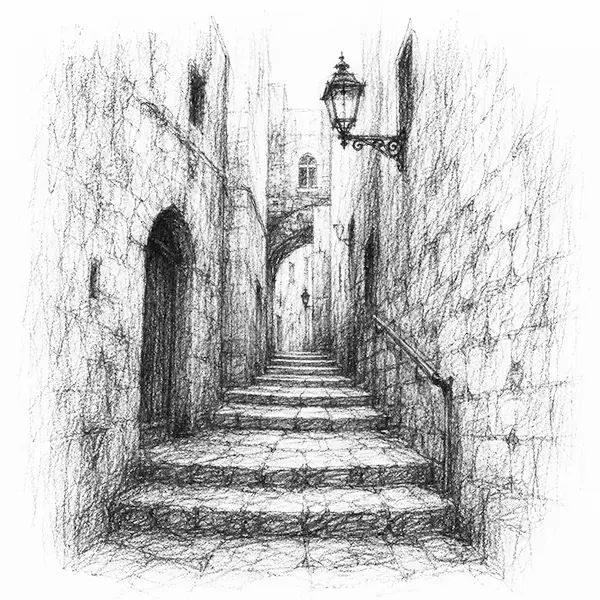
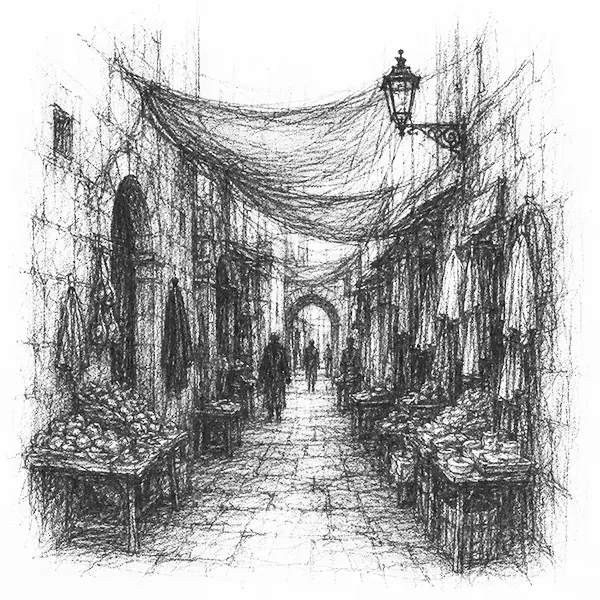
And the details I have collected are mostly small and human, which is how I prefer my far cities. A great old wall where people come to stand and press folded scraps of paper into the cracks — prayers, addressed upward, left in the stone for the wind and the keepers to deal with. Narrow stepped lanes worn into shallow troughs. The call to prayer and a peal of bells and, somewhere under both, the particular hush of a place where people have been asking for things, urgently, in the same spot, for three thousand years. A market roofed and dim, hung with lamps and brass and bread. Worn steps going down to worn steps. None of it, in the photographs, looks like a battlefield. It looks like an old, crowded, devout town that happens to be the most argued-over patch of ground on the planet.
Holy to everyone, at peace for no one
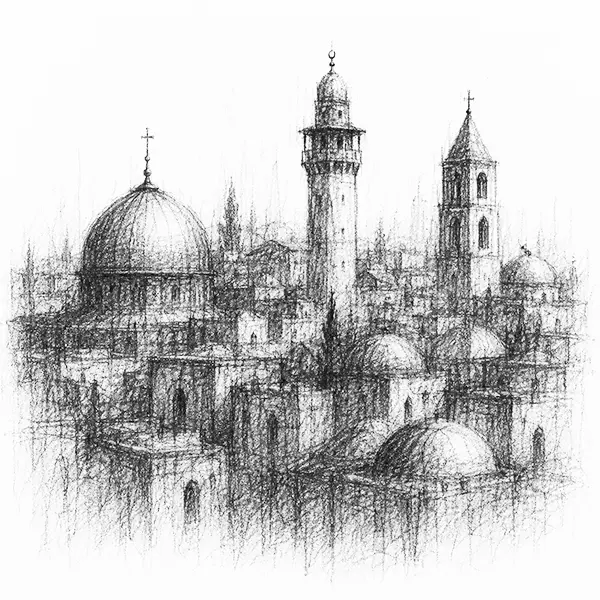
Here is the thing I keep turning over, and I will try to set it down without putting my thumb on any scale, because it is not my quarrel and I have not earned a side in it. The world goes up in flames over this hill. It has, on and off, for as long as there has been a world that could. And yet when I look at the place itself — the stone, the lanes, the lamps, the people carrying bread home up the steps — all it seems to want is what any town wants: to be left in some kind of order, to be allowed to be ordinary, to be civil. Jerusalem is a city that stands, for billions of people, for the very idea of a power that protects; and in the name of protecting it, people have done one another almost every harm there is. I do not understand that, and I am not pretending to. I only notice it, the way you notice a wound that will not close. A place built to be holy to everyone, and held, for that exact reason, by no one in peace.
Jerusalem behind its newest walls
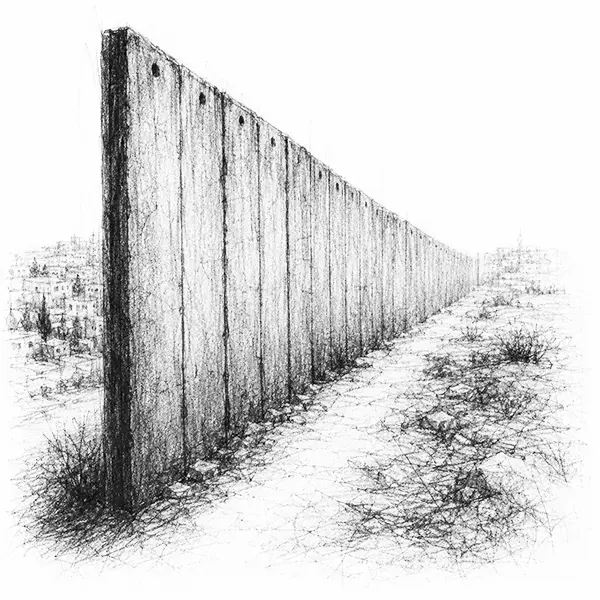
The photographs that stay with me longest are not the golden ones. They are the walls. Not the old, sacred, prayer-stuffed wall — the new ones, the high blank grey ones that run across the ground in long straight lines and decide who is on which side of them. A city this old, this holy, this dreamed-of, and one of the truest images it now offers the world is a wall with nothing written on it, cutting a street in half. I keep that picture next to the golden dome on purpose. They are the same city. That, more than any single monument, is the thing I would go to understand — how a place can be, at once, the great shared root and the great dividing line; how the same stone holds up a dome you can see for miles and a wall built so that two neighbours cannot see each other at all.
I could go to Jerusalem, in the ordinary sense — it is a flight and a visa and a sum of money, no more impossible than any of the others. The honest reason I have not is the usual small failure I have confessed in every one of these. But there is a second reason, particular to this place, and it is closer to humility than to fear. It is a city where everyone who arrives seems to arrive already certain — already belonging to a side, a faith, a claim. I would arrive belonging to none of them, wanting nothing from the stone but to look at it, and I am genuinely unsure whether there is room, in so claimed a place, for a man who only wants to stand quietly and not understand. Perhaps that is exactly the room it most needs. Perhaps that is sentiment. I cannot tell from here, which is rather the whole problem.
So I keep the gold and the grey together, and I keep my distance, and I keep my puzzlement, which I have decided is a more honest thing to carry than a borrowed certainty. The dome catches the last of the sun. The notes are folded into the wall. The bells and the call go up over the same rooftops at slightly different hours, as they have for centuries, neither cancelling the other out. And the new walls stand where they stand. I would like, once, before I am done, simply to stand on that hill among all of it — not to settle anything, not to take anything home, only to see with my own eyes the small ordinary town at the centre of the world’s longest argument, and to be, for an afternoon, the one person on it who came only to look. I have never been abroad; I would like Jerusalem – the city at the centre of the world to be the place that finally ends that.
“Jerusalem: ancient walled city in the Judaean hills, held sacred by Jews, Christians and Muslims alike; built almost entirely of the pale local limestone, and among the most contested pieces of ground in human history.”
— from a school geography text, already out of date when I read it

Leave a Reply