Abroad · never been
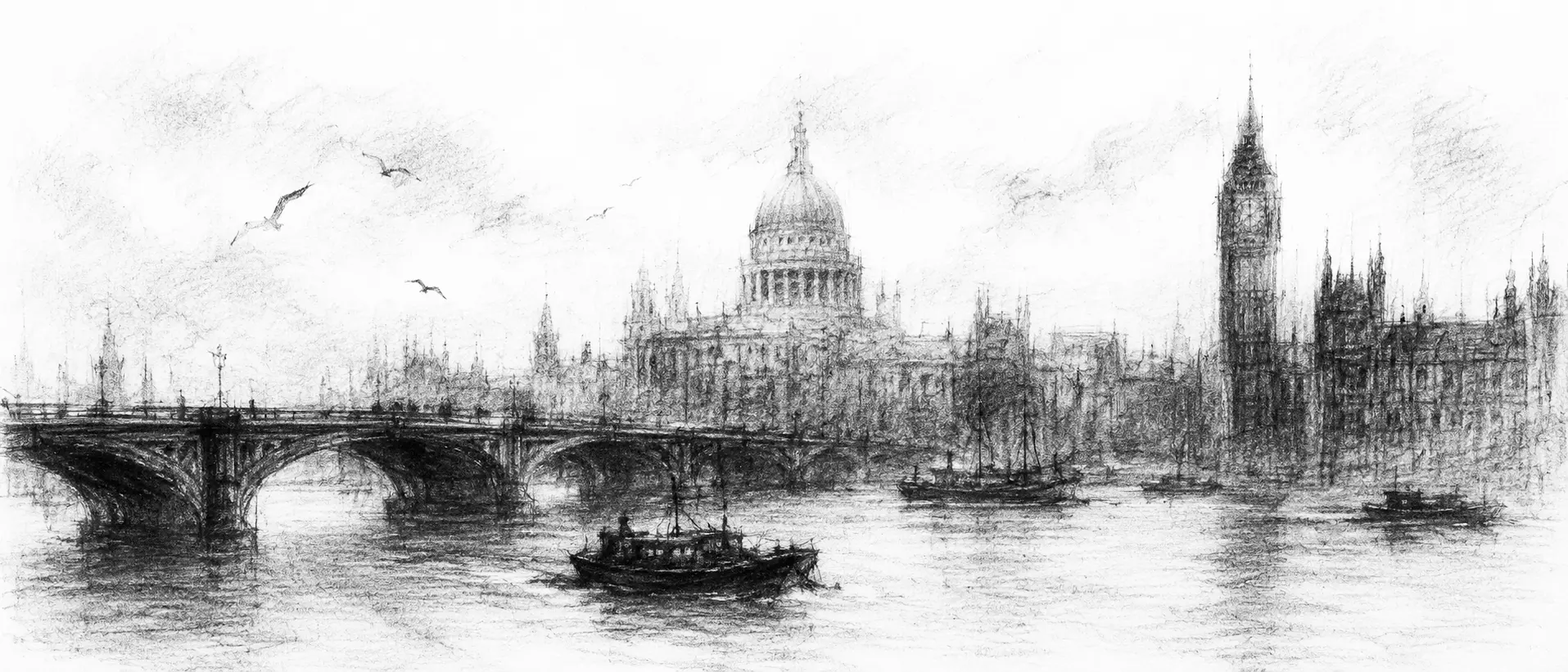
London is the foreign city I know best, and I have never seen a single street of it. That is not a paradox so much as an inheritance. I was born in a country this city ran, from a great distance, for the better part of two centuries; and long after it stopped running us, the things it left behind stayed — chief among them the language I am using right now, which arrived on the same ships as the rule and somehow outlasted it, and which I write more readily than I write my own. So I did not come to London the way I came to Venice or Reykjavík, building it out of scraps. London was issued to me at school, in a borrowed tongue, as a sort of second capital of the mind. I have been reading it my whole life. I have just never stood in it.
The London I read before I saw it
The reading is the thing. The encyclopedia, of course, and the documentaries with their grave narrators walking me along the river. But mostly the films — and not only the old black-and-white ones, though those too; films across eight decades, the wartime ones and the swinging ones and the grey rainy modern ones, and the costume dramas that take you back through fog to a London of gas and horses. And the books, a whole childhood of them, set in a city of yellow fog and hansom cabs and orphans and inheritances, read in a hill town a long way away, so that by the time I was twelve I could have given you directions, more or less, through a London that had not existed for a hundred years and that I had assembled entirely out of other people’s sentences.
The empire gone, the grammar stayed
I should say plainly that I carry no grudge I can find. It would be easy, and not entirely wrong, to look at the old centre of all that and feel the weight of what was done from it; but the honest truth is that it is too long ago and too thoroughly mixed into me now for anger to get any purchase. They took a great deal and they left a few things, and one of the things they left I have made unarguably my own — I am, after all, describing their capital to you in their language and enjoying myself doing it. There is a wry justice in that I have always rather liked. The empire is gone. The grammar stayed, and changed owners, and here we both are.
Homesick in advance for the grey
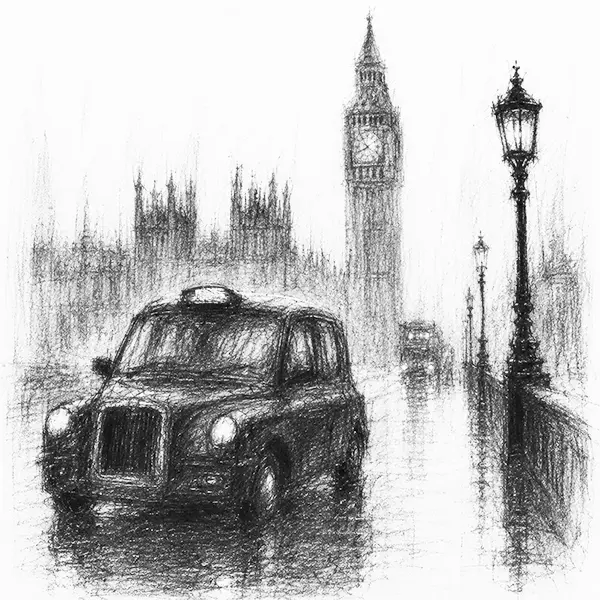
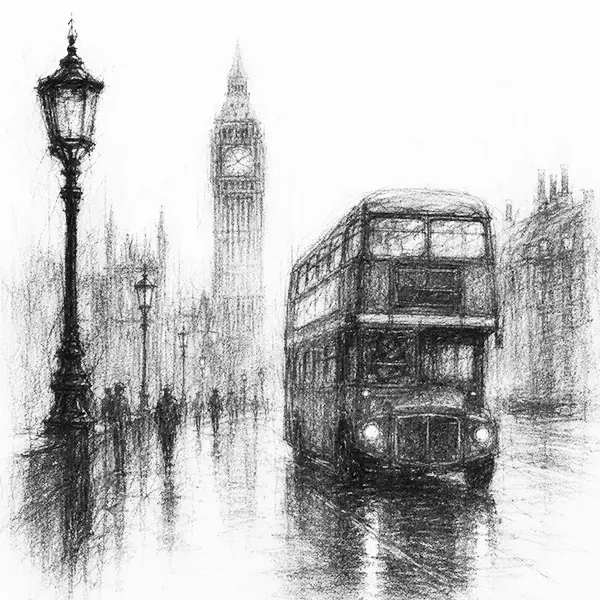
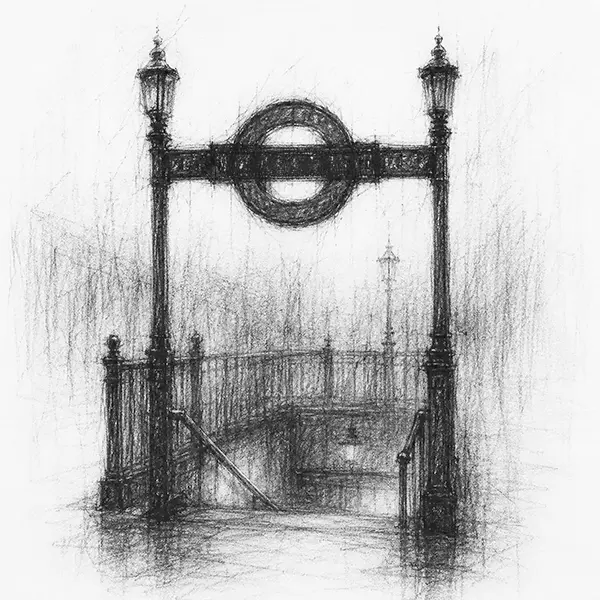
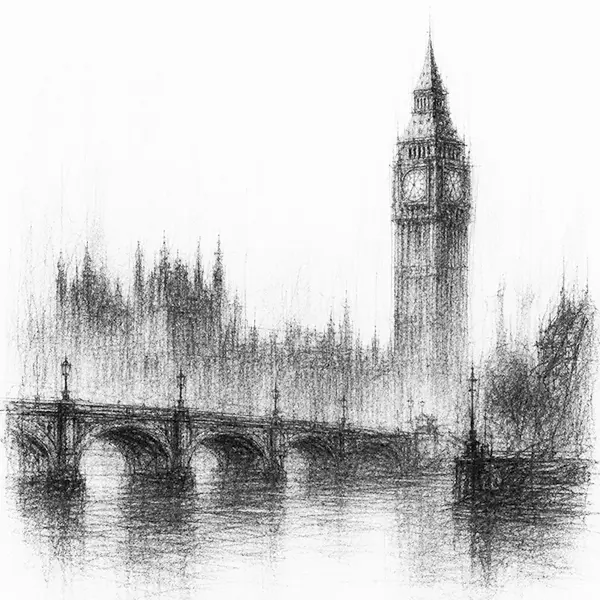
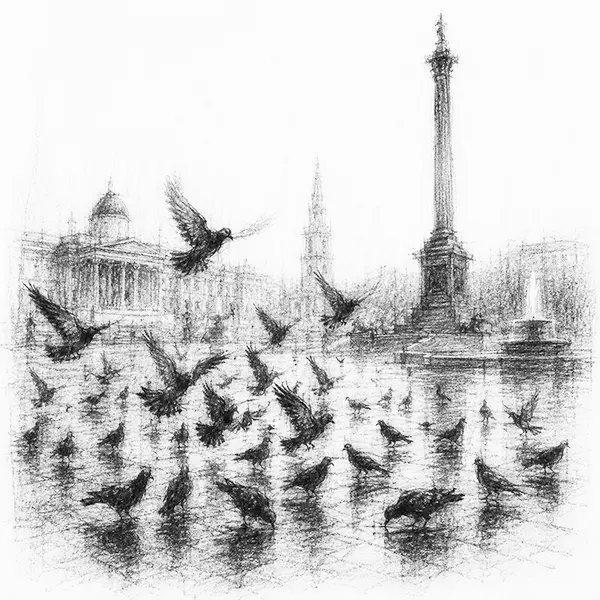
The concrete city, the one in the photographs, I know by heart without having earned it. The grey, first — a city that seems to come in every shade between cloud and pavement, rain on stone, the river the colour of the sky. The red buses, double-decked, going by in the wet. The round red-and-blue sign over the steps down to the Underground, and that particular thing everyone mentions: the warm wind that comes up the stairs ahead of a train you cannot yet see, pushing the day’s used air out into the street. The black cabs, high and rounded and somehow dignified. A great clock tower at the river’s edge. Pigeons going up all at once off a vast paved square. None of it is mine. All of it is familiar. It is the strangest feeling, to be homesick in advance for a place you have never been.
Buildings honest enough not to match
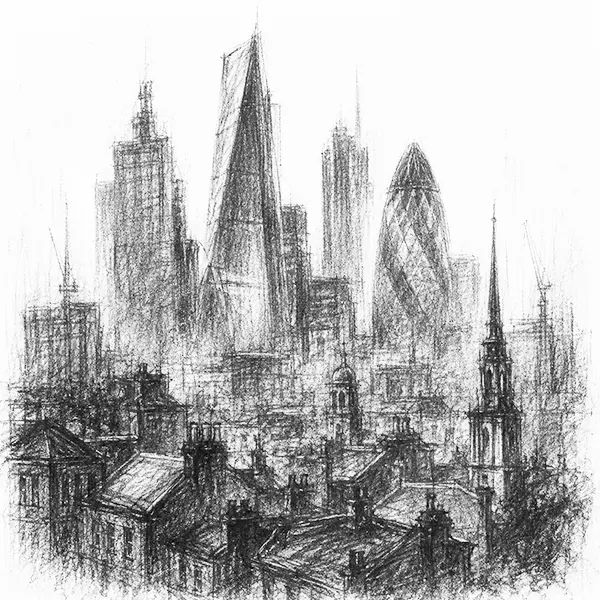
What fascinates me most, though, is a thing the books never mentioned and only the recent photographs show: how the city is built out of every century at once, with no apparent agreement between any one building and the next. A blackened medieval church standing in the shadow of a glass tower shaped, frankly, like a vegetable; a Victorian market beside a slab of raw concrete beside a thing all mirrors; a dome from one age, a spire from another, a great wheel from this one, none of them matching, none of them asked to. A friend sent me a photograph once of the cluster of new towers in the old financial quarter — one like a gherkin, one with a great sloping top, jammed up over the small brown rooftops and a church or two — and instead of the eyesore I was meant to see, I found I loved it: a city honest enough to let every era it has lived through simply stand there, elbowing the others, refusing to be tidied into a single style. A misfit, beautifully, on purpose. I think I would feel at home among buildings that do not match, having spent my life among towns that do not match, being a man who has never quite matched his own.
The patch of London I would walk to first
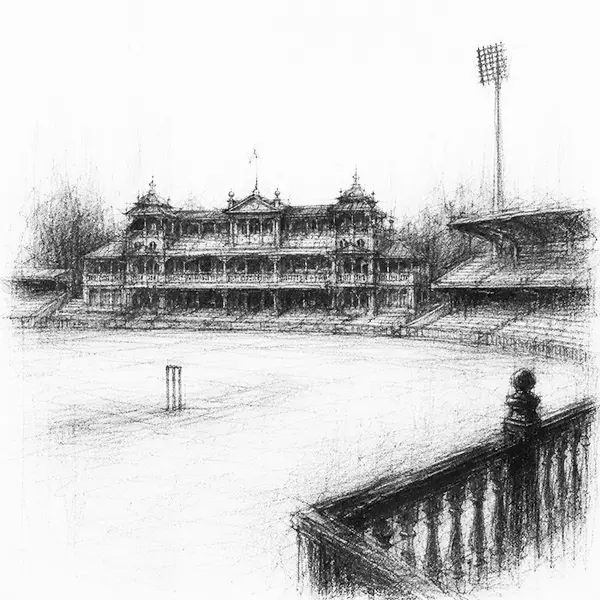
And then there is the real reason, the one underneath the language and the fog and the architecture, and it is a game. Cricket — the most English thing there is, invented on their village greens, carried out across the empire as a sort of civilising lesson, and then, in one of history’s better jokes, taken up by the colonies and played, eventually, rather better than the teachers. I love it the way only someone from my part of the world can love it, completely and irrationally, and the dream I will confess to is not a museum or a palace. It is a seat at Lord’s — the home of the whole thing, the ground where the game keeps its memory — on an ordinary day, doing nothing, looking across the green at the old pavilion with its long balcony where the captains come out, the members in their colours, the little press box, the slope of the outfield. To have loved a game my whole life, a game my country half-owns now, and never once to have sat at the place where it lives. Of all the streets of London I have never walked, that is the patch of grass I would walk to first.
So why have I not gone, when this of all places would be the easiest — no language to learn, no real strangeness, a city I could navigate on the first morning from memory alone? The usual answer, the small daily failure I have owned up to in every one of these, and one extra thing besides. I am a little afraid of how well I know it. With the others, going would be discovery. With London I am not sure there is anything left to discover; I have read it too thoroughly, for too long. I might step out at the station into the grey and the red buses and the warm tunnel wind and feel only the flat click of recognition — ah, yes, exactly as described — and that is a strange and specific thing to be afraid of, the disappointment not of finding too little but of finding precisely what you were promised.
So I keep the city I was raised on at second hand, in the language it sent us and we kept. The grey river under the low cloud, the red buses in the rain, the mismatched centuries standing shoulder to shoulder and not speaking, the warm wind coming up out of the ground ahead of a train. And out past all of it, a quiet green ground with an old pavilion at one end, where a game the English gave away is still played, and where there is an empty seat I have been meaning, my whole reading life, to come and take. I have never been abroad, and the country that taught me to read is still only something I have read.
“London: capital of the United Kingdom, on the river Thames; once the centre of the largest empire in history, and long a great port and seat of trade, law, and the English language.”
— from a library reference book I renewed until they asked for it back

Leave a Reply