Abroad · never been
Most of the places I dream of are old, and most of them are old precisely because the dreaming likes ruin and weather and the long patience of stone. Singapore is the opposite, and that is exactly why I cannot leave it alone. It is one of the few cities on earth that is younger than the idea of itself — a place that, within a single human lifetime, took an equatorial swamp at the tip of a peninsula and decided, with what seems to have been almost frightening deliberation, to turn itself into the future. There are people alive who remember it as something else entirely. That a city can be willed into existence like that, cleaned and ordered and engineered up out of the mud and the heat in fifty years, is to me a kind of marvel and a kind of unease at once, and I have never been to see which one wins.
It comes to me, as everywhere does, secondhand — documentaries, photographs, the endless approving footage, a former colleague who stops there on the long flights east and speaks of it the way people speak of a very expensive, very efficient machine they cannot quite love but cannot fault. Between them they have built me a city of glass and rain and relentless newness, where the towers are draped in plants and the airport has a waterfall and nothing, anywhere, is broken or late or dirty. I come from places that are none of those things, gloriously, exhaustingly none of them, and the idea of a city that simply solved the problems mine have lived with forever is one I want to stand inside, if only to feel what is gained and what is quietly lost.
The ship in the sky of Singapore
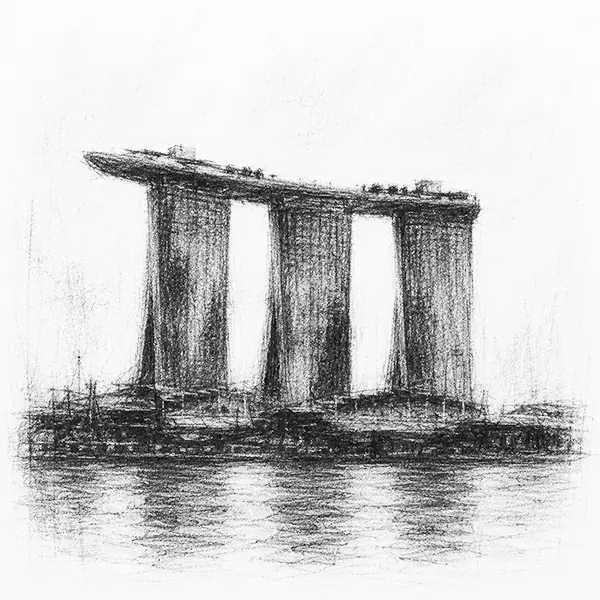
The image that fixed the place for me is the absurd and wonderful one everybody has now seen: three tall towers with an entire ship laid across their tops, a long curved deck slung in the sky between them, with a swimming pool up there on the roof of the world. It is architecture as pure swagger, a building that exists to make you say they did not and then admit that they did. I am torn about it exactly the way I am torn about the whole city — half of me finds it a vulgar trick, and half of me is a delighted child. I would like to stand at its foot and look up and feel both halves at once, which is, I suspect, the honest response the place is designed to produce.
The forest an engineer dreamed
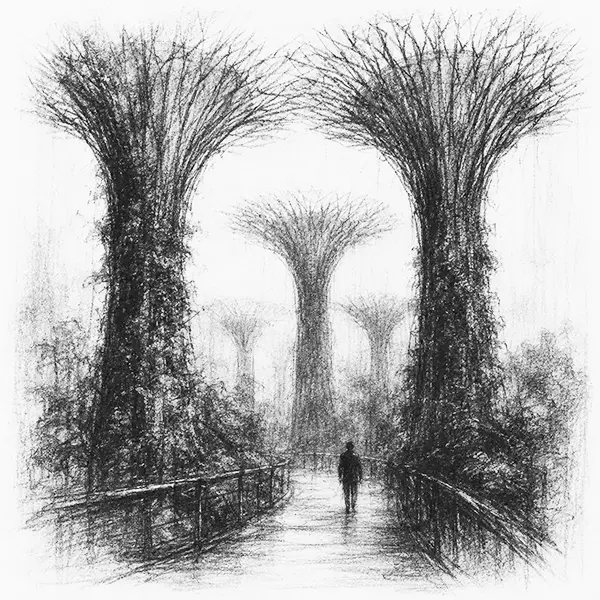
Then the gardens that are not gardens — the giant artificial trees, taller than buildings, steel structures grown over with real plants and lit up at night, a forest that an engineer dreamed and a botanist filled in. It is the city’s whole character in one object: nature not found but manufactured, improved, scheduled, made to perform on the hour. A part of me recoils — a tree should not need a steel skeleton and a lighting cue. And a part of me thinks it is the most honest thing the place has built, a city that cannot pretend its greenery is wild admitting outright that here, everything, even the forest, is on purpose. I would walk under them at night and not know whether I was charmed or chilled.
The old city under the new
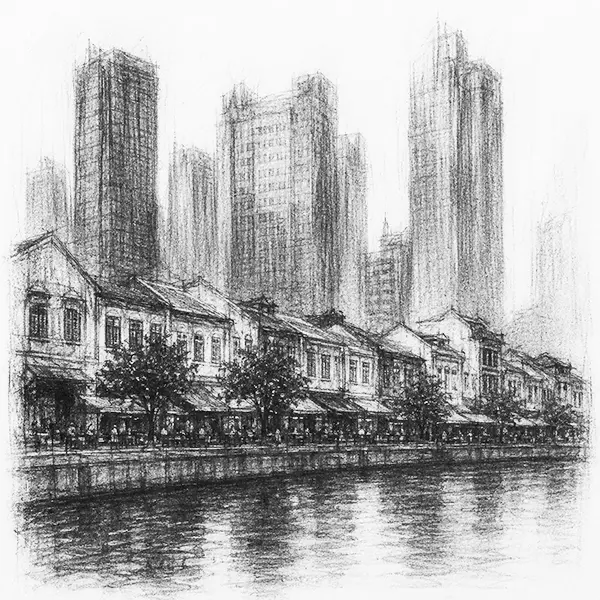
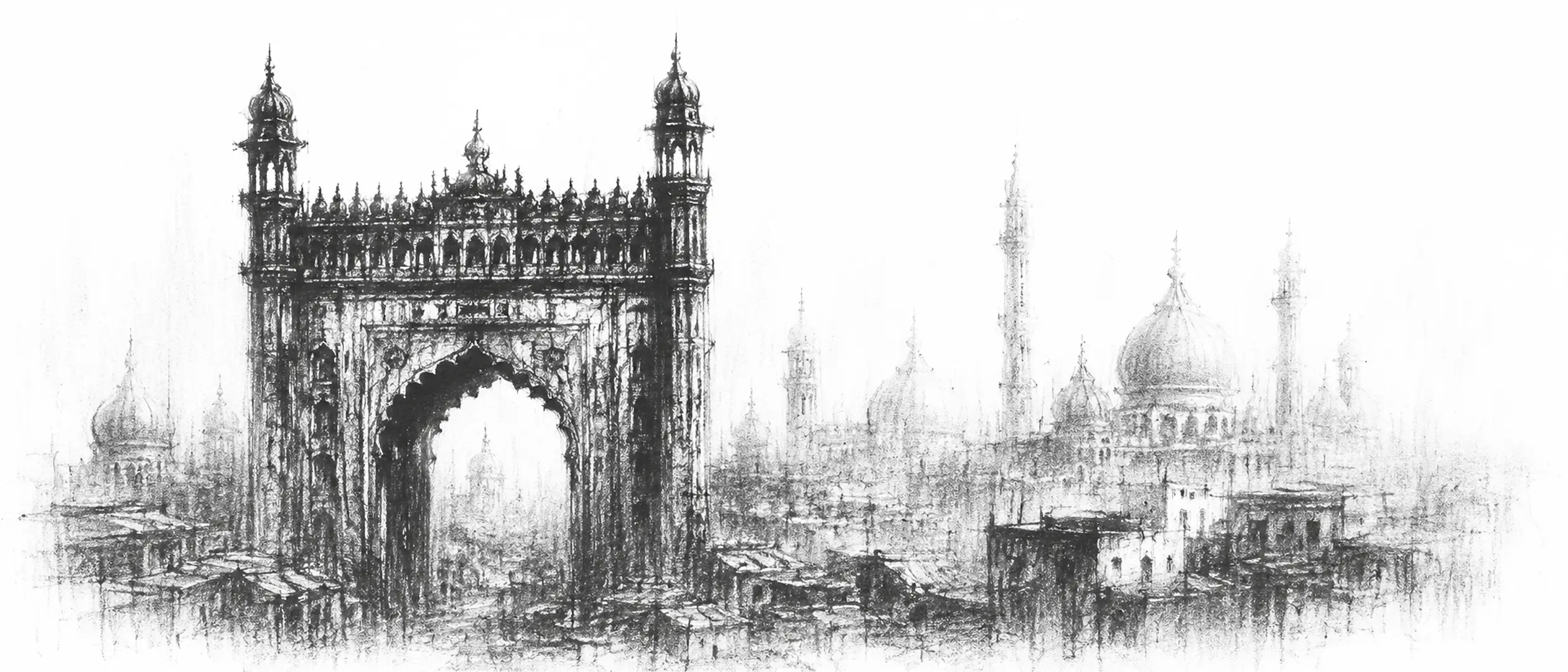
What I would look for, I think, is the older city under the new one — the low rows of colonial shophouses along the river quays, with their shutters and their five-foot ways and their faded paint, crouched now in the shadow of the glass towers that have grown up behind them. Every engineered city keeps a little of its past as a kind of garnish, and I always find myself drawn straight to it, to the few crooked old streets left standing among the perfect new ones. I would want to sit on one of those quays at dusk, the old waterline at my back and the impossible towers lit up across the water, and feel the whole compressed century of the place in a single view.
A legend built from scratch
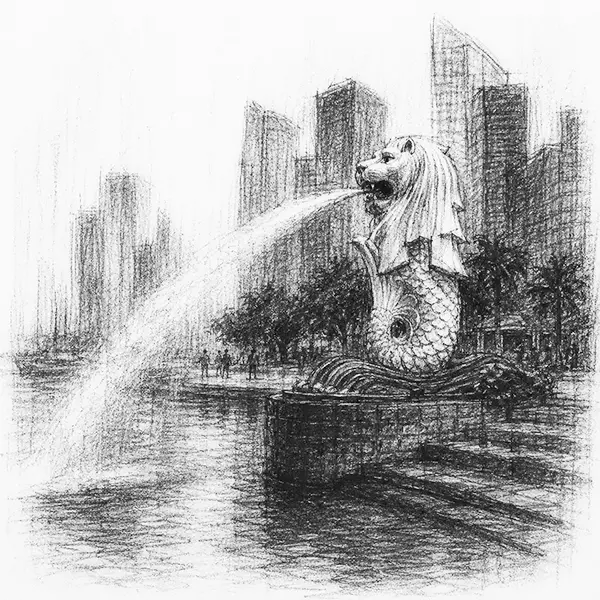
The city has invented itself a mascot, as engineered places do — a creature with a lion’s head and a fish’s body, spouting water at the harbour’s edge, half myth and half marketing, a symbol manufactured for a place too young to have grown its own. I find it faintly ridiculous and I am oddly fond of it, the way you are fond of anything trying that hard. A city building itself a legend from scratch because it has not been around long enough to inherit one is doing, in miniature, exactly what the whole place does: deciding what it wants to be and then simply constructing it, monsters and forests and futures included.
The hawker counter at midnight
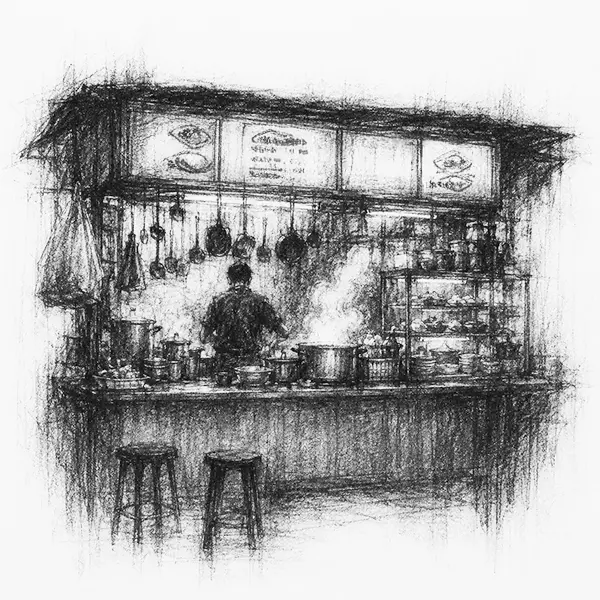
And then, thank goodness, the food, which is where the engineered city finally lets its hair down and where I would spend most of my time. For all its order, the place is mad about eating, and does it in great crowded hawker halls where a hundred stalls steam side by side and the whole polyglot history of the peninsula — the Malay, the Chinese, the Indian, the everything — turns up on little plates for the price of nothing. That is the Singapore I think I could love without reservation: not the towers or the trees but the hawker counter at midnight, the queue, the steam, the noisy democratic business of a hot crowd eating well. I am a greedy man, and this is the part of the future I would happily move into.
The strait that made Singapore
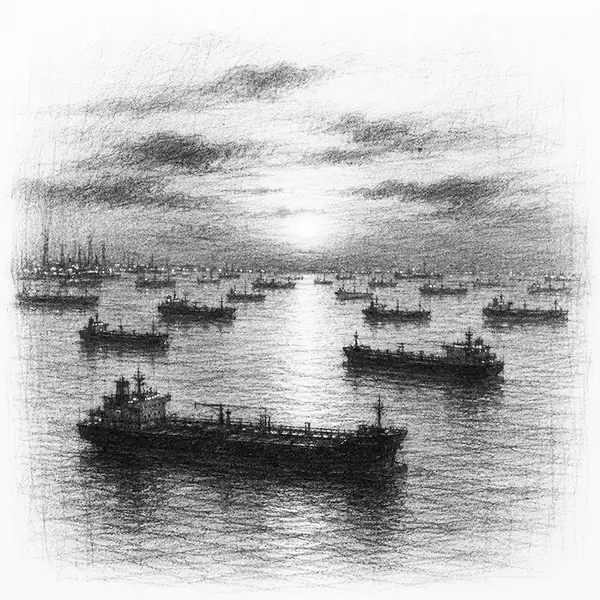
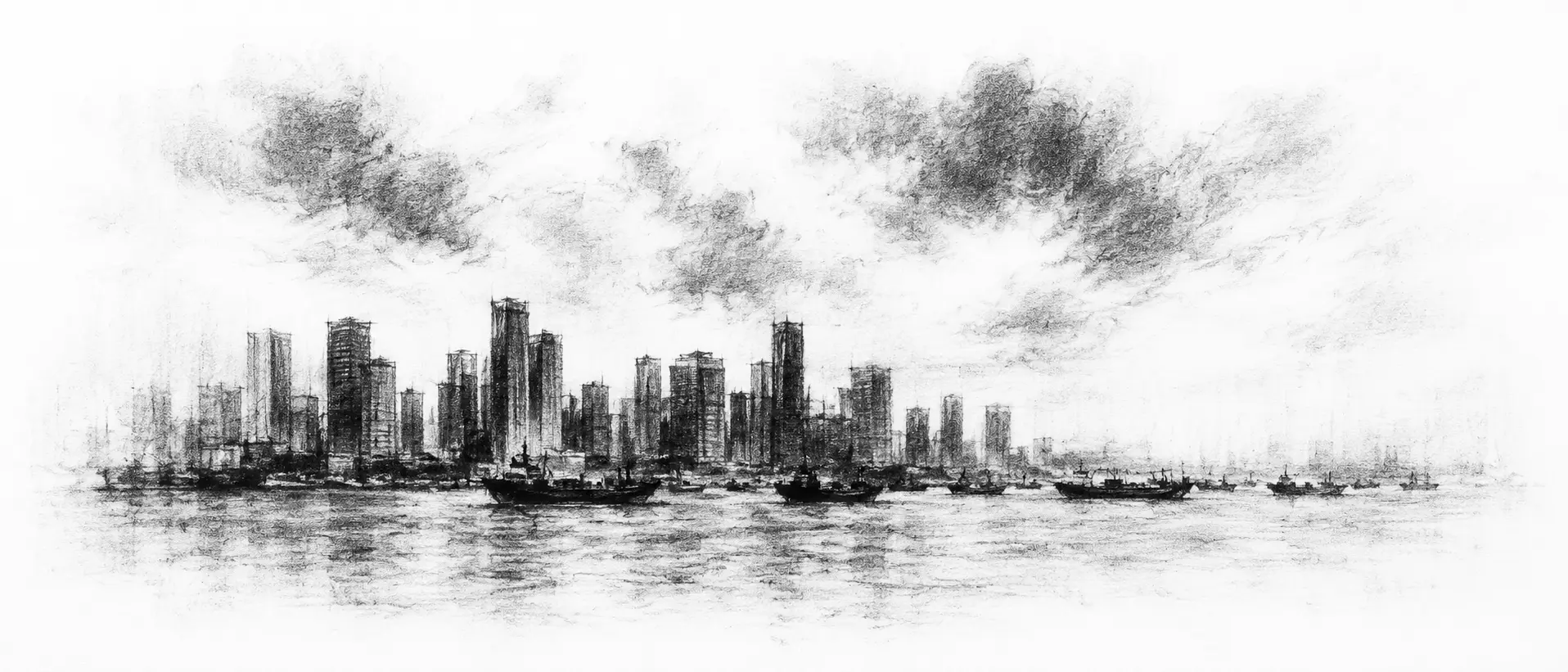
And beyond the bright edge of it all, the sea — the strait crowded with ships, hundreds of them at anchor and under way, the freighters and tankers that are the real reason the place exists at all, because it sits astride the gap that half the world’s trade must pass through. The glass and the trees and the lion are the show; the ships are the engine. I would like to stand at the water at dusk and count the lights of them out to the horizon and remember that the gleaming impossible city behind me is, underneath the swagger, a very old and very simple thing: a place that controls a narrows, grown rich on everything that has to sail past.
So Singapore is the strangest entry in this book of mine — not a ruin I long for or a wilderness I cannot reach, but the most finished, most arrived, most thoroughly completed city there is, dreamed of by a man who has never managed to arrive anywhere at all. There is a joke in that I cannot quite get past: that the place which solved the problem of how to get where it was going holds, for me, the same plain obstacle as all the others — a flight, a fare, and a life that keeps not taking them. One of these years I should go and stand under the ship in the sky, and walk beneath the steel forest, and eat at the midnight counter, and find out whether the future is somewhere I would actually want to live, or only, like everywhere else, somewhere I would want to have seen. I have never been abroad; the city that arrived everywhere is the one I have most completely failed to reach.
“Singapore: island city-state at the southern tip of the Malay Peninsula, astride the strait that bears its name; transformed within a single generation from a colonial trading port into one of the world’s wealthiest and most ordered cities.”
— from a library reference book I renewed until they asked for it back

Leave a Reply