Abroad · never been
Quebec City arrived in my head fully walled, which is not how cities usually come to me. Most of them I have to assemble from loose parts — a roof here, a river there, a fact I am not sure I trust. This one came whole, and came as a contradiction: a walled town of the old European kind, thick stone gates and all, set down on a cliff on the wrong side of an ocean, in a country I think of as too young and too cold to have any use for a wall. I read once that it is the only fortified city left on the whole of its continent north of Mexico, and I have never checked, because the fact is doing exactly what I need it to. A piece of old France, left out in the snow, refusing to admit which century it is in.
The castle that crowns Quebec City
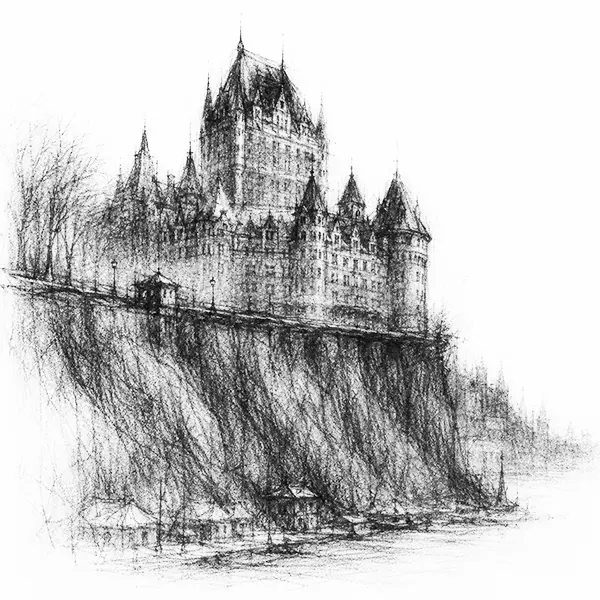
What you see first, in every photograph anyone has ever taken of the place, is the hotel. It sits on the very lip of the cliff, a great pile of turrets and steep roofs and dormers, more castle than lodging, the sort of building a child would draw if you asked for a fortress and gave him a green pencil. It was raised, someone told me once, by a railway company that wanted travellers to arrive at the edge of nowhere and feel they had reached somewhere after all — an advertisement the size of a palace, put up to sell the idea of the country to the people crossing it. I like that it is honest about being a performance. It stands where a real fort once stood, playing the part of a castle so completely that the actual castle underneath it is forgotten. I have looked at it from below in a dozen pictures and never once wanted to go inside. It is the outline I keep.
Down into the lower town
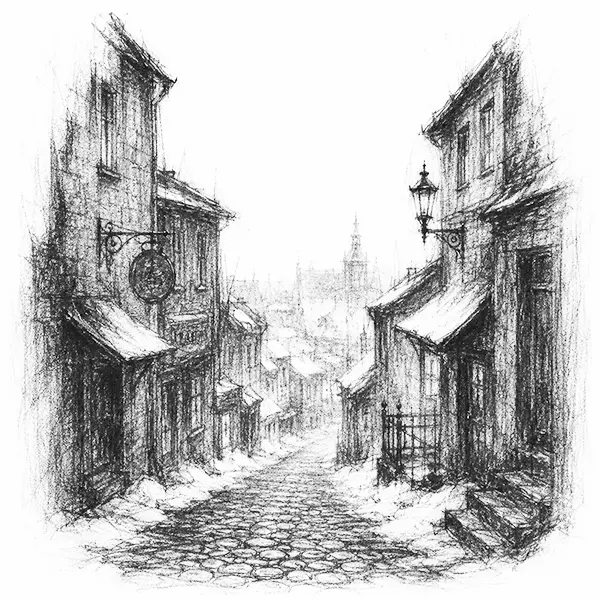
Below the cliff there is the older, smaller town, the one that came before the hotel and the wall and the grandeur — a huddle of thick stone houses down at the level of the water, where the first people to arrive actually lived before they thought better of it and moved up the hill out of the flood and the wind. The lanes down there are narrow and steep and paved in round stone, shopfronts leaning close over them, and in the footage they are always either hung with lights or knee-deep in snow, sometimes both. It is the part everyone photographs and nobody explains, because there is nothing to explain: it is simply very old and very small and improbably intact, a European alley that took a wrong turn across the Atlantic and never found its way back. I have walked down it in my mind more than I would admit at dinner.
The only wall left standing
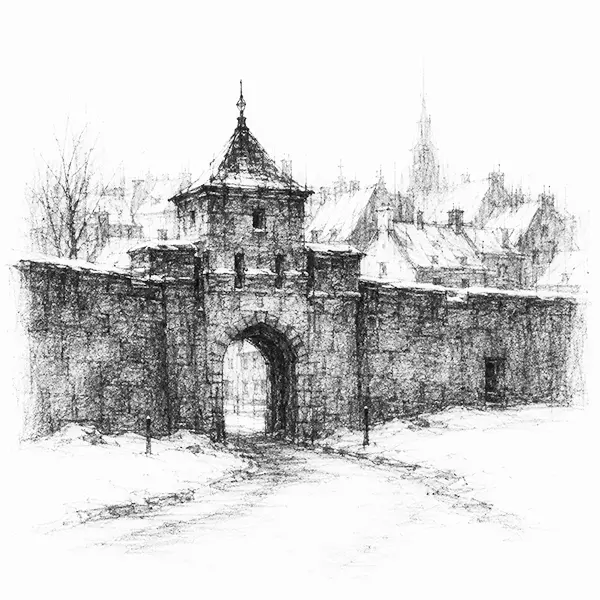
Then the wall itself, which is the thing that fixed the place in me for good. A real defensive wall, low and thick and grey, running right around the old upper town, pierced here and there by arched stone gates a cart could just about pass through — gates that a modern city has to steer its traffic around, patiently, because it will not knock them down. I have read that they nearly did, more than once, in the practical years when a wall was only an obstacle, and that each time somebody argued them out of it, and the wall stayed. A town that keeps the wall it no longer needs, that drives its buses the long way round a gate a musket once guarded, has decided something about itself that I recognise. You keep the old defence not against an enemy but against forgetting who you were when you built it. I have kept whole cities on exactly that logic.
Winter made a festival in Quebec City
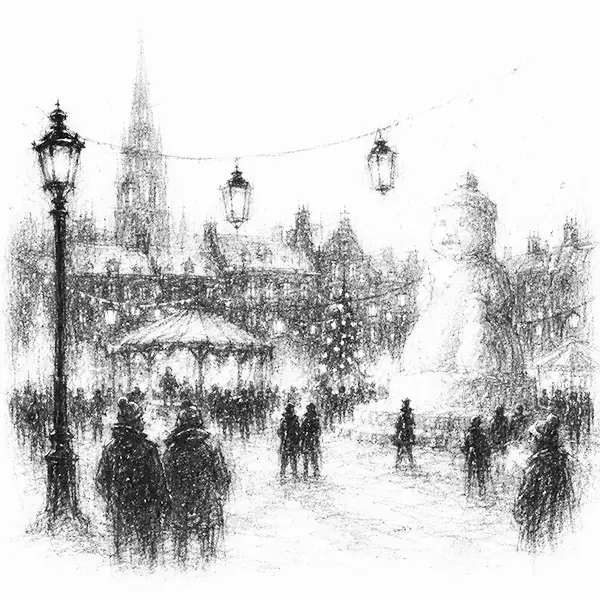
The winter there is not a season I can properly imagine, which is precisely why I keep returning to it. Somewhere I picked up the fact that they hold a great festival in the dead of it, in the coldest, darkest stretch when any sensible town would be indoors waiting it out — that they go the other way instead and fill the frozen streets with lanterns and snow sculptures and people in the cold on purpose, as though the winter were a guest to be entertained rather than a siege to be survived. Being a man from a city where the difficulty is heat, where the whole year is arranged around getting out of the sun, I find something close to defiance in it. Quebec City, so buried in snow that it decided, at some point, to throw the snow a party. I have watched the same few minutes of that footage many times, the breath of the crowd going up white under the lamps, and understood almost none of it, and wanted it anyway.
The little railway up the cliff
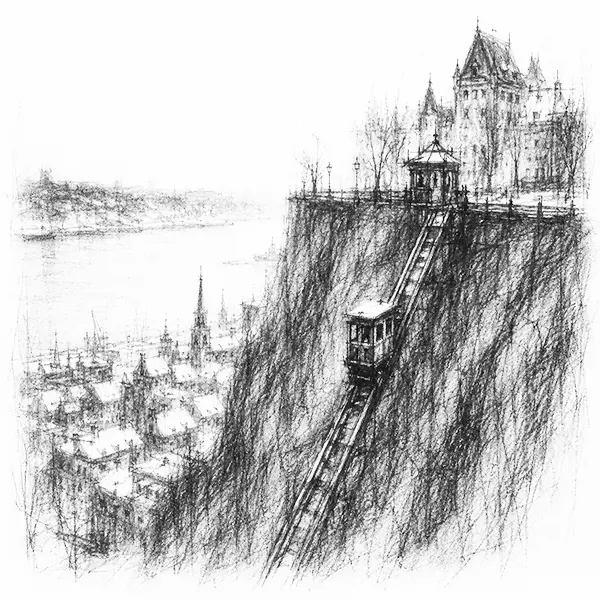
Between the lower town and the upper there is a small funicular, a box on a rail that climbs the sheer face of the cliff, hauling people up out of the old riverside quarter to the grand streets on top so they do not have to take the long stair in the snow. It is a modest, ingenious thing, and I have ridden it in my head far more often than the trip could ever justify — the town dropping away beneath, the river opening out grey and enormous below, the roofs of the lower town tilting as you rise. It does in half a minute what the first settlers did over a century: it carries you from the cramped, flooded, practical beginnings up to the view, the wall, the castle, the part of the place that decided it was going to be permanent. I find I trust cities that keep the climb visible. Quebec City has bolted it to the cliff for anyone to see.
Quebec City, where the river goes hard
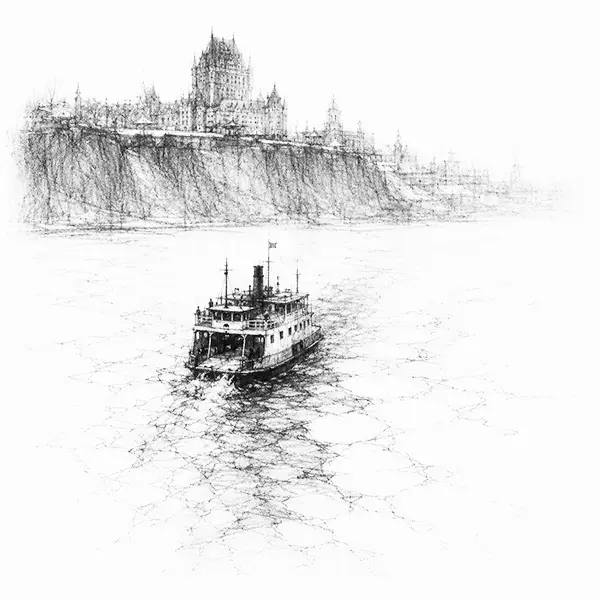
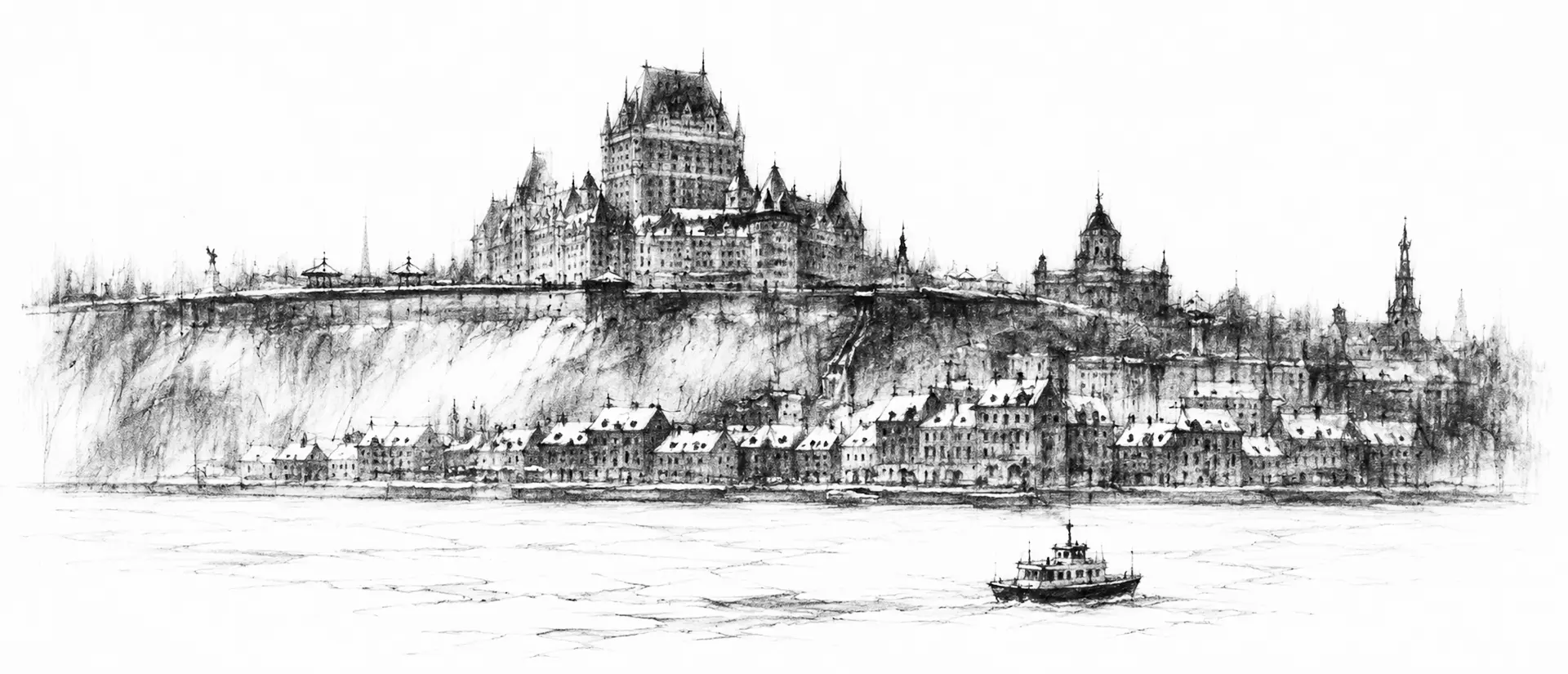
And under all of it, the river. The St Lawrence there is very wide and, for a good part of the year, half frozen — not a solid sheet but a moving field of broken pale floes grinding slowly down toward the sea, so that the little ferry that crosses to the far bank has to push through it, opening a black lane in the ice that closes again behind it almost at once. There is a photograph I have kept a long time, of exactly that: the boat small and dark, the ice fanning white from its bow, the cliff and the castle rising behind. I think about the ordinariness of it, that this is simply the commute, that people stand on that deck in the cold reading the paper while the boat breaks a river to get them home. It is the kind of detail no fact can give you and no visit could improve.
I could go, of course. You have heard this from me before and you will hear it again, in the same flat voice. The passport is in the drawer, on its third renewal, clean as the day it was issued, and Quebec City is a long flight and a stamped visa and a sum of money I keep spending, year after year, on nearer and smaller things. No wall keeps me out — the wall is theirs, and it lets everyone through its gates. There is only the distance, and the cost, and the old familiar failure wearing a new coat each winter. I have started to suspect I keep the town precisely because I have not gone; that the morning I actually stood inside the real gate in the real snow, the walled grey Quebec I have carried for years would fold itself up and hand me back the ordinary one that every visitor already owns.
So I keep it where it is, up on its cliff behind its stubborn wall, the castle crowning the ridge, the funicular climbing, the lower-town lanes deep in snow, a small boat breaking a lane through the ice on the river below. I have never been abroad; Quebec City is one of the towns I have decided, for now, to keep behind glass rather than spend.
“Quebec: city and provincial capital, Canada, founded 1608 on a cliff above the St Lawrence River; the only walled city in North America north of Mexico.”
— from an old geography reader, the pages soft at the corners

Leave a Reply