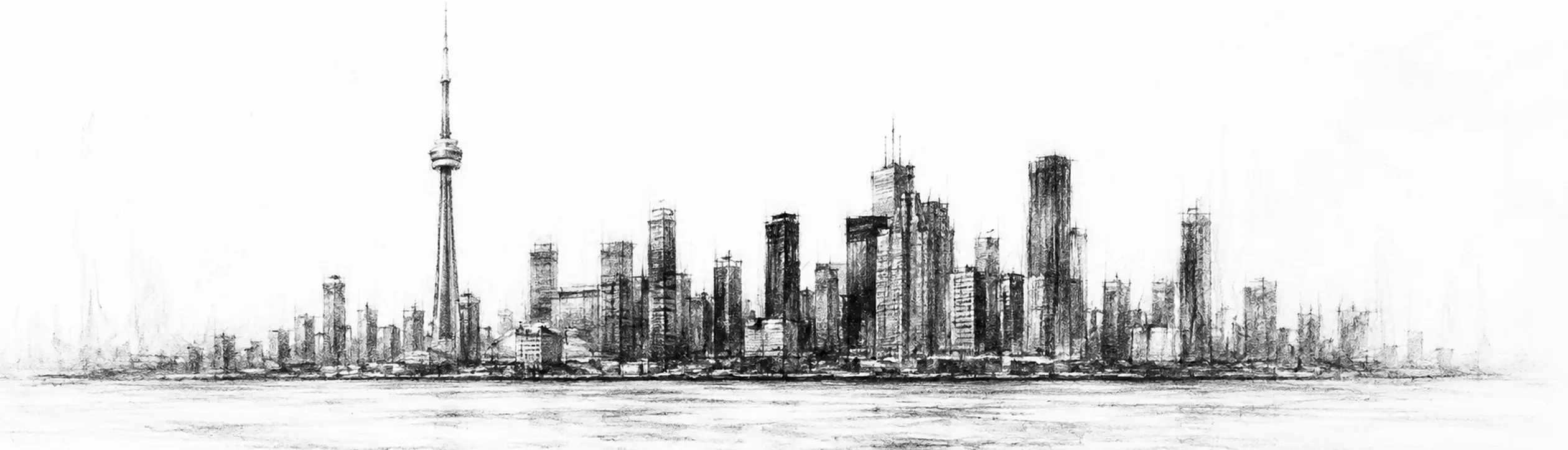
Abroad · never been
I think of Toronto as the city I might, in another life, have moved to. It is flat, orderly and cold, set on the shore of a lake so big it has no far side, a lake that is really an inland sea. Over the last century a sizeable part of the whole world quietly came there to start again, including a great many people from my own corner of it. Toronto is not near me. It is about as far as a place can be while staying on the same planet, a long flight over the top of the world, a visa, a fare always wanted nearer home. That is what abroad is to a man with my passport. But it pulls at me differently from the others, because it is not a city I merely dreamt of seeing.
That is the particular ache of the place. For people of my background and my generation, this was one of the doors out — the steady, lawful, cold country where you filled in the forms and waited and were let in, and your children grew up speaking like the place, and you sent photographs home of snow. I knew people who went. I half-thought about it myself, in the abstract, the way you think about a road you can see clearly and do not take. And so when I look at the pictures of it now, I am not only looking at a city I have never visited. I am looking at the shape of a life I did not choose, lived out by other people in the cold, along a frozen lake, very politely.
I have Toronto the way I have all of them — documentaries, photographs, films, and a former colleague who emigrated there and writes, every so often, with a cheerful, slightly stunned tone, about the winters and the order and the hundred languages on his street. Between them they have built me a city that is not dramatic the way the mountain cities are, not beautiful the way the old ones are: flat, grey, glassy, sensible, enormous, laid out in a calm grid along the edge of all that cold water. I have never seen my own breath go white in air that cold. I think I would find it both miserable and thrilling, the way new misery often is.
Toronto’s stubborn red-brick bones
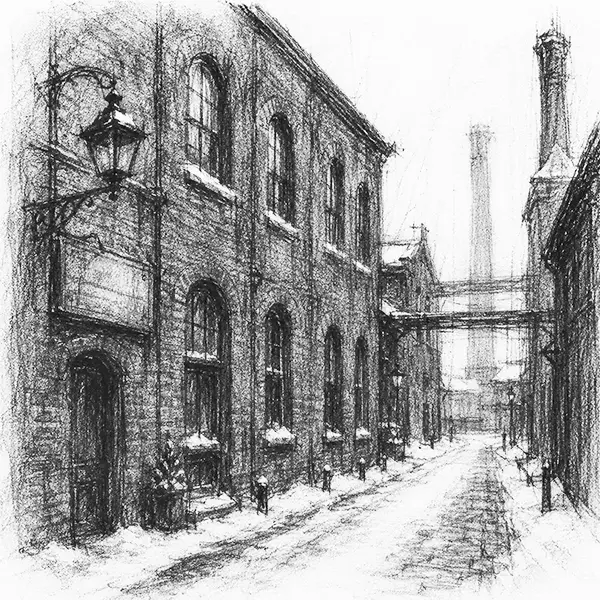
Away from the glass towers there is an older city of red brick — lanes of Victorian warehouses and factories with their heavy industrial fronts, cobbles, iron, all of it kept and cleaned up and turned to other uses, snow on the sills. I am drawn to the leftover working parts of a place, the brick that was built for trade and soot and somehow survived into a softer age. A lane like that, under fresh snow, with the cold light on the old brick, is the part of the city I think I would actually love — not the towers, which any city can grow, but the stubborn red-brick bones underneath them. I would walk it slowly, in a coat that was certainly not warm enough, and like the city for keeping its old skin.
Toronto – at the frozen edge of Lake Ontario
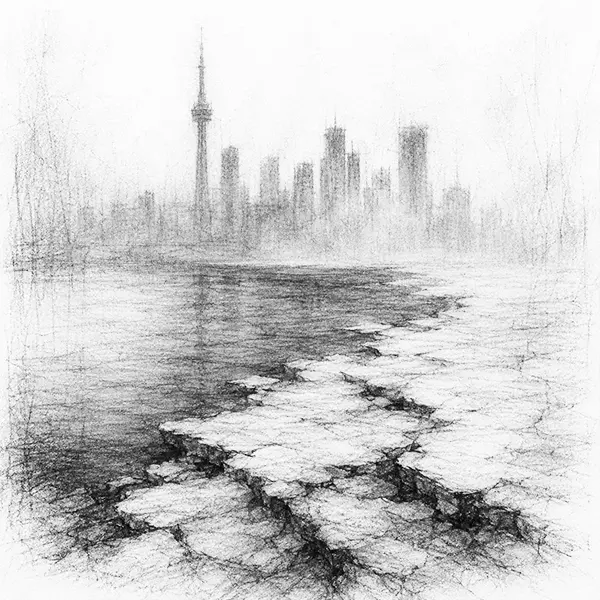
And then the lake — that enormous flat sheet of water at the city’s feet, frozen and grey at the edges in winter, with no far shore at all, so that the city seems to stand at the edge of a cold ocean that simply stops being liquid. I come from a country with warm seas and great brown rivers; the idea of water that turns to ice you can stand on, of a shore that is white and silent and going nowhere, is foreign to me in the most basic way. I would walk out toward that frozen edge, carefully, the towers at my back and the white nothing in front, and feel the specific cold of a place where even the sea gives up and freezes, and stay just long enough to know I had felt it.
A slow red box on a track
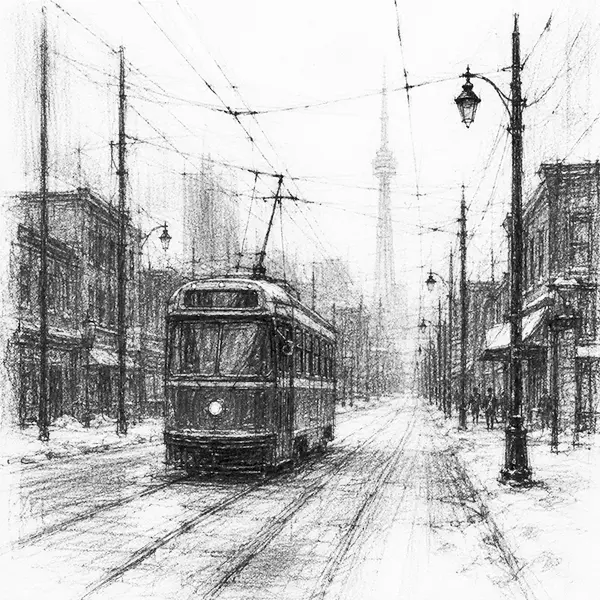
Down the long straight streets run the streetcars — old red rail-cars sliding down the middle of wide avenues, stopping in the road for people to climb on, threading the flat grid of the city in the snow. After the steep little trams I imagine elsewhere, these are a flatlander’s version, calm and level and roomy, made for distance rather than for hills. I am fond of any city that kept its rails when it could have torn them up, that still moves its people about in a slow red box on a track. I would ride one from end to end with no destination, watching the orderly neighbourhoods go by through a fogged window, just to feel the size and the sameness and the sense of a city that works.
The street where home is one shop among many
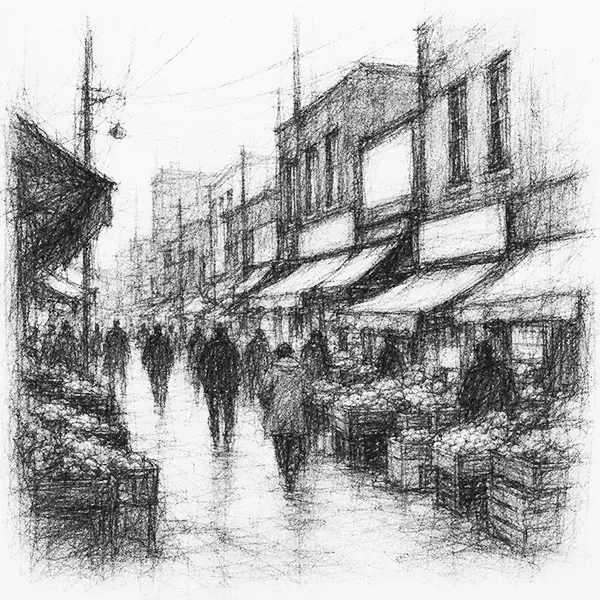
And then the thing the city is really famous for, which does not photograph as a monument because it is not one — the streets where the whole world has set up shop side by side, a block of one country’s groceries giving way to another’s, signs in a dozen scripts, the food of everywhere on one ordinary road. This is the part that is closest to the bone for me, because somewhere on a street like that is the shop my own people opened, the food I grew up on sold far from where it grows, the life that the ones who left built for themselves in the cold. I would walk one of those mixed, modest, miraculous streets and find the corner that smelled of home, and feel the full strange weight of a place where home is just one more shop among many.
A country organised around its leaves
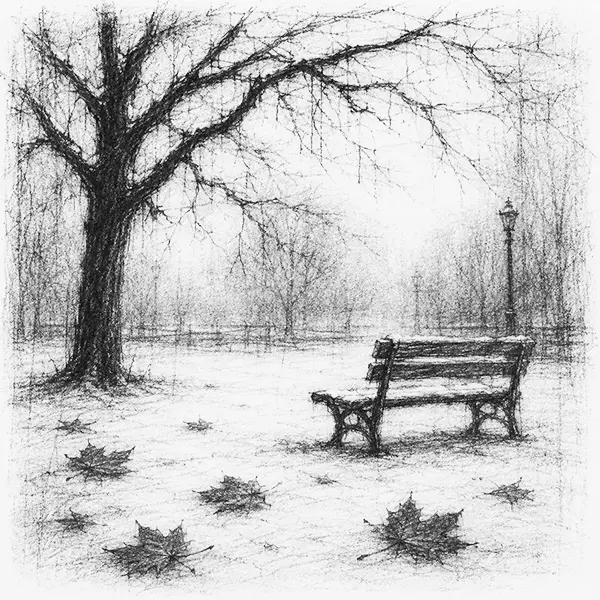
The country wears a leaf for its emblem, and I would want to see the tree it comes from — the maples, bare and black-branched in winter over a white park, or going up in red and gold in the autumn that everyone there talks about, a whole country organised around the turning of its leaves. I come from a place of two seasons, wet and dry, where the trees mostly stay as they are. The idea of a land that throws a festival of colour and then strips bare and freezes, year after year, marking time so dramatically, is exotic to me in a quiet way. I would sit on a cold bench under a bare maple and try to imagine the same branches on fire with colour two months before, and the snow two months after.
Toronto, dancing on its ice
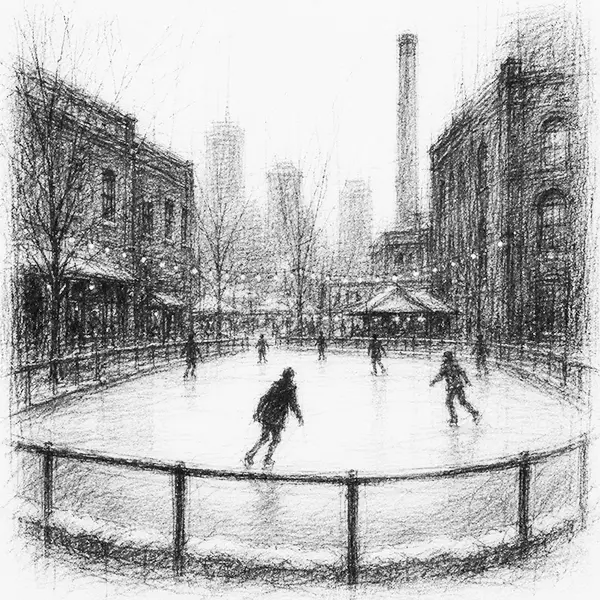
And the thing that seems to me to sum up the place’s whole relationship with its cold — the outdoor rink, a flooded, frozen square between the buildings where people put on blades and skate, in the open, in winter, for pleasure, turning the very thing that should make a city miserable into the reason to go outside. A people who looked at half a year of ice and decided to dance on it. I find that genuinely moving, the refusal to merely endure the cold, the insistence on using it. I would stand at the rail in a borrowed scarf and watch them go round, and understand that a place is not defined by what it is given but by what it decides to do with it.
So Toronto takes its place among the far cities — the coldest, the flattest, and the only one that is also a life I might have lived. There is no good reason I never went, only the layered ordinary ones: the flight, the visa, the fare wanted nearer home, and beneath those the quieter fact that to go now, as a visitor, is to tour the road I did not take. It is an orderly city on a frozen sea where a great many people like me began again, and I stayed where I was, and have watched their snow in photographs for years. One of these years I should make the long way north and walk the red-brick lane in the cold, and find the shop that smells of home on a street full of every other home, and stand at the edge of the frozen lake, and feel, for a few days, the weather of the life I did not choose. I have never been abroad, and the life I might have lived here goes on snowing without me.
“Toronto: the largest city of Canada, on the northern shore of Lake Ontario; a flat, modern, highly multicultural city, a major destination for immigrants, known for its tower-studded skyline, its streetcars, and its long cold winters.”
— from a school geography text, already out of date when I read it
Leave a Reply