Abroad · never been
I have wanted, for years, to walk into the great square at Marrakech at dusk and find out how much of a city a photograph actually leaves out. Every place I keep, I built from looking — from pictures, from footage, from other people’s holiday slides — and they say Marrakech is the one city where looking gets you least: that its real life is smoke and drums and the smell of frying and a hundred people talking you into things, none of which survives a camera. They say the square at nightfall is the loudest, most crowded, most alive acre in Africa, and yet every photograph I have chased down of it looks, honestly, like a still and slightly disappointing thing. It is a long flight and a dear one, and I keep not taking it. And here is what draws me: of all the cities I keep, Marrakech is the one I have the least of — because the single thing it is famous for is the one thing a picture cannot hand me. It might be the only place left that could still surprise me.
Marrakech, and the tower you steer by
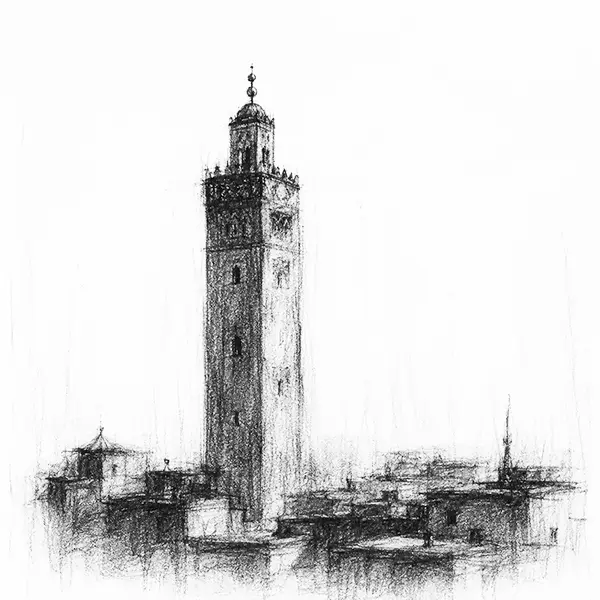
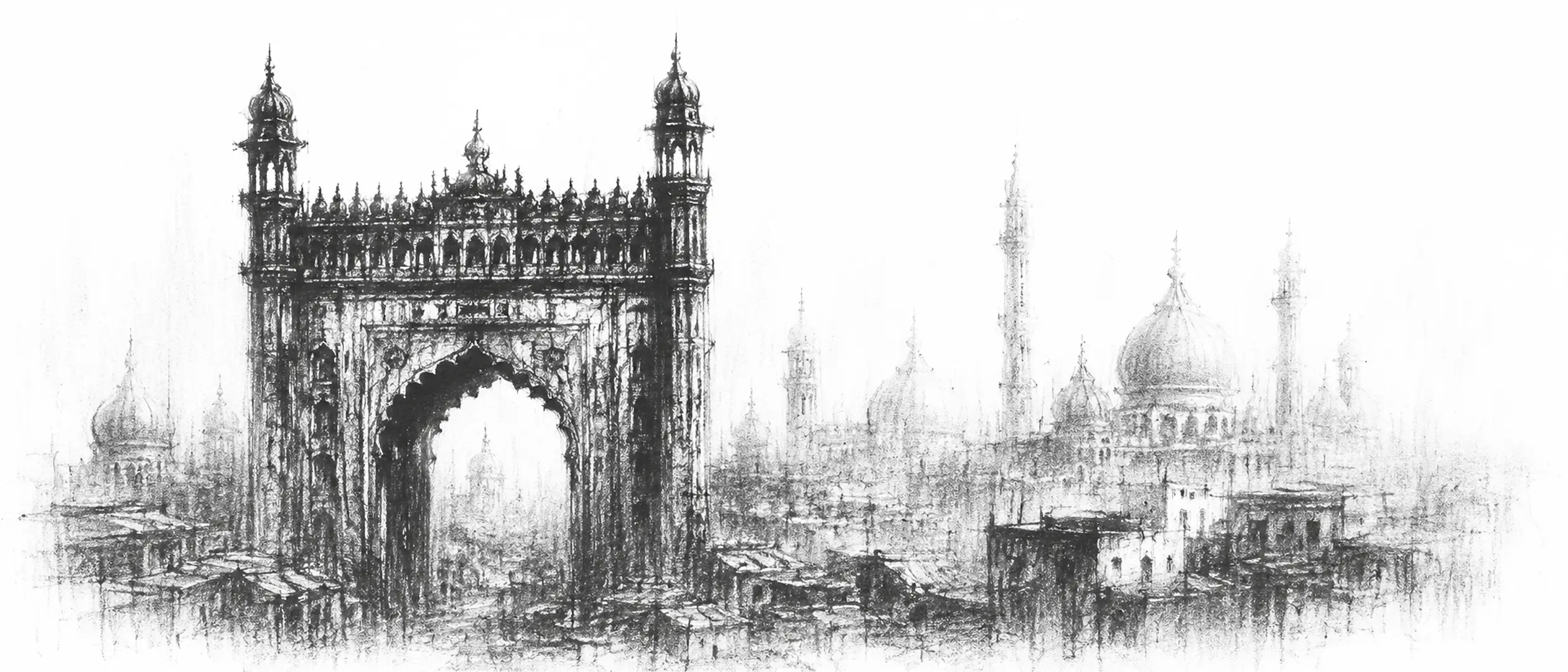
What you see first, from a long way off, is the tower. A great square minaret of pale stone standing over the low city, older than most of what surrounds it, built so that it can be seen from everywhere and so that everywhere can be found again by it — the one fixed thing in a place otherwise designed to turn you around. No building in the old city, the guidebooks say, may rise higher than it, so it keeps a lonely command of the skyline, and from the flat roofs at dusk it is the last thing to hold the light. I have a clear enough picture of it. It is the part of Marrakech that photographs honestly, because a tower is a shape, and a shape is what a camera is for. The trouble, I gather, starts the moment you look down from it.
The great square at dusk
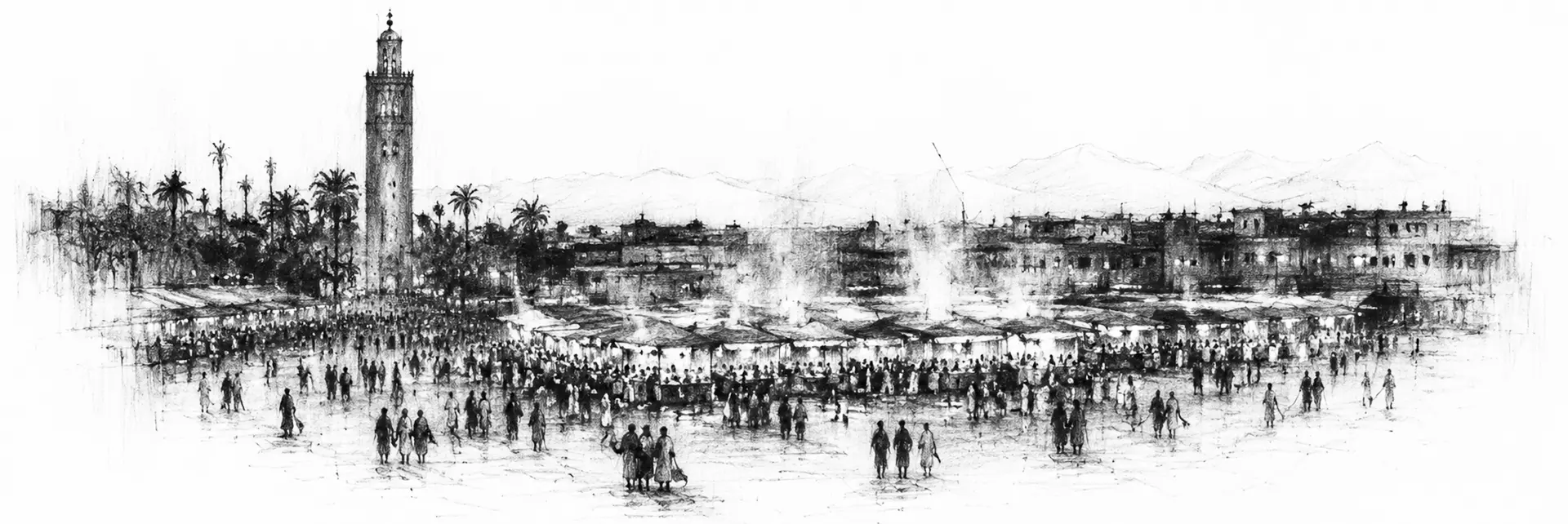
Because down at the foot of it is the square, and the square is where my whole method falls apart. I have read a hundred accounts of it at nightfall and watched the footage go soft and orange, and every one insists on the same thing: that the photograph is a lie of omission. What the picture shows is smoke rising off a hundred food stalls, a crowd with no edges, lamps coming on. What the picture cannot show is the noise — drums and pipes and the cry of the sellers and the patter of the storytellers, all at once — or the smell of the grilling and the mint and the diesel, or the heat still coming up off the day’s stones, or the animal pressure of that many people wanting that many things in one place. It is, they say, the least photogenic great sight on earth, in the exact sense that a photograph gives you perhaps a tenth of it. I have built whole cities out of tenths and been perfectly content. This is the one where I know, going in, that I am being shortchanged.
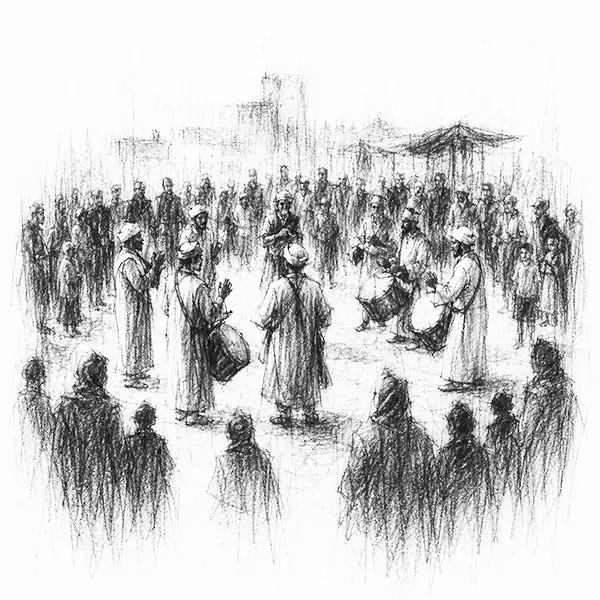
The one part of it the camera does love is the performers, so they are the part I have the most of and trust the least. A man cross-legged with a flat basket and a pipe and a swaying snake; a ring of drummers and storytellers and men with chained monkeys; the circles of onlookers forming and breaking. In the photographs it looks like theatre laid on for me. But every account swears it is nothing of the kind — that the snake man and the storyteller have worked that square for a living since long before there were tourists to watch, that the real audience is local and the real transaction is a coin dropped by someone who already knows how the story ends. A whole living theatre that has merely agreed to let me stand at the back, and that I have only ever watched with the sound off.
A labyrinth built to lose you in
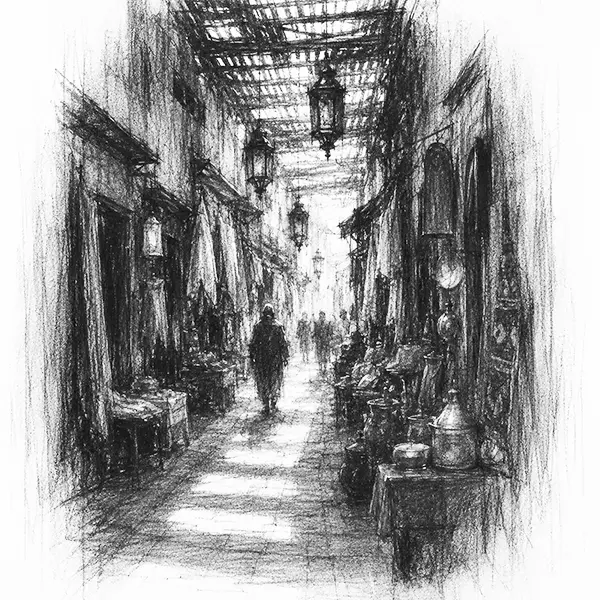
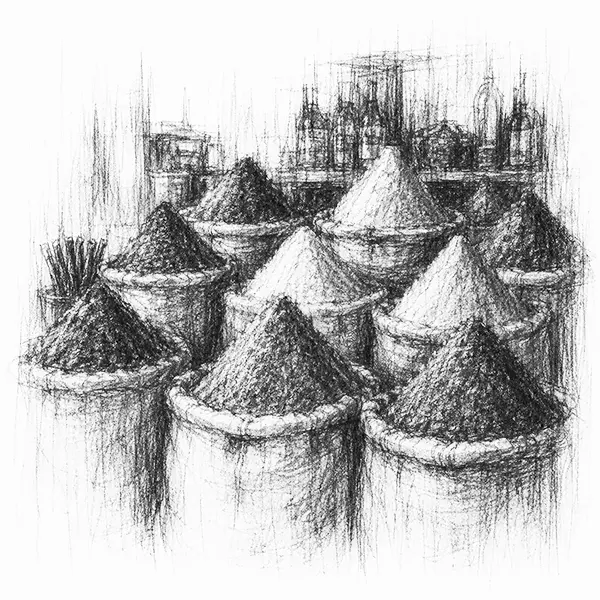
Off the square run the souks, and the souks are a maze on purpose. Covered lanes barely a shoulder wide, roofed with slats so the light comes down in bars of dust, hung with lamps and slippers and carpets and cones of things I could not name, turning and forking and turning again until — everyone agrees on this — you are lost inside ten minutes and stay lost, cheerfully or otherwise, until the lanes decide to spit you out somewhere you never meant to be. Someone who went told me the getting lost is not a flaw in the place but the whole design of it, that the maze is how the selling gets done, and that the only honest way through is to give up on through and let it carry you. I have gone through life with a map of everywhere in my head. A city built precisely to make the map useless unsettles and delights me in exactly equal measure.
What Marrakech keeps behind a plain door
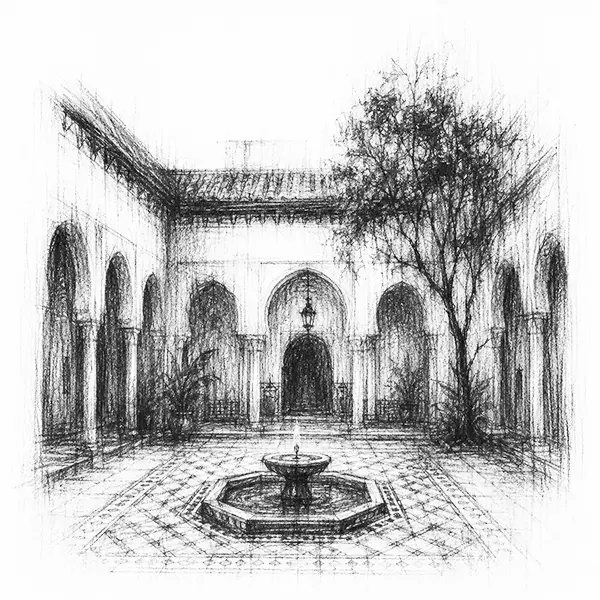
And then the thing I find most Marrakech of all, though it is the quietest: the houses that show you nothing. A riad, the old courtyard house, turns to the lane a blank wall and a plain door and not one window, so that the street is a run of shut faces — and then the door opens on a cool courtyard with a fountain and a tree and tiled arches and the sky dropped in overhead like a lid. Everything the house has, it keeps turned inward, away from the eye; the beauty is real and entirely private, and you would never guess it from the street. I understood that arrangement the moment I read it, because it is more or less how I have built myself — a plain enough front, and whatever there is kept in an inner courtyard I do not open to the lane. Marrakech puts up my own reticence in stone and calls it architecture.
A garden kept cool behind a wall
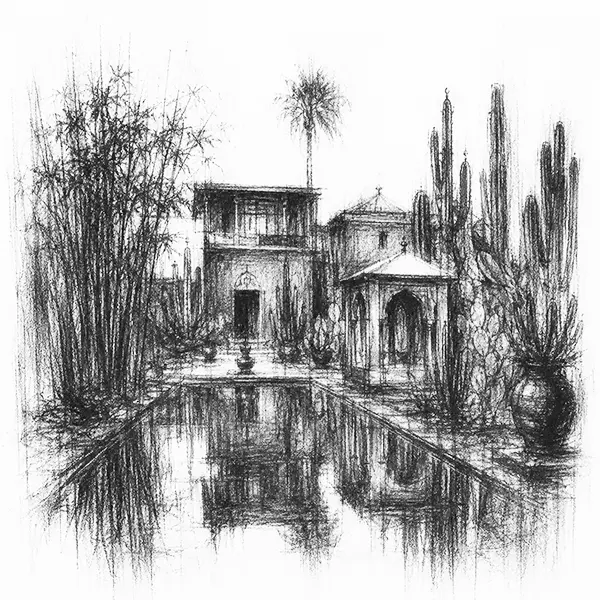
The respite I keep, out of all that dust and glare, is a garden. In a city the colour of dry earth, someone once walled off a square of ground and filled it with everything the place is not — tall bamboo and date palms and fat cactus, thin channels of water run cool along the paths, and the walls between them washed a blue so deep it seems to drop the temperature just by being looked at. A foreigner made it, by every account, and loved it past all reason, and the city has kept it since as carefully as it keeps its shrines. What everyone comes away with is the same small shock: that you step through a plain gate out of the car horns and the white heat into a green dripping hush, and something in the chest lets go. I know that impulse to the ground — to answer a hard bright climate not by beating it but by building one cool contradiction behind a wall and guarding it. It is the riad’s trick again, worked in leaves and water: everything worth having kept turned inward, away from the street.
The snow above Marrakech
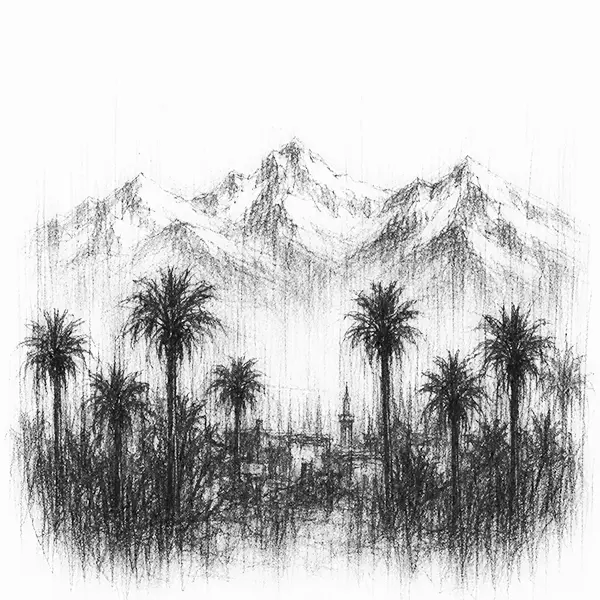
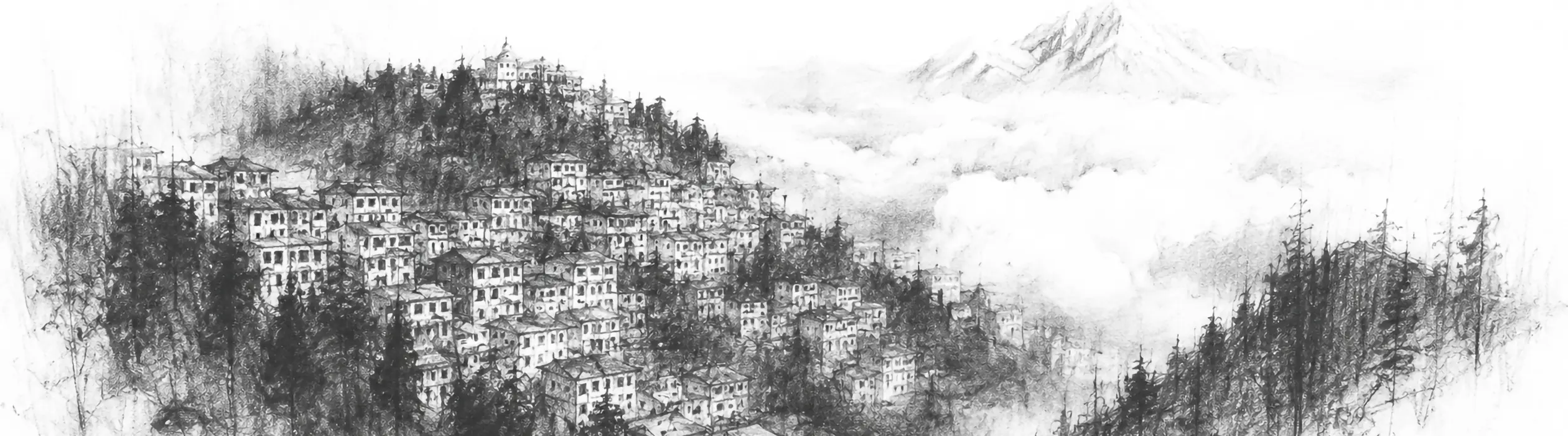
And behind all of it, on a clear day, the thing I can least believe: snow. The photographs that undo me are the ones taken from a rooftop with the hot low city in the foreground and, floating above it, the white wall of the Atlas — real snow, on real mountains, an hour or two from a place I think of as pure heat and dust. A city at the mouth of a desert with a range of snow at its back, so that in the right season a man could sweat in the square all afternoon and see, over the rooftops, the cold he had gone south to escape. That contradiction is the last thing I keep about Marrakech, and the one I most want confirmed in the flesh — because it is exactly the kind of thing a photograph might be lying about, and exactly the kind of thing I would forgive it for.
Could I go? Yes — a long flight, a fare, a visa, a few days I never quite set aside. And of all my cities, this is the one where going would add the most, precisely because I have gathered the least of it — where the smell and the noise and the heat, the nine-tenths no camera ever brought me, are still sitting there uncollected. Which makes the not-going harder to explain than usual, so I explain it less, and go on not going.
So I keep Marrakech where the pictures keep it, which I now know is barely at all: the tower holding the last light, the square going up in smoke and a sound I cannot hear, the plain doors with their hidden courtyards, the snow improbable on the mountains behind. It is the one city I own almost nothing of, and the one that might therefore still be new to me. A strange thing to be able to say after a lifetime of having never been abroad — that somewhere out there a whole place is keeping nine-tenths of itself for me, if I would only go and collect it.
“Marrakech: city of central Morocco at the foot of the Atlas Mountains, on the edge of the Sahara; long a caravan and market town, its old quarter ringed by earthen walls the colour of the ground it stands on.”
— copied from a traveller’s account into the back of a notebook, years ago

Leave a Reply