Abroad · never been
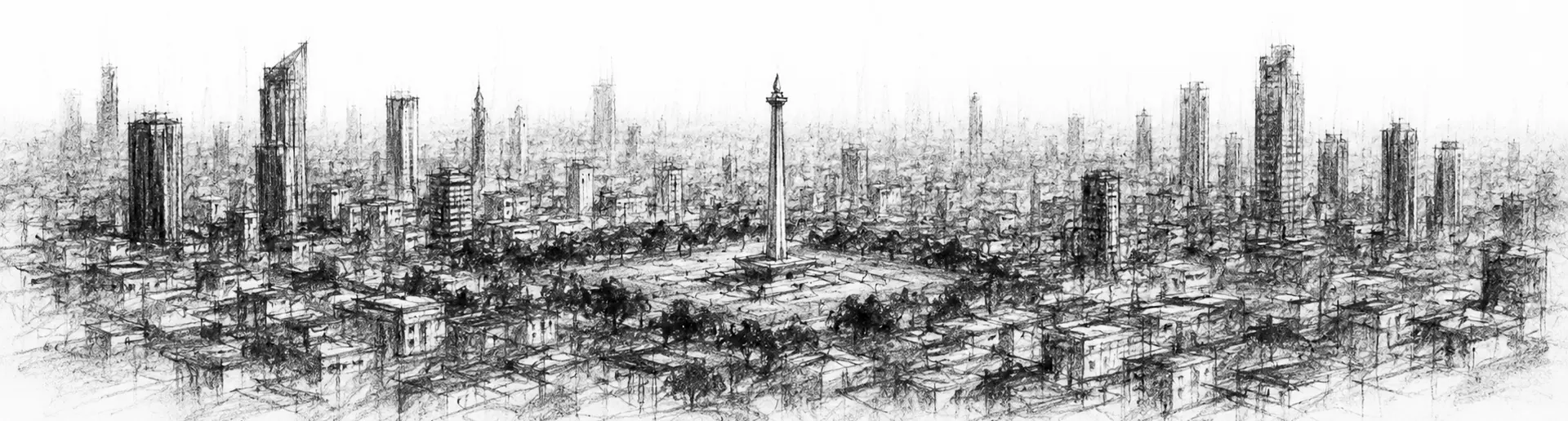
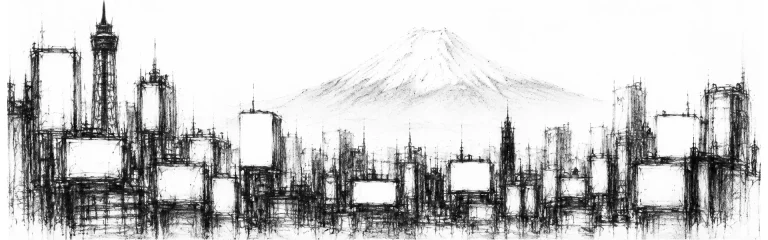
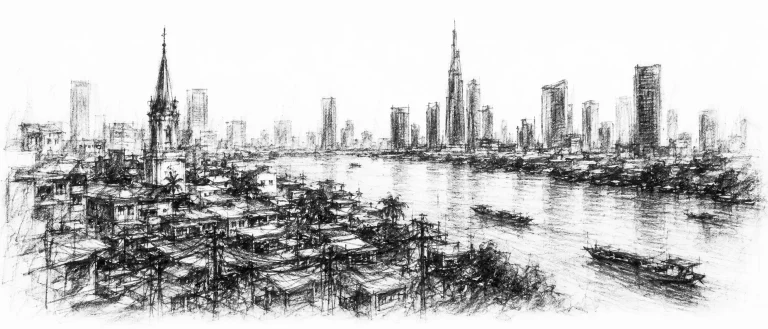
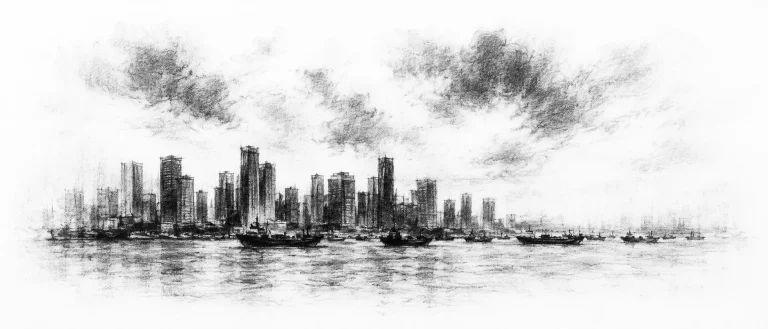
Jakarta has cured me of an idea I did not know I was holding — that the places would wait for me, that the world would hold still and patient while I got round to it, one unhurried year at a time. Everything I have gathered about the city comes back to water and to size: a low enormous sprawl laid over a swamp at the mouths of its rivers, so vast the encyclopedia gives up on a centre and simply lists districts, and sinking — this is the fact I cannot get past — a few centimetres deeper into its own bay every year, the sea climbing to meet it faster than the city can raise walls against it. It is so large and so heavy that it is pressing itself down into the ground it stands on, and its own country, I read, has quietly begun building a replacement capital on higher ground. I have spent a lifetime assuming I could always go later. Jakarta is thirty million people and a sinking capital, and it is running out of later.
Jakarta and the golden flame
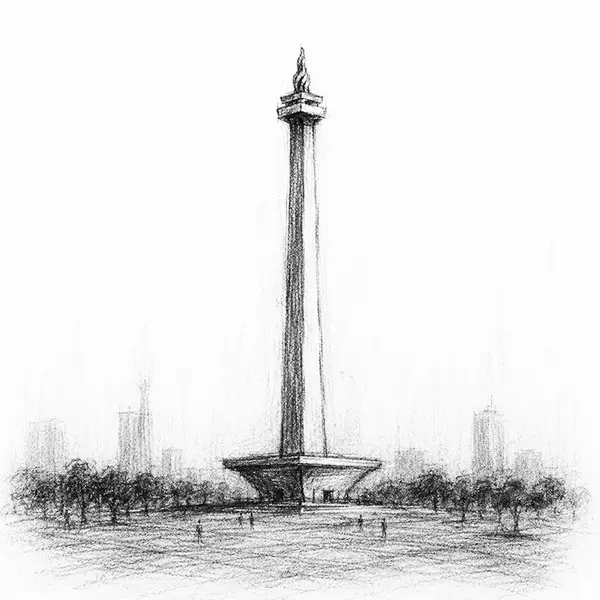
The one fixed point in all that sprawl, the thing every photograph of Jakarta agrees to put at the middle, is the monument. A tall plain needle of pale stone standing alone in a great square of green, and on the very top a flame — a sculpted flame, the documentaries are careful to say, sheathed in a skin of real gold, so that on a clear morning the tip of the column catches the sun and burns without burning. Someone once told me, pleased with the number, exactly how many kilos of gold sit up there over the heads of a city where a great many people have very little. I filed that away with its small discomfort left in. A country that plants one golden flame in the middle of an ocean of low grey roofs, high up where everyone can see it and no one can reach it. I have built cities on thinner symbols than that.
The old Dutch square
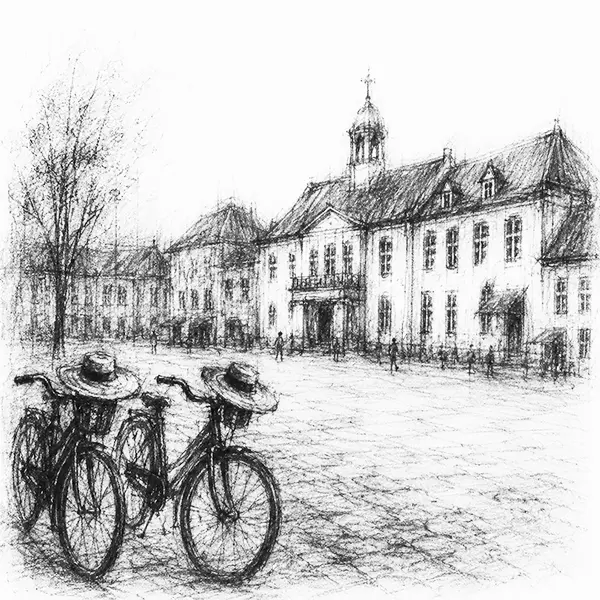
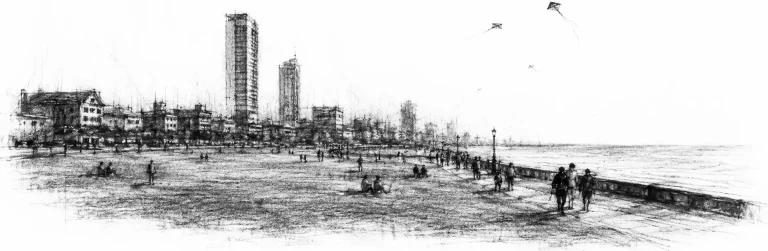
Then the old town, the one corner where the sprawl remembers being small. A cobbled colonial square the Dutch laid down when the place was their trading post, shuttered white-and-ochre buildings around a flat open space, the windows tall and European and out of place under the equator’s light. The pictures I have are mostly of the bicycles: fat old cruisers in sherbet colours, a matching wide-brimmed hat hung on each set of handlebars, that they rent out by the hour to be pedalled slowly around the square by people photographing one another. I keep coming back to what the buildings used to be. A former trading empire’s counting-house turned into a place where people ride painted bicycles for pleasure on a Sunday. The city took the rooms its occupiers left behind and made a playground of the ledger office.
Where Jakarta waves you in
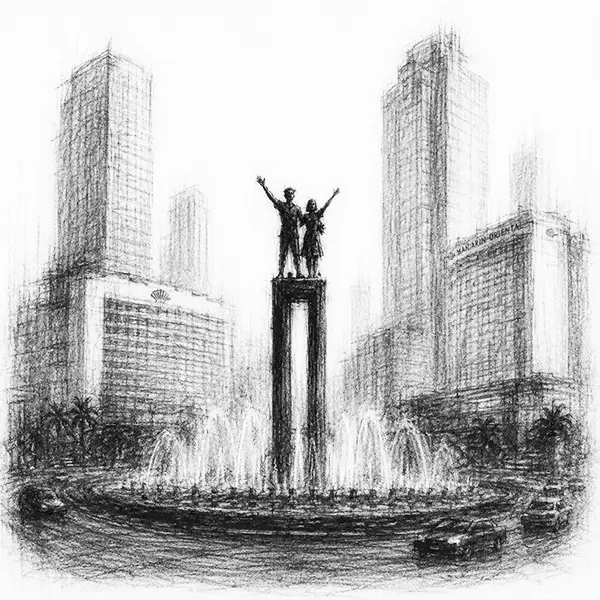
At the centre of the new city, where the grand hotels and the tallest glass towers stand shoulder to shoulder, there is a great fountain roundabout, and rising out of the water two bronze figures — a young man and a young woman, arms lifted, put there generations ago to wave the world in for a games nobody now remembers. The traffic wheels around them without stopping, all day and most of the night. What I keep is the gesture itself, held for sixty-odd years: a city with its hand permanently raised in welcome, ringed now by towers that were not dreamed of when the arm first went up, still saying come, come, to a world that on the whole could not place it on a map. Jakarta keeps building upward and waving outward, and the ground beneath the whole performance is quietly going down.
A nation gathered under its own roofs
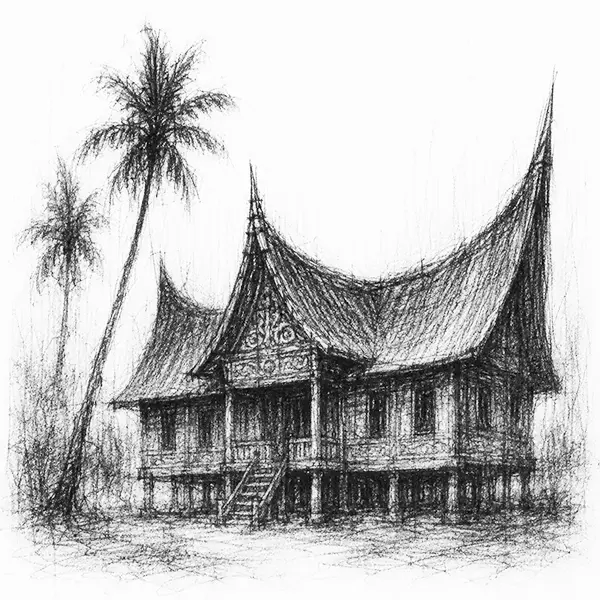
There is a park on the eastern edge of Jakarta where the capital did a strange and touching thing: it gathered the whole archipelago into one place, raising a full-size traditional house from each of its provinces along the paths, so that a country of thousands of islands can be walked across in an afternoon. It is the houses I keep — not a dome or a spire among them, those belong to other people’s countries, but the islands’ own architecture: great timber halls with roofs that sweep up at both ends into sharp horns, or curve like the hull of an upturned boat, carved along the gable, made to a shape you would find nowhere else on earth. I have turned the pictures over many times. A city that built itself a small model of its whole nation to keep in a park — and is now, quietly, preparing to stop being that nation’s capital at all. The country in miniature will stand there long after the real one has packed up and moved away.
The wooden ships at Sunda Kelapa
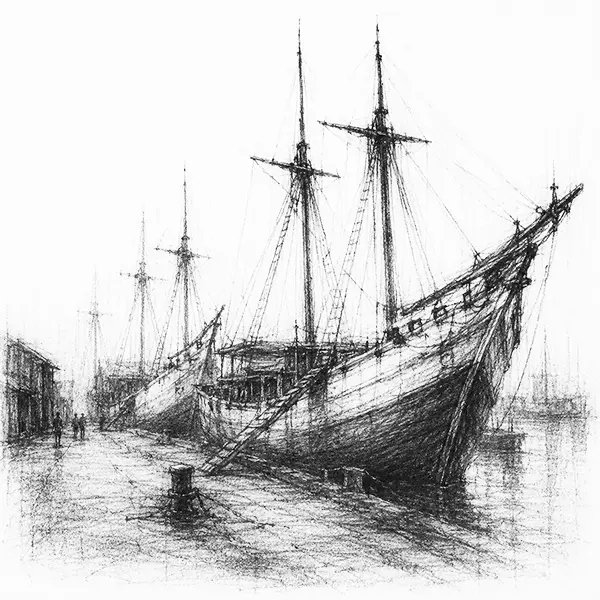
The oldest thing I keep is down at the old harbour, and it should not still exist. Along a wharf on the north edge, where the city first began as a pepper port, there are ships — actual wooden sailing ships, tall two-masted schooners with high curved prows, built by hand from timber the way they have been for centuries, and still, the encyclopedia insists, working: taking on cement and sawn planks by the sackful over a gangway onto their decks and carrying it off across the archipelago under engine and sail both. I have looked at the photographs a long time. A row of hand-built wooden ships, hulls painted in fading colour, moored bow-to-quay under the cranes of a working port, doing an honest cargo run in a century that has no more need of them and has not got around to telling them so.
The islands off Jakarta
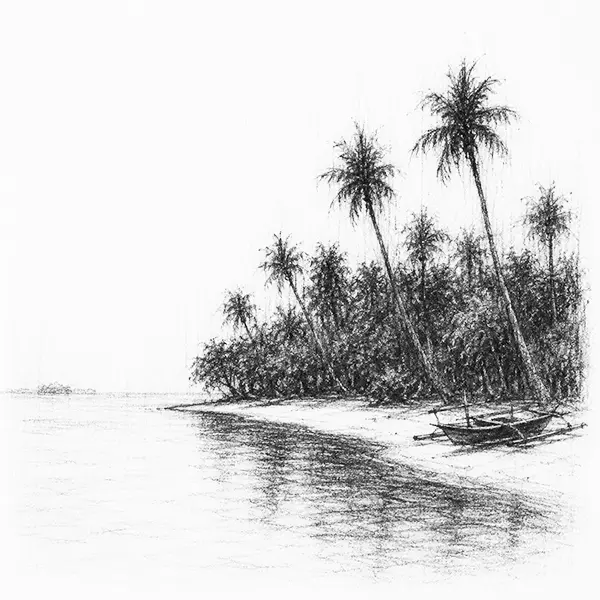
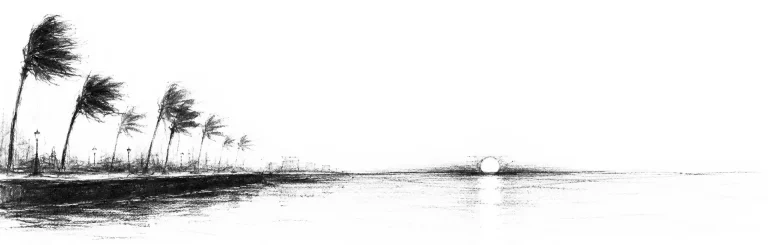
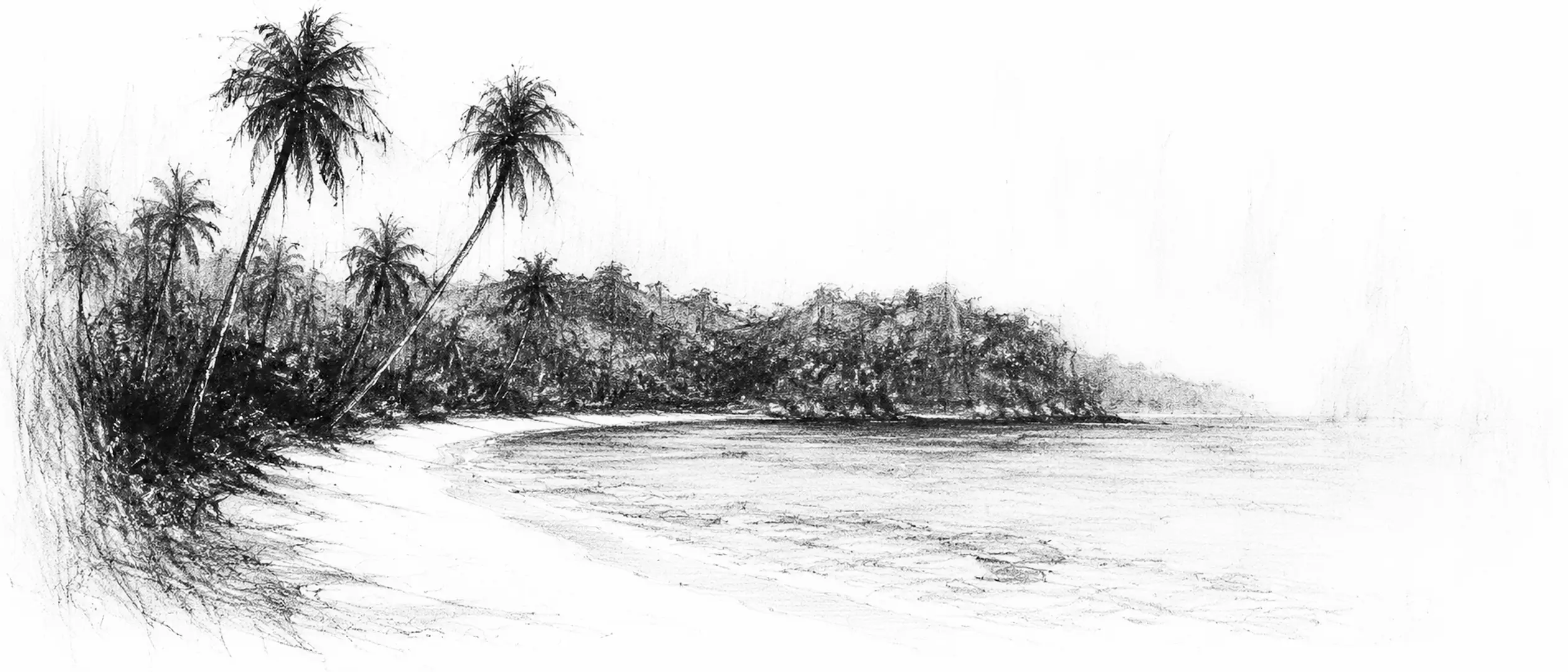
But the Jakarta I come back to is the one that turns its back on itself and looks out to sea. A short way off the drowning coast, scattered across the same bay that is slowly claiming the city, lies a long chain of low coral islands — the Thousand Islands, the maps call them, though nobody has made the count come out — palm-tufted specks of sand where the people of the megacity go, when they can, to stand for an afternoon on something quiet that is not sinking yet. The photographs are almost embarrassingly plain after all that sprawl: a curve of pale sand, a lean of palms, a single wooden boat pulled up, the flat bright water running out to nothing. I have looked at them the longest of all. Thirty million people at your back, going under by inches, and in front of you the very sea that is doing it, made for one afternoon into the most peaceful thing you ever saw.
The confession is the usual one, and it costs me nothing to make and everything to act on. I could go. It is a long flight and a real fare and a visa to arrange — the ordinary toll of anywhere far — and I have paid heavier tolls without blinking for duller trips closer to home. Nothing forbids it but the old failure in a fresh coat. And there is a particular pressure on this one, the reason it will not leave me be: they are leaving it. The country, I read, is raising a whole new capital in a cleared forest on another island and moving the government there by degrees, up off the drowning city onto higher ground. The Jakarta I have been meaning to see is being abandoned faster than I can get myself to it — the rarest thing among all my dream-cities, a door that is measurably, provably closing.
So I keep it where it is, low and enormous and going under by inches. The golden flame is burning on its needle, the bronze pair have their arms up over the fountain waving in a world that cannot place them, the hand-built ships are taking on cargo at the old pepper wharf, and out past the drowning coast the little palm islands sit quiet on the rising sea. For a man who has never been abroad I have grown strangely attached to a place I will likely only ever know as it goes under — Jakarta, which I kept meaning to reach, and which its own country is leaving before I could make up my mind to arrive.
“Jakarta: capital and largest city of Indonesia, on the north-west coast of Java at the mouth of the Ciliwung river; founded as a trading port and long known to European merchants as Batavia.”
— from a merchant’s atlas of the Indies, much amended by hand

Leave a Reply