Abroad · never been
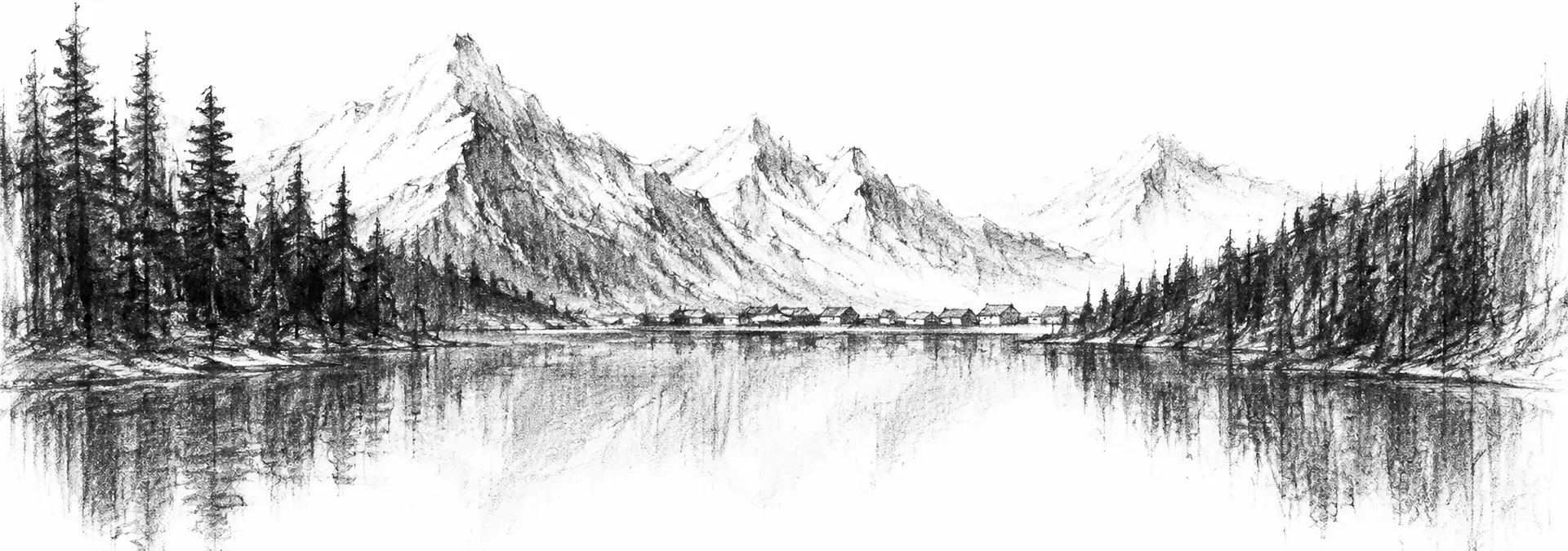
Banff is the only place I keep that is not really a city at all, and I have often wondered why I keep it. It is a small town, by every account a very small one, set down among mountains so large that the town seems to be there on sufferance, permitted to exist in a gap the peaks left open and no more. It sits inside a national park — the whole town does, streets and shops and all, fenced round by law against the wilderness it lives in, so that the wild animals wander into it and the people are the ones held to the rules. I have collected it out of documentaries and calendars and the holiday photographs of people who came back changed and could not say why. What I have built is less a place than a scale: mountains, and a human thing very small at the foot of them.
The lake that fixes Banff in the mind
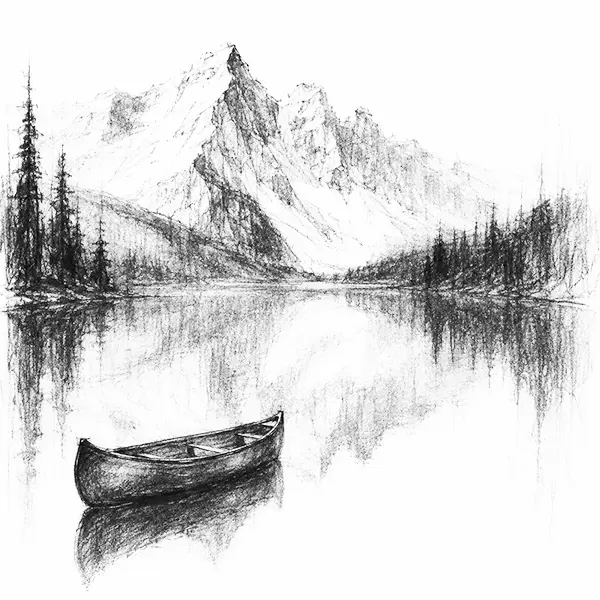
It always begins with the lakes, and with their impossible colour. I did not believe the colour the first time I saw it and quietly assumed the film had been tampered with — a turquoise so bright and so opaque it looks poured rather than found, a blue-green you associate with warm shallow seas and not with cold mountain water at all. Then someone explained it: the glaciers above grind the rock to a flour so fine it hangs in the meltwater and throws the light back, and the colour is not a trick but a kind of powdered mountain suspended in the lake. In every picture there is a single canoe out on that surface, still, the paddler barely moving, the whole enormous scene held motionless in the water below as clearly as above. I have sat in that canoe in my head on many hot afternoons. It is the coldest, quietest image I own, and I go to it the way other men go to a cold drink.
A castle in the pines
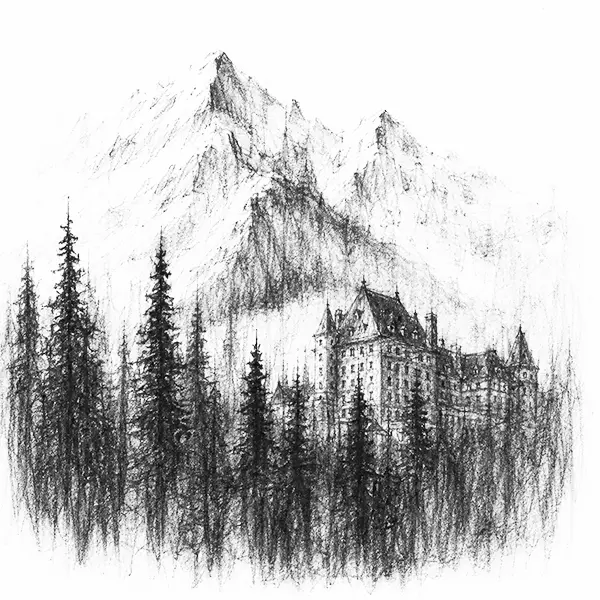
There is one grand building, and only one, and even it has been made to bow to the mountains. A great stone hotel stands among the pines below the peaks, turreted and heavy, a castle set down in the wilderness by the same railway habit that scattered such places across the whole cold country — a fortress with no war to fight, put up so that travellers who had come to the edge of the map could sleep behind stone walls and pretend the mountains were a view rather than a fact. But here the building does not dominate anything. Set against those peaks it looks small, provisional, a good idea the landscape is tolerating. I find I prefer it that way. A castle that would rule any city it stood in, reduced by mere geography to a lodge in the trees, is a useful thing to keep in mind on the days I take my own arrangements too seriously.
The peak that keeps its snow at Banff
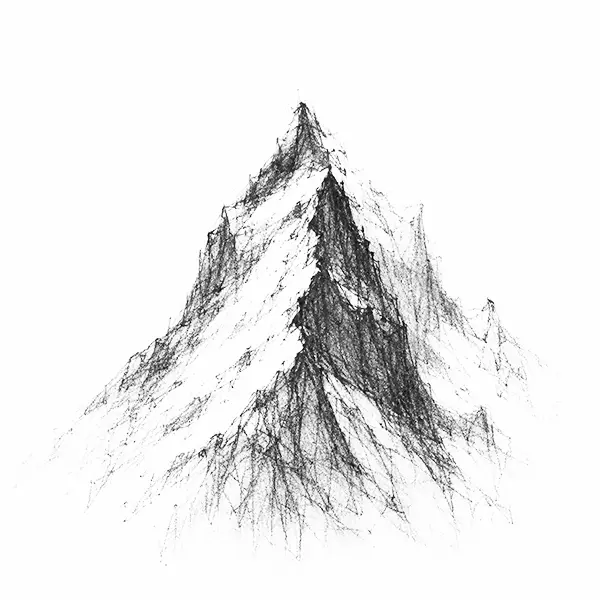
The peaks themselves are the part I cannot get to hold still in my head, being a man from flat wet country where the horizon is a suggestion and the highest thing for miles is a water tower. These are sheer and grey and folded, with the snow lying in the high creases all year even when the town below has gone green for its short summer, so that you can stand in warmth and look straight up at winter and see both at once. I have read the plain facts of how they were made, the slow buckling of the ground over ages beyond use to me, and the facts do nothing. What does something is the single photograph of one sharp peak against a bare sky, the snow still on it in July, indifferent to everything smaller than itself. I keep it as a corrective. There is a size of thing against which a passport in a drawer is not even a small matter.
An elk in the road
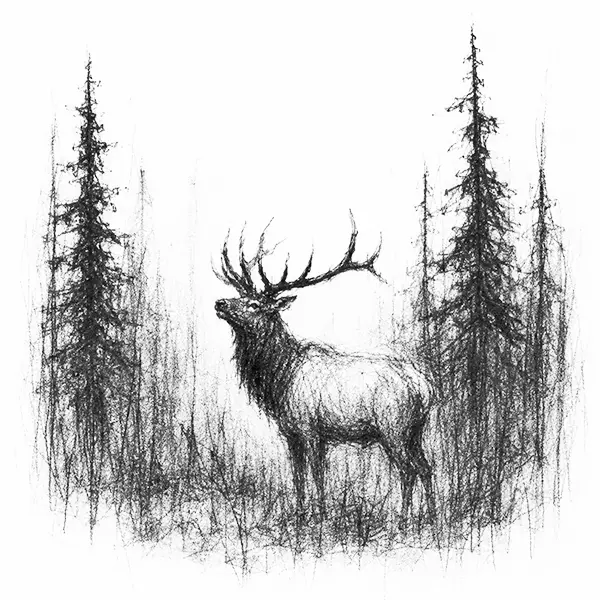
Then the animals, which have the run of the place in a way I find hard to credit. Because Banff sits inside the park and not the other way round, the wild things treat the streets as more of the forest, and the footage is full of them: an elk with a great spread of antlers standing in someone’s garden, unbothered, or halting the traffic on the main road while it decides where to go next. I have read the notices they put up, all of them addressed to the people and none to the animals — keep your distance, do not feed, do not come between the elk and its young — as though the town knew perfectly well whose land it was borrowing. A place that writes its rules for the humans and lets the animals off entirely has arranged the hierarchy in a way that strikes me, from the middle of my own crowded flat country, as close to just.
Banff, and the cold clear river
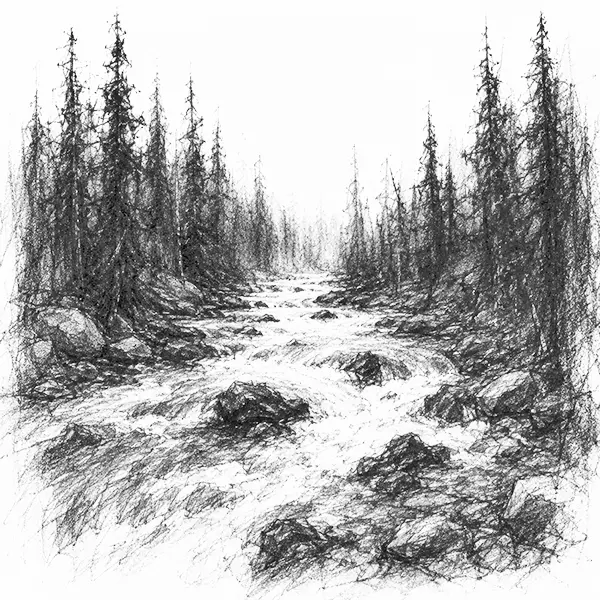
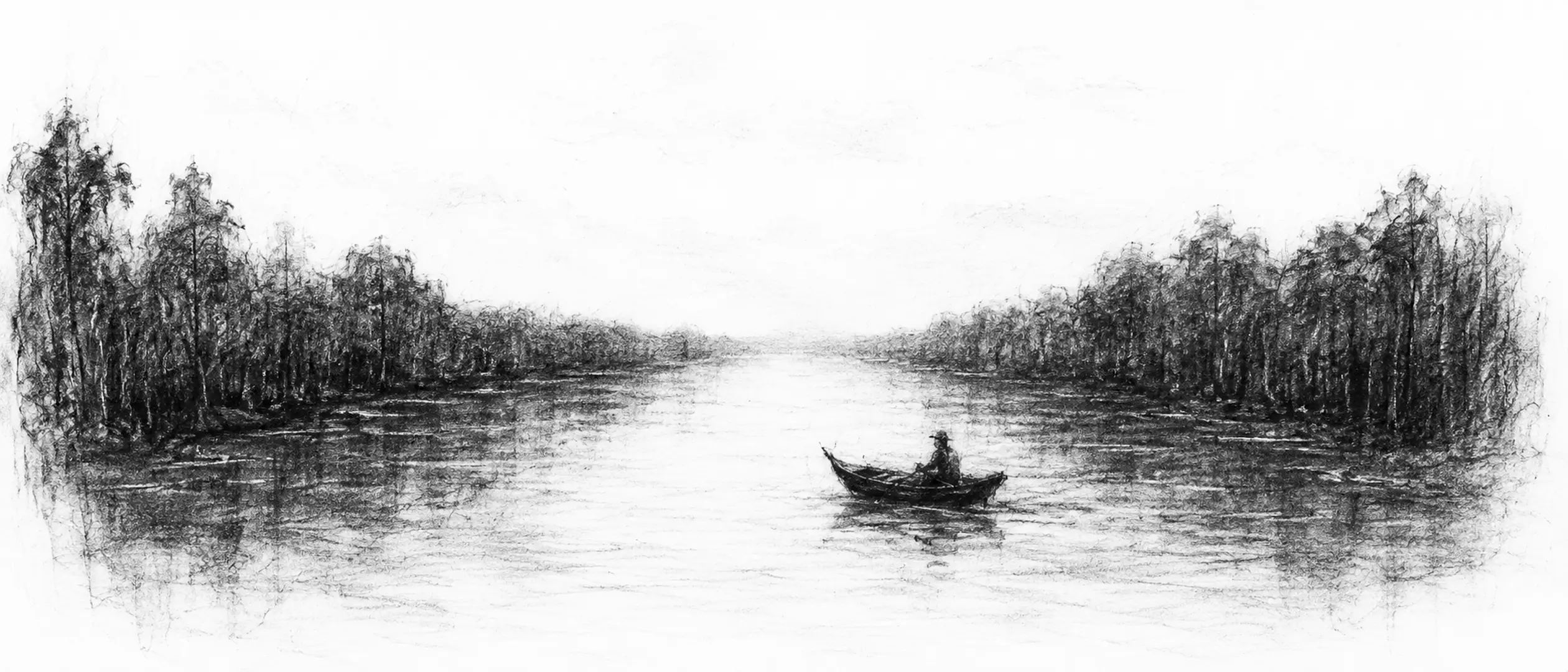
And running through all of it, the river. It comes down out of the high snow fast and very cold and so clear that in the pictures you can count the stones on its bed through the moving water, threading between dark walls of pine, green-blue in the deep pools and white where it breaks. It is the same water as the lakes, only let loose and hurrying, carrying its powdered mountain down toward flatter country, toward, eventually, a sea I will also never stand beside. I keep coming back to the clearness of it. In the rivers I have actually known, the water keeps its secrets; you cannot see an inch down. The idea of a river you can see straight through to the bottom, cold enough to hurt, running past a town the mountains have merely agreed to let stay, is about as far from my own life as an image can get, which is, I have noticed, why it lasts.
I could go. The line is always the same and I have stopped expecting it to change. The passport is in the drawer, on its third renewal, clean as the day it was issued, and Banff is a long flight and a stamped visa and a sum of money I keep spending on nearer, smaller, warmer things. No one forbids it. There is only the distance, and the cost, and the familiar private failure I re-dress each year in a reason that sounds, for a season, almost convincing. And I have come to suspect I keep the place precisely because I have not gone — that the morning I actually stood at the edge of the real cold lake with the real peaks doubled in it, the still turquoise Banff I have carried for years would fold itself up and hand me back the ordinary postcard everyone brings home.
So I keep it where it is, up among its tolerant mountains, the canoe motionless on the impossible water, the elk holding up the traffic, the castle small among the pines, the clear river hurrying its powdered mountain away downstream. I have never been abroad; Banff is one of the places I have decided, for now, to keep still rather than to spend.
“Banff: town in Alberta, Canada, within Banff National Park in the Rocky Mountains; the country’s oldest national park, established 1885.”
— from an old travel gazetteer, the entry underlined by a hand not mine
Leave a Reply