Abroad · never been
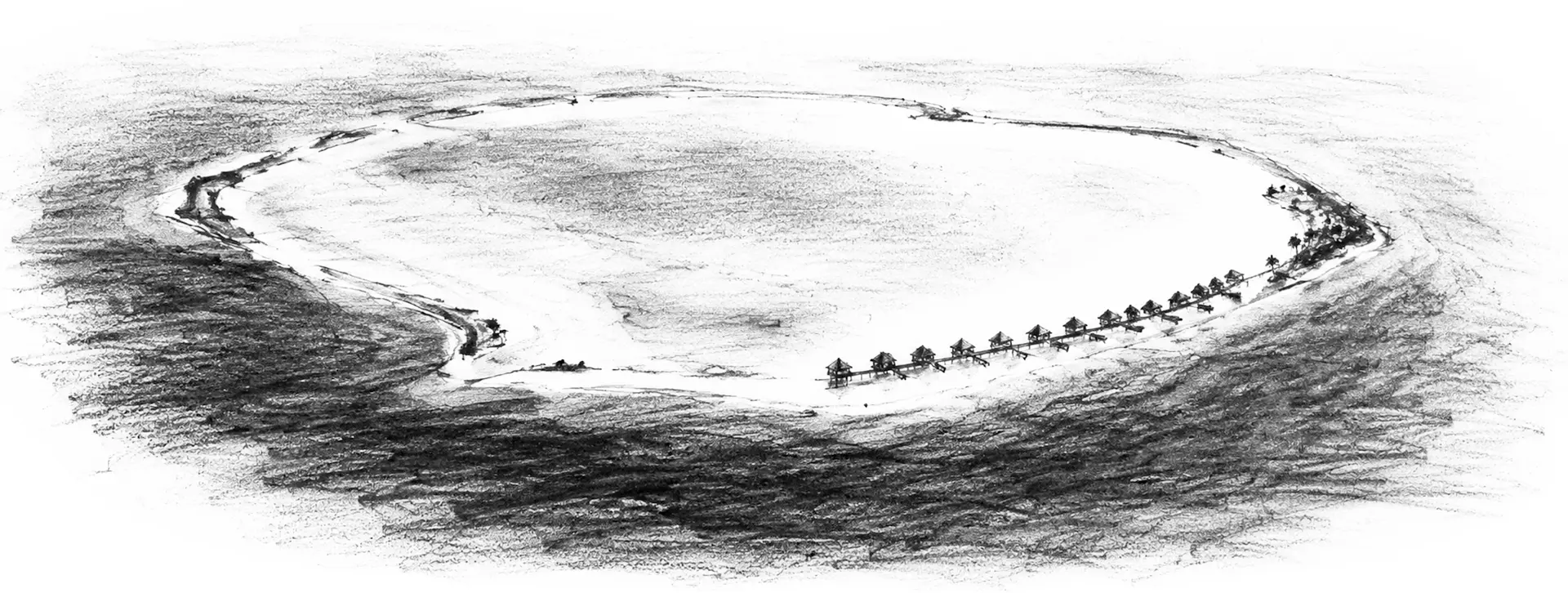
The Maldives is the least solid country I keep. Every other place I own has ground under it — a hill, a river, a plain, something you could fall down on. The Maldives is a scatter of coral rings dropped across a piece of ocean the size of a small country, most of it a metre or two above the water and going the wrong way, and the encyclopedia says so plainly, in the same flat tone it uses for populations and exports: that this is among the lowest countries on earth, and that the sea it is made of is also, slowly, the thing that will take it. I have kept the place a long time. I am aware, keeping it, that I may be holding something that will not be there to be visited by the time I get around to the excuse-that-fails for the last time.
The Maldives, a country with almost no ground
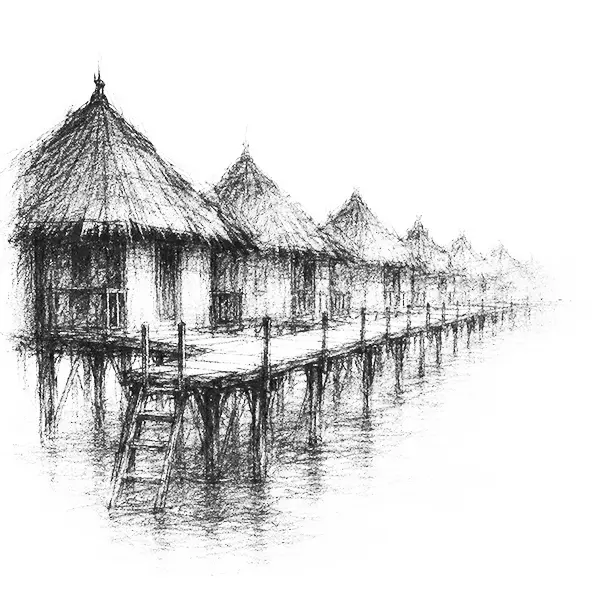
The image the place sells, the one in every window of every travel agent I have ever walked past slowly, is the row of houses standing in the sea. Little wooden villas up on stilts, strung out in a neat line over water so clear and so pale that in the photographs they seem to float on nothing, a walkway running behind them and a ladder down from each one straight into the lagoon. It is, I know, the most photographed and the most expensive thing about the country, and I have watched other people’s holiday pictures of it with the particular flat feeling those pictures give — the sense that the place has been arranged, priced, and delivered exactly as promised, with nothing left over for the person to discover. And yet under the brochure there is a real and strange fact I cannot let go of: that here, having your house stand directly on the sea is not a folly or a warning but the ordinary way of things, in a country where the sea is most of what there is.
The only road in is water
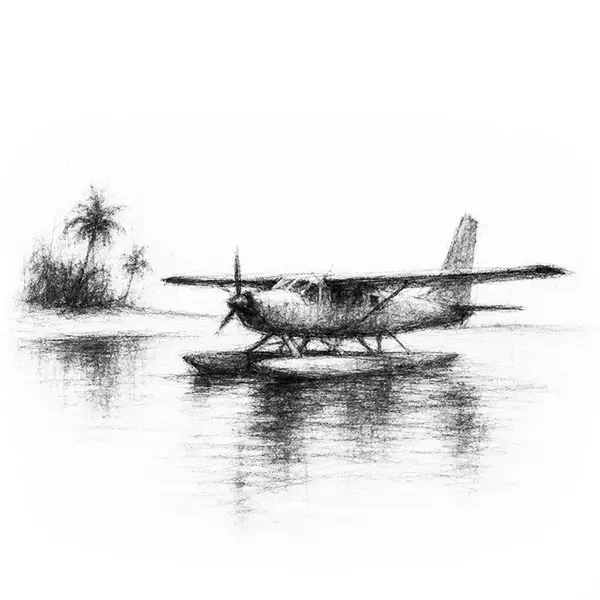
Getting anywhere, in my picture, means water and sky and nothing else. There are no roads to speak of between the islands; there could not be. So you come in over the ocean and, for the last part, you drop onto it — small seaplanes on floats that land on the flat water and taxi up to a jetty, or slow boats that thread from one ring of sand to the next. Someone described it to me once, a man who had been sent there for a wedding he could not get out of: the little plane coming down onto the sea with a shudder, and the door opening onto heat and salt and a silence he had not expected, no engine, no horn, no city, just the slap of water on the floats. I have kept that. A place you cannot drive to any part of, where the plainest journey, from here to there, is made across open sea by a machine that lands on it. Everything about the country’s own geography insists you arrive gently or not at all.
Below the Maldives, the real country
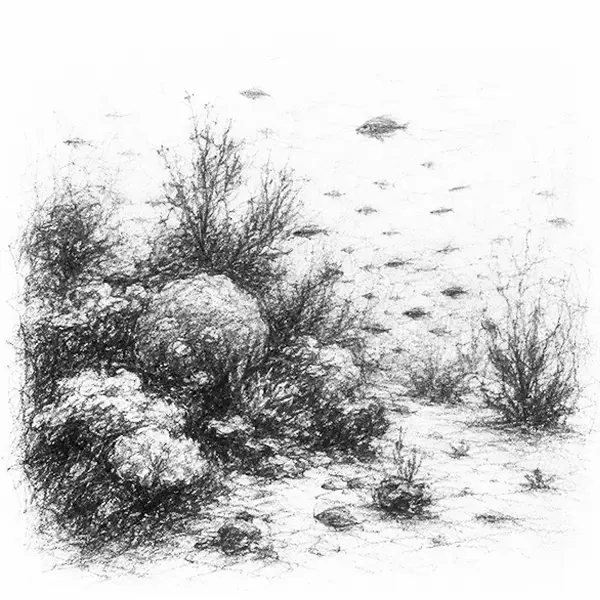
But the country above the water, I have slowly understood, is only the roof. The real one is underneath. The whole nation, the encyclopedia explains, is built on coral — living reefs that made the islands in the first place and go on ringing every one of them, so that a step off any beach puts you over a wall of it dropping away into the blue, thick with fish in colours the black-and-white footage I first saw it in could only hint at. That is the thing the documentaries send their cameras down for, and the thing, I gather, that most people actually come all that way to see: not the islands but the water beside them, and the enormous crowded life going on a few feet under the surface everyone is lying on top of. A country whose best part is the part below sea level, in the very medium that is also its ending. I have turned that over more than anything else the place has given me.
One palm and a great deal of blue
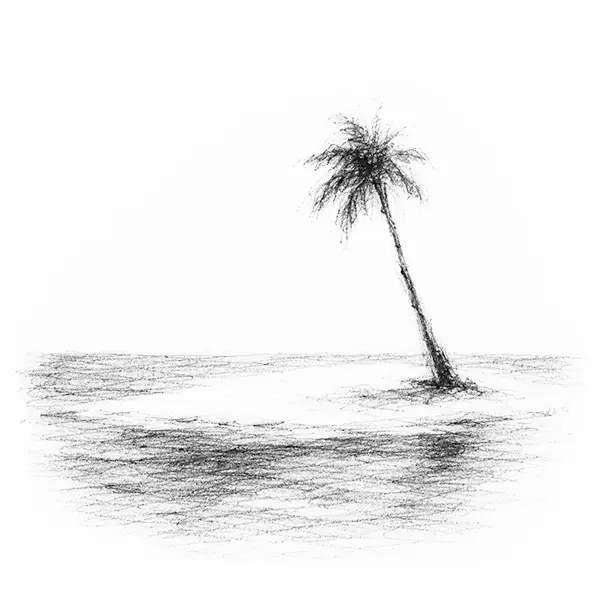
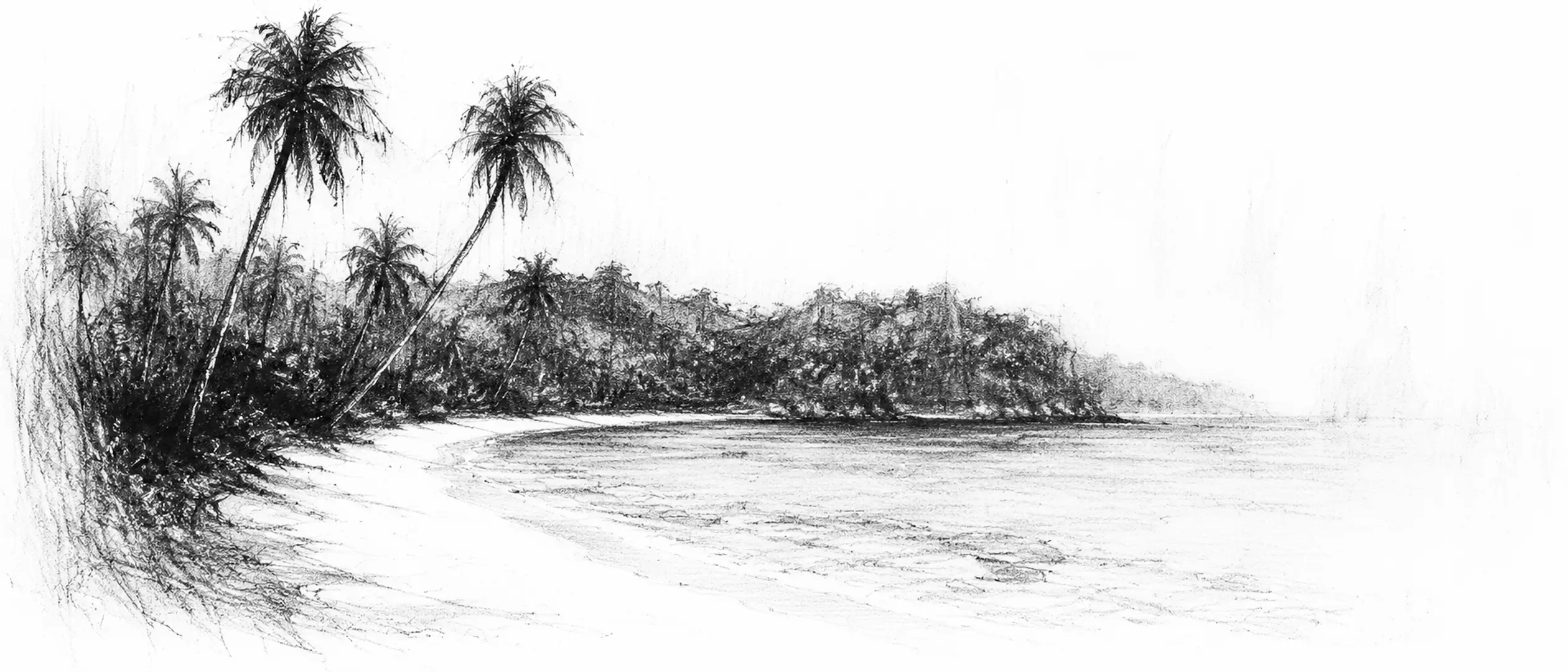
The image I keep closest, though, is the emptiest one. A sandbar — not even an island, just a low bank of white sand that the tide leaves bare for part of the day — with a single palm leaning on it and open water in every direction to the edge of the photograph. Nothing else. The travel pages use it to mean luxury, the ultimate privacy, an island so exclusive it has only one tree, and I understand the sell and I want the opposite thing from it. I want the bareness for its own sake. A scrap of ground so small and so provisional that the sea covers and uncovers it twice a day, holding up one palm against all that blue, and doing it anyway, for now, the way everything in that country is done for now. Being a man from a crowded, permanent, unfloodable city, I find a piece of land that modest and that temporary almost impossible to believe in, and I keep going back to look at it precisely because I cannot.
What the Maldives will not keep still for
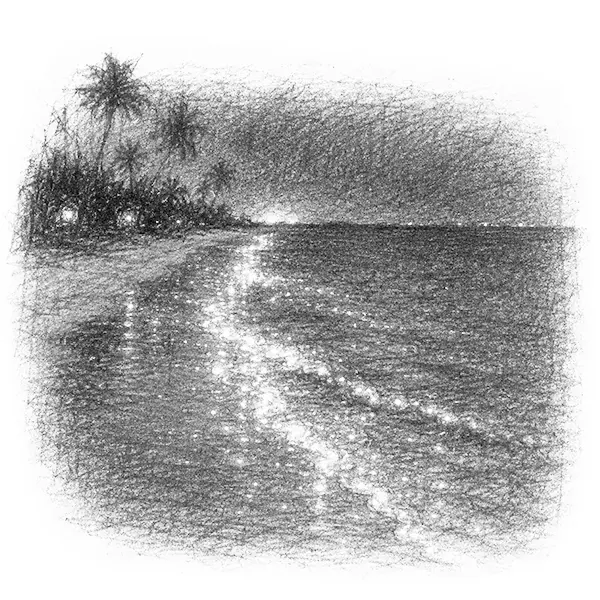
Under all of it there is the fact I opened with and cannot put down, the one the brochures leave out and the documentaries end on. The place is going. Not in the way everything is going, slowly and in general, but in a specific measurable way, a country a metre above a rising sea, its people already discussing, out loud and on the record, where they might have to go and what it means to be a nation without a piece of ground to be a nation on. I keep the Maldives, in other words, in the full knowledge that it is one of the few places I love that has an expiry stamped somewhere on it, and that my long habit of not-going may this once be doing the deciding for me, quietly, while I make my usual excuses about the flight and the visa and the money.
I could go. The passport is in the drawer, on its third renewal, unstamped, and the Maldives is a long flight and a stamped form and a sum I keep spending nearer home. Nothing is stopping me but the old failure in its yearly new coat. And still I have not gone, and this time the not-going has an edge the other cities do not, because the thing I am declining to visit is also, on the record, declining to stay. I have half-decided I keep it as the photographs handed it to me — the ring of sand, the one palm, the fire in the night water — because if I flew all that way and stood on the actual bar of wet sand, I would be standing on something I already know, on the plainest evidence, will not be standing there very long, and I am not sure my particular kind of longing survives that kind of clock.
So I keep it where it is, a thin bright ring on a great deal of blue. The villas are standing out over their lagoon, the little plane is coming down onto the flat water, and along one dark shore the edge of the sea is glittering coldly at a footstep nobody has made yet. I have never been abroad; the Maldives is one of the places I have kept exactly as it is, and may, this once, be keeping only because I never went to watch it start to go.
“Maldives: republic of about 1,200 coral islands in the Indian Ocean, southwest of India; the lowest-lying country in the world, with an average ground level of about 1.5 metres above the sea.”
— from an old almanac, somewhere between the tide tables and the kings

Leave a Reply