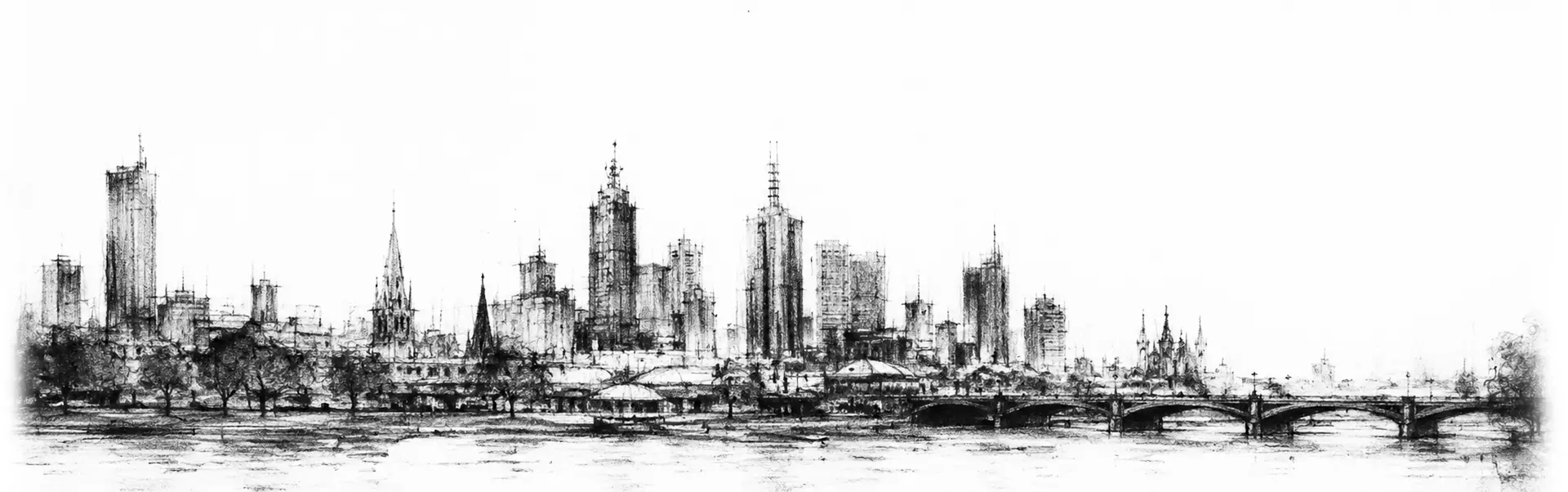
Abroad · never been
I came to Melbourne the way I come to all the far-down places, last and sideways — after the cities everyone hands you, the ones with a skyline you can draw before you can spell. For years it was only a name at the bottom of the world, a long way past everywhere I already could not reach. What I knew first was not a sight but a complaint: that the place cannot settle on a season, that it will hand you a bright morning, a cold rain, a hot wind, and an evening fit for a coat, all in one afternoon, and call it a normal day. They say there you get four seasons before lunch. I have been turning that line over for years. It is the most honest thing I know about any city, and I have never been near it.
Melbourne paints its back lanes
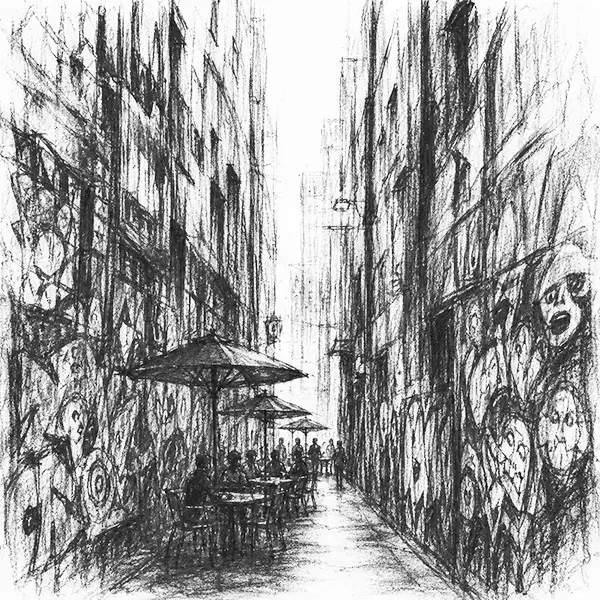
The real beginning, if I am honest, was a back alley. A documentary I watched late, half asleep, the camera slipping off a wide ordinary street into a slot between two buildings — and the slot was alive. Every brick painted over and painted again, walls thick with marks layered on marks, and down the middle of all that noise a thin line of little tables under tilted umbrellas, people drinking coffee with great seriousness in a lane that smelt, I imagined, of paint and roast and rain. I did not understand a city that kept its best rooms in the gaps between its buildings. I understood it at once. A place that decorates its back passages and feeds you in them is a place I would like, I decided, from six thousand miles off, on a sofa, in the dark.
The old trams in the wet
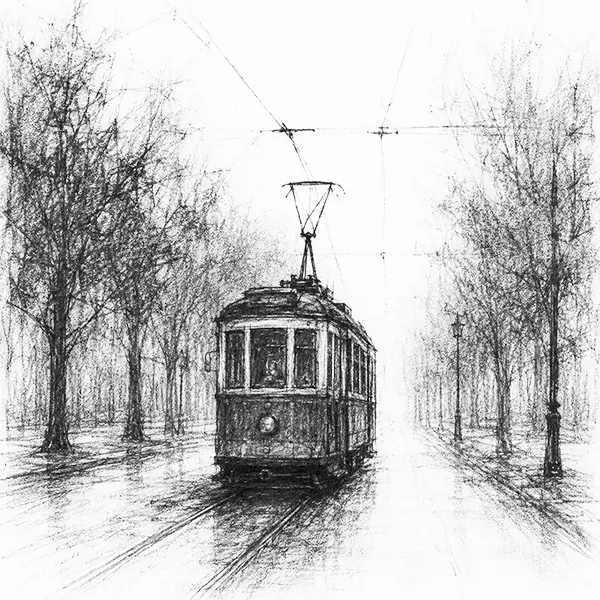
Then the trams, which are the thing I keep returning to — not the new ones but the old brown-and-cream carriages I have only seen in pictures, rattling down the middle of streets wide enough to lose a parade in. I have read that the city kept its trams when half the world was tearing theirs up for the motorcar, kept them out of stubbornness or thrift or affection, and ran them so long they stopped being transport and became the place itself. They run, I am told, right out to the edge of the bay. There is footage of one going by in the wet, the rails two bright lines on the dark road, the windows lit and full of strangers going home, and I have watched it more times than a sane man would admit. I do not want to ride it, exactly. I want to be the one standing on the kerb, watching it pass, somewhere I have decided I will one day stand.
A suburb dressed in iron lace
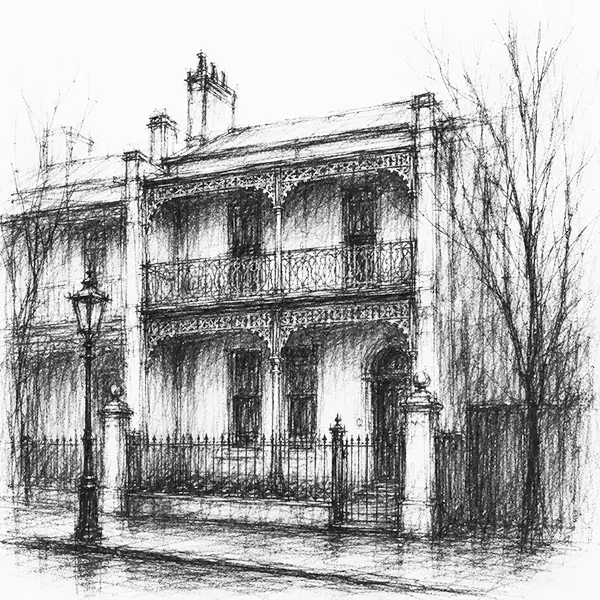
What I have, mostly, is a heap of facts kept the way some men keep receipts. That a long-ago gold rush poured so much sudden money into the place that it threw up whole streets of stern, showing-off stone, and dressed the houses in cast iron — verandahs laced and frilled with the stuff, balconies dripping with it, an entire suburb of ironwork bought with luck dug out of the ground. That it called itself, for a while, the richest city of its age, and built like it believed it. That the money left, the way money does, and the iron lace stayed, going quietly rusty over streets of ordinary people. I file these against a journey I keep meaning to make. I like a city that overdressed in its youth and never quite grew out of the clothes.
An arcade out of the weather
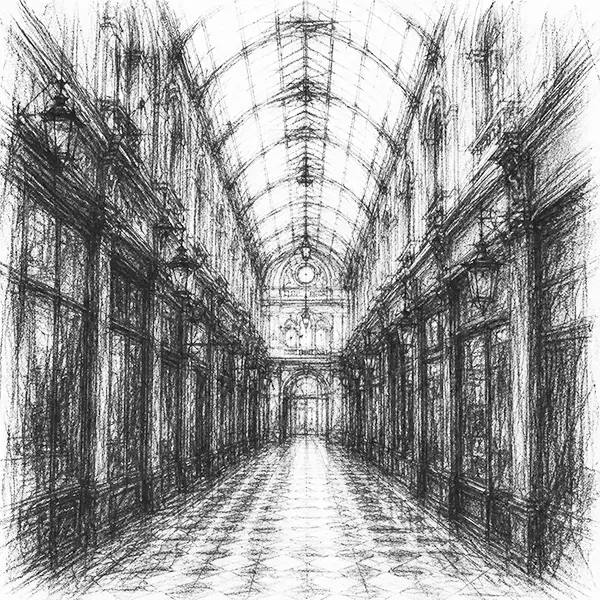
Some of that money went up, I gather, but a good deal of it went sideways and indoors, into long glass-roofed arcades cut through the middle of the blocks — corridors of small shops under a high arched skylight, tiled underfoot, where the changeable sky is held politely at arm’s length and it is always the same mild indoor afternoon. In the one photograph I trust, the light comes down through the glass in a single soft column and lands on a patterned floor worn smooth by a century and a half of feet, and there is no one in it. I have spent a fair amount of imaginary time in that empty arcade. It is the kind of place a man can stand inside out of the weather and feel, for a moment, that he has arrived somewhere, when in fact he is on his own sofa, and it is raining at home too.
A cathedral of floodlight
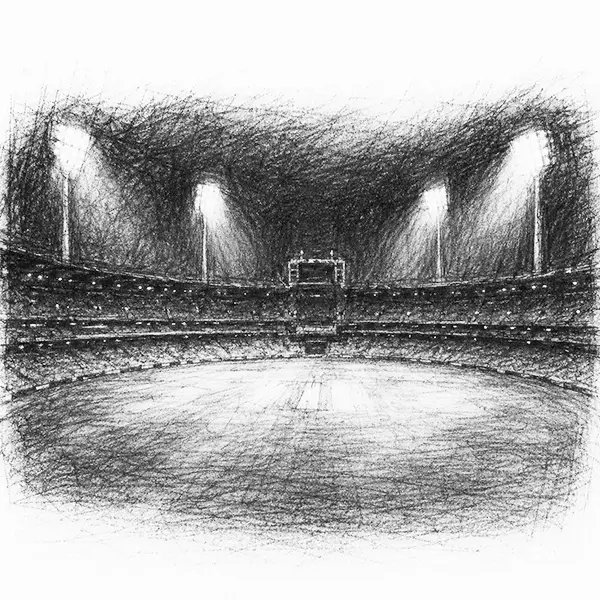
And the ground — there is a cricket ground there I have known the name of since I was a boy who could not have found the city on a globe. A great grey oval, a bowl of stands going up and up, and at night the tall light towers come on and pour a flat white day down onto the grass while it is black everywhere else. I grew up in a country that takes this game more seriously than is good for it, and that particular ground sits in my head as a kind of distant cathedral, half real and half rumour, where I have watched, on a small screen, in the small hours, things I will describe to no one because they would not understand why a grown man set an alarm for them. To stand inside that lit bowl with a hundred thousand strangers is on a list I keep. The list is long. I have crossed nothing off it.
The bright locked boxes of Melbourne
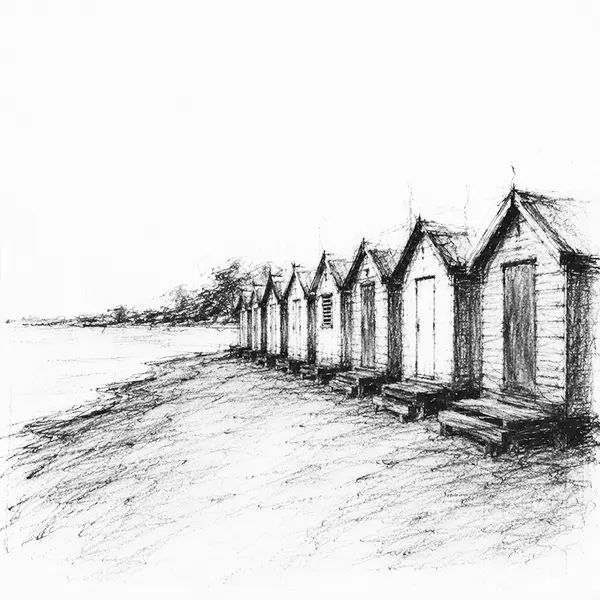
The most particular Melbourne I own came from a former colleague who had spent a year there and remembered, of all of it, a row of little wooden huts on a beach by the bay. Bathing boxes, she called them — small painted sheds standing in a tidy line on the sand, each one a different bright colour, owned and locked and handed down, costing, she swore, more than a flat would cost where I live, and good for nothing but keeping a deckchair and a towel out of the wind. She could not tell me the gold rush from the iron lace. She could only tell me about those silly beautiful boxes, and the cold flat shining bay behind them, and a wind that came straight off the bottom of the world. It has done more for my idea of the place than every fact I have filed away. I keep a row of bright locked sheds at the edge of my Melbourne, holding nothing, facing the sea.
Here is the part I do not say aloud. I could go. The passport is in the drawer, on its third renewal, clean as the day it was issued, and the city is a known and unheroic number of hours away — a long flight and a form and a sum of money I have, each time, found a nearer use for. No wall, no war, no one forbidding it. And still I have not, and the not-going has become a thing I own as surely as the iron lace and the empty arcade. I have started to suspect I keep these places best by staying off the plane. So I keep my Melbourne where it is, under its changeable sky, the tram going by in the wet and the bright boxes locked along the bay — one more entry in the long, unembarrassed account of a man who has never been abroad, and who keeps writing the paragraph instead of buying the ticket.
“Melbourne: city of south-eastern Australia, capital of the state of Victoria, founded 1835 and grown rapidly wealthy in the gold rush of the 1850s; noted for its parks, its arcades, and its tramway system.”
— from a battered atlas, in the gazetteer at the back

Leave a Reply