Abroad · never been
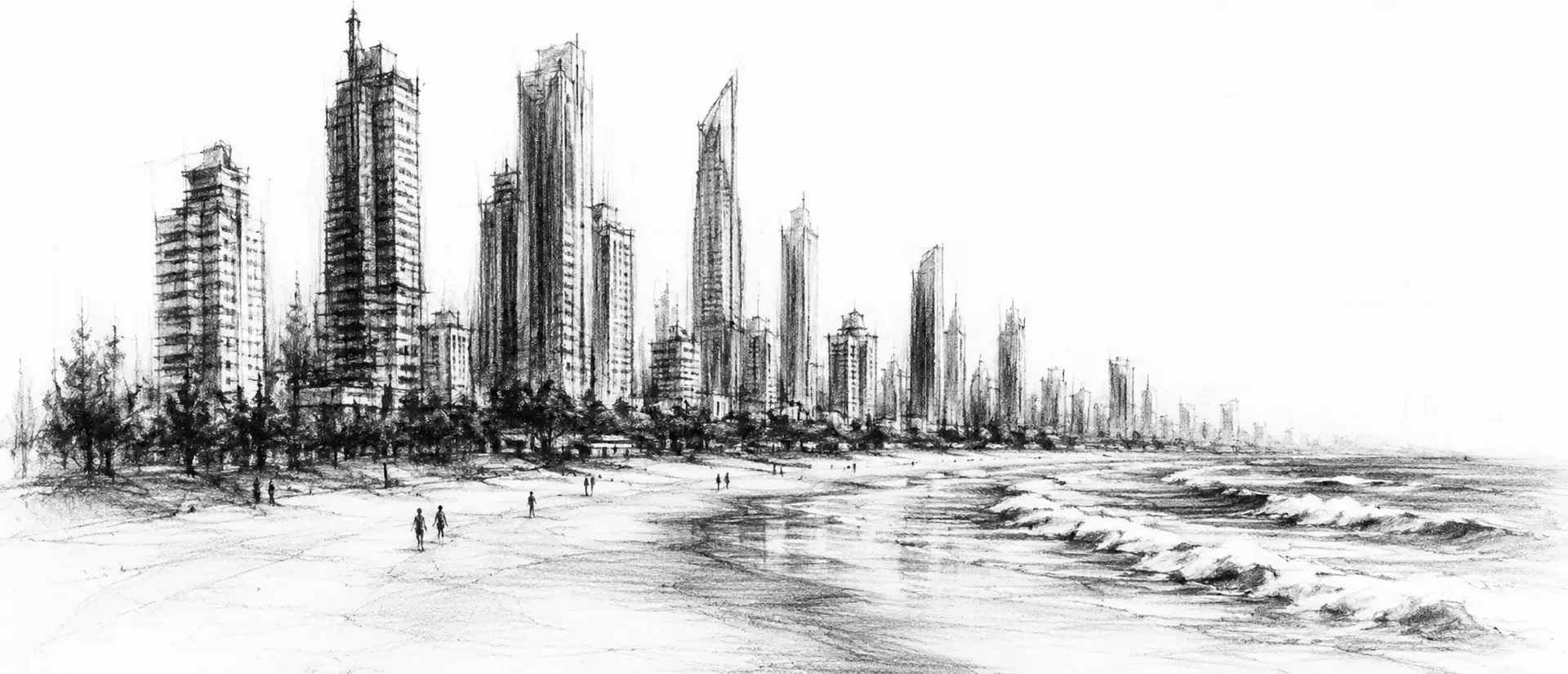
The Gold Coast is a name before it is a place, and I have always half-suspected that was the whole point. Somebody, the story goes, called a long stretch of ordinary Australian beach the Gold Coast in order to sell the land behind it, and the name did what a good name does — it worked, it stuck, it summoned into being the very city it had only pretended already existed. Now there is a real skyline standing exactly where the invented one was promised: a wall of glass towers set down at the very edge of the sand, a whole city arranged, from top to bottom, around the business of being on holiday. I come from a place with a great deal of history and not much leisure. A city that is nothing but leisure has always struck me as the more foreign of the two.
The Gold Coast, where the towers meet the sand
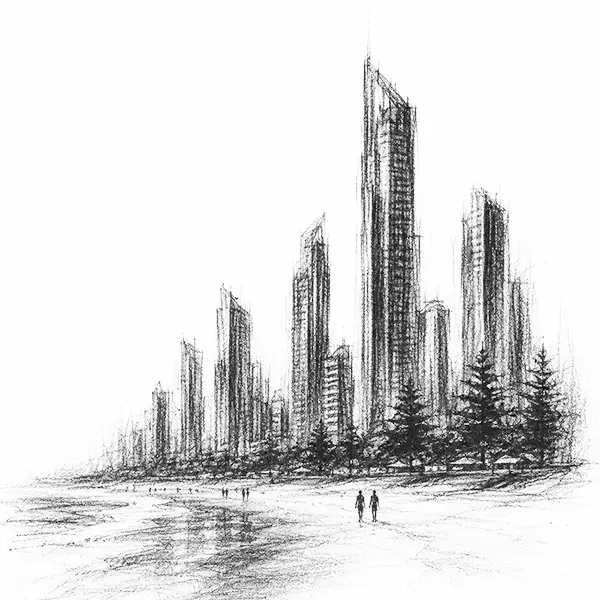
The image everyone owns of the place is the same image: the towers standing straight up out of the beach. Not set back behind a road and a promenade the way a sensible cold country would build, but right there, so that the shadow of a fifty-storey building falls across people lying on the sand in the late afternoon, and the same wave you are swimming in is thrown back, a hundred times over, in the glass above your head. There is one tower taller than all the rest, a pale needle they say you can see the long curve of the coast from, and around it the others crowd down to the water like a class photograph that will not quite hold still. A city that walked out into the sea and stopped at the last dry inch of it.
The line where the wave stands up
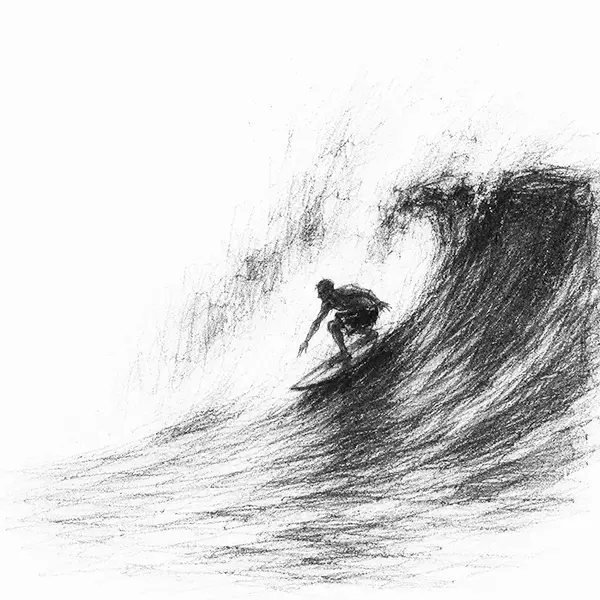
But the towers are the newcomers. Before any of them the place belonged to the surf, and it still does, in the way a language belongs to the people who dream in it. Everything I have of the Gold Coast that is worth keeping is about the wave — the long even rollers that come in off the open ocean and stand up, for a few seconds, into a moving wall of water a person can slide along the face of. I have watched the footage until I could nearly feel it: the figure crouched low, cutting a line across the wave just ahead of the part of it that is already falling, riding the collapse without ever being caught by it. It is the bridge and the rope again, in another country — the whole art of the thing living in the margin, the hand’s-breadth between the ride and the wipe-out.
Red and yellow, and the space between
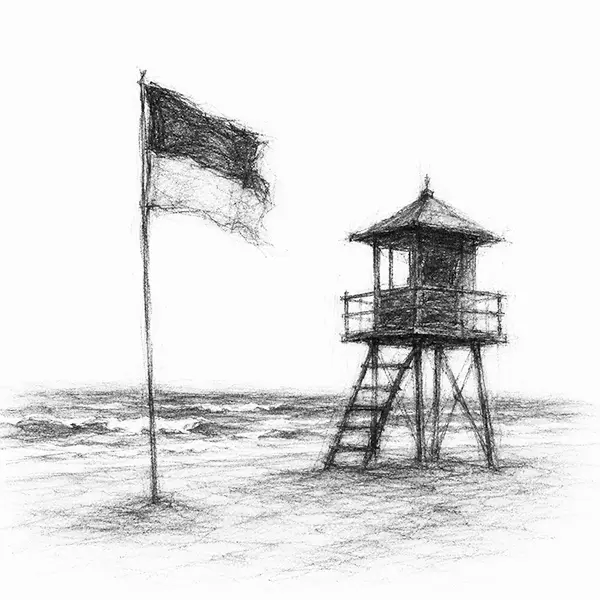
Against the wave they set a small ceremony I find almost moving. Along the beach stand a pair of flags, red over yellow, planted in the sand a certain distance apart, and the whole understanding of the place is that you swim between them and nowhere else, because between them a lookout in a tower is watching, and beyond them he is not. A country that turned rescue into a civic habit — volunteers in caps who train against the day the sea decides to take somebody back, and who, the plain fact runs, drag thousands out of it every year. I have thought about those two flags more than about the towers. A pair of coloured cloths that say, in effect: here we can save you; past here you are the sea’s own business. I have spent a whole life staying carefully between the flags.
The green behind the glass on the Gold Coast
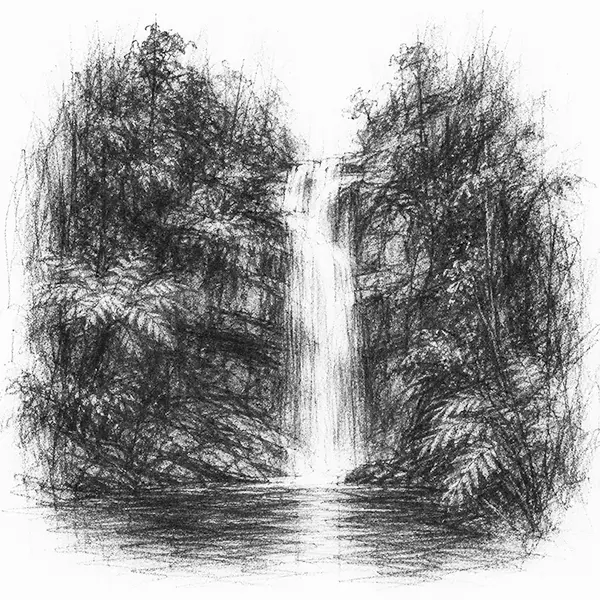
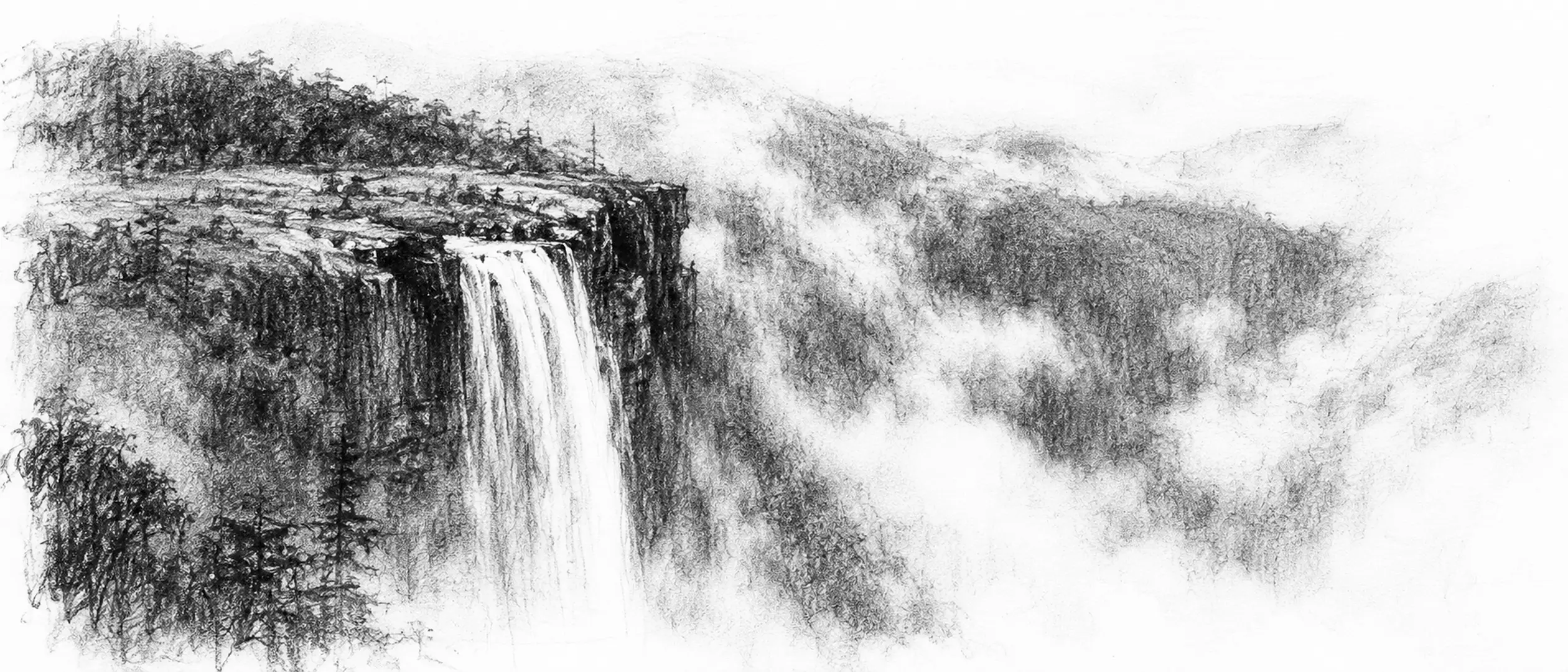
There is a part of it almost nobody photographs, and it is the part I would go for. Behind the towers, an hour up into the hills, the coast turns its back on itself and becomes old rainforest — deep green gorges the encyclopedia counts among the oldest surviving forest of their kind anywhere on earth, with waterfalls dropping into cold pools, and, in the caves after dark, small insects that hang from the roof and shine like a spilled sky. A city selling sun and glass, with a stretch of ancient dripping green folded up in the hills directly behind it, saying nothing about itself. I have always liked a place that keeps its oldest thing out of the brochure.
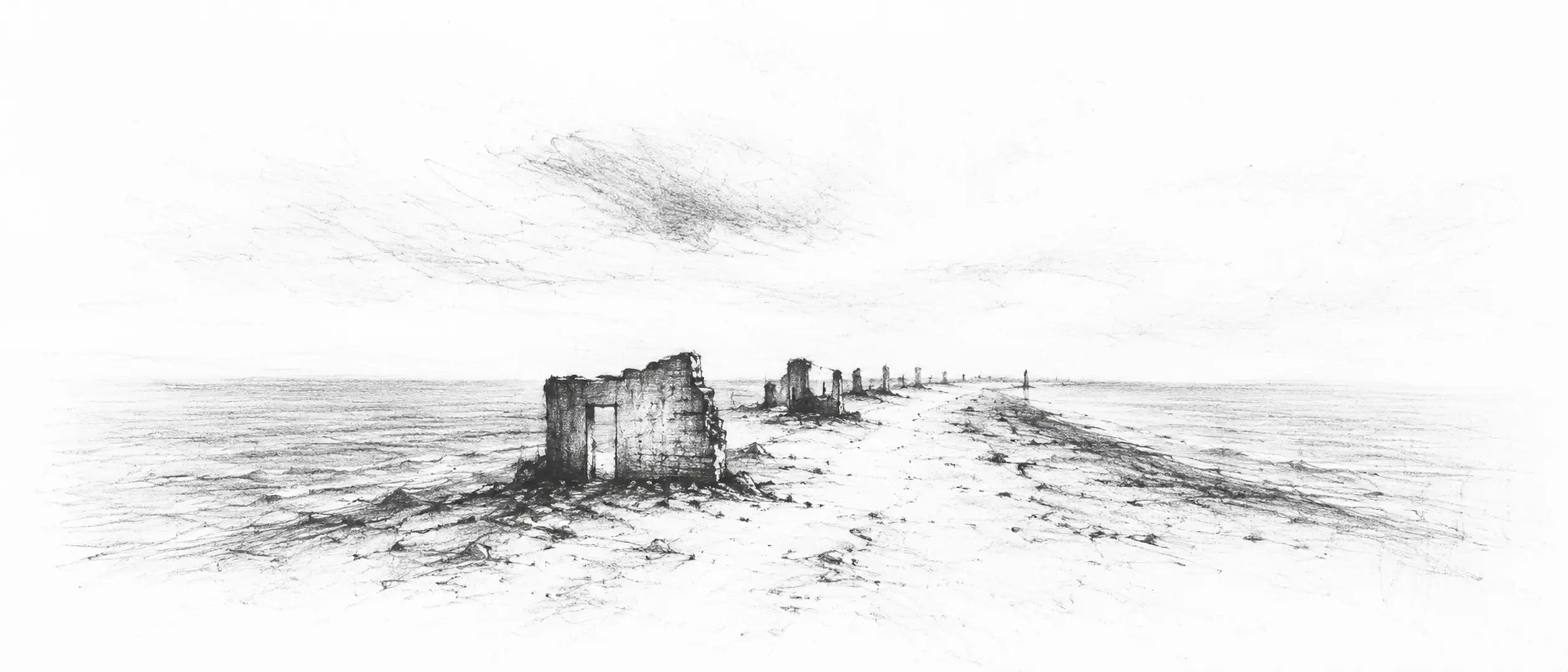
What the Gold Coast looks like empty
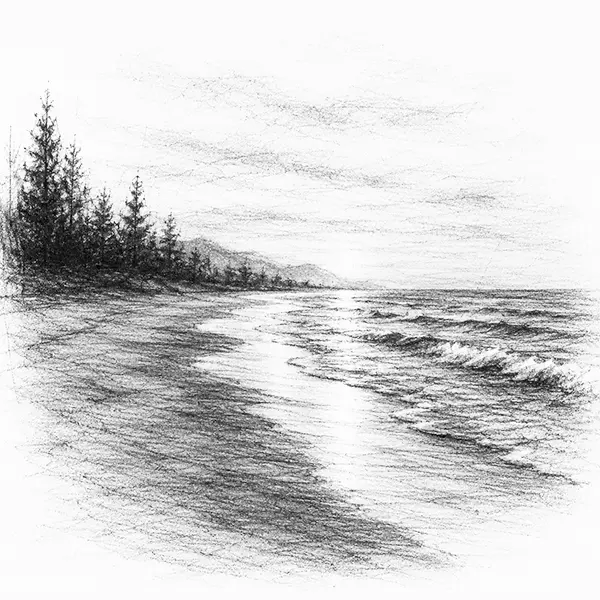
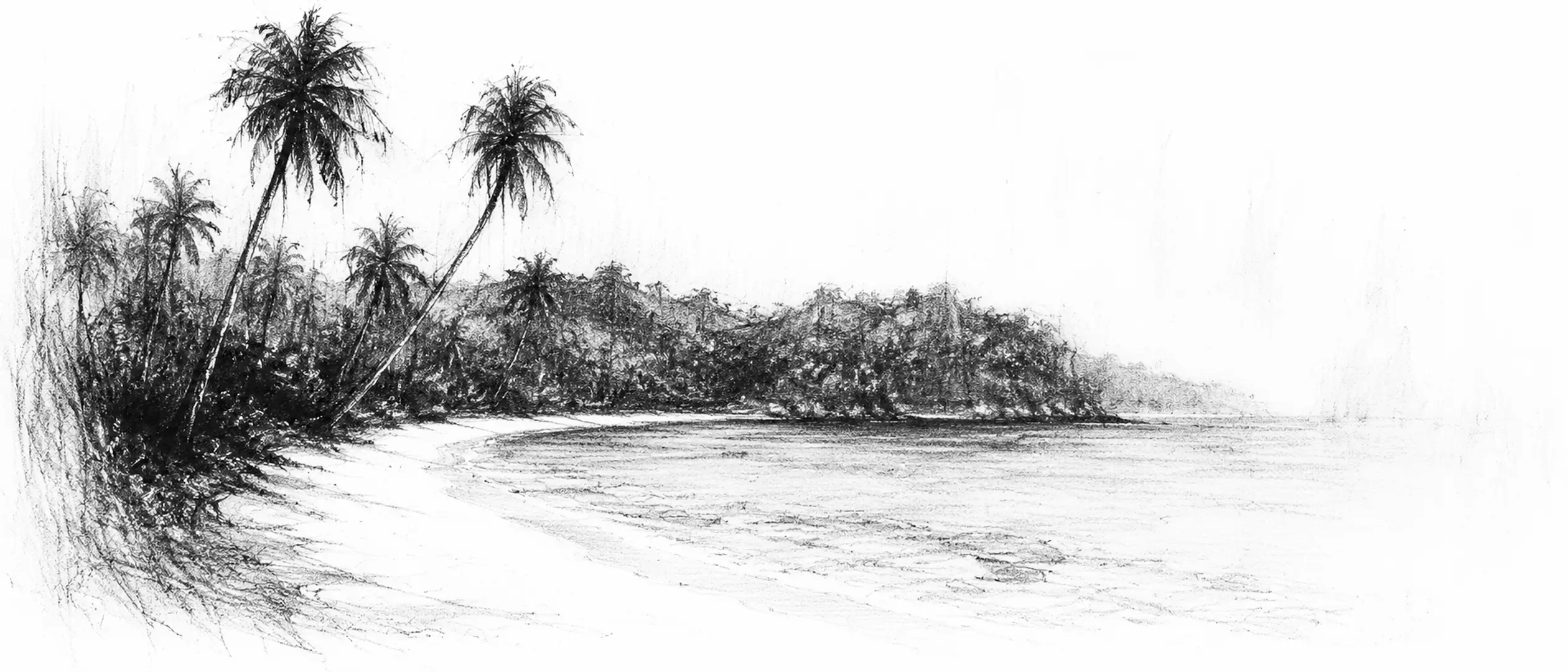
The picture I keep last is the one with no one in it. The beaches there run for something like fifty kilometres, and they face straight into the open ocean, which means the sun comes up out of the sea in front of them; and there is an hour, before the towers throw their shadows and the flags go up, when a single one of those beaches is only a long curve of pale sand with the first light lying flat along the wet edge of it and not one soul yet awake to see. A city built entirely to be looked at, caught in the one hour it is not performing for anyone. That is the Gold Coast I would want — the empty one, the rehearsal before the crowd, which is of course the single version of it I could never buy a ticket to see.
I could go. The passport is in the drawer, on its third renewal, clean as the day it came, and the Gold Coast is a long flight and a stamped visa and a sum of money I keep laying out, each year, on things that are nearer and a good deal less bright. Nothing forbids it now. And still I have not gone, and the not-going has hardened, the way it always does with me, into something closer to ownership than to regret — a loud bright city I somehow possess more surely for never once having stood in the noise of it.
So I keep it where it is, in the still hour before the flags: the towers standing to their knees in the sea, the surfer folded into a wave that has not yet fallen, and behind the whole performance the old green forest dripping in the hills and keeping its own counsel. I have never been abroad; the Gold Coast is one of the places I have chosen, for now, to keep just before the sun comes up over the water and gives it away.
“Gold Coast: city of Queensland, Australia, on the Pacific coast south of Brisbane; noted for some fifty kilometres of surf beaches, a hinterland of subtropical rainforest, and a shoreline built up with high-rise towers.”
— from an atlas gazetteer, under the cities of the southern sea
Leave a Reply