Abroad · never been
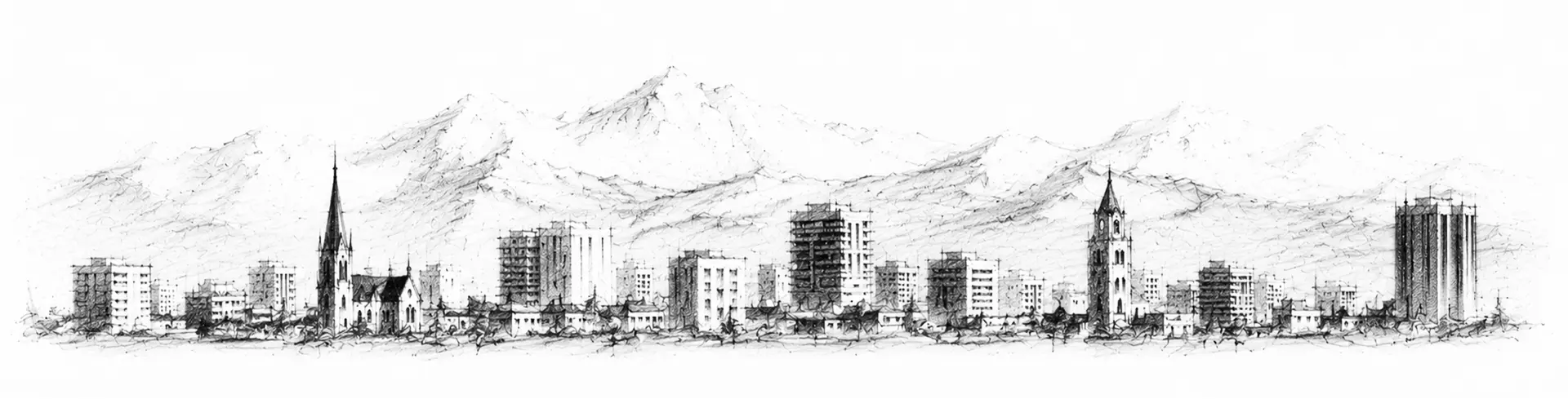
I came to Christchurch already secondhand twice over — a copy of a place I had also never seen. The first thing anyone ever told me about it was that it is the most English city outside England, and they said it the way you pass on a thing you have decided to be proud of on someone else’s behalf. A cathedral in a square. A river with willows. Stone the colour of a wet biscuit, grey Gothic schools, gardens laid out by people who missed somewhere very far away and set about building it again from memory at the bottom of the world. I had not been to England either. So I was being handed an imitation of a place I did not have, on the far side of an ocean I had never crossed, and I took it gladly, because that is what I do.
Christchurch and the willows of the Avon
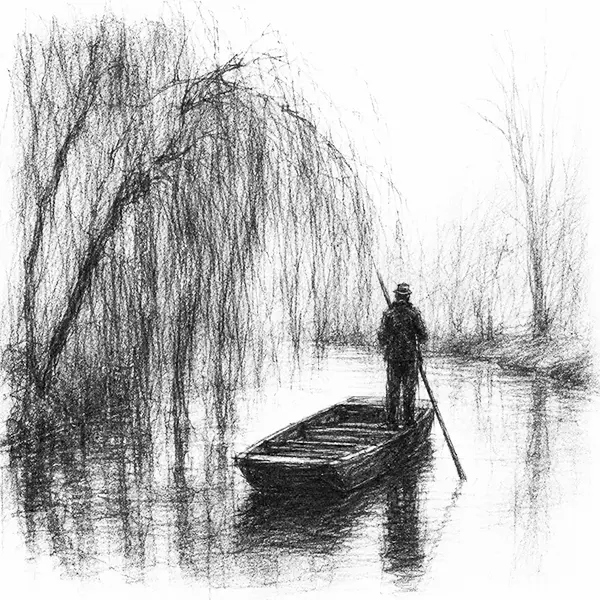
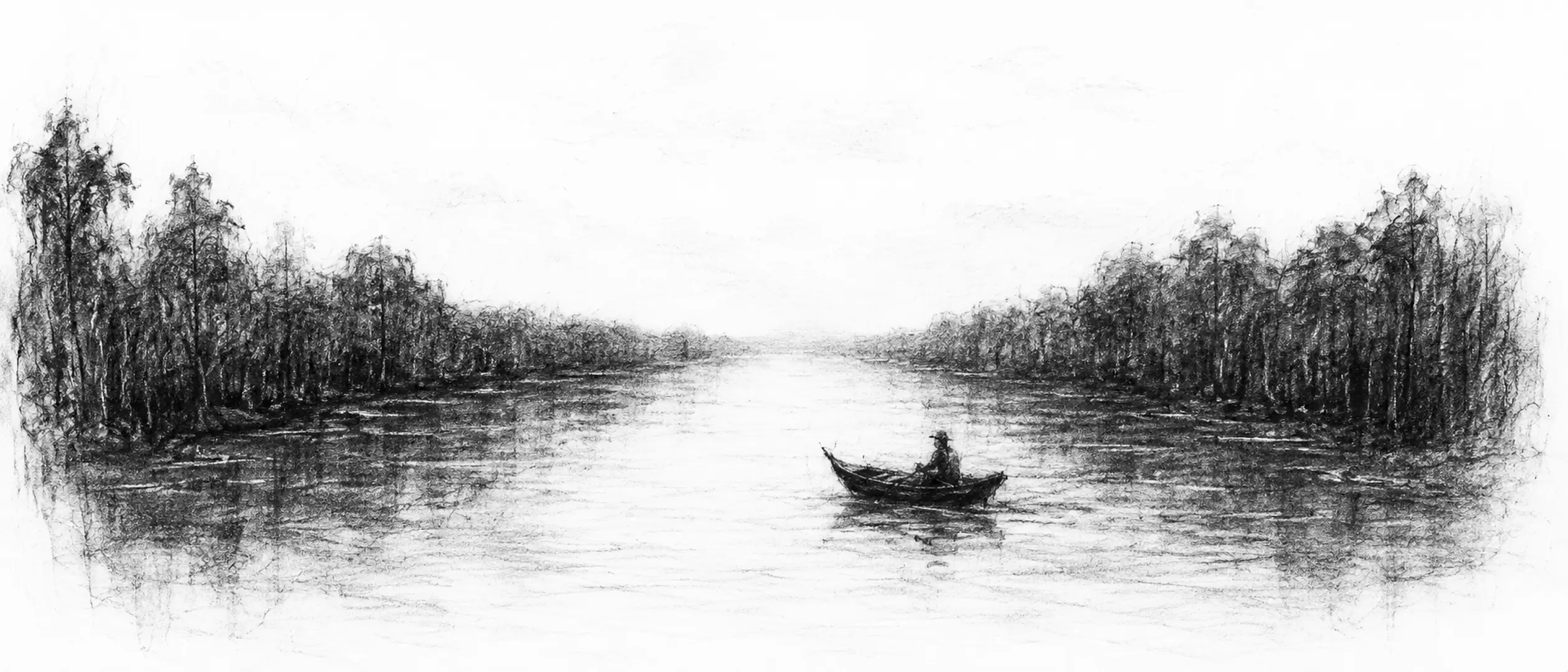
The river did most of the work. The Avon (they kept the name, of course they did) runs through the middle of it, narrow and slow and overhung with willows, and people go out on it in flat-bottomed boats pushed along with a pole, the way I had only ever seen done in photographs of one particular English university and assumed happened nowhere else on earth. A man in a straw hat standing at the stern, leaning on a long pole, the boat sliding under low branches. It is such a deliberate, transplanted thing to be doing in the South Pacific that I loved it immediately. Someone had wanted the willows badly enough to plant them twelve thousand miles from where willows belong, and then wait the decades it takes a willow to lean properly over water. That is the thing I keep snagging on — the patience of homesickness, the willingness to set something growing that you may not live to see finished, just so a stretch of foreign river will one day feel like the right kind of cold and green. I have read that on a still afternoon the reflection doubles the whole scene, so neatly that the photographs look folded. I believe it without needing to check.
When the ground moved
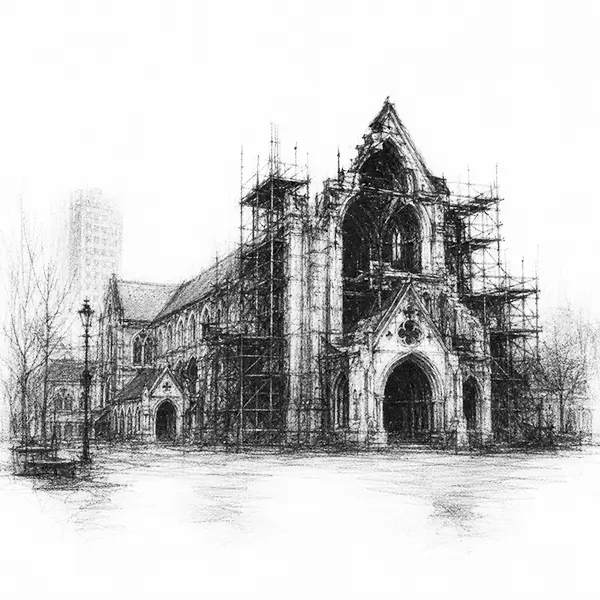
Then, years after I had filed all this comfortably away, the ground moved, and I had to learn the city over again as a different thing. It came as a news item first, a morning’s footage of dust going up off a city I had only ever pictured as still. The earth there does not sit quietly. The whole country rides a seam where two plates grind past each other. One September it gave the city a hard shove in the dark. Then, the following February, a smaller and far crueller one came in the middle of a working lunchtime, shallow and close, and that one brought the buildings down with people inside them. The stone cathedral in the square — the one the whole town had been arranged around, the thing that made it most English — lost its spire into its own porch and stood there afterwards open to the sky, a broken tooth behind a fence. For years it just sat, argued over, too sacred to clear and too dangerous to enter, while the city decided what it was allowed to feel.
A made-do holiness
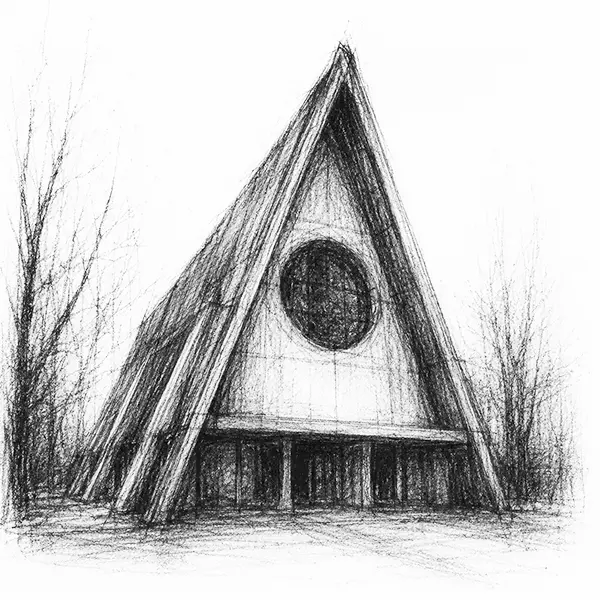
What they did next is the part I keep returning to. While the stone one stood broken behind its fence, they put up another cathedral a few streets over, a temporary one, meant to last only until the argument was settled — a steep A-frame thing, a great triangle of plain beams with a round window in its face, light and cheap and frankly strange, built in part of materials you would expect to find holding up a roof and not standing in for one. People called it the cardboard cathedral, half mocking and half fond, and went to it. I find that almost unbearably moving in a way I have trouble explaining at dinner — a city knocked flat that does not wait for permission to grieve grandly, but raises a plain bright shed and calls it sacred for the time being. A made-do holiness. I have built a good deal of my Christchurch out of that one building.
Recovery in primary colours
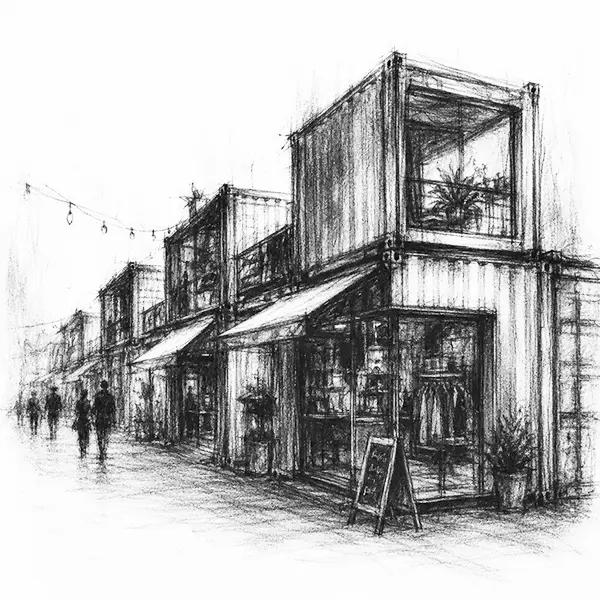
The rest of the rebuild ran the same way, by all the accounts I have collected. With the centre fenced off and unsafe, the shops came back first as shipping containers — the steel boxes off the docks, painted up and stacked two high and turned into a street of cafés and stalls, a city centre made of the very things that carry cities to one another. It was supposed to be temporary too. A lot of the bravest things there were supposed to be temporary. I like a place that improvises its own recovery in primary colours, that does not stand around waiting to be solemn. From everything I can gather at this distance, Christchurch decided that the opposite of a ruin is not a monument but an open shop.
Breathing borrowed summer
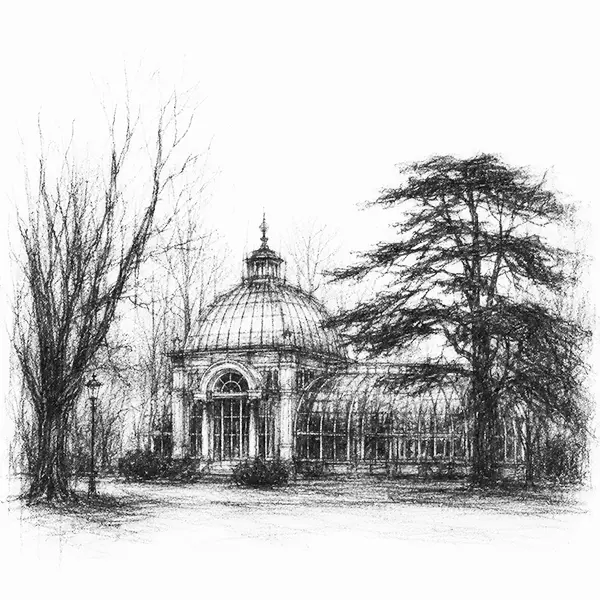
And underneath all the breaking and mending, the gardens held. The thing the settlers wanted most seems to have been the thing the earth left alone — a great green botanic garden in the loop of the river, old exotic trees brought from everywhere and grown enormous, and a white Victorian glasshouse with a curved roof standing among them, the kind of patient warm bubble where a cold country keeps the plants of warmer ones alive out of sheer longing. I understand that impulse to my bones. A man from Calcutta keeping a memory of Switzerland in a drawer is not so different from a colder people keeping a jungle under glass. We are all, in our way, growing something out of its proper climate and refusing to let it die. The pictures I trust best are the winter ones, the glasshouse warm and lit among bare black trees, breathing its borrowed summer out into a cold that does not belong to the things inside it.
Christchurch, with a glacier at the end of the street
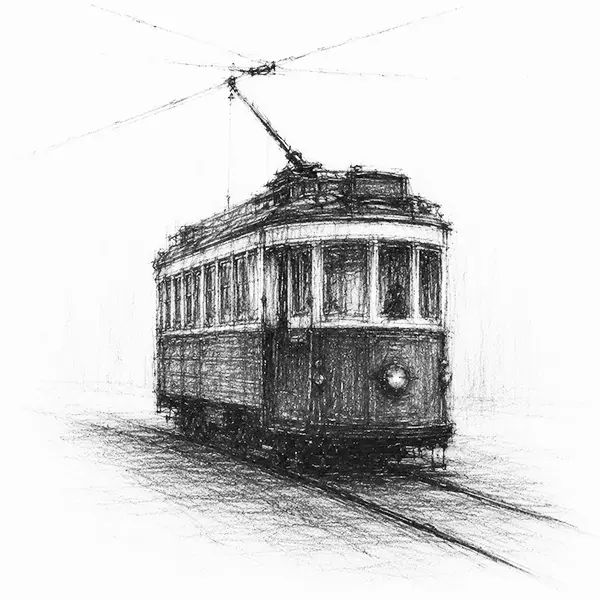
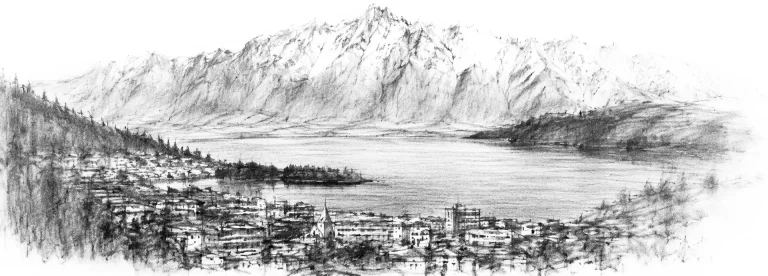
There is an old tram, too, that loops the rebuilt centre — not transport so much as a thing the city kept and polished and put back on its rails after the shaking, the way you set a clock going again because the silence of a stopped clock is worse than the noise of a working one. And around all of it, holding the whole tidy English idea in place, lie the Canterbury plains: flat farmland running out further than seems reasonable, hedged and ditched into squares, and then, along the far western edge, the Southern Alps standing up white and sudden out of all that flatness, near enough to see from the streets on a clear day. A snow wall at the end of every long road out of town. The most particular thing anyone ever told me about the place was from a former colleague who had driven those plains once, who said you could be in a calm grey city that thought it was Surrey, and look up at the end of an ordinary street, and there was a glacier. He could not get over the nearness of it. Neither, secondhand, can I.
That is the Christchurch I keep: a borrowed England that the actual earth refused to leave alone, mending itself in plywood and painted steel under a row of mountains that do not care how English anyone is. And I could go and stand in it. The passport is in the drawer, third renewal, clean as the day it came, and the only thing between me and that street with the glacier at the end of it is a very long flight, a visa form, and the small daily failure to fill it in. I have never been abroad, and the cities I love best are the ones I have left, for now, exactly where I found them — out past the willows, just before the snow line, putting themselves quietly back together without me.
“Christchurch: city of the South Island, New Zealand, on the Canterbury Plains near the mouth of the Avon River; founded 1850 as a planned Church of England settlement.”
— from the one-volume encyclopedia I have had since school

Leave a Reply