Abroad · never been
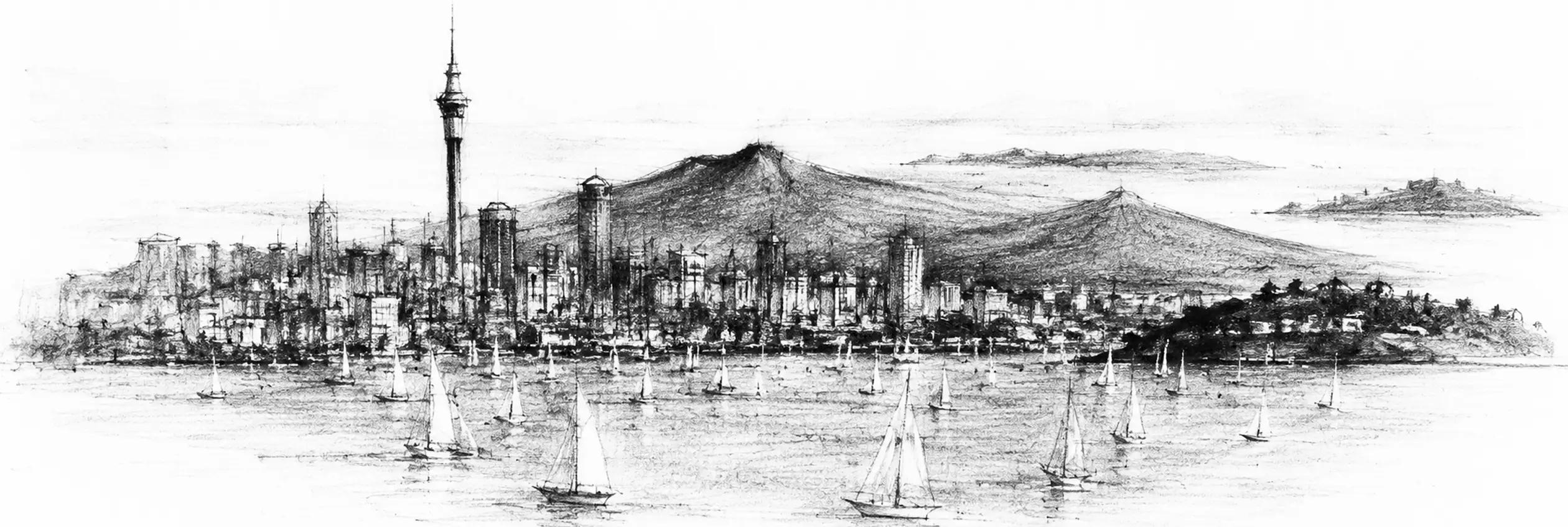
If Sydney is as far as the earth allows, this is a little further — the next city down and across, on the far side of a sea from a place that is already the far side of the world from mine. I have written before about wanting Sydney for the sheer distance of it, the upside-down sky, the longest flight there is. Auckland is the same impulse carried one stretch onward: not the bottom of the world but the edge of it. A small green country flung out past the last of everything into an enormous empty ocean, two long islands with almost no one on them and, near the top, a city spread out across the cones of dozens of dead volcanoes, strung between two seas. It is, on the map, about the last inhabited place I could point to before the blue takes over completely. That is most of the reason I want to go.
It reaches me thinly, which is part of the appeal — fewer films, fewer photographs, a country that does not push itself at you the way the great cities do, that you have to go looking for. What I have built is a place of clean hard sea-light and constant wind, of green hills that are secretly old craters, of water on both sides of everything, of sails and ferries and a tower over a low bright town. A young city, by the standards of the ones I keep, on very old land, at the windy end of the world.
Auckland, a whole city out on the water
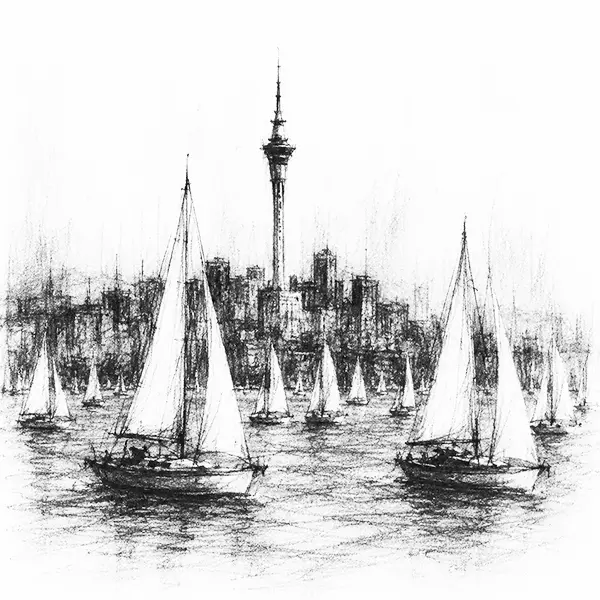
The first thing everyone says of Auckland is the boats — that there are more sailing boats per person there than almost anywhere, a whole city out on the water at the weekend, white sails crowding the harbour under the one tall slender tower that marks the place from a distance. A city so wrapped in sea that messing about in boats is simply what people do, the way mine go to the market. I have spent my life beside working water and crowded water; the idea of a whole population that takes to the harbour for the pleasure of it, in the wind, under sail, is foreign to me in the gentlest way, and I would like to watch it from the shore on a bright blowing afternoon.
A city that mows its craters
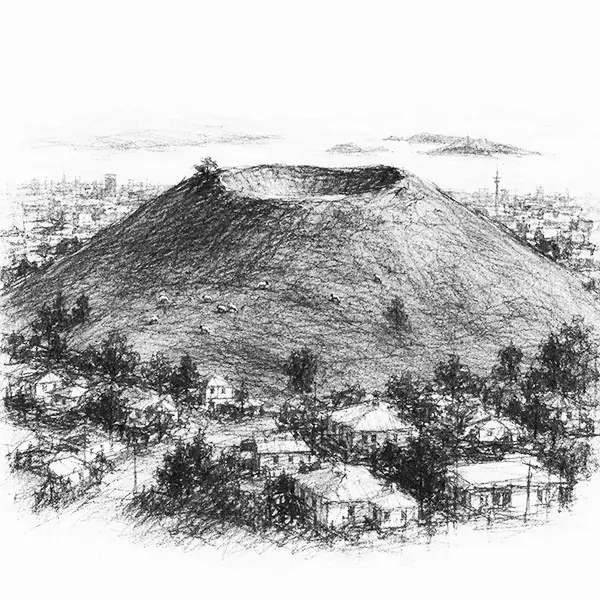
Then the volcanoes, which are the strangest and best thing — Auckland is built across dozens of them, small extinct cones grassed over and grazed by sheep, rising green and round straight out of the suburbs, so that a person can climb a perfectly ordinary hill at the end of their street and be standing on the lip of an old crater with the whole city and both its seas laid out below. A town that grew up among sleeping volcanoes and simply made parks and pastures of them, that mows its craters, delights me out of all proportion. I would climb one in the morning wind and turn slowly around and see, in a single rotation, a city, a harbour, an ocean on each side, and the green cone under my feet that made the ground I was standing on.
Where the sea turns wild
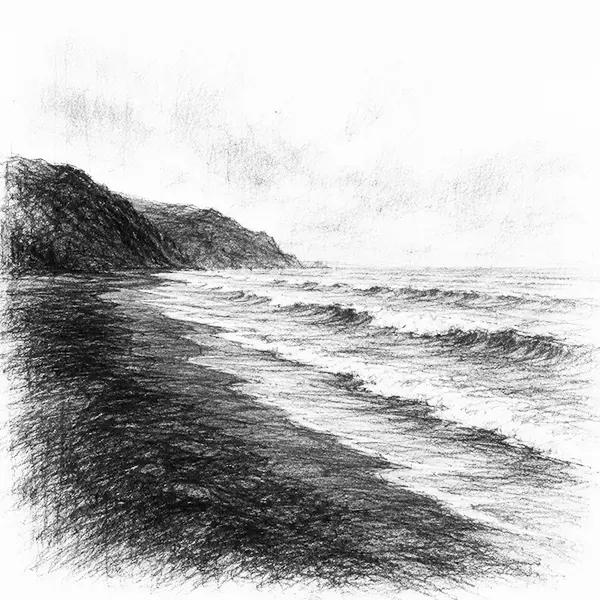
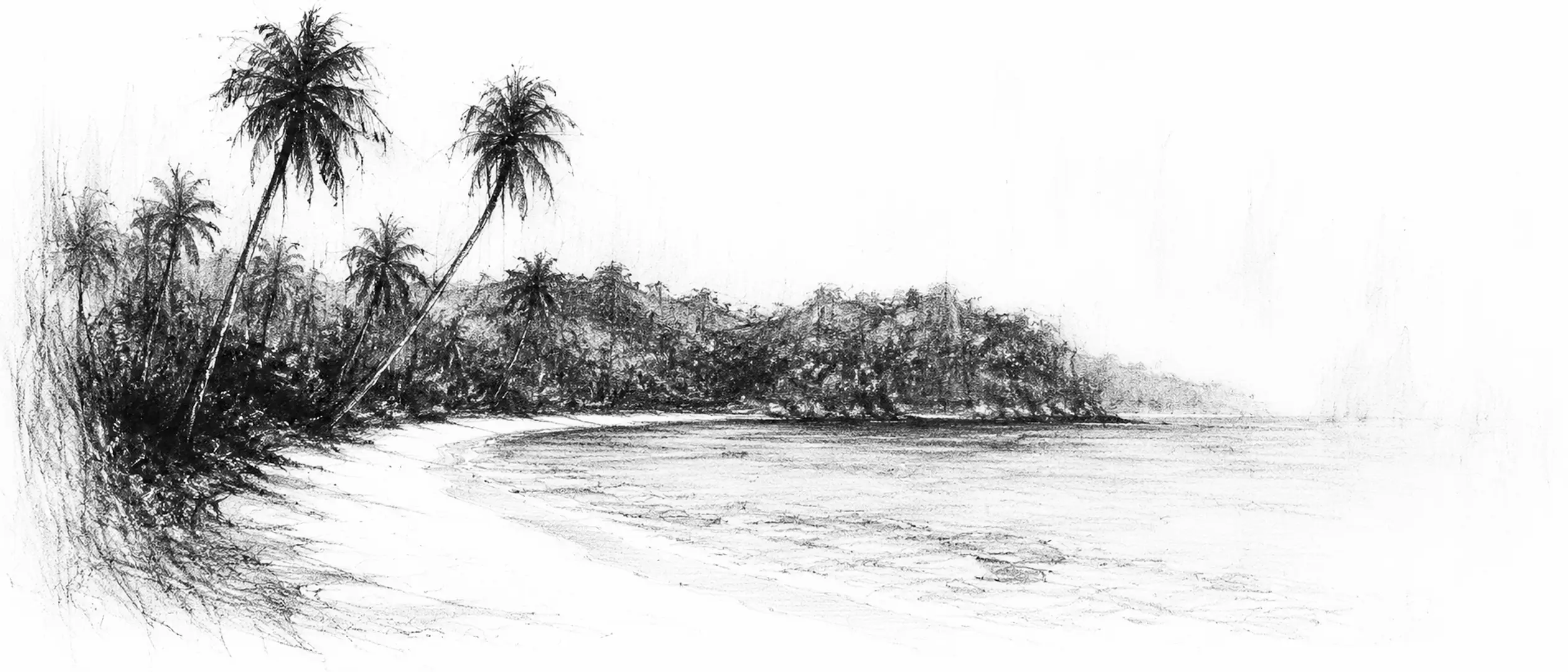
On one side of the narrow land the sea is mild and full of islands; on the other, a short drive west, it turns wild — long black-sand beaches pounded by a heavy grey surf that has come uninterrupted across half a planet of open water, iron-dark sand, big rollers, almost no one. I have stood on warm pale crowded beaches all my life. A black beach with that much furious clean ocean arriving on it, the sand the colour of the volcanoes that made it, is the kind of elemental, unpeopled place I find I want more and more as I get older — somewhere the sea is simply enormous and busy and indifferent, and a person is rightly very small.
More sheep than people
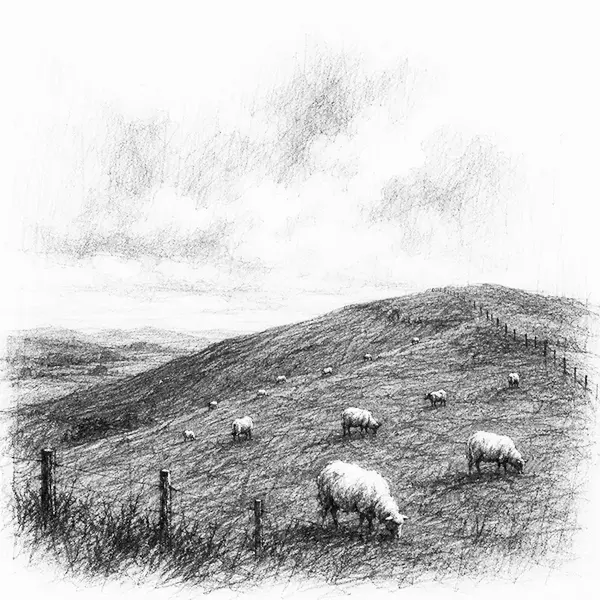
And just past the city, the emptiness — for all that this is the country’s largest town, the country itself is mostly green and almost unpeopled, steep hills of pasture rolling away under an enormous sky, with more sheep on them, famously, than there are people in the whole of it. I find that ratio wonderful. I come from one of the most crowded corners of the earth, where land is never simply empty and quiet is a thing you have to buy or steal; the idea of a whole country that is mostly grass and animals and weather, where you can drive an hour past nothing but green hills and the white dots of sheep, strikes me as its own kind of riches. The harbour and the towers are the part everyone photographs. I suspect the empty green just beyond them is the part I would find hardest to come home from.
The ferry out of Auckland, toward the islands
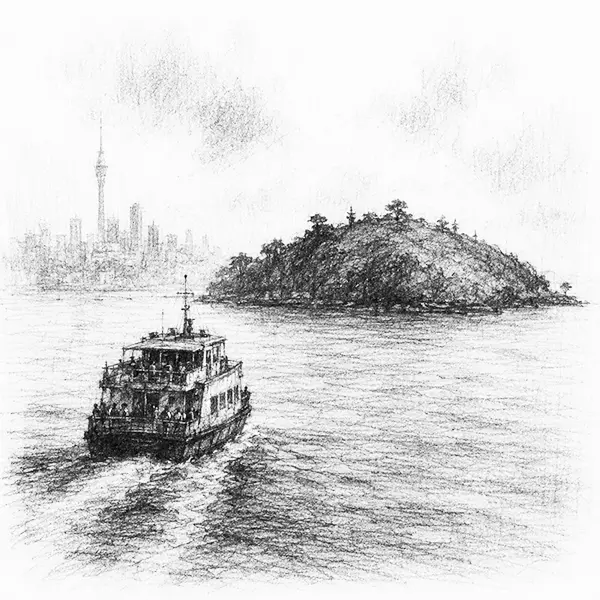
What I would do, given the chance, is leave again — take one of the little ferries that run out from the city across the gulf to the green islands scattered offshore, vineyards and beaches and bush and almost nobody, the city dropping behind and an island rising ahead, the same impulse that, in Vancouver, would put me on the boat to the wilder shore. I notice it is becoming a pattern in these far places: that when I finally reach the edge, I immediately want the edge of the edge, the island past the city, the quiet past the quiet. I would ride that ferry out and not be in any hurry to ride it back.
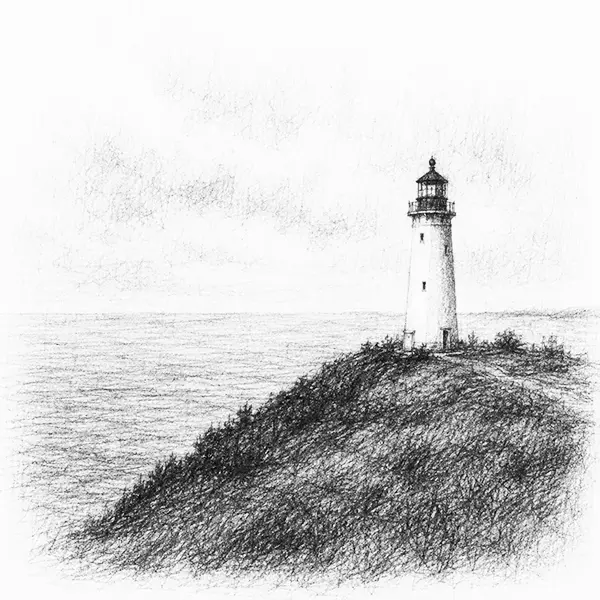
And at the end of the land, where the green finally runs out, a lighthouse — a plain white tower on a headland above an ocean that simply does not stop, that runs from here unbroken to the ice at the bottom of the world. I am drawn to the far points of places, the last bits of land with a light on them, and this would be among the very last: to stand at its foot and face south and west, with almost nothing between me and the underside of the planet but water. I have spent my life inland and crowded, hemmed in by people and land on every side. The thought of standing at the very lip of the inhabited world, a single small light at my back and all that empty sea in front, is close to the whole of what this far country quietly promises me — the edge, and the room.
So Auckland sits at the very end of my reaching, the furthest small lit dot before the map gives out — wanted, like Sydney, partly for the plain enormous distance of it, and partly for the particular things that distance has grown: the cones, the black sand, the empty green hills, the islands scattered out past the harbour. The obstacle is the obstacle it always is, only stretched to its limit: the longest flights there are, the dearest fares, and a life that keeps spending its leave closer to home. One of these years I should go to the windy end of everything, climb a grassy crater in the morning, and then, of course, get on the ferry, and go a little further still. I have never been abroad, and I dream hardest of the place that sits furthest from ever saying so.
“Auckland: largest city of New Zealand, in the north of the country’s North Island, built on a narrow isthmus between two harbours across a field of around fifty small extinct volcanoes; among the most remote major cities in the world.”
— from a set of travel books once sold to the house, door to door

Leave a Reply