Abroad · never been
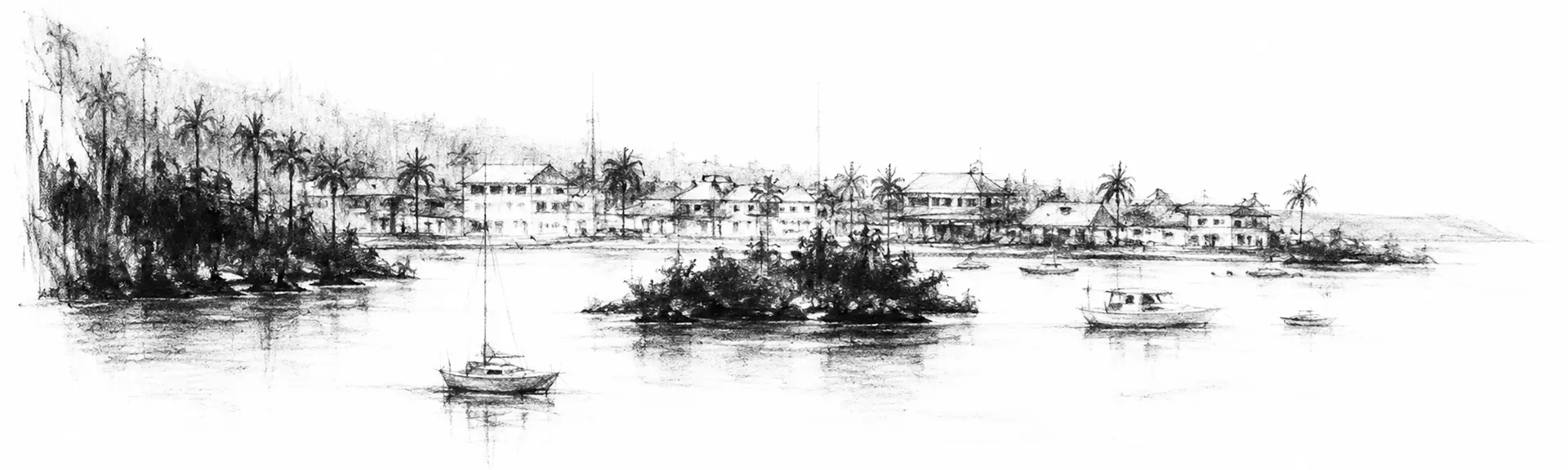
Port Vila is the capital of a country I could not have found on a map at nine and can only just find now — a scatter of some eighty islands flung across a stretch of the Pacific, so far out and so lightly drawn that the atlas seems half to have forgotten them. Everything I have of it is water and green and quiet: a small harbour town on a calm lagoon, little islands sitting offshore in turquoise like stones dropped in a bowl, a few boats swinging at anchor and nowhere in particular that anyone needs to be. I collect, I have noticed over the years, a great many cities that shout. This one only whispers, and I have kept Port Vila longer than most of the loud ones.
Port Vila and the quiet water
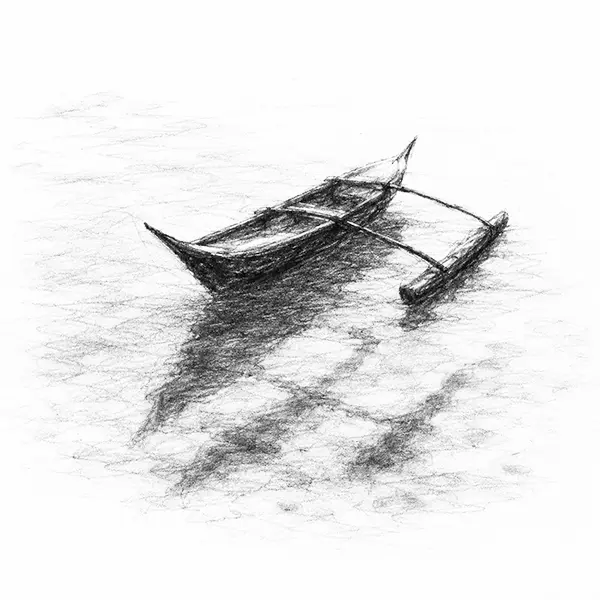
The picture I built first was the simplest one: a narrow canoe on impossibly clear water. Not a boat with an engine, but the old kind, a hollowed hull with a slender float lashed out to one side on two arms so it cannot tip — a design, the encyclopedia notes with a certain awe, that people carried across thousands of miles of open ocean long before anyone in my own part of the world had thought to leave sight of the shore. In the photographs the water is so clear the canoe seems to hang on air, its own shadow lying on the pale sand a few feet beneath it. I have looked at that shadow a long time. A boat, its shadow, and nothing at all between them but water you cannot see.
The mountain that burns at night
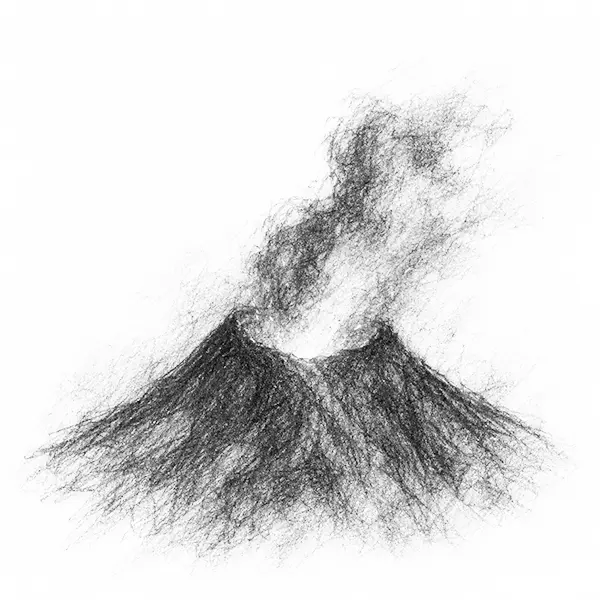
Then, on another of the islands — a flight or a slow boat from the town, for the country is mostly the sea between its pieces — there is the volcano. One of the few on earth, the documentaries agree, that a person can simply walk up to and stand at the very lip of, close enough to feel it in the chest, and look down into a crater that has been quietly on fire for as long as anyone has troubled to keep count. At night it throws its red up onto the underside of its own smoke, so that the whole mountain seems to breathe out light. I have watched that glow on a screen with the room dark. A hole in the top of the world with a fire at the bottom of it that never goes out, and people living within sight of it who have simply made their peace, as one does, with the neighbour who never sleeps.
The blue hole in the jungle near Port Vila
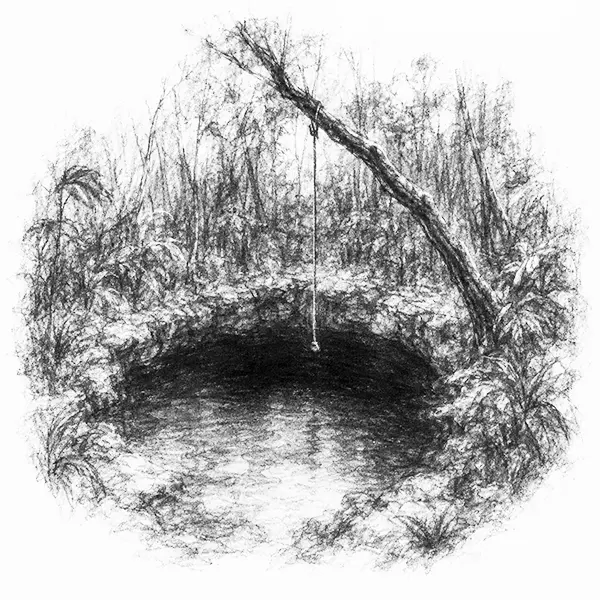
The detail I cannot get past is the blue holes. Somewhere back in the green, fed from underground, there are freshwater pools charged with a blue that no photograph quite convinces you of — a still round eye of water in the middle of the jungle, a rope slung from a leaning tree above it, the whole thing lit as if the colour were coming up out of the earth rather than down from the sky. I come from a city of brown rivers and warm brown ponds, and the idea of water that clean, that blue, sitting quietly in a forest for anyone who bothers to walk to it, strikes me as a kind of wealth nobody thought to put a price on. I have wanted to put a hand down into that colour and find it, disappointingly, ordinary and wet.
A palm that grows sideways to the sea
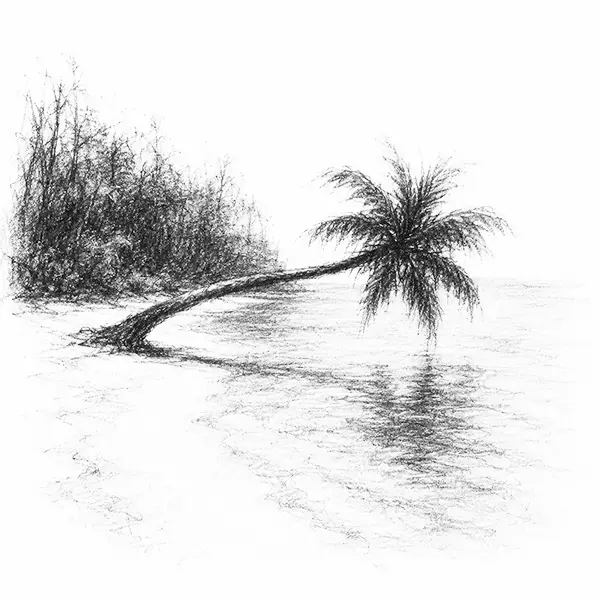
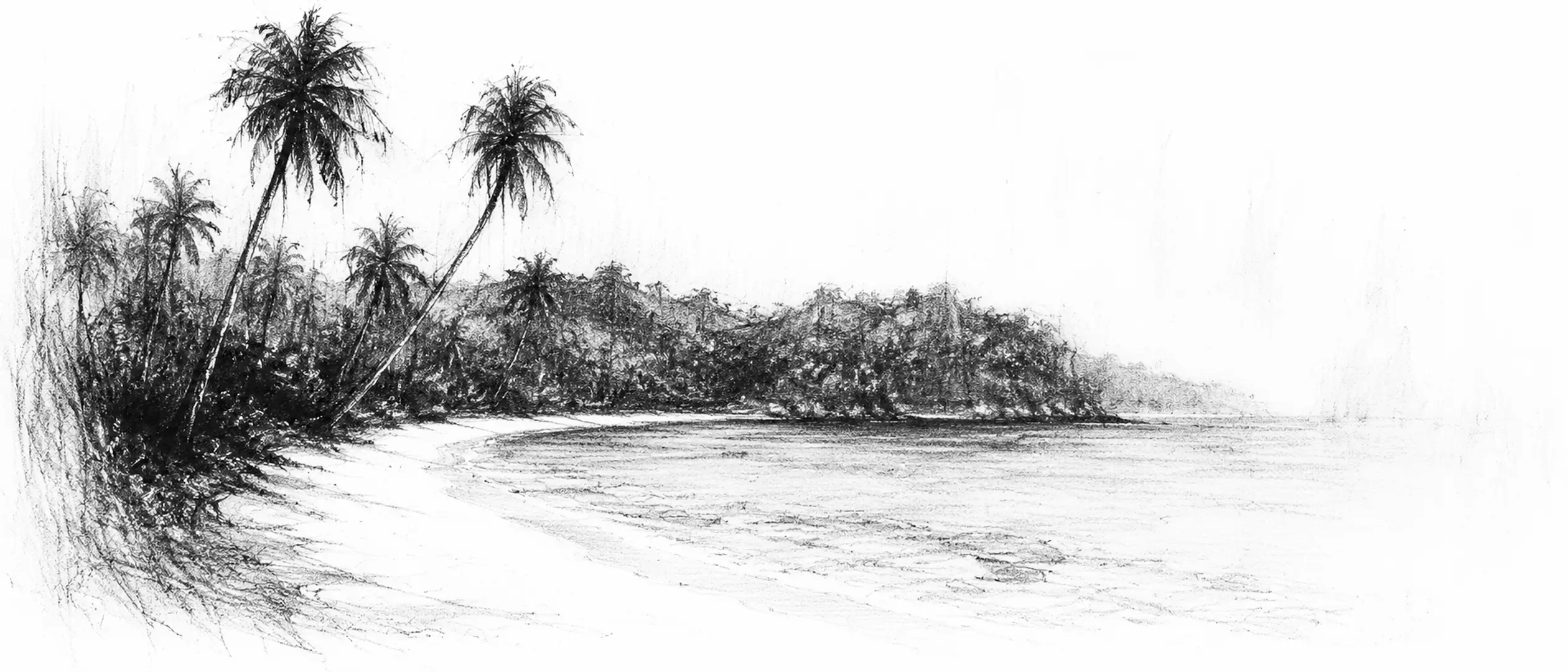
And of course the beach, because it would be dishonest of me to pretend I do not keep the beach. The one in all the pictures is nearly empty: white sand, water going out through every shade of green into blue, and a single palm that has grown out almost flat over the shallows, leaning to the sea as though it had been drawn there to give the photograph its one diagonal. It is very likely the most photographed thing in the whole ocean and I love it without apology. A tree that spent its entire life leaning out toward the water and never once fell in — I do not think I need to explain to you why I have kept a picture of it on the wall of my head for so many years.
What Port Vila keeps underwater
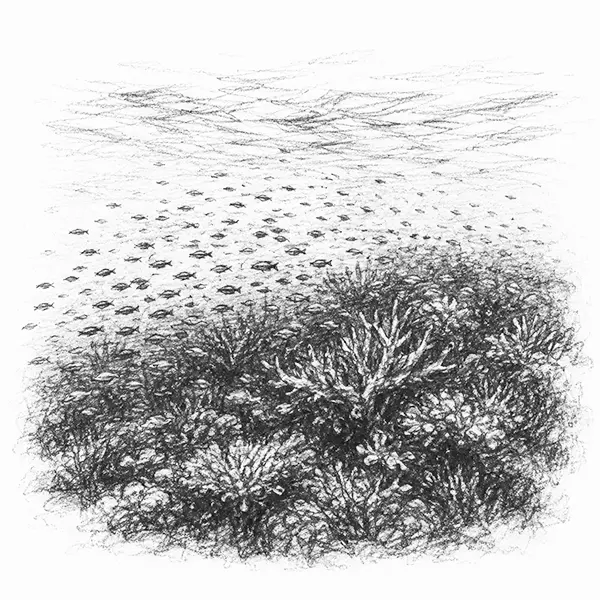
But the best of it is the part you would have to put your face in the water to see. Just off the beaches the reef comes up close to the surface, and in the photographs taken down there it is thick past belief with fish — clouds of them, striped and spotted and improbable, moving all at once over coral in the colours of a thing that ought not to be alive and is. A whole second country, busier and more crowded than the sleepy town above it, going about its business a few feet under the calm. I keep imagining the quiet up top and that silent riot just below, the two of them sharing the same still water. Port Vila, the town that whispers, floating on a world that is anything but.
I could go. It is nearly the last thing I say to myself some nights. The passport is in the drawer, on its third renewal, unmarked, and Port Vila is a very long flight and a stamped visa and a sum of money I keep handing, every year, to things nearer and duller and more easily defended. Nothing forbids it. And still I have not gone, and the not-going has done what it always does, quietly turning from a thing I regret into a thing I own — an island town I possess the more completely for never once having troubled its actual quiet with my actual self.
So I keep it where it is, out past the edge of the atlas: the outrigger and its shadow on the clear sand, the red mountain breathing light onto the dark on the far island, the blue hole burning cold in the green, and under the calm harbour that silent crowded reef going about its day. I have never been abroad; Port Vila is one of the places I have decided, for now, to leave exactly as quiet as I found it.
“Vanuatu: an archipelago of some eighty islands in the southwest Pacific, formerly the New Hebrides, governed jointly by Britain and France until independence in 1980; its capital, Port Vila, stands on the island of Efate.”
— from a gazetteer of the smaller nations, near the end

Leave a Reply