Abroad · never been
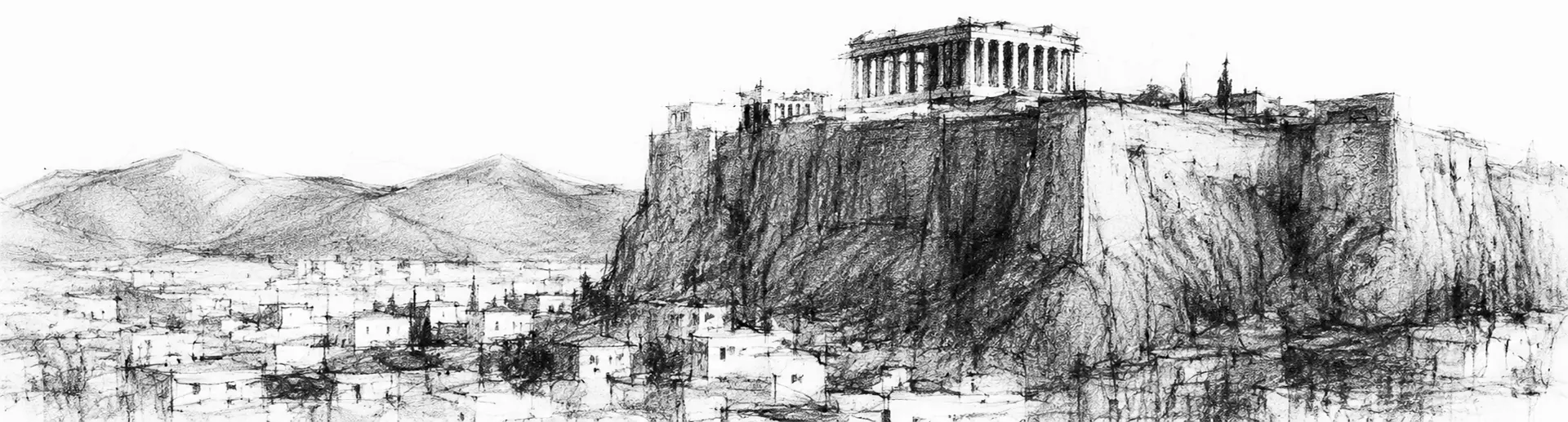
I knew the light of Athens long before I knew it as a place. Not a building, not a map, not a date out of a schoolbook — a quality of light, sworn to me so often and by so many that I came to half-believe it was the city’s only export. The light there, they all said, does something to stone it does nowhere else. Late in the day it goes thick and gold, then briefly some colour you have no honest word for, somewhere between honey and bruise, and the old marble drinks it and gives it back. I have never seen it. I have been certain of it for twenty years.
Athens, assembled from other people’s looking
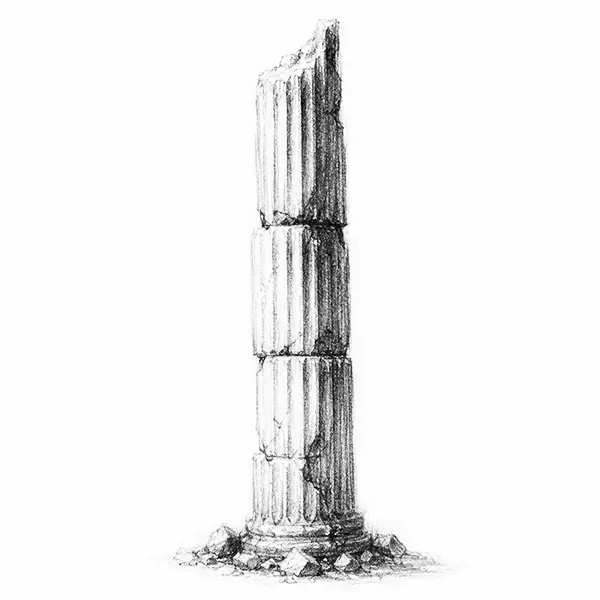
It came to me the way these places always do, sideways and in pieces. A documentary, watched late with the sound low, the camera walking up a worn marble path so polished by feet that it shone like wet soap. A double-page photograph in a magazine left in a waiting room: the famous temple on its rock, shot at an hour when the columns had gone the colour of a struck match. A few dense columns in an encyclopedia that has stood on my shelf since school, with one small grey picture of a thing that was clearly meant to be magnificent and looked, at that size, like a broken comb. None of it was mine. I assembled the whole city out of other people’s looking, the way I have assembled all my far cities, and then I quietly moved in and did not leave.
The ruin in Athens that stands in the traffic
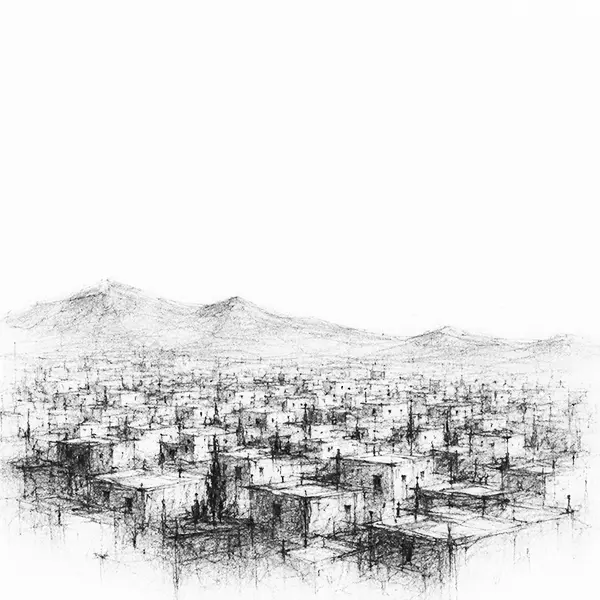
What surprised me, when I began to collect the harder facts, was how little of the dream the real place seemed to want to confirm. I had been keeping a city of clean white ruin, and the pictures kept handing me a different thing entirely: a low, dense sea of flat-roofed apartment blocks, the colour of dust and old bone, poured out across a plain until it broke against the dry hills. Out of the middle of all that ordinary concrete, on its bare rock, rises the one impossibly old thing everyone has come to see. I had expected the ruin to be set apart, kept behind glass. Instead it stands in the traffic. People buy their bread and argue about the bill and forget to look up at the single most looked-at object on the planet, because it is simply the thing the bus passes on the way to work. I find I love it more for that, not less.
Facts kept like coins I cannot spend
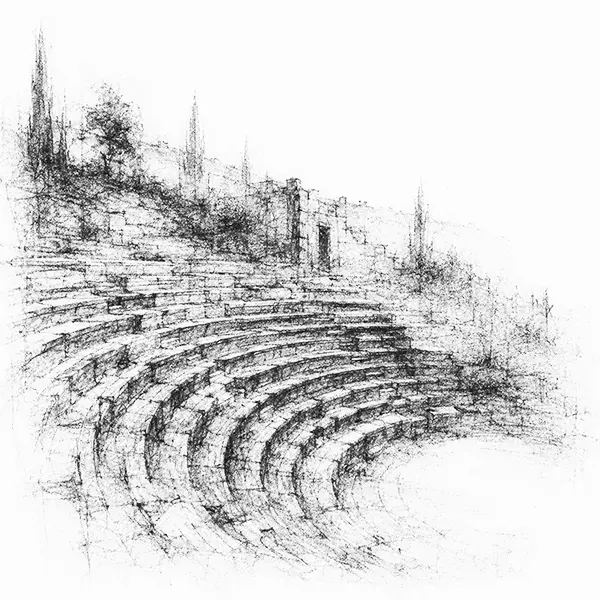
I keep the facts the way some men keep coins they cannot spend. That the marble of the great temple was hauled down off a mountain a few hours away and is faintly veined with iron, which is the secret of the honey colour — the stone rusting, very slowly, in the sun. That the place where the whole noisy machinery of arguing in public was more or less invented is a bald hump of rock where men once stood up and talked the city into and out of its wars. That a barefoot, ugly, maddening man wandered these same streets asking people questions until they could no longer bear him, and they killed him for it, politely, with a cup. That below the temple a stone bowl is cut into the hillside where they have been putting on plays for longer than most countries have had names, and the acoustics are such that a coin dropped at the centre can be heard at the back. None of these will ever be tested by me. I file them anyway, against a journey I keep meaning to make.
The tree that refuses to end
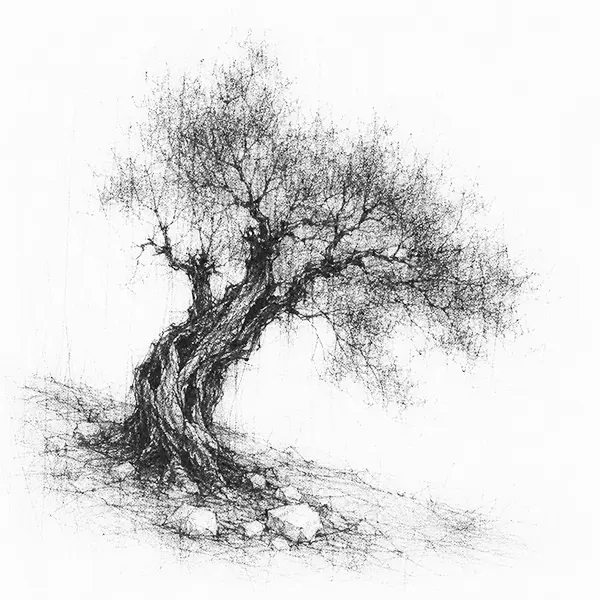
There is an olive tree in my Athens, though I could not tell you where I got it. Grey-green, half silver when the wind turns the leaves, standing on a slope of pale stones with its trunk wrung like a cloth — the kind of tree that looks a thousand years old and very possibly is, since they say the olive does not so much die as keep starting over from its own root. It is the one living thing in the city I have built, and I notice that I have given the dream a tree that refuses to end, in a place whose whole appeal is that everything else there has already half-ended and gone on standing anyway. I did not plan that. The mind furnishes these rooms while you are not watching.
A city issued a double of its own face
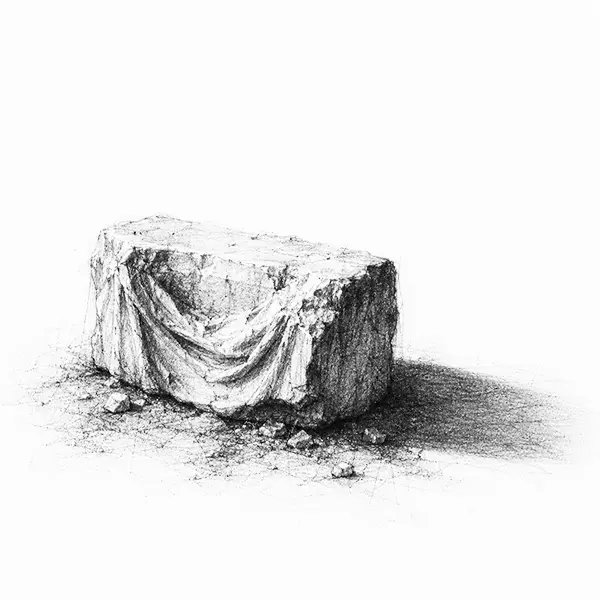
The thing I cannot get past, the fact I turn over most, is that the marble is dissolving. Not from age — from breath, more or less. For a long stretch of the last century the city’s own smoke and traffic hung over the basin in a brown lid the locals had a single flat word for, and the acid in it ate the carved faces and the folds of stone robes faster than two thousand years of plain weather had managed. They took the most delicate of the carvings down off the building and put them indoors, and stood blank copies in their places, so that the temple you photograph is in part a careful cast of itself, guarding the real thing in a cool dark room nearby. I keep snagging on that. A city so old it has had to be issued a stunt double of its own most famous face, to spare the original the air its own children breathe.
Athens, gold for a few minutes then gone
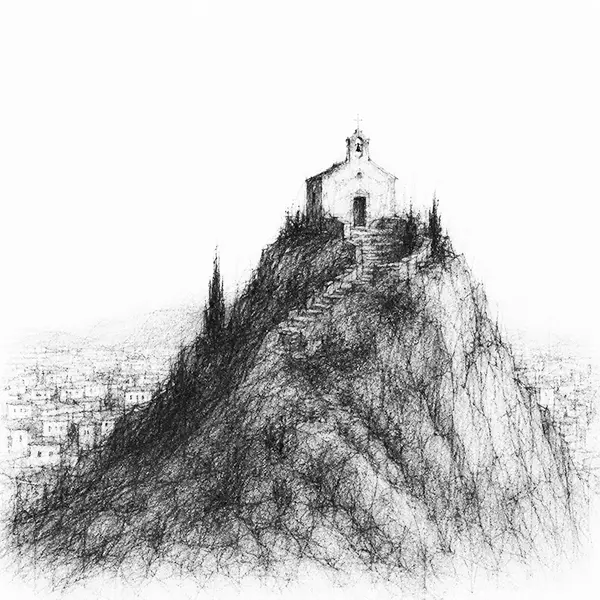
The most particular Athens I own did not come from any documentary. A former colleague, a restless sort who travelled the way other people drink, told me once about climbing the steep pointed hill that stands over the city — higher than the rock with the temple — at the end of a hot day, on a whim, badly shod, swearing the whole way up. At the top there was only a tiny whitewashed chapel and the entire plain laid out below, the white blocks going pink and then grey, the temple on its rock lit gold for a few minutes and then not, and the lights coming on across the basin like something poured. He remembered no fact about it, no name, nothing I could look up. Only that for the length of one cigarette nobody around him spoke, because there was plainly nothing to add. That has done more for my idea of the place than every dense column in the encyclopedia. I have been standing on that hilltop at dusk for years, and I have never once had to climb it.
And here is the part I do not say at dinner. I could go. The passport is in the drawer, on its third renewal, clean inside as the day it was issued, and Athens is a known and unheroic number of hours away by air — a long flight, a visa stamped, money I keep meaning to set aside and keep spending nearer home instead. No wall, no war, no one forbidding it. Only the small recurring failure I dress up each time as philosophy: I did not book the ticket, again, and then I sat down and wrote a paragraph about why. I have started to suspect I keep some cities precisely by not arriving — that the afternoon I finally stood sweating in the actual crowd on the actual rock, my gold evening Athens would fold itself quietly up, and I would be left with the real one, which belongs to everybody.
So I keep the Athens I can afford, where it is always just before dark and the marble is just going the colour I have no word for. The olive holds its slope, the little chapel keeps its hill, the temple stands in the ordinary traffic being ignored by people who live there, and the light does the one thing it was sworn to me it does. It is another entry in the long account of a man who has never been abroad, and has built a whole bright country out of refusing to ruin it.
“Athens: capital of Greece, on the plain of Attica; named for the goddess Athena, and counted among the oldest continuously inhabited cities in the world.”
— from a school geography text, already out of date when I read it

Leave a Reply