Abroad · never been
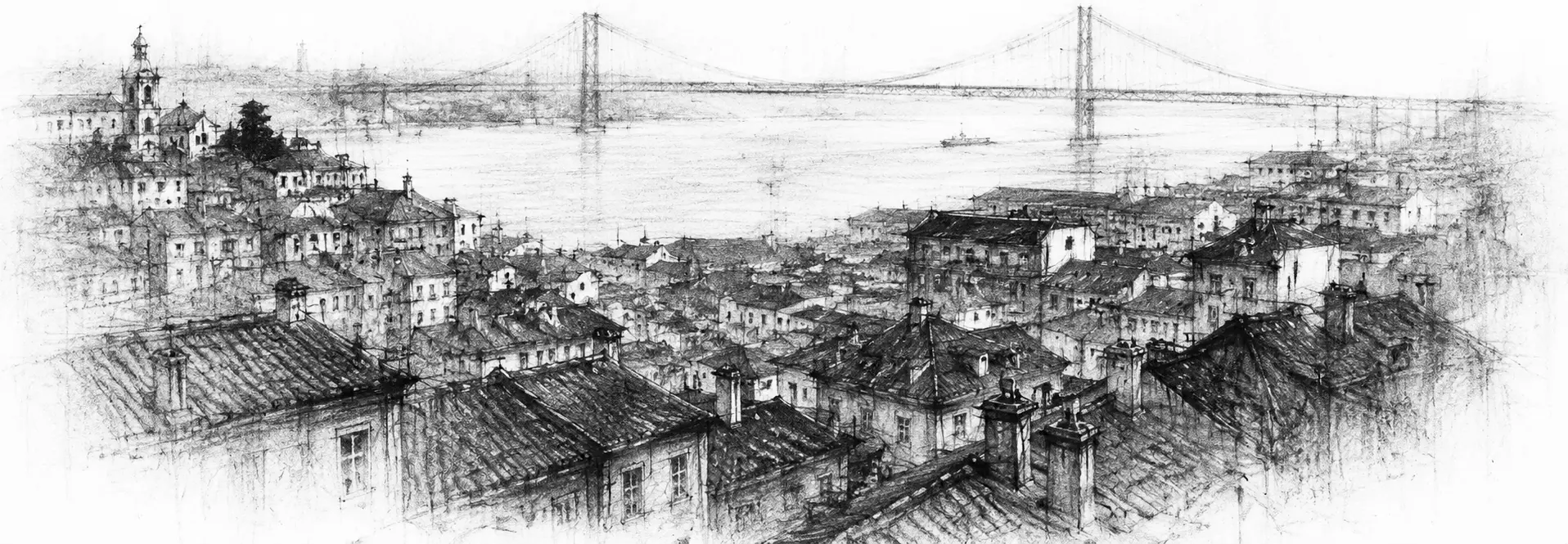
I think of Lisbon as a city tilted toward leaving. It stands at the very western edge of Europe, the last city before the open Atlantic, built on hills above a river so wide it looks like the sea already. Lisbon is not near me; nothing in Europe is. Getting there means a long flight, a visa to queue for, a fare I keep spending nearer home. That is what abroad is to a man with my passport. But of the far cities I keep, this one pulls strangest: a faded sea-empire’s capital that once sent its ships off the known end of the map, longed after by a man who has never sailed anywhere at all.
What draws me is exactly that. A small country that was once enormous, that put out from this one river mouth and went all the way round the world and came back smaller, and seems to have kept the going-and-coming in its bones. The photographs are full of light, a hard clean white Atlantic light bouncing off pale stone and off the river, and yet the feeling that comes off them is not bright at all. There is a word the place is famous for that has no real twin in my languages — a sweet, settled sadness, a longing for something that may never have existed, carried about quite cheerfully. I think I recognised it before I had any business recognising it. I have a good deal of it myself.
I have Lisbon the way I have all of them — documentaries, photographs, films, the encyclopedia, and a music heard secondhand and kept deliberately vague, a voice and a guitar coming from a back room somewhere, the sound longing makes when it decides to sing rather than complain. Between them they have built me a town of yellow trams and blue tiles and steep falling lanes, of viewpoints over red roofs, of a great river going silver in the evening. I have never stood at one of those high corners and watched the light go down the river toward the sea. I feel I have rehearsed it.
Lisbon’s trams climb the hills
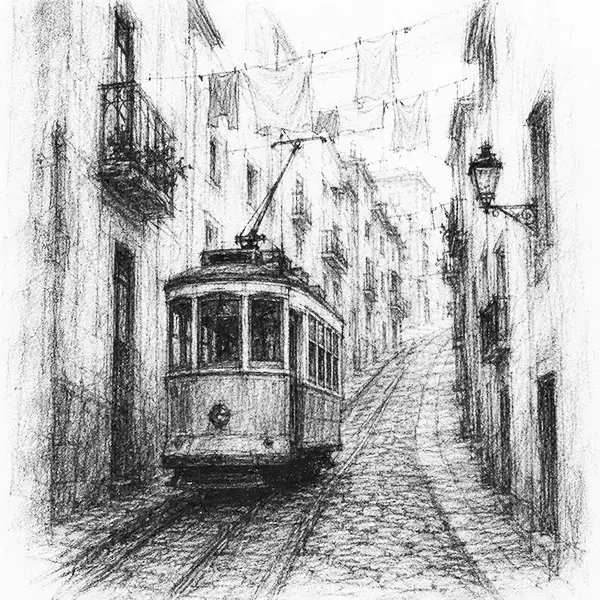
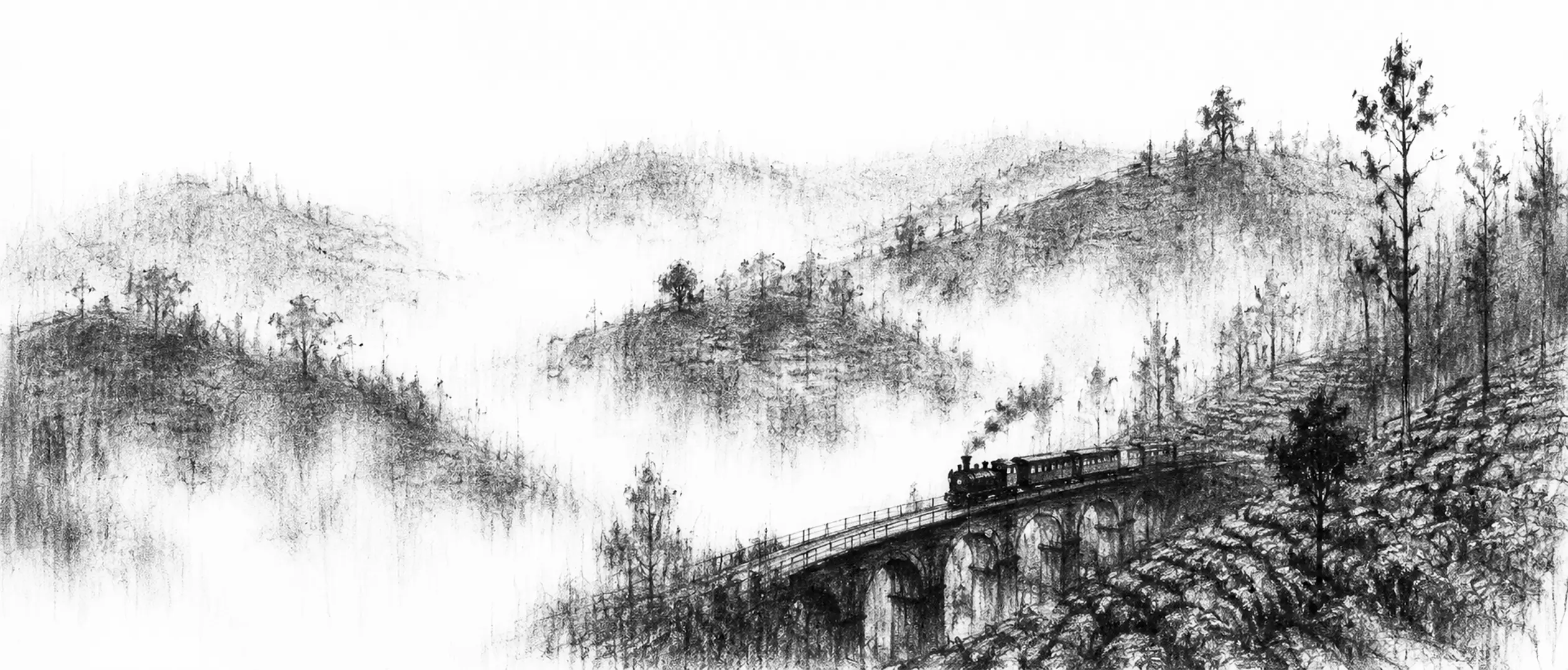
The first thing, in every photograph, is the little trams — small old wooden cars the colour of butter, grinding up lanes so steep and so narrow that they seem to be climbing a staircase, swaying round corners with their poles sparking, brushing the washing on the walls. A city built on too many hills to be sensible, that answered the hills not by flattening them but by sending these brave little boxes straight up them, the same way, on the same rails, for the better part of a century. I am charmed beyond reason by a place that meets a hard problem with a small stubborn solution and then keeps it forever. I would ride one to the top of the steepest lane it could find, just to feel a whole city tilt.
The necessary thing made lovely
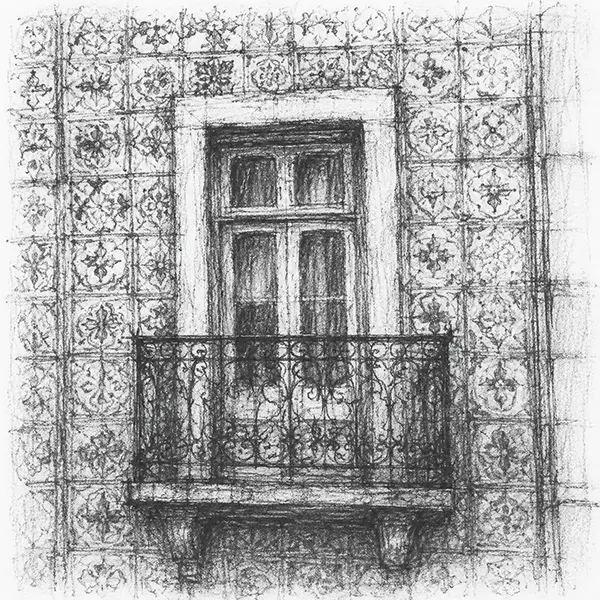
And the tiles — whole buildings faced in patterned ceramic, blue and white and green and gold, glazed squares climbing the fronts of houses from the pavement to the roofline, so that the ordinary streets shine after rain as if the city had dressed up for no occasion in particular. It is weatherproofing turned into beauty, a practical skin against the damp Atlantic air that the place decided, somewhere along the way, to make lovely. I keep finding that this is what I am drawn to in every direction — the constraint turned into an ornament, the necessary thing made beautiful because a town could not bear to leave it plain. I would walk a long way to run my hand down a wall of those tiles.
The nerve of the great red bridge
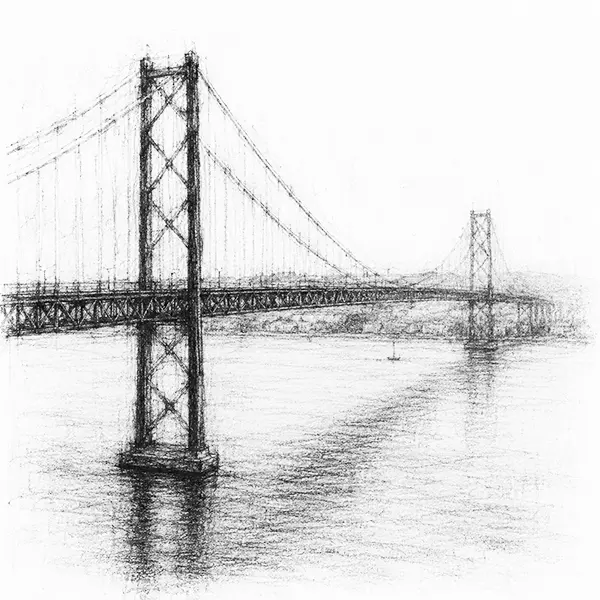
Across the wide river stands the great red bridge — long and high and rust-coloured, marching across water so broad you can barely see the far bank, the kind of bridge that looks less like a crossing than a statement, a small country insisting on the scale of its one enormous river. I have always loved a big bridge, the nerve of the thing, the human cheek of stringing steel across that much water and trusting it. From the high parts of the city, they say, you can see it standing over everything, going red in the evening sun. I would like to watch it from a viewpoint with a coffee going cold in my hand and the river turning to metal beneath it.
A grand room left open to the water
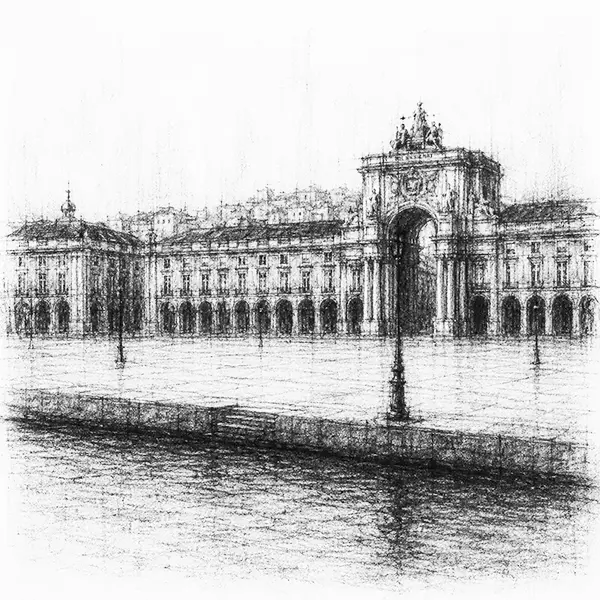
Down at the bottom of all the hills, where the city meets the river, a great open square — a wide formal space of pale arcaded buildings on three sides and the fourth side left entirely open to the water, so that the city seems to stop and present itself to the river, or to whatever the river leads to, which is everywhere. It was from roughly here that the ships once left. I am moved by a city that builds its grandest room not around a king or a god but around the act of departure, that leaves one whole wall of itself missing so the sea can get in. I would stand on the open edge of it, with my back to the town and my face to the water, and feel the particular size of being at the jumping-off place and not jumping.
Above Lisbon, from the old castle
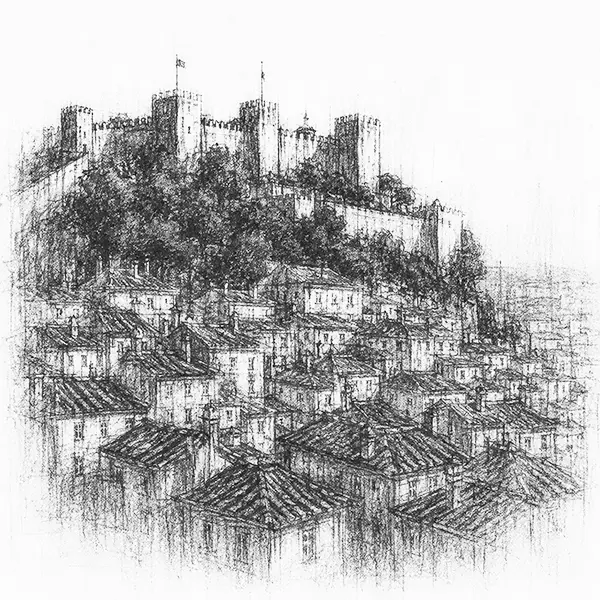
On the highest hill, an old castle — pale broken walls and square towers ringing the very top of the town, from which the whole city falls away on every side down to the river, roofs and roofs and roofs the colour of dried blood, the bridge in the distance, the water beyond. The oldest and highest thing, the place the city started and then poured down the slopes away from. I am always drawn to the high quiet corner that the crowds have to climb to, the leftover battlement with the long view, and a castle that does nothing now but hold the best view of its own city is exactly that. I would go up in the early morning before the heat and the crowds, and simply look down at all of it for a while.
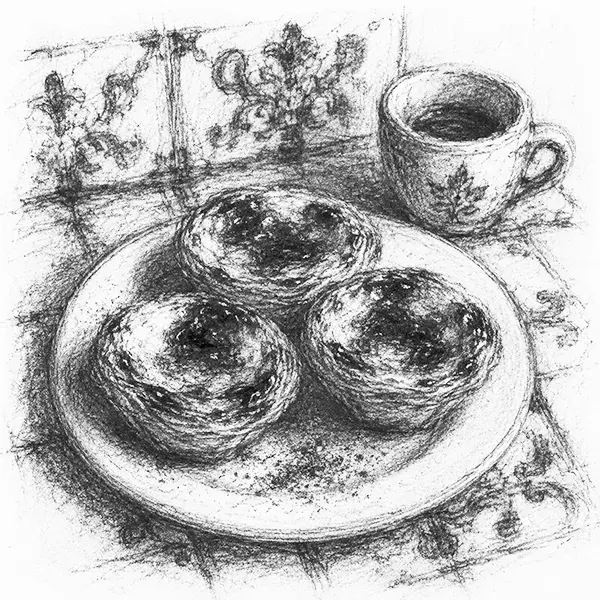
And, because I am who I am, the small sweet thing — the custard tarts, little cups of flaky pastry filled with a soft burnt-topped custard, eaten warm and dusted with cinnamon, the kind of perfect small pleasure a whole city queues for and never tires of. I have had the imitations, the travelled cousins of them, in glass cases far from home. The thought of the real one, warm from the oven, on a tiled counter in the city that has been making it the same way for longer than memory, with a small bitter coffee beside it, is the most modest of reasons to cross a world, and somehow exactly the kind of reason that finally moves a man like me.
So Lisbon takes its place among the far cities — the sea-empire’s faded capital, dreamt after by someone who has done none of the sailing. There is no good reason I have never gone, only the ordinary ones: the long flight, the visa, the fare always spent closer to home, the quiet habit of meaning to and not. It is a town built around leaving, that put out from one river and went round the whole world, while I have stayed on my hot flat plain and gone almost nowhere. One of these years I should make the long way west to the edge of the map, and ride the little tram to the top, and stand on the open side of the square with my face to the water — and learn, at last, whether the sweet sadness they sing about feels, up close, anything like my own. The city built around leaving, longed after by a man who has never been abroad.
“Lisbon: capital of Portugal, built on hills above the broad estuary of the river Tagus near the Atlantic; once the centre of a great seaborne empire, known for its tiled houses, its hill trams, and its viewpoints over the water.”
— from a set of travel books once sold to the house, door to door

Leave a Reply