Abroad · never been
St. Petersburg is a city someone willed up out of a swamp and a sentence, and I have been living in the sentence for years without ever paying the fare.
St. Petersburg, willed up out of a swamp
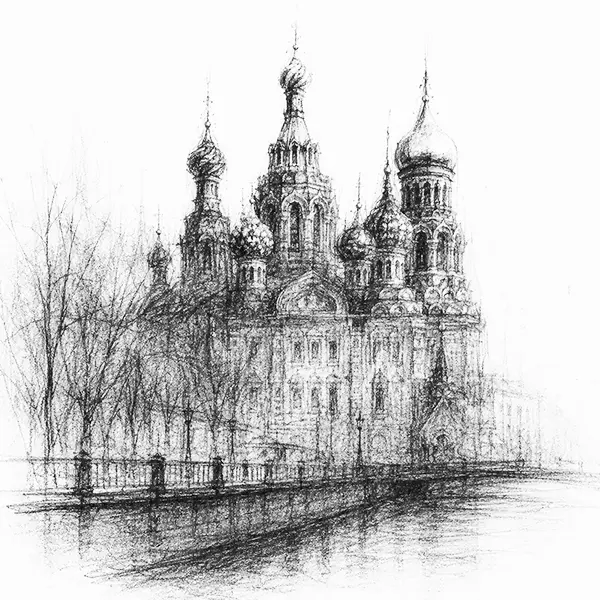
I came to it backwards, through paper, the way I come to all the places I will not visit. Long before I could have found it on a map I had the fact that fixed it for me: that a single man, impatient and enormous, looked at a freezing northern marsh where two rivers argued with the sea and decided a capital would stand there, and that thousands of people died in the mud making it stand, and that it did. A city is usually an accident that thickened over centuries. This one was an order. Somebody drew it first and then made the ground agree. I have never been able to shake the strangeness of that — streets laid out straight as a ruler on top of a bog, palaces the colour of sugared almonds floating on piles driven into water. The whole place is a dare that came off.
You build a city like that out of borrowed eyes, and I have borrowed shamelessly. A documentary watched late, the sound turned low, the camera drifting over a frozen river. A magazine spread in some waiting room, the canals shot from a bridge. Four close columns in the encyclopedia that has stood on my shelf since school, with one small grey photograph of a square too big for the frame. And the novels, of course — the thick ones everyone owns and means to finish, where the weather is always against the characters and the streets are counted out in exact numbers of paces by men with fevers and ideas. I read those young, in a hot climate, and got my first damp grey north out of them, and never quite gave it back.
Where the summer dark never comes
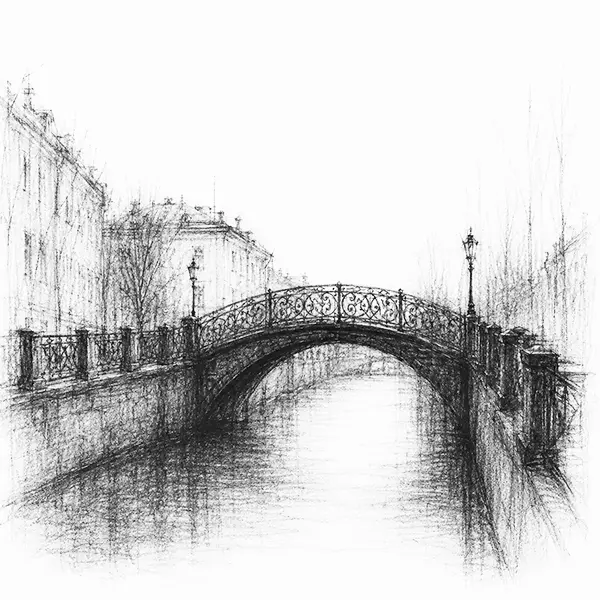
What I have, mostly, is the water. They call it the north’s answer to Venice, though that undersells the cold and the scale — a city threaded with canals and crossed by hundreds of bridges, the big river splitting it into islands, granite embankments holding the whole arrangement in place like a hand around a glass. I have collected the small facts the way some men collect coins they cannot spend. That in summer the dark never properly comes, and for a few weeks the sky at one in the morning is the colour of dishwater and people simply stop going to bed, walking the embankments at hours that have no business being lit. That the great bridges over the main river lift their arms in the small hours to let the ships through, splitting the city in two until dawn, so that a man on the wrong bank is stranded there with his decisions until the road comes back down. That the winters are long enough and dark enough to have produced, by some logic of compensation, more music and more gloom and more talk per square mile than any sensible place would attempt. None of it will ever be tested by me. I have filed all this against a journey I keep meaning to make.
A needle holding up the sky
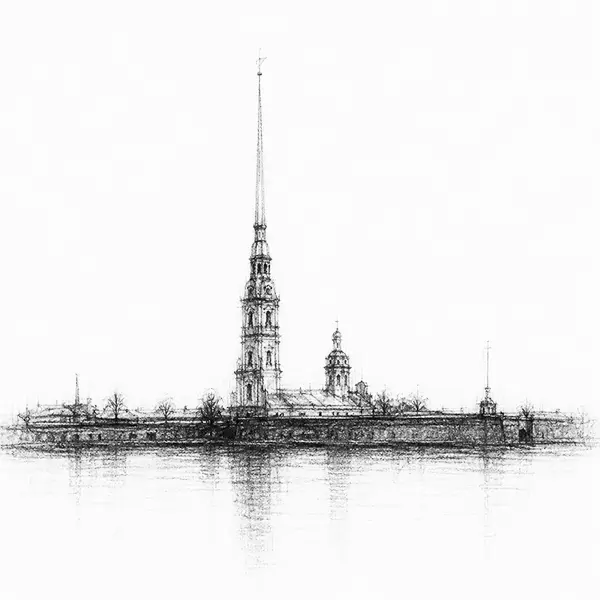
The thing the pictures keep returning to, and so do I, is the gold. Across the river there is a low fortress, the first stone they laid, and out of it rises a spire so thin and so tall it looks less like architecture than like a needle holding the grey sky up off the water. It was a prison once, that fortress, behind its mild golden point — the same building keeping the bones of emperors and the cells of the men who wanted no more emperors, which is the kind of joke the place makes without meaning to. I like a city that cannot decide whether it is a palace or a cell and so quietly becomes both. There is more gold inside the churches, I am told — domes of it, leaf laid over wood and brick until a marsh town glitters like a reliquary — and I have decided to believe the footage rather than test it.
The Hermitage at four in the morning
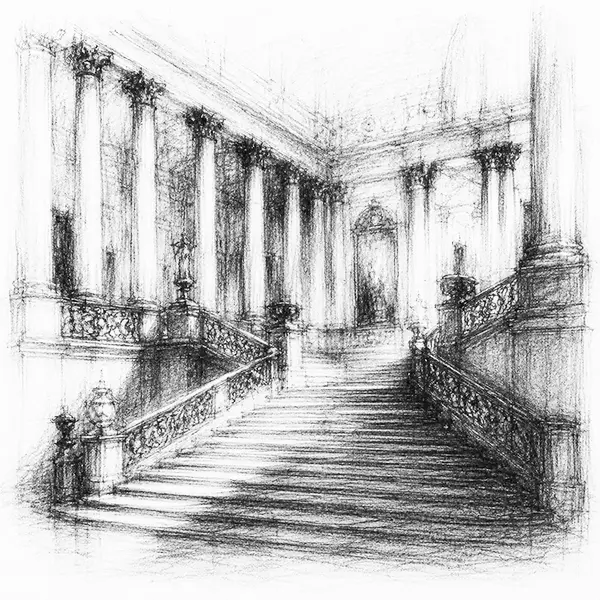
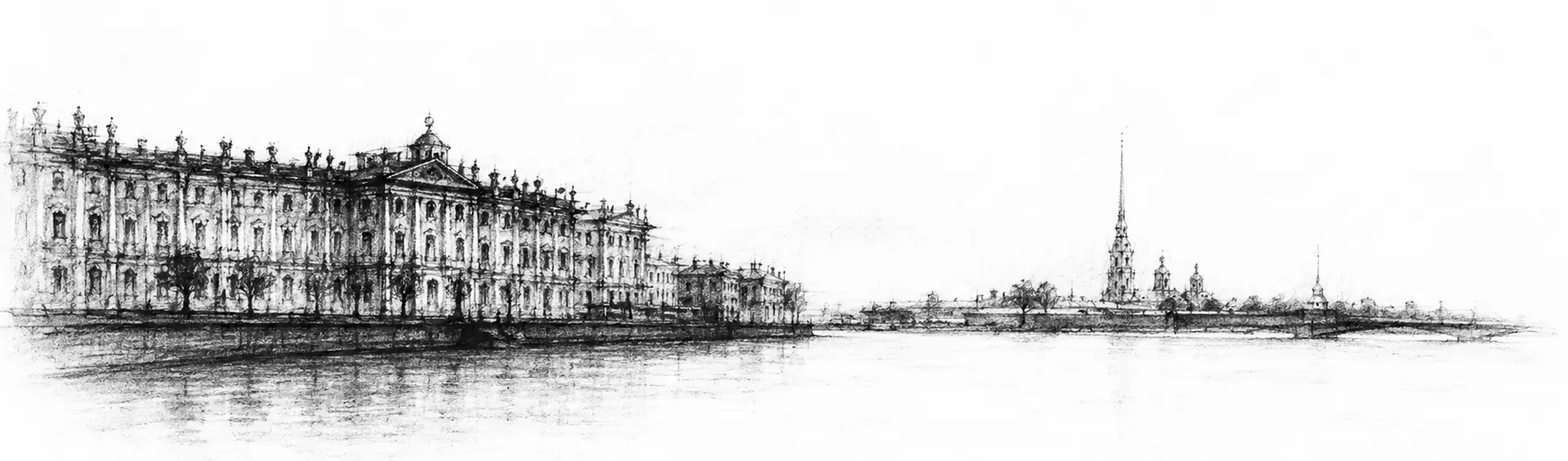
Then there is the great house on the river, the long one the colour of mint and cream, that began as one family’s address and became, after the world turned over, the largest museum I will probably never walk through. I have read the number of rooms and refused to believe it. They say you could give each painting a few seconds and still need years to reach the end, that the staircase alone was built to make a visitor feel suitably small before the people who lived at the top. In one documentary the camera goes through it at night, empty, the parquet shining, the chandeliers off, attendants asleep in chairs in the corners of rooms worth more than provinces — and that emptiness moved me far more than any crowded daytime tour could. An enormous beautiful container, holding the loot of three centuries and, at four in the morning, almost no one.
When the Neva remembers it is a river
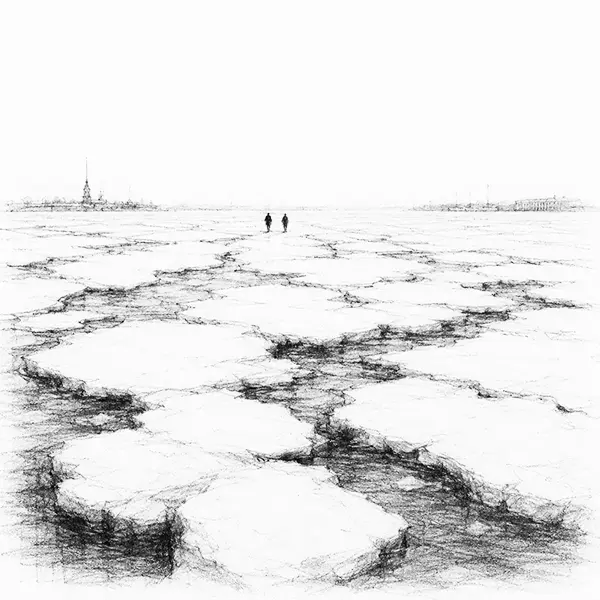
But the image I steer by is the ice. For months the river goes hard and white and silent, a road where a current should be, and people walk across it as if water had simply been cancelled for the season. And then, at a particular week in spring that no calendar can fix exactly, it breaks. It comes apart with a sound, they say, that you feel in the chest before you hear — a long groan, then a cannonade, then the whole frozen surface shouldering itself downstream in slabs the size of rooms, grinding under the bridges, carrying off whatever was foolish enough to still be standing on it. The city stops and goes down to the embankments to watch the river remember it is a river. I have wanted to stand in that crowd, in that cold, for the breaking, for as long as I have known it happens. I have wanted it the way you want a thing precisely because you are warm and far away from it.
The bronze horseman of St. Petersburg
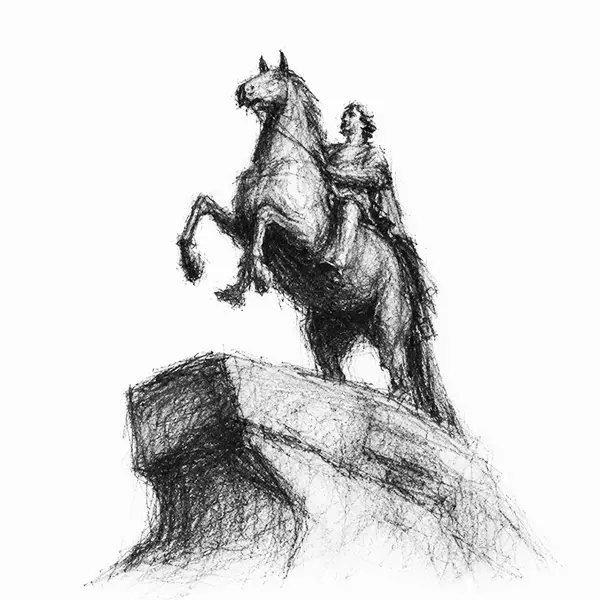
The most particular St. Petersburg I own came from a man I once worked under, who had gone there in winter on someone else’s money and remembered, of all of it, one statue — a bronze tsar on a rearing horse on a single colossal block of stone, the horse crushing a snake under its back hoof, the whole thing aimed out across the river as if the man were still giving orders to the water. There is a famous old poem, he said, where that very statue climbs down one terrible flood night and chases a small clerk who has lost everything through the drowning streets. He could not quote a line of it. He only remembered standing under the green metal in the dark, half believing it might move, and finding the idea both absurd and not. That secondhand shiver has done more for my idea of the place than every fact I have filed. I have been standing under that horseman in borrowed snow ever since, waiting to see whether it turns its head.
I could go to St. Petersburg, of course. The passport is in the drawer, third renewal, clean as the day it was issued; the city is a long northern flight and a stamped page away, no more impossible than any of the others I keep meaning to reach and then do not. The honest obstacle is the same one it always is — a far journey costs real time and real money, and both keep getting spent nearer home, on duller and more necessary things, while the marsh capital waits in the encyclopedia where it cannot disappoint me. I keep the ice unbroken and the horseman still and the white nights exactly the colour of dishwater, because I have never been abroad, and this is one more city I have decided, for now, not to spend.
“St. Petersburg: founded 1703 on marshland at the mouth of the Neva, built on driven piles and laid out to a plan; capital of the empire for some two centuries; threaded by canals and crossed by several hundred bridges.”
— copied into a notebook from something I have long since forgotten reading

Leave a Reply