Abroad · never been
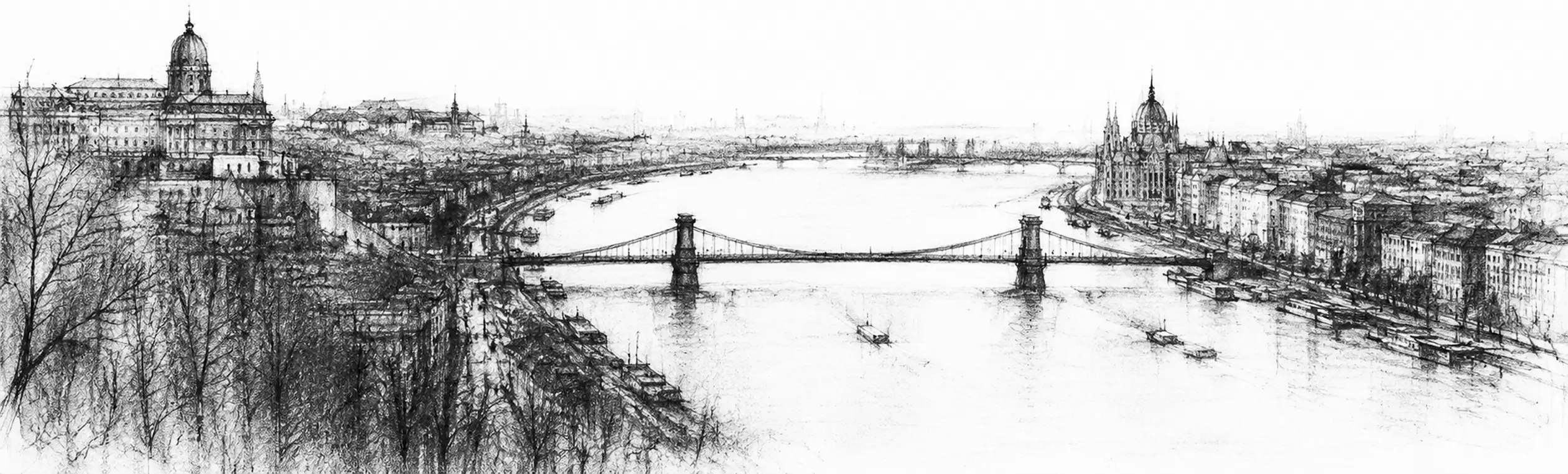
I came to Budapest as an argument that had already been settled. Two cities, I read somewhere when I was young — a flat one and a hilly one, facing each other across a grey river, ignoring each other for centuries until somebody drew up the paperwork and made them one. I liked that more than I can account for. A city that was a marriage, a late one, and you could still see the join. I have lived in places that were really several places wearing one name and pretending otherwise, and the honesty of a city that admits to its seam went straight into me and stayed.
The lions of Budapest and their false silence
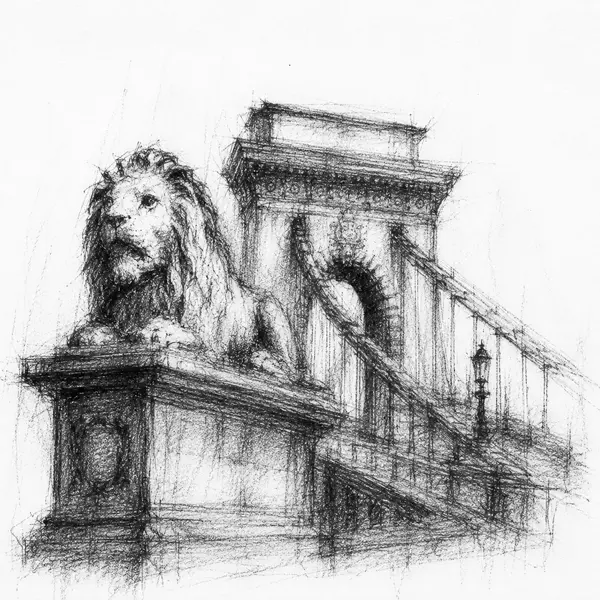
What I knew first, before any of the rest, was the bridge with the lions. A documentary on a Sunday afternoon, the sound low. The camera crossed a long suspension bridge with a great stone lion couched at either end, and a voice told me the old story everyone tells: that the sculptor, jeered at because his lions had no tongues, was so undone by the shame that he threw himself into the river below. It is not true. The lions have tongues; you simply cannot see them from the road. But I have never wanted it to be untrue. I kept the bridge and the false story together, the way you keep a coin you know is counterfeit because of who gave it to you. A city where even the lying anecdotes are good is a city worth not visiting carefully.
A parliament built for a larger country
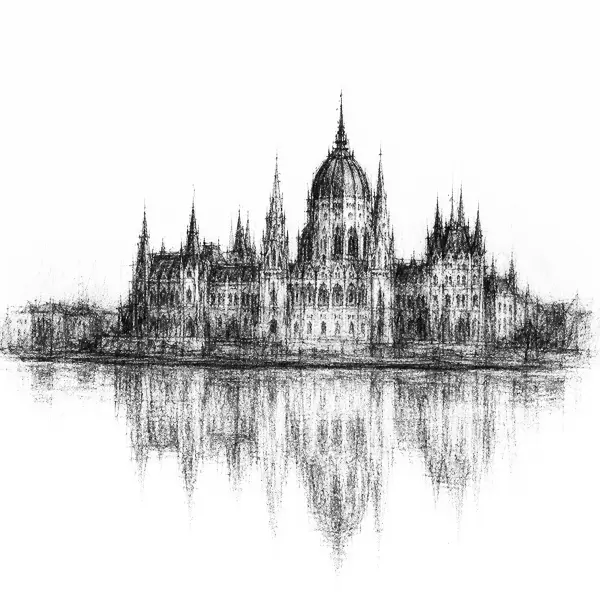
Then the building on the water. The parliament is a vast pale wedding cake of spires and arches, set right at the lip of the river, so that on a still evening there are two of it: one standing, one drowned and slightly broken by the current. Somebody once told me, with the satisfaction of a man handing over a fact he knows will be kept, that it was built to a deliberate, almost insulting size — hundreds of rooms, a needle of a dome, miles of stair — for a country that has spent most of its history being smaller than it planned to be. I filed that away with the rest. A grand house raised by people who suspected the grandeur would not last, were right, and built it anyway. I understood the impulse. I have furnished whole cities in my head on exactly that principle.
Chess in the rising steam
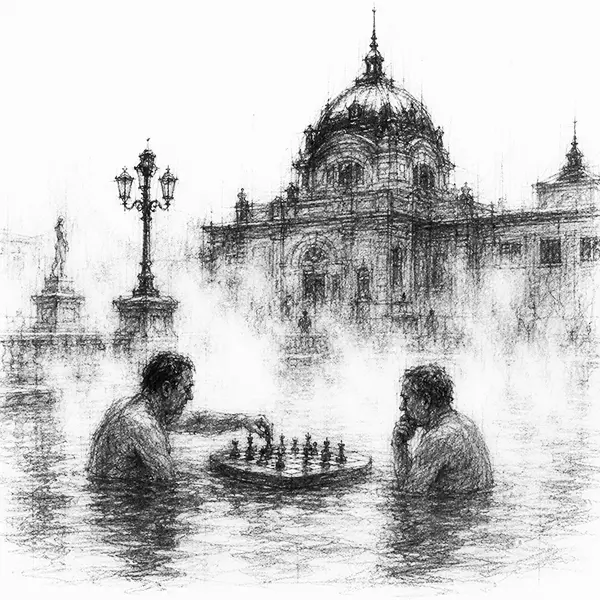
The detail I come back to oftenest is the one I find hardest to believe, which is the heat under the ground. The whole city, the encyclopedia says, sits on hot springs — water that comes up already warm from somewhere far below — and people have been bathing in it since long before the place was Hungarian at all, under domes the old occupiers left behind when they finally went. There is a photograph I have seen more than once, and have never quite recovered from: an outdoor pool in deep winter, the air so cold the steam comes off the surface in sheets, and two old men up to their chests in the water with a chessboard floating between them on a little tray, playing on in the snow as though the season were someone else’s problem. Being a man from a city where the heat is the enemy you negotiate with from April to October, I find the idea of warmth as a gift the earth simply hands you — in the cold, for nothing — close to miraculous. I have wanted to sit in that water and lose at chess for years.
The slow climb up Castle Hill
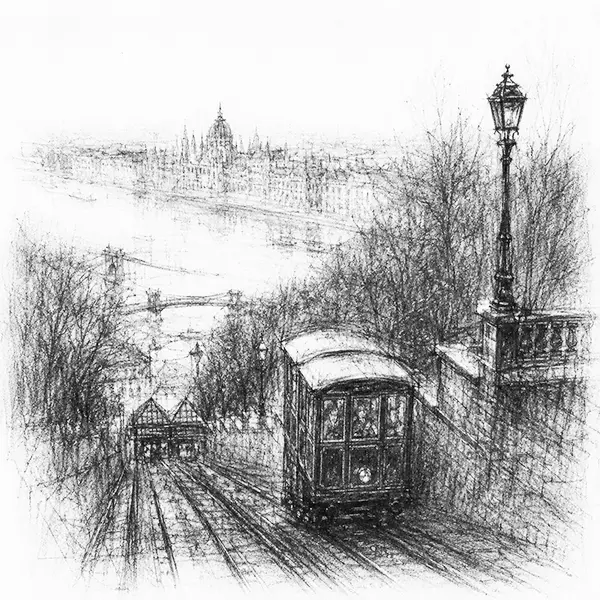
The hilly side I know mostly as a climb. A small old funicular — a box on a slope, hauled up and let down on a cable since before most cities had thought of such a thing — that lifts you from the bridge to the castle on the ridge, slow as a held breath, the river falling away below. I have ridden it in my head far more often than is decent. From the top, the footage agrees, the whole flat half of the city lies out in front of you in the haze, the parliament small and silver at the waterline, the bridges stitched across the river one after another, and you can stand there and take in both cities at once, which is a thing the two halves themselves spent six hundred years refusing to do.
The dome that lost its nerve
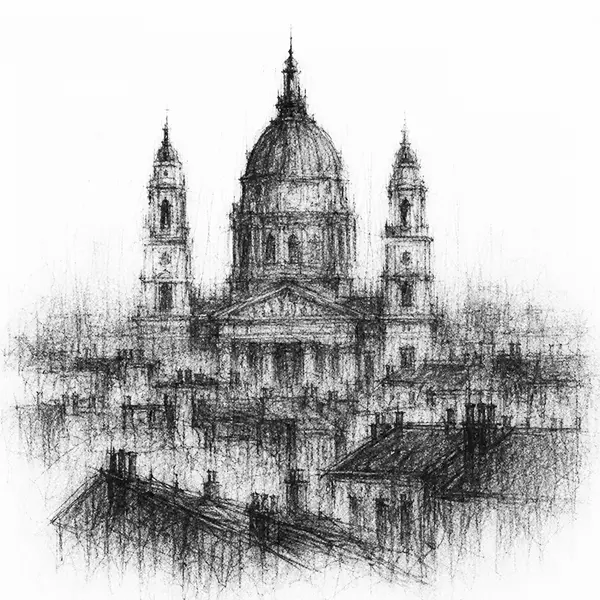
Then the great dome on the flat side, the one the whole of Pest seems to lean quietly toward. St Stephen’s — a church built so slowly that the men who laid the first stone were decades dead before anyone set the last, and partway through the work the half-raised dome lost its nerve in the night and came down in a heap, so they carted off the rubble and began the dome over again. The encyclopedia gives its height and then, in the same breath, hands the parliament across the river the identical figure, and explains that the match was deliberate: nothing in the city was to be allowed to stand taller than either God or the government, so the two were made to tie to the metre. I have turned that over more than most things I know about the place. And inside, the documentaries drop their voices for it, they keep a saint’s blackened right hand in a small gold box in the dark, a thousand years old and carried around the streets once a year — still, they insist, a hand. A city that raises again the dome that fell on it, that measures its faith against its state to the metre, and will not let a dead king’s fist out of the building. It has a habit, wherever you look, of refusing to let the thing that fell be the end of the story.
What Budapest keeps out in the open
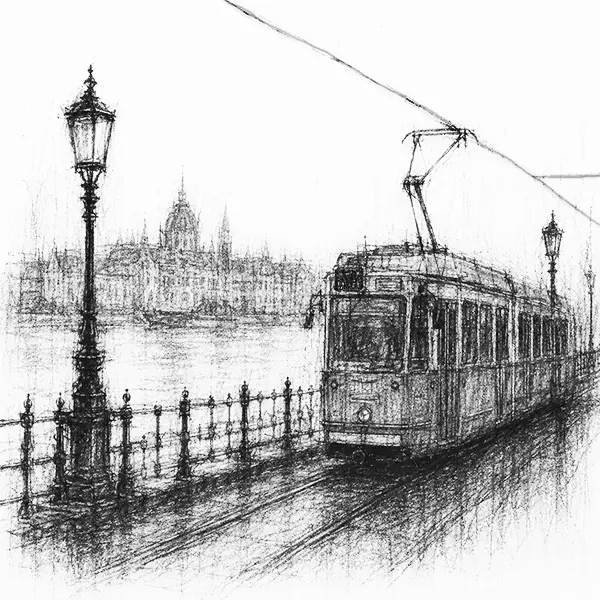
For there was a great deal of damage. I know — the way you know the plot of a book everyone has read but you — that near the end of the last war the city was held and shelled and starved for the better part of two months, and that the retreating army blew every bridge across the river into it before they left, the lions and all, and that the people fished the stones out and put the bridges back where they had been because there was nowhere else for them to go. Along the embankment there are iron shoes set into the stone at the water’s edge, left there by someone in memory of the people made to step out of their own and into the river, and I have never been able to look at the one photograph I have of them for very long. A city, I have come to understand, is also a record of everything that was done to it, kept out in the open where the trams run past.
I could go to Budapest. You have had this confession from me before and you will have it again. The passport is in the drawer, on its third renewal, clean as the day it was issued, and Budapest is a long flight and a stamped visa and a sum of money I keep promising to nearer, smaller things. No wall, no war now, no one forbidding it. And still I have not gone, year after year, and the not-going has quietly become a thing I own rather than a thing I regret. I have started to suspect I keep the place exactly as it is — two cities and a grey river and a chessboard in the steam — because the moment I stood on the actual bridge between the actual lions, the slow grey Budapest I have carried would fold itself up and hand me back the real one, which everybody already has.
So I keep it where it is, just before dark, just above the waterline. The funicular is climbing, the parliament is doubling in the river, the lions are keeping their false silence at the bridgehead, and somewhere two old men are playing chess in the snow over water the earth warmed for free. I have never been abroad; Budapest is one of the cities I have decided, for now, not to spend.
“Budapest: capital of Hungary, formed in 1873 by the union of Buda and Óbuda on the west bank of the Danube with Pest on the east; noted for its thermal springs.”
— from an old almanac, somewhere between the tide tables and the kings

Leave a Reply