Abroad · never been
I have been reading about Rome since I was a boy bent over schoolbooks, without ever meaning to. It was years before I understood that the maps and the dead emperors and the borrowed words all led back to one town. Rome is not near me; nothing in Europe is. Getting there means a long flight, a visa to wait on, a fare I keep spending closer to home. That is what abroad is to a man with my passport. And of all the far cities I carry, this is the one I have the oddest claim on: the place that supplied a good half of everything I was taught, without ever asking me.
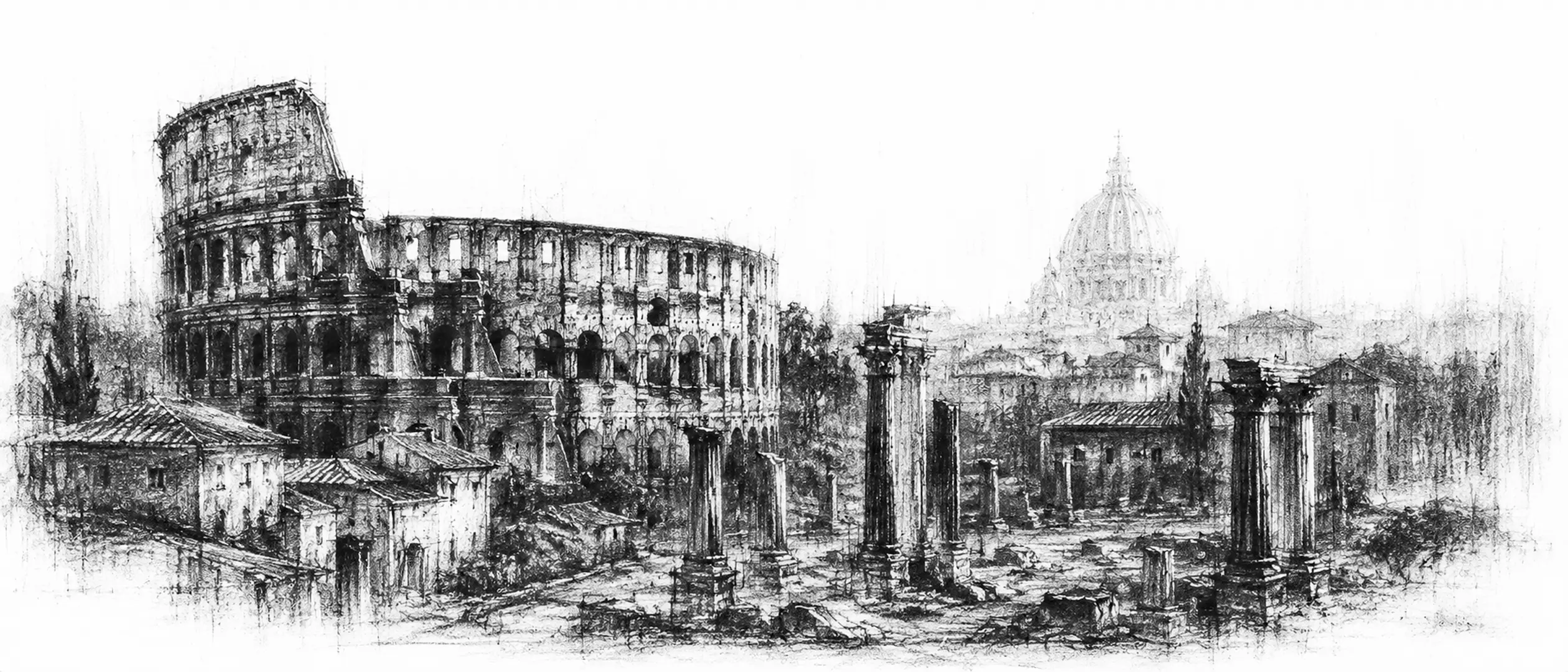
What I cannot get over, from this distance, is that it is a living city and not a museum. I had assumed as a child that a place so old would be roped off and hushed, kept behind glass and velvet cord. Instead the photographs show traffic going round a two-thousand-year-old ruin the way it goes round a roundabout, washing strung between houses that were old when my country’s old buildings were young, a man drinking his coffee with one elbow on a fallen column. The past is not put away there; it is left lying about underfoot, built over and built into, so the ancient world and the morning’s errands share the same streets. I find that almost impossible to picture from here, where old things are either worshipped or knocked down and rarely just lived beside.
I have Rome the way I have all these places — the encyclopedia, documentaries, photographs, a great many films that cannot keep away from those ruins and that warm stone, the scraps of Latin and the emperors’ names that anybody of my schooling carries about whether he wants them or not. Between them they have built me a city of ochre and tall flat-topped pines, of marble gone the colour of old honey, of water running in the squares for no better reason than the pleasure of the sound. I have never thrown a coin into one of those fountains. I could tell you exactly the noise it would make.
The great ruin of Rome, left a ruin
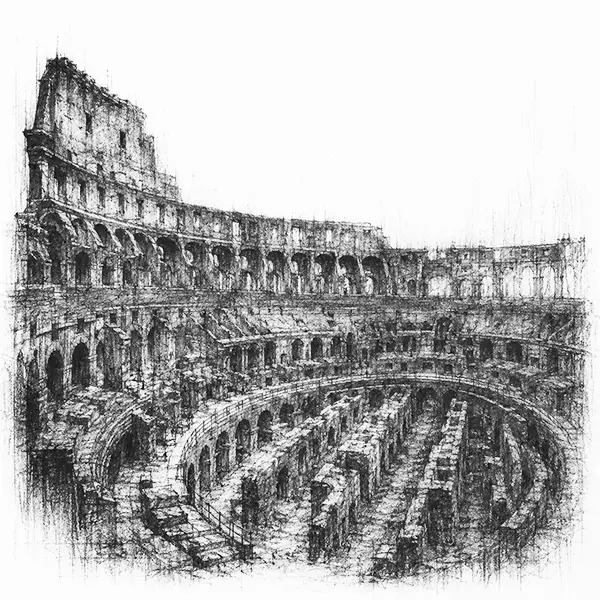
The first thing, the thing on every cover, is the great broken amphitheatre at the heart of it — a vast oval of arched stone with half its outer skin sheared away, so that you see clean through its tiers to the sky behind, the floor long gone and the cellars beneath it laid open like the works of a stopped clock. I love a ruin that has been left a ruin, neither tidied into a model nor pulled down for the stone, just standing there enormous and patient in the middle of the traffic, having outlasted everything that was done in it. I would walk a slow circle round the outside of it in the heat, looking up, and try to feel the weight of all the centuries it has simply gone on standing through.
The Forum, a grand plan come apart
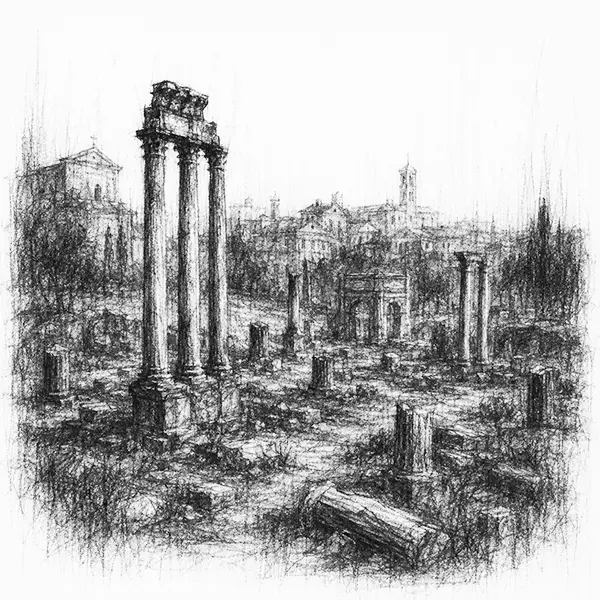
And below the streets in one place, a sunken field of broken columns — the old forum, where the business of an empire was once carried on, now a hollow of stumps and standing pillars and fallen architraves with the modern city looking down into it over a railing. Three columns still holding up a corner of something; a single arch; a pavement worn into ruts by carts two thousand years dead. I am drawn, as I always am, to the places where the grand plan has come apart and the grass has got in — and there can be no grander plan more thoroughly come apart than that one, lying open to the weather in the middle of a working city, with the buses going past above it.
The dome every dome has copied since
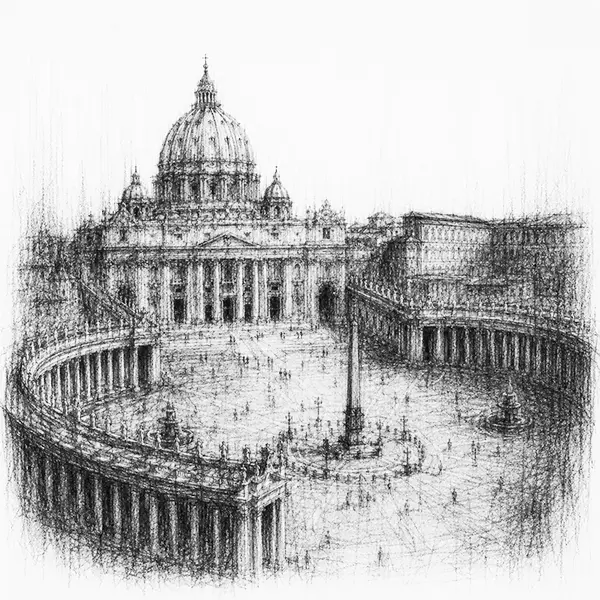
At the far edge of the old city, the great domed church and the square in front of it — an enormous dome that every dome built since has been quietly copying, set behind a wide oval space gathered in by two long curving arms of columns, as if the building had reached out to hold a crowd. I am not a religious man in any ordinary way. But I am moved, every time, by the sheer scale of what people will raise up to point at something larger than themselves, and by the patience of it — the lifetimes of work, the certainty that the thing would be finished long after every hand that started it was gone. I would stand small in the middle of that square and let it be as big as it wanted to be.
Water set running for the pleasure of it
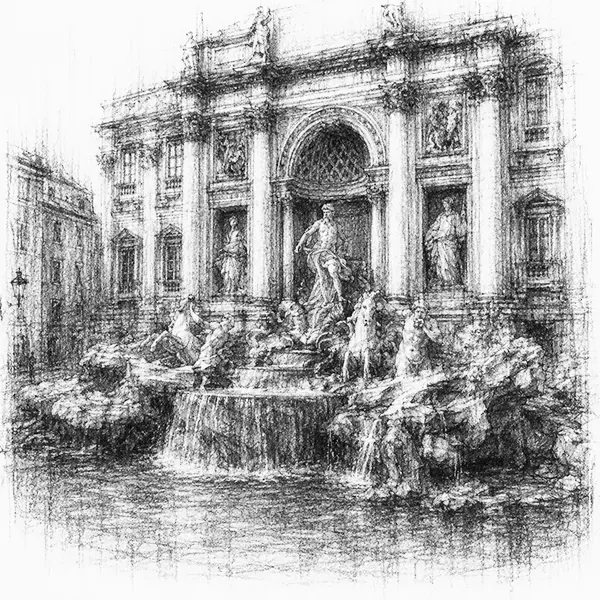
The city runs with water — fountains in square after square, stone gods and horses and shells with water pouring over them and away down the streets, the habit of a place old enough and once rich enough to treat clean running water as a thing to be staged rather than merely supplied. Where I come from water is either scarce or a danger, never a decoration. The idea of a town so easy with it that it lets it spill day and night through the open hand of a marble river-god, just for the look and the sound of it, is a kind of luxury I would like to sit beside in the cool of an evening, on the wet rim of the stone, and not quite believe.
Lost in a back lane of Rome
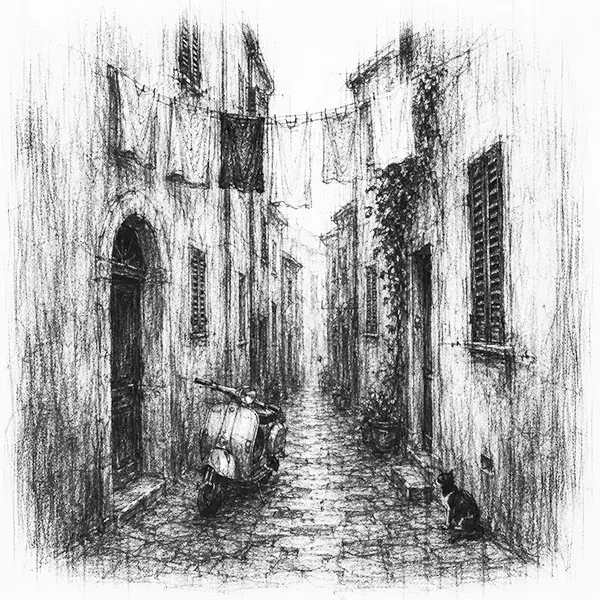
But the part I think I would love most is the part between the famous things — the narrow back lanes the colour of terracotta and mustard, barely wide enough for a scooter, shutters half-closed against the afternoon, a line of washing strung from one wall to the other, a cat, a doorway, an old woman watching the street. The ordinary life of a place is always what I end up wanting more than its monuments, the unphotographed hour in the unremarkable street. A city this loaded with marvels would, I suspect, be best understood by getting deliberately lost in the plainest lane I could find and standing in it doing nothing, until it stopped being a sight and became a street.
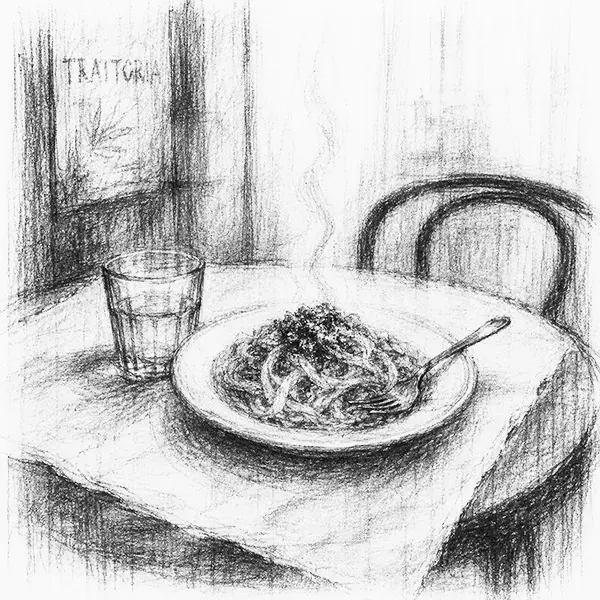
And I will be honest, as I always am about this: a good part of what I want in Rome I want with my stomach. Not the grand stuff — the plain stuff, a plate of pasta in a small back-street place with paper on the table, four or five ingredients and no fuss, the kind of cooking confident enough to leave things out. I have eaten the travelled, improved, far-from-home versions of it all my life, in cities a long way from where it belongs. The thought of the unshowy original, made the way it has been made for longer than my country has been a country, eaten without ceremony at a wobbling table in a lane, is exactly the sort of small thing I file under “one day” and let a whole life go past without arranging.
So Rome stands at the head of the far cities — the oldest claim I have on anywhere, and the longest postponed. There is no good reason, only the usual ones: the long flight, the visa, the fare always spent nearer home, the steady private habit of meaning to and not. It is the town behind half my schooling, the source of words I use without thinking and history I was made to learn, and I have never once stood in it. One of these years I should make the long way west and walk into the middle of all that casual, traffic-worn antiquity, and get lost in a mustard-coloured lane, and eat the plain plate of pasta, and throw the coin at last, and hear it land. I have never been abroad, and the oldest claim I have on anywhere is the one I have postponed the longest.
“Rome: capital of Italy, on the river Tiber; once the centre of the Roman Empire and long the seat of the Catholic Church, its old city dense with classical ruins, churches and fountains standing among the modern streets.”
— from a school geography text, already out of date when I read it

Leave a Reply