Abroad · never been
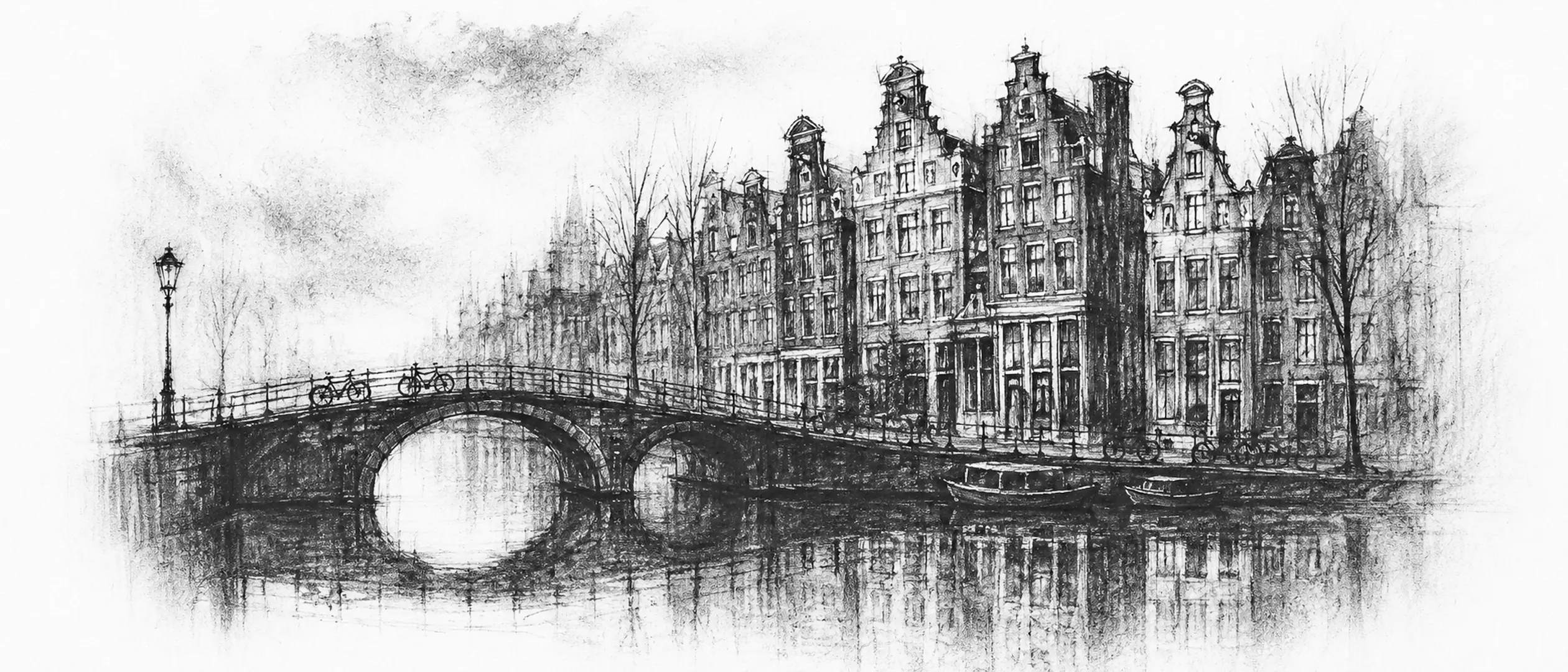
I have wanted to walk the canals of Amsterdam for as long as I have known they were there. It is a city full of water. The canals run through it everywhere, and you are never far from the smell of them. It is not near me; nothing in Europe is. Getting there means a long flight, a visa to queue for, a fare I keep spending closer to home. That is what abroad is to a man with my passport. Still, of all the cool grey European cities I dream of, this is the one I can least explain and most easily feel. A watery, crooked, low-lying town, about as far from the hot crowded plains I was born on as a place can be and still be a city.
What pulls me is simple. The city chose the water instead of fighting it. Centuries ago it laced itself with canals dug in careful rings, so the streets and the water run side by side. The houses stand with their feet in the wet. To get anywhere you cross one little humpbacked bridge after another. The place made a deal with the sea: we will live below you, behind walls, and pump you out every day forever. It has kept its side so long and so calmly that the danger has turned into charm. I find that quietly heroic — doing a hard thing every day, without fuss.
I have it from the usual places: documentaries, photographs, the encyclopedia, and a great many films. The Hollywood ones cannot resist those canals; they put their chases and their kisses along that water because nowhere else looks quite like it. Between them they have given me a city of grey-gold light on still water, of fine slanting rain, of reflections so clean the houses seem to stand on their own upside-down twins. I have never heard a bicycle bell ring across one of those bridges. I feel I could describe the sound.
The bridges at the heart of Amsterdam
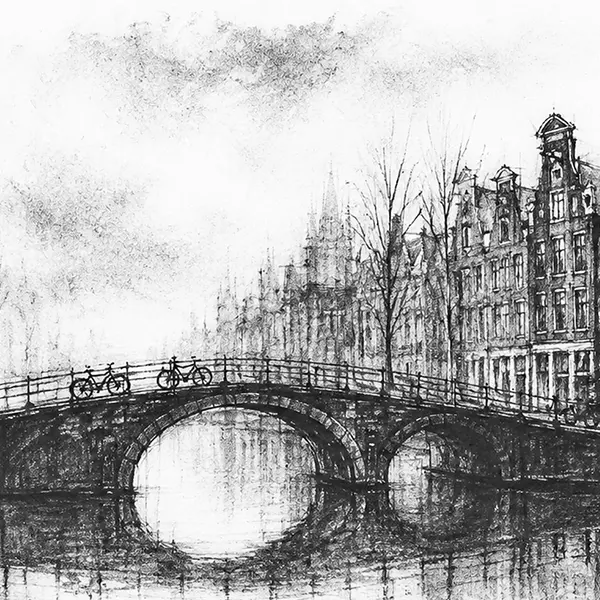
The bridges are the heart of it for me — those low arched crossings, hundreds of them, with their iron railings and their bicycles leaning two and three deep, where the whole picture of the city composes itself: the canal running away, the houses leaning over the water, a barge, a duck, a man on a bike with a child on the back and a bag of shopping on the front, unbothered, in the rain. I have stood on a great many bridges in my life. I would like to stand on one of those small ones and watch a flat grey city assemble itself in the water below me, and feel how a place organised entirely around canals must change the way a day moves.
The houses that have earned their lean
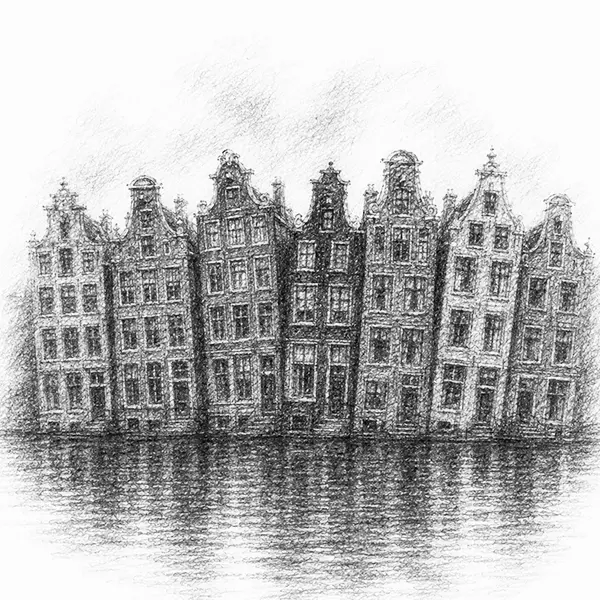
And the houses, which are the most endearingly odd thing about it — tall and thin and pressed shoulder to shoulder along the water, each one a narrow slice with a fancy stepped or curved gable at the top, and almost all of them leaning, tilting forward over the street or sideways into a neighbour, because the ground is soft and the centuries are long and nothing built on a drained marsh stays quite upright. A whole street of grand old buildings all gently falling over at slightly different angles, and the city loving them for it rather than straightening them. I am very fond of things that have earned their crookedness. I would like to walk a canal of them in the wet and pick out the worst leaner.
The one humane decision
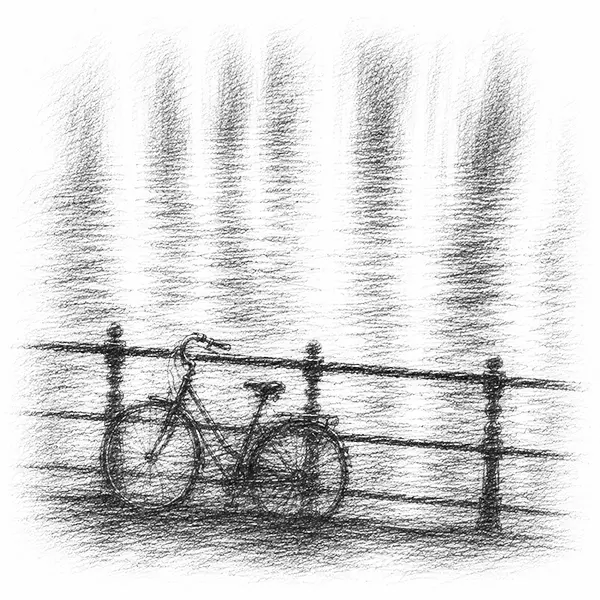
Then the bicycles, which are everywhere in every photograph, in numbers that stop looking like transport and start looking like weather — racked solid along every railing and bridge, leaning in heaps, ridden by everyone, in the rain, in good clothes, with no helmets and no hurry. A city that simply decided the bicycle was the sensible answer and arranged itself around that one humane decision. I have spent my life in places that arranged themselves around the car and the horn and the heat. The idea of a flat cool city you cross by bicycle, slowly, ringing a little bell, is to me a small unreachable utopia, and I would like to be a clumsy part of it for a few days.
A home that floats
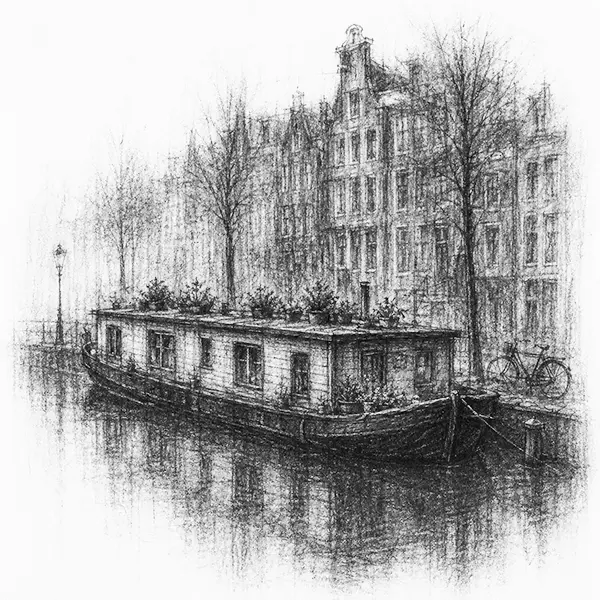
There are people who live on the water itself, in long low houseboats moored to the embankments, with pot plants and bicycles on the roof and a cat in the window and the whole canal for a front garden. The thought delights me out of all proportion — a home that floats, in the middle of a city, that rocks a little when a barge goes by, where the postman comes down a gangplank. I have always lived firmly on the ground, in the heat, in the crowd. A narrow house that floats on a grey canal under a leaning gable is about as far from that as a home can get while still being a home, which is, I suppose, exactly why I want to see one.
Constraints turned into ornaments
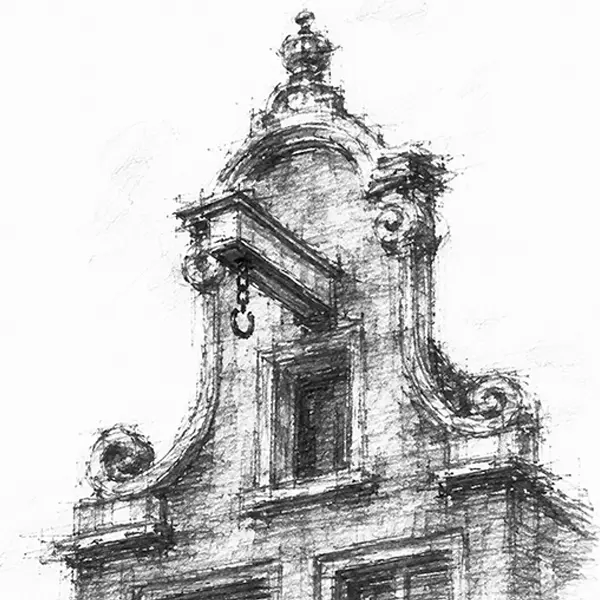
Even the small practical details charm me. The houses are so narrow and their stairs so steep that the people could never get their furniture up them, so each one has a beam sticking out at the very top of the gable, with a hook, for hauling a sofa or a piano up the front of the building and in through a window — a city solving the same little problem the same clever way for four hundred years, until the solution became part of the skyline. I notice I am drawn, again and again, to places that turned their constraints into ornaments. It may be the whole of what I am looking for, in every direction at once.
The one bright corner of Amsterdam
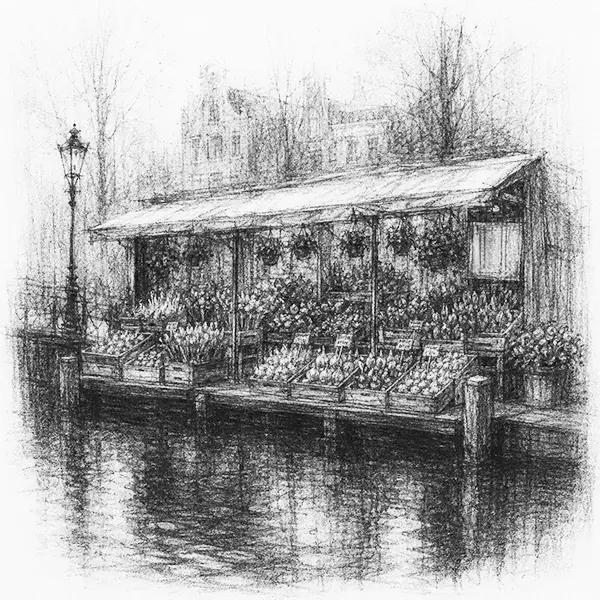
And the flowers, because the country is half made of them — a market strung along the edge of a canal, selling cut blooms and bulbs in wooden trays under awnings, colour I would have to take on faith from the grey of my charcoal, the one place where the city’s careful greyness gives way and lets itself be bright. I would buy something I had nowhere to plant, just to carry it along a canal in the rain.
So Amsterdam takes its place among the far cities after all — not near, not easy, no short hop, but a proper abroad with every one of abroad’s small obstacles: the long flight north, the visa, the fare I keep spending closer to home, and the old habit of meaning to and not. It is a city that made its peace with the sea and stayed standing, crookedly, below the waterline, for four hundred years; and I am a man on the other side of the world who has carried its canals around in his head for decades and never once stood on one of its small bridges. One of these wet grey mornings — and it seems to have them in endless supply — I should finally make the long way north, and stand on one of those bridges, and hear the bell. I have never been abroad; this is one of the bridges I have put off the longest.
“Amsterdam: capital of the Netherlands, built on a network of concentric canals across reclaimed marshland below sea level; known for its tall gabled merchant houses, its bridges, and its bicycles.”
— from a battered atlas, in the gazetteer at the back



Leave a Reply