Abroad · never been
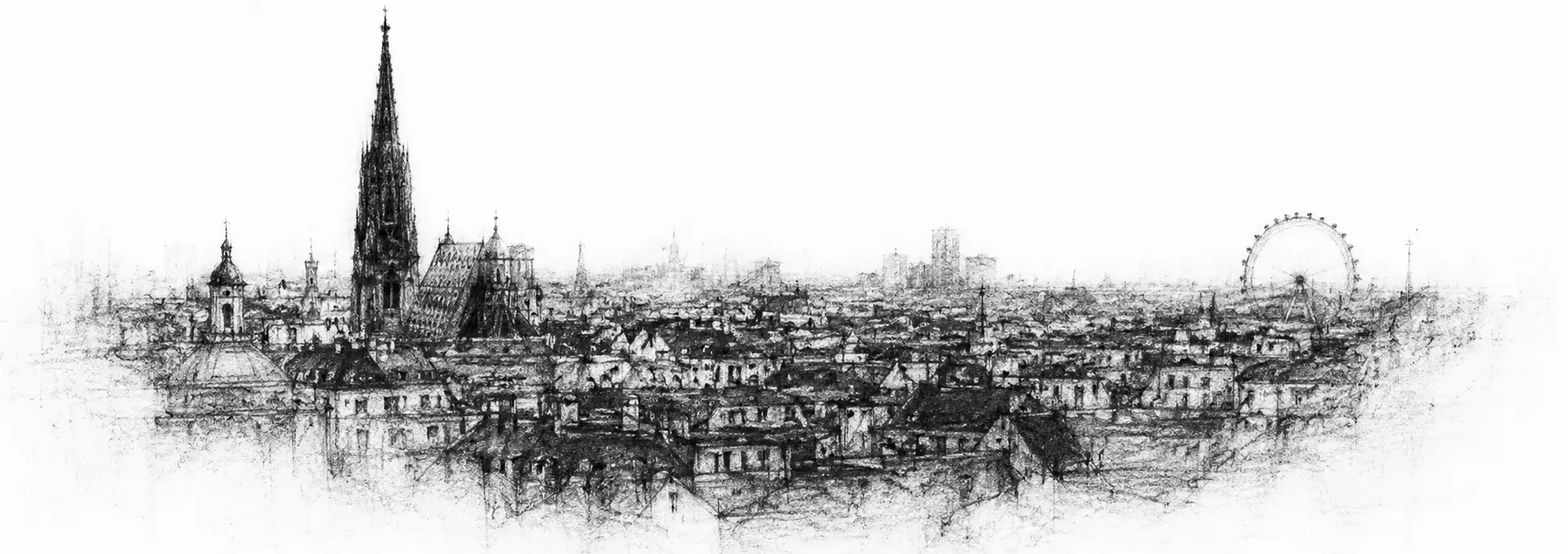
I have kept Vienna for years as a capital built for an empire that no longer exists. That was the first thing I ever understood about it, before I knew a single street, and it is still the thing I understand best. A city stitched together to govern half a continent, hung with the offices and ballrooms and parade grounds of a monarchy that ran on a dozen languages. Then, almost overnight, the empire was folded up and put away, and the enormous capital was left standing over a small, quiet country like a man wearing the coat of someone much larger than himself. I have a soft spot for things that outlast their reason. I had one waiting, it turned out, before I ever saw a picture of the place.
Vienna out of an old film
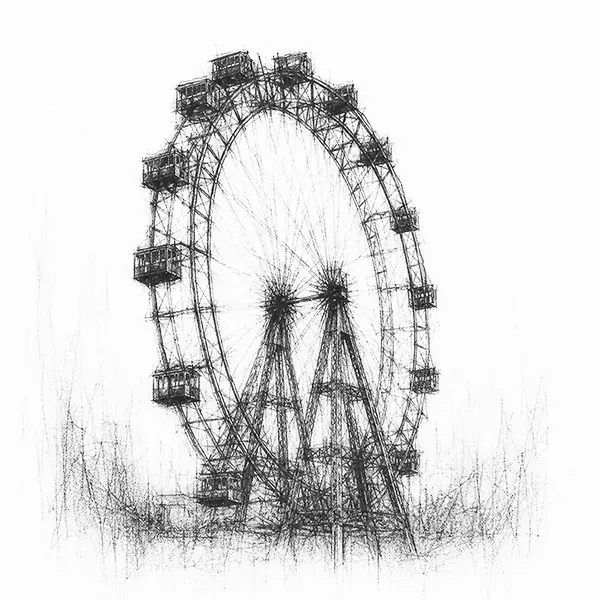
It came to me, as these places do, sideways and in pieces. A film I saw far too young and can no longer name. I have lost the plot and the people and kept only the look of it: a ruined postwar city in deep shadow, wet cobbles shining, a man caught for one instant in a darkened doorway, and behind it all a thin, nervy, jangling music made on a single stringed instrument I could not have named then and would only embarrass myself naming now. I did not follow the story. I followed the city — the long staircases, the sewers, the great slow wheel turning over the fairground in the rain. I have been trying to recover the rest of that film for most of my life. The wheel stayed. The story is gone.
An antiquity built to order
You cannot come to Vienna clean either; nobody can. It has been painted and recorded and printed until the real place must feel, on its tired days, like an impersonation of its own gift shop. Mine was assembled in instalments, the way all my far cities are: a double-page spread in a magazine in some waiting room, the boulevard shot from above and curving like a drawn bow; a Sunday documentary with the sound turned low, the camera gliding past gold and marble while a steady voice told me things I would not retain; the long Vienna entry in a one-volume encyclopedia I have had since school, with one small grey photograph of a cathedral roof patterned like a snake’s back. None of it was ever mine. I built the whole city out of other people’s looking, and then quietly moved in.
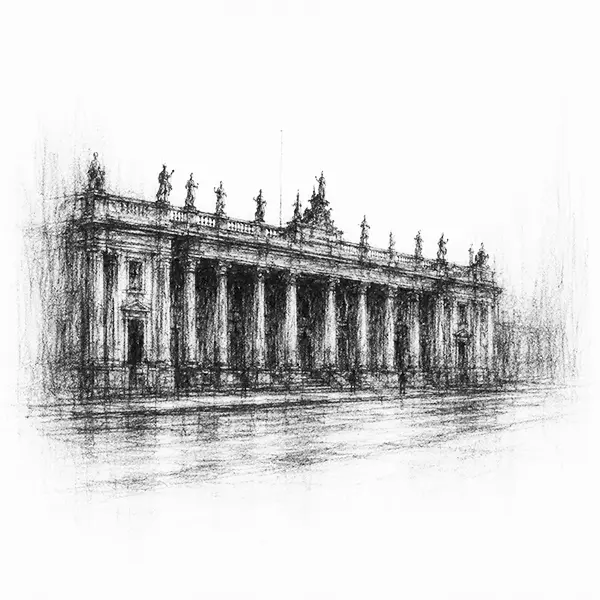
What I have, mostly, is a list of facts kept the way some men keep coins they cannot spend. That when they finally pulled down the old city walls, they did not build a road in their place so much as a stage — a single great ring of a boulevard, and along it, one after another, a parliament got up to look like an ancient temple, a town hall pretending to be a cathedral, museums like palaces and palaces like museums, each one dressed in the costume of a different century, all of them new at once, all of them lying cheerfully about their age. A whole ring of borrowed grandeur, run up in a few decades to make a young empire feel old. I find that more touching than I can quite explain — a city so anxious to seem ancient that it built its antiquity to order.
The gilded box built for sound
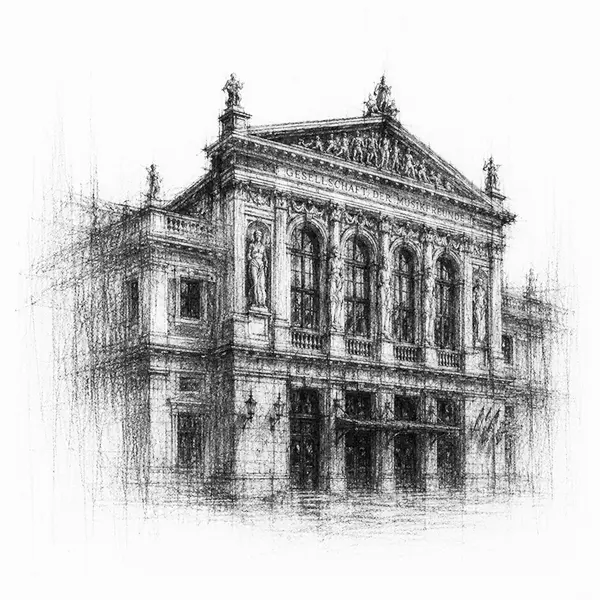
And the music. Every account of the place comes back to it, and I have let it. A city where, the story goes, three or four of the men who changed what music could do all walked the same streets within a few short blocks and a few short years of one another, where a certain three-beat dance once swept the ballrooms like a fever and never quite let go, where on the first morning of every year an orchestra in a hall lined with gold plays the same handful of tunes to half the planet at once. I have heard that hall described as a gilded box built more for its sound than its splendour, and that the gold is half the reason it sings. I will take that on faith. I have never been in a room that was beautiful and right at the same time, and I would like to believe one exists, even if I keep declining to go and check.
A single cup, a whole afternoon
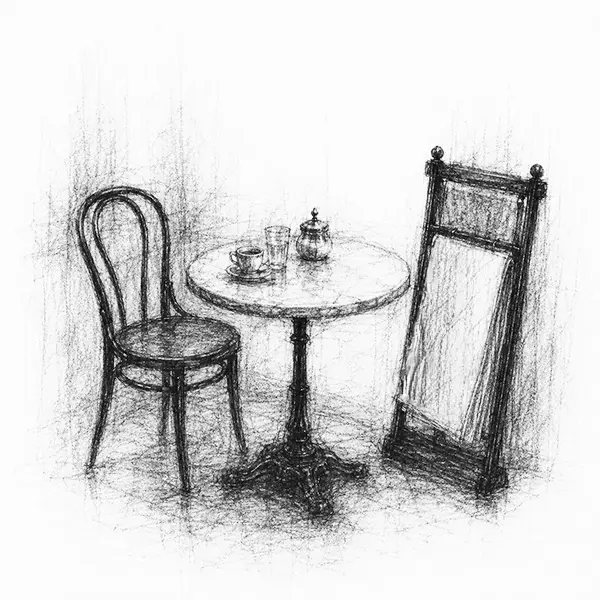
The detail I keep returning to, though, is smaller and stranger, and it is the coffee house. Not the coffee — the *institution* of it. The idea, sworn to me more than once, that you may buy a single cup, sit at a marble table on a curved wooden chair in a room with a high ceiling and a tired chandelier, and stay for the whole of an afternoon; that a waiter in a dark jacket will bring you a glass of water beside the cup and refill it without being asked and without expecting you to leave; that the day’s papers hang on long wooden rods along the wall, public property, free to anyone with the patience to read them. A place engineered for the unhurried, the broke, the lonely, the still-thinking. I read that and thought: I have been looking for that room my entire life, and it has been sitting in a city I keep not flying to.
The horses and the river that was never blue
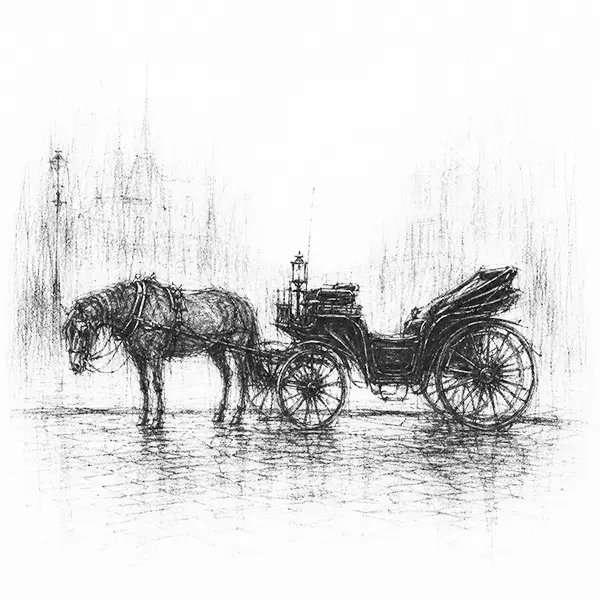
The other things arrive the way facts about a far place always do — slightly worn, slightly secondhand. The horse-drawn carriages still working the old squares, the smell of them apparently the one honest thing left in a centre otherwise scrubbed for visitors; the cream-white stallions trained, in a riding hall older than my whole country’s independence, to do slow impossible things in the air, as if dancing were a discipline you could drill into an animal. The dark slice of chocolate cake two rival houses have feuded over for a century as though the recipe were a border. The big brown river that turns out not to be blue at all, and never was, and was only ever called blue by a song. I file these the way I file everything: against a journey I keep meaning to make.
Snow on the Vienna domes
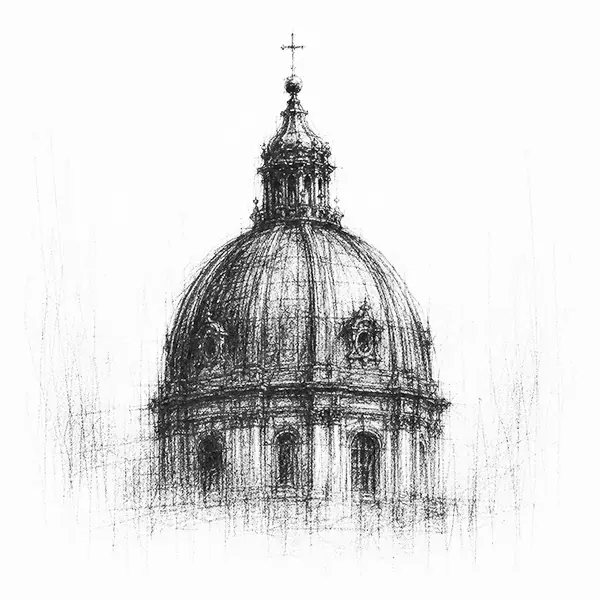
The most particular Vienna I own came from a former colleague, a man not given to wonder, who had once spent a single winter week there for work and remembered almost nothing of the work. What he remembered was walking back to his hotel late through the old centre while it snowed — real snow, the slow vertical kind — and the great green-black baroque domes going white at the top while their lower curves stayed bare, and the streets emptying, and the cold being a clean cold, nothing like ours. He said it without trying to make it mean anything, which is exactly why it has done more for my idea of the place than every gilded fact I have shelved. I have been walking home through that imaginary snow for years, watching the domes go white, and I have never once had to find the airport.
Here is the part I do not say at dinner. I could go. The passport is in the drawer, on its third renewal, as clean inside as the day it was stamped; there would be a visa to arrange and a long flight to sit through and money I have always, somehow, just committed to something nearer home — but none of that is a wall, none of it is a war, no one is forbidding it. The distance is real and the distance is also an excuse, and I have stopped being able to tell where one ends and the other begins. I keep some of these cities, I have begun to suspect, precisely because I have never stood in them. Arrival is a kind of spending, and the thing I would be spending is the version I made myself.
So I keep my Vienna where it is — a too-large capital wearing a vanished empire’s coat, with the snow coming down on the domes and the great wheel turning slowly over the dark fairground and a marble table holding a chair for a reader who has had years to come and sit in it and has not yet managed the trip. The papers are on their wooden rods. The water glass is full. This is one more entry in the long, patient account of a man who has never been abroad, and who has built a whole second city out of refusing to ruin the first.
“Vienna: capital of Austria, on the Danube; formerly the residence of the Holy Roman emperors and, until 1918, the seat of the Austro-Hungarian monarchy.”
— from a magazine cutting I have kept for no reason I can name

Leave a Reply