Abroad · never been
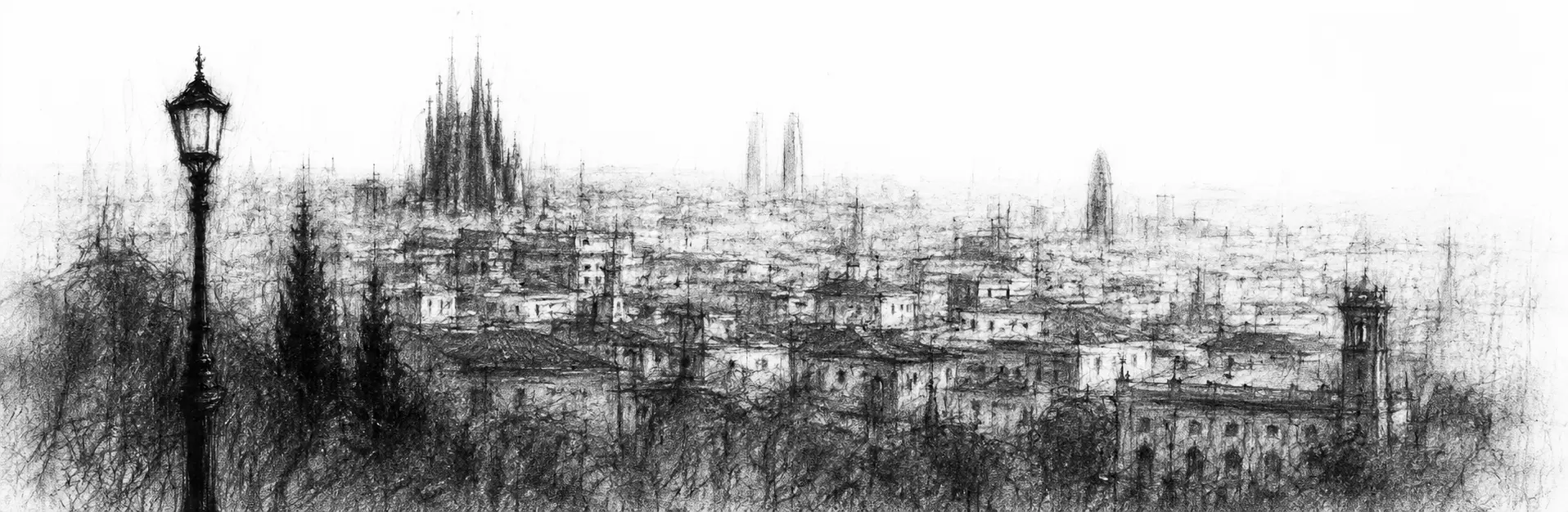
I have owned Barcelona for years as a building that refused to be finished. Long before I had a street name or a word of the language, I had the fact of a cathedral going up so slowly that men were born, grew old, and died in the years it took to raise even its towers. It is still not done. I must have been a boy when I first saw it in a photograph, the stone spires pushing out of a thicket of scaffolding and cranes, more like something melting upward than being put together. I did not understand it. I have not finished understanding it since. A church that has outlived everyone who began it, and plainly means to outlive everyone alive now, struck me even then as the most patient and the most arrogant thing a city could set out to do.
Barcelona, grown rather than built
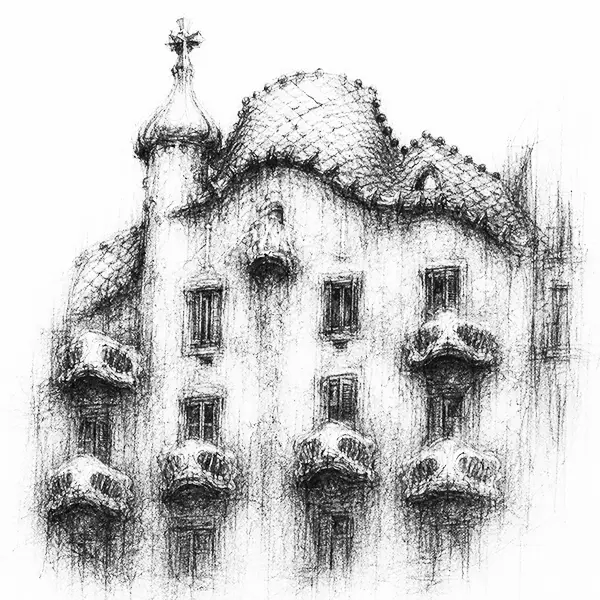
The man who gave the city its strangest shapes worked as if a straight line were a personal insult. I have it from a documentary, watched with the sound low on a Sunday, that he poured the last forty years of his life into that one unfinished church. Then he died the way a poor man dies: knocked down by a tram, unrecognised, taken at first for a beggar on account of his clothes, while the towers he had given everything to stood half-built over the city. I will not name him; I am not sure a name would help. What he left does not look built so much as grown. House-fronts that ripple as if the sea had been working on them. Balconies like bone. Roofs that heave and scale over like the back of a sleeping animal. I have stared at these in print until they stopped looking like architecture and started looking like weather.
A bench made of broken things
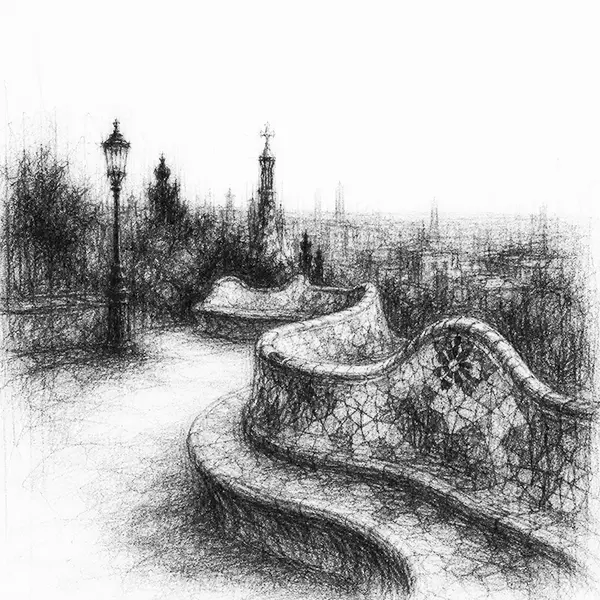
Up on a hill at the edge of the city there is a park the same hand laid out. A single bench winds like a serpent the whole way round a terrace, every inch of it surfaced in broken tile: smashed crockery, off-cuts, the rejects of a hundred kilns, set into mortar until the ruin becomes a pattern. I learned the word for the technique once and have lost it again. Whole walls and chimneys and a famous lizard, all skinned in the shards of other people’s broken things. There is something in that I have never quite got over. That you could take everything which had cracked and failed and been thrown out, and press it into the shape of a bench where, on a warm evening, strangers sit shoulder to shoulder and watch the city run down to the sea. I have been sitting on that imaginary bench for years, and it has never once been full.
Order and riot in one square mile
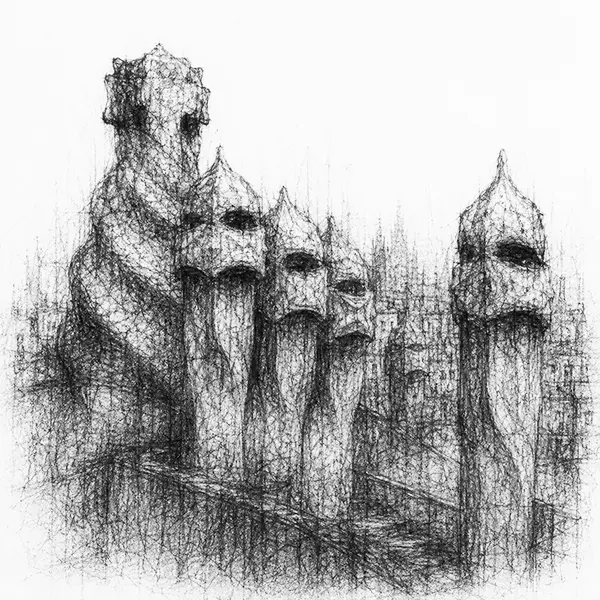
On the roof of one of his houses the chimneys stand like a guard of helmeted soldiers, hooded and half-turned, dressed again in that broken glaze, so that the most ordinary thing a building owns — the place the smoke gets out — becomes a small standing army keeping watch over the rooftops. I have read that the city below them is laid out on a stern grid, block after block with the corners sliced off at an angle, so that from above it reads as a vast chessboard of octagons, every crossroads opened out into a little square of extra light. A city that planned itself with a ruler, and then turned one man loose inside it to break every line he could find. The contradiction is the part I keep. Order and riot in the same square mile, and neither one of them apologising to the other.
The street in Barcelona built for walking nowhere
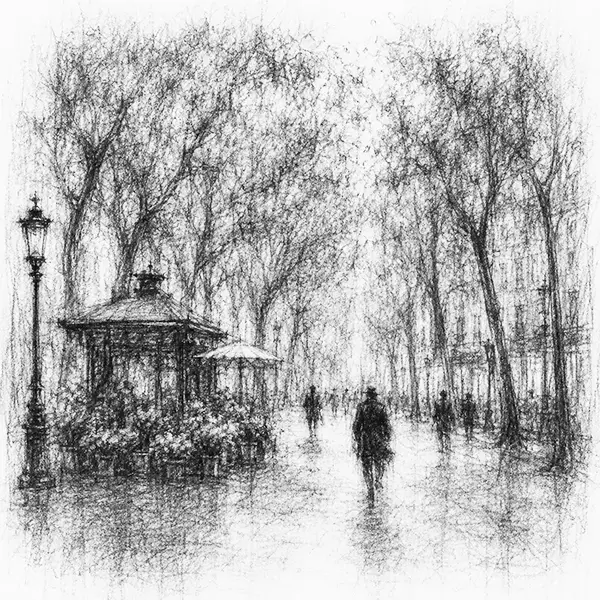
There is a long, broad walk that runs down the spine of the old city to the water, plane trees meeting overhead, a river of people moving through the middle of the traffic rather than beside it. In the pictures it is always crowded — flower stalls, a coloured circle set into the pavement that they say you must step on if you mean to come back, men painted head to foot standing dead still and pretending to be statues for coins. It is the kind of street I do not have where I am from: a street built for no purpose at all except to be walked down slowly, on the way to nowhere in particular, in the general direction of the sea. I have walked it in my head so many times that the real one would surely feel like a remake of a film I already knew by heart.
The alleys that keep no record
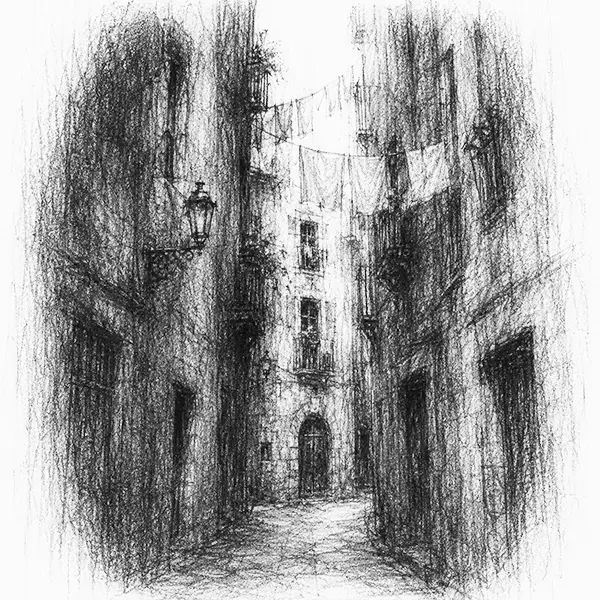
Off that walk, to either side, the old quarter folds itself into alleys so narrow the buildings seem to lean in and confer — stone gone the colour of weak tea, washing strung high up where the light still reaches, a cathedral you come upon suddenly with no room at all to stand back and take it in. I know, the way you know the plot of a book everyone has read but you, that this handsome stone has seen far worse centuries than it admits to: that not a hundred years ago the city rose, armed itself, ran its own factories and trams by committee for a single strange season, and was then ground flat again — a revolution that lasted about as long as a held breath, written down afterward by a foreigner who had come to fight in it and nearly died of the fighting. The alleys keep none of that on their faces. They just go on being beautiful and narrow, which may be the most Barcelona thing about them.
What I cannot get from any picture is the sound of the place, which is half the point of a city and the half I always lose. I know there are two languages there, one of them older and prouder and not the one the rest of the country speaks, and that people will correct you over it gently and firmly at once. I have read about the towers they build out of their own bodies in the squares on feast days — men standing on the shoulders of men, eight and nine high, a small child sent up last to scramble over the lot of them and raise one hand at the top, the whole swaying thing held upright by a scrum of arms below and the plain nerve of strangers. That they do it on purpose, for no prize but the standing of it, tells me something about the place I have not finished thinking through.
Barcelona from a hill at last light
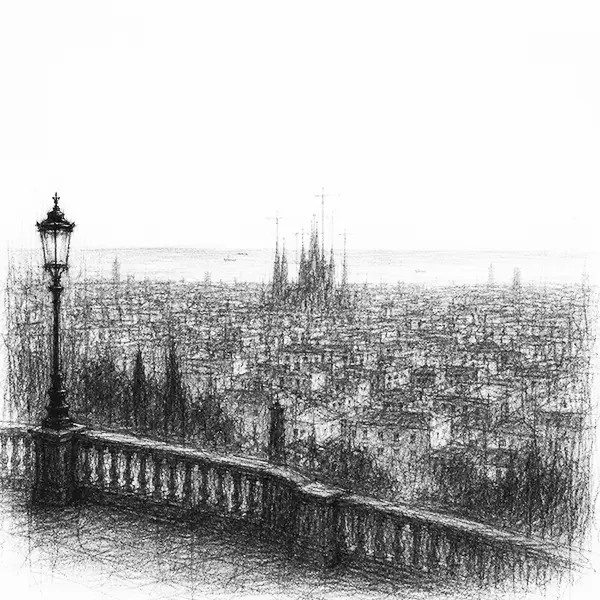
The most particular Barcelona I own came from a man I worked alongside for a year, who had gone there once for a wedding and could remember almost nothing of the ceremony. What he had kept was an afternoon when he climbed up to a terrace on one of the hills above the city, late, with the light going, and looked at the whole grid of it laid out below him running dead flat to the Mediterranean — the unfinished towers sticking up out of the middle of everything, cranes and all, gone gold; the sea past them turning from blue to lead. He said the cranes had small red lights that came on as the dark came down, and that for one moment he could not tell the church from the building site, and that this had seemed to him exactly as it should be. It has done more for my idea of the place than every fact I have filed against it.
And I could go. You have heard this from me before and you will hear it again: the passport is in the drawer, on its third renewal, as clean inside as the day it was stamped, and Barcelona is a known and unremarkable number of hours away by air — a long flight, a queue, a form, nothing a braver man would even count as an obstacle. No wall, no war, no permission withheld. The money that might have carried me there has gone instead, year on year, on things nearer home and harder to argue with, and the truth underneath that is smaller still: I did not book the ticket. Again. I keep meaning to, the way you mean to read the enormous famous novel everyone swears by — sincerely, and never quite this year.
So I keep the Barcelona I can afford, which is the unfinished one. In it the cranes never come down and the church is never topped out; the broken tiles catch the last of the light along a serpent of a bench above the city; the long walk runs on down through the plane trees toward a sea I have decided not to swim in yet. I have never been abroad, and this is one of the towns I have let stay unfinished on purpose — a cathedral that will not be done in my lifetime, looked after by a man who has not yet got round to finishing his own.
“Barcelona: chief city and port of Catalonia, in north-eastern Spain, on the Mediterranean coast; founded in Roman times and long the rival of Madrid.”
— copied into a notebook from something I have long since forgotten reading

Leave a Reply