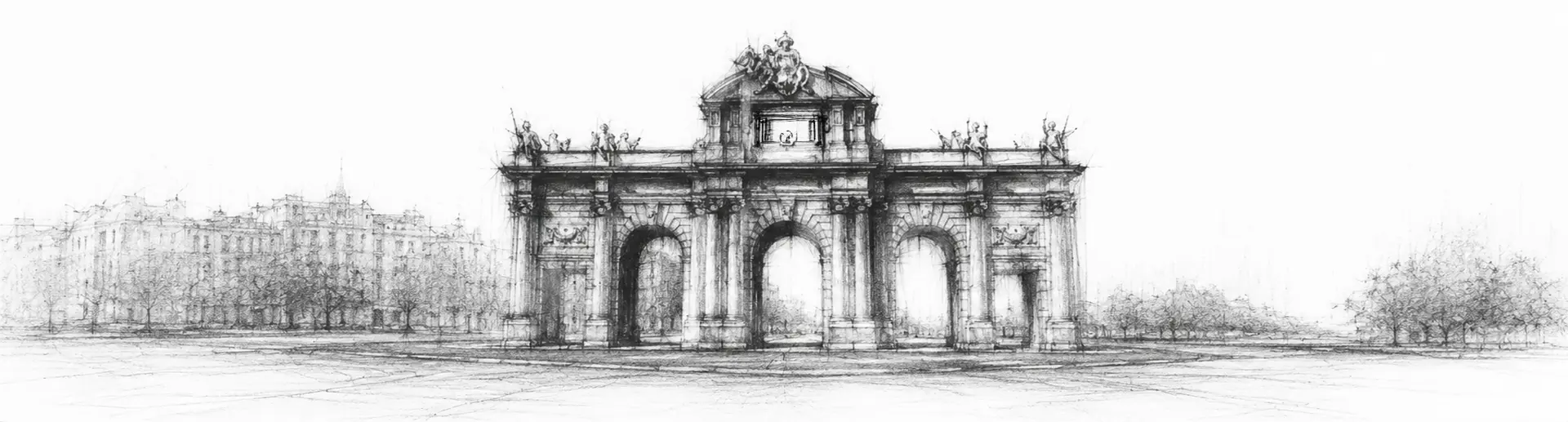
Abroad · never been
I have loved Madrid a little for a strange reason: it was simply put there. Most cities grow where it makes sense — a harbour, a river mouth, a ford men had always crossed. Madrid was set down in the dead middle of the country, on a high dry plateau, by a king who wanted a capital beholden to nothing and equidistant from everything. A great city raised on a whim and a compass-point, the highest capital in Europe, four hundred miles from the nearest wave. The air is so thin and dry that the old line says it can carry off a man and not so much as trouble a candle.
I came to it late and from a long way off, the way I come to all of them. A documentary watched on a slow afternoon with the sound turned low, the camera drifting through high rooms hung with enormous dark paintings. A double-page of photographs in some magazine in a waiting room — a square the colour of dust, a fountain, a sky scrubbed an impossible blue. The long entry in the one-volume encyclopedia that has stood on my shelf since school, three dry columns and one small grey photograph of a plaza. None of it was ever mine, exactly. I built the place, as I build all of them, out of other people’s looking, and then quietly moved in.
The great square in Madrid, the city walled out
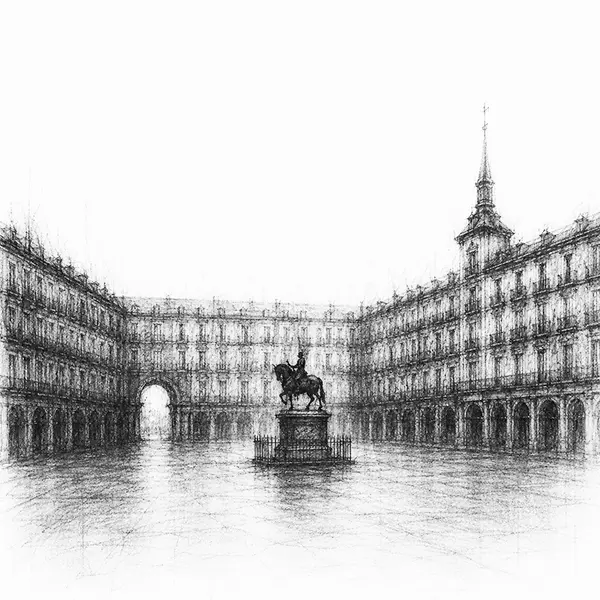
What I return to most is the great enclosed square — a vast paved rectangle of identical balconied fronts, nine ways in through arches and not one of them showing you the square until you are already standing inside it. I have read that it has been, in its time, a market and a bullring and a stage for coronations and for burnings, that the same stones once held a festival and a public death on the same afternoon, the balconies sold off to the highest bidder for either. Now it is photographs and a man dressed as a cartoon, but I keep the older version: a stone box of a square with the whole noisy city walled out of it, a single bronze king on a bronze horse in the centre, going nowhere at all with tremendous dignity.
A thousand empty rooms in Madrid
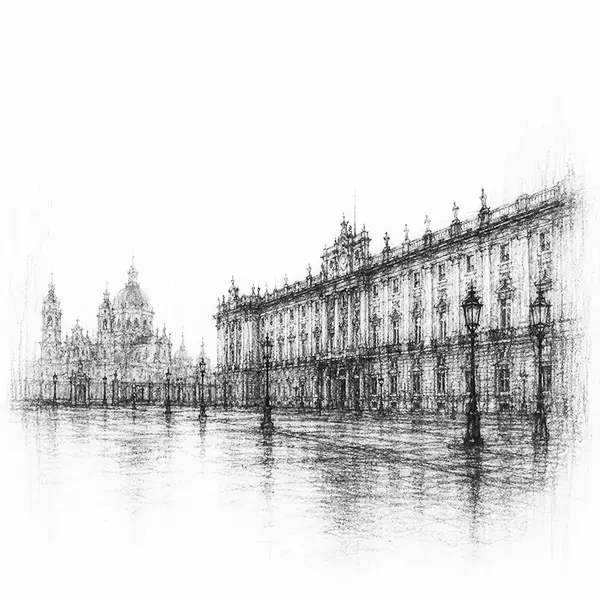
Grandest of all, and emptiest, is the palace. A long pale block of a building, well over two thousand rooms, the largest royal palace in Europe by floor space — and the royal family, having raised it, decided generations ago they would rather live somewhere smaller and quieter across town, so the seat of the whole Spanish crown now stands mostly unused above its formal gardens, a white cathedral facing it across a windswept plaza. I keep it beside the other Madrid facts I love for their plain absurdity: that the city does not sit down to dinner until ten or eleven and treats one in the morning as a sensible hour to be out walking with children; that a capital four hundred miles from any coast insists on the best fish in the country, trucked up overnight from ports it cannot see, so that the old joke runs that Madrid is the finest seaport in Spain and has no sea. A place grand enough to keep a palace it will not sleep in, and proud enough to eat the sea it does not have — I have decided, on no authority at all, that I would do well in a city so unbothered by its own contradictions.
A palace built for the mail
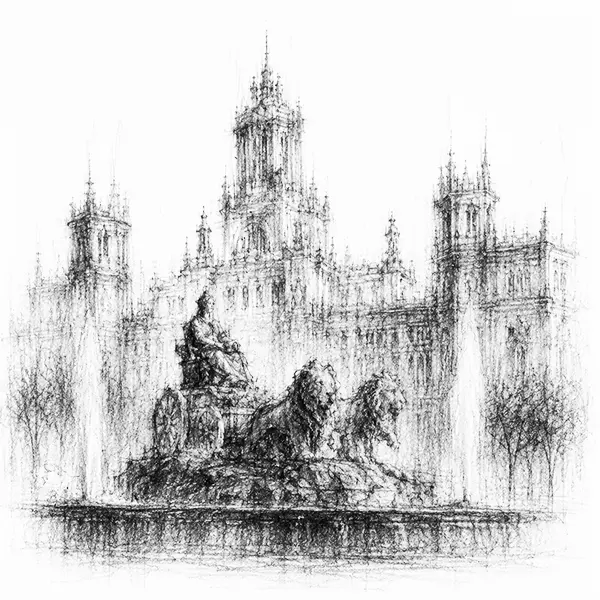
Then the buildings that take themselves entirely seriously, which I love best of all in a city otherwise so unbothered. There is a palace, white and spired and tiered like the top of a wedding cake, grand enough to run a small empire from — and it was raised, of all the earthbound purposes, to sort the post. A cathedral built for letters. Out in front of it a marble goddess rides a chariot drawn by two stone lions straight through the traffic, and the city has decided she belongs to it the way other cities are owned by a saint, gathering at her feet when something goes right. A people grand enough to put up a palace for the mail and then take a fountain for their patron tells me more in one gesture than a shelf of guidebooks.
The pictures are the real reason
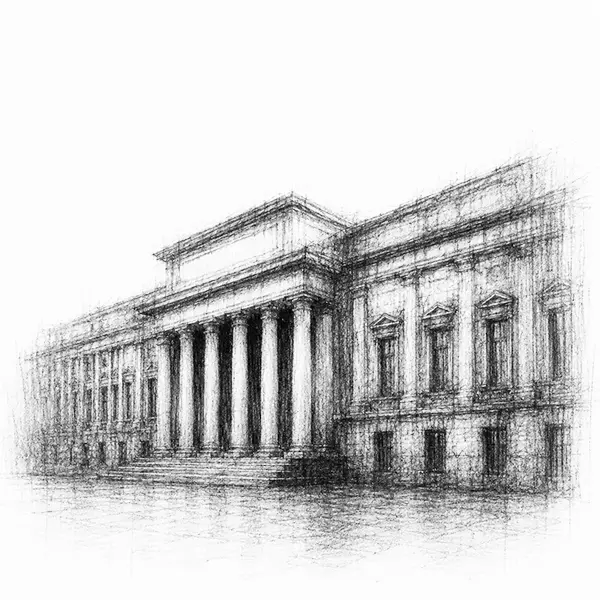
The pictures, though. The pictures are the real reason, and the hardest to walk around without naming names I have promised myself not to name. There is a long sober building the colour of weak tea where the country has hung the best of what it made and what it carried home, and I have walked through it a hundred times without once leaving this chair. A room of court portraits where the painter stood at his own canvas and turned to look back out of it, so that four centuries on you are the one being studied. A wall of late black pictures that a deaf old man smeared straight onto the plaster of his own house, the one no one forgets among them — a god in the dark, eating his own child. A great grey canvas of men with lanterns and levelled rifles and one figure in a white shirt with his arms flung up, caught in the half-second before. I have stood in that last room so often in my head that I am half afraid the real one will turn out smaller.
A light with an edge like a blade
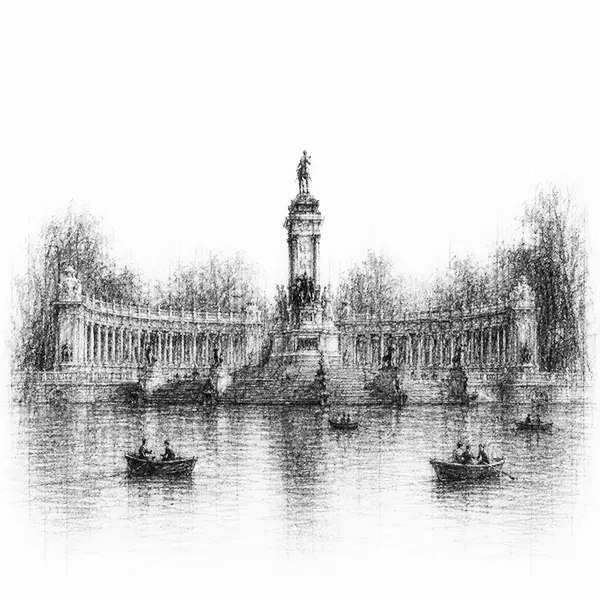
Between the squares I keep the great green rectangle they set down beside the museums — a royal garden thrown open to the whole city a century or so back, wide gravel walks under clipped trees and, at its heart, a still boating lake with a long curved colonnade of stone rising behind it and a monument lifted high over the water. In the photographs the little rowing boats sit motionless on a surface the exact colour of the sky, and the place has the calm of something built for no purpose but the afternoon. And the light — I keep coming back to the light, which everyone who has tried to paint the place both complains about and leans on, a hard dry clean light that throws a shadow with an edge like a blade and makes the cheapest wall look carved. It is the light of a place with no moisture in the air to soften anything, two thousand feet up and a long way from any sea. A light that does not flatter and has never felt the need to.
The dry country Madrid was dropped into
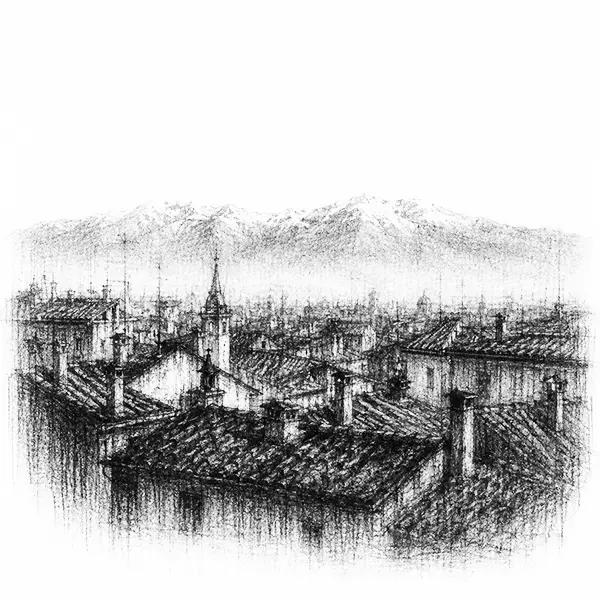
And around it all, holding it, the dry country it was dropped into. On a clear day, past the last roofs, a low line of mountains stands up grey and bare — the sierra, snow on it for a season, near enough that the cold comes sliding down off it into the streets and far enough to look like the idea of mountains rather than the things themselves. The river the city was given is a national joke, a thin brown thread the rest of the country never tires of teasing it for, so meagre that some old wit is supposed to have advised the city to buy a river worthy of its bridge or else sell the bridge. A capital with a grand stone bridge and almost no water to put under it. I find I trust a place that can laugh that easily at its own dry luck.
The most particular Madrid I own came from a former colleague who had gone over for work and stayed a weekend on his own account. He remembered almost none of the sights — not a painting, not a square — only that he had come out of a bar at three in the morning braced for a dead city and walked instead into a street more awake than noon, everyone unhurried, nobody going home, the dry air still warm off the stones. That was the whole of it. It has done more for the place in my head than every dark painting I have filed away.
And I could go. You know the shape of this confession by now: the passport sits in the drawer on its third renewal, clean as the day they stamped it, and Madrid is a long dry flight and a visa and a sum of money I keep spending nearer home instead. No wall, no war, no one refusing me the door. The honest account is plainer than I would like — that I have meant to, for years, the way I mean to do the things I am surest of, and somehow the high dry capital in the middle of nowhere stays a city I have decided not to spend yet. I have never been abroad; Madrid is one more place I have kept whole by staying away from it, lit by a hard clean light I have only ever watched fall across other people’s photographs.
“Madrid: capital of Spain, lying near the geographical centre of the country on the Meseta Central at an altitude of about 650 metres — the highest capital city in Europe.”
— from a magazine cutting I have kept for no reason I can name

Leave a Reply