Abroad · never been
Here is a confession to begin with: I am not sure I am allowed to want Paris. It is too obvious. It is the most wanted place on earth, the default answer to the question of where one would go — so wanted, so pictured, so thoroughly handled by everybody who ever made a film or sold a perfume or fell in love, that to add my own small longing to the pile feels like turning up to a feast with a single grape. And yet here it is, the longing, as plain and as embarrassing as everyone else’s. I have never been to Paris. I would like, before the end, to go.
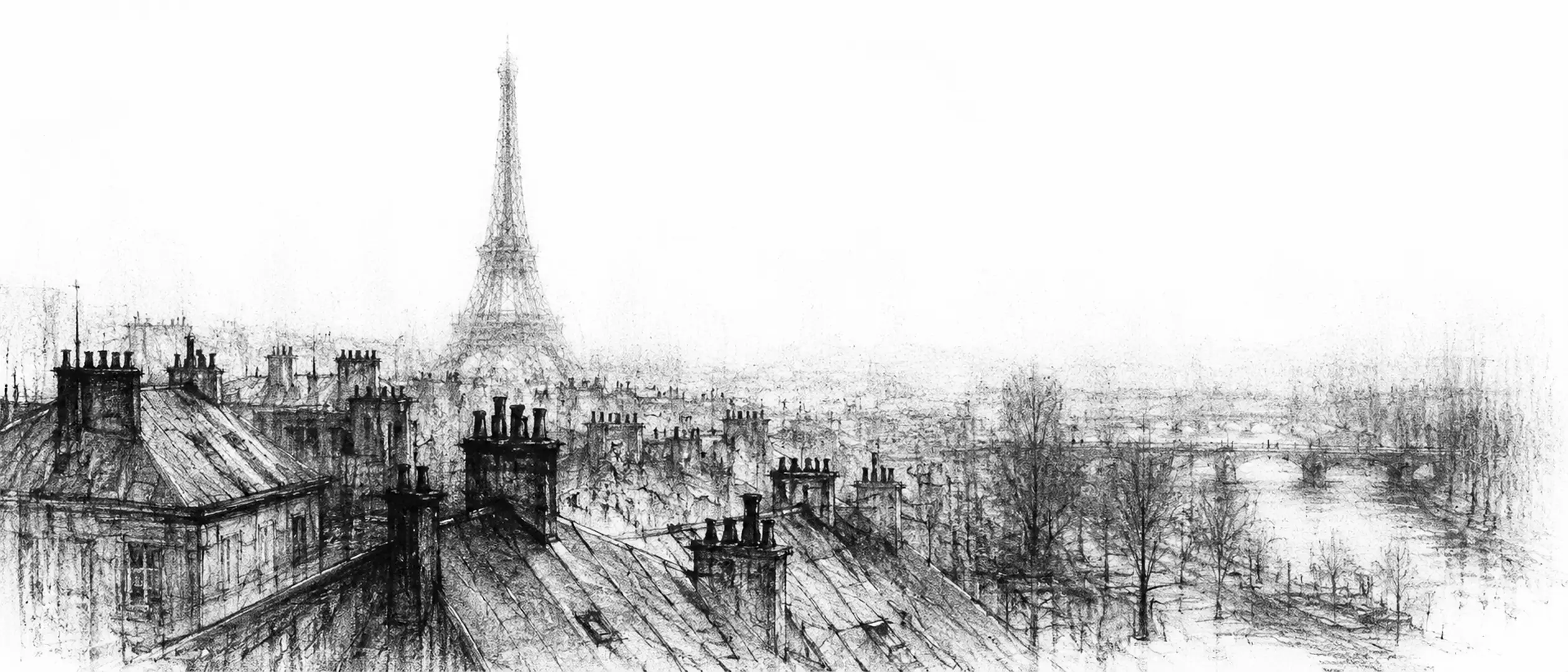
The strange thing is how much of it I already own. No city has been delivered to me in such quantity without my asking. I have watched it in films for fifty years, in grey and in colour, in the rain and in the spring, as a backdrop to every kind of story, until I can walk its idea in my sleep: the river, the bridges, the wide pale buildings all exactly the same height, the tower at the end of every other street. I have absorbed Paris the way you absorb a song that is simply always playing somewhere, until the day you realise you know every word and cannot remember ever having learned it. I half-believe I have been. I have to remind myself, with a little jolt, that I have not.
That is the particular trouble with this one. The far cities I keep, the ones across real oceans, I want because I cannot see them, and the charcoal is the only picture I have. Paris is the opposite problem. I have seen it too much. It has been pre-dreamed on my behalf, in advance, by everybody, so thoroughly that my own first sight of it, if I ever have one, will be less a discovery than a checking — yes, the tower is where they said, yes, the light does that to the stone. Saturation, it turns out, is its own kind of distance. You can be kept from a place by never seeing it. You can also be kept from it by seeing it so often it stops being real.
The tower that stands for Paris
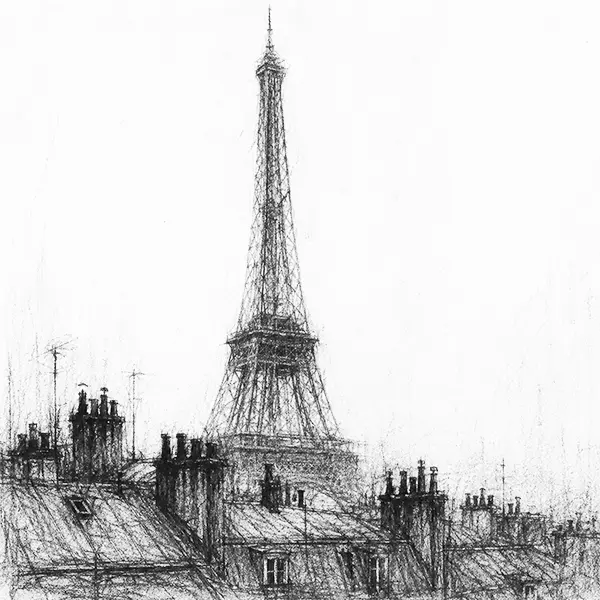
The tower is the worst offender and I love it anyway. That great iron thing, built to be temporary and then never taken down, has been photographed more than any object ever made, and there is not a single angle of it I have not already been handed. I should be sick of it. I am not. There is something I cannot get over in a city agreeing, more than a century ago, to let a piece of bare engineering — a pylon, really, a tall iron scaffold meant to come down in twenty years — become the thing it is known by forever, the way you might keep a stray dog that wandered in for one night. I would like to stand under it once and feel how big it actually is, which the photographs, for all their number, have never once told me.
A table on the pavement
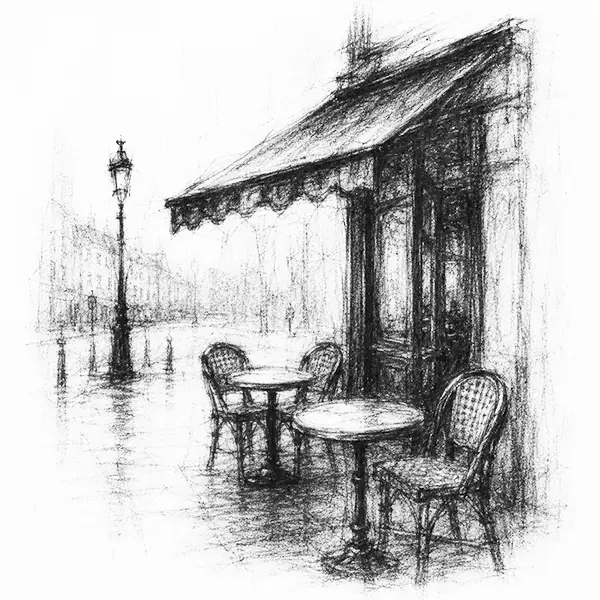
What I want there is not grand. It is the café — the small round table on the pavement, the cane chair turned to face the street, the single slow coffee that buys you the right to sit and do nothing for an hour and watch a city go by. Every film taught me that table. It is, I think, the real thing I covet about the place: not the monuments but the permission, the idea of a whole culture that long ago decided sitting and watching was a respectable way to spend a morning, and built half its streets to make it possible. I have done my watching of the world mostly from behind glass and from a distance. I would like to do it once from that chair, on that pavement, with nowhere in particular to be.
Bookstalls along the Seine
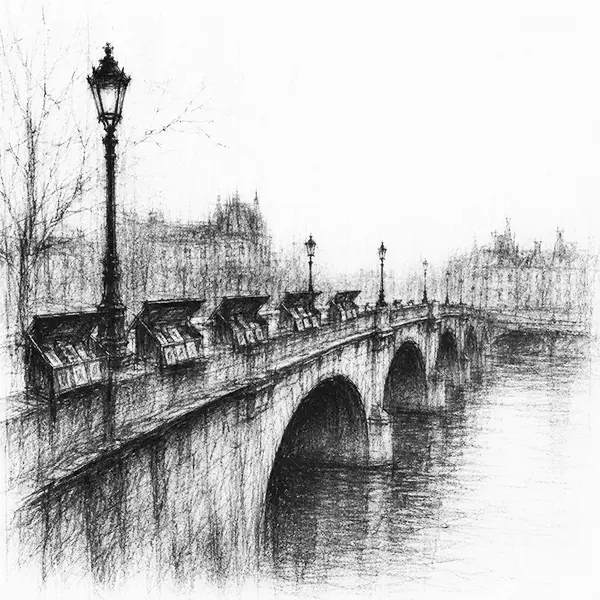
Then the river, which runs through the middle of the dream the way it runs through the middle of the city, with its bridges and its stone embankments and, along the parapets, those green boxes of old books and prints that fold out in the morning and shut at night. A whole trade in secondhand paper carried on in the open air beside the water, exactly the kind of slightly useless, entirely civilised thing I am helplessly drawn to. I have built so much of my own life out of secondhand pages — the encyclopedia, the photographs, the borrowed images of borrowed places — that a city which sells them off a bridge over a river feels, absurdly, like somewhere I already belong.
The avenue rising to its arch
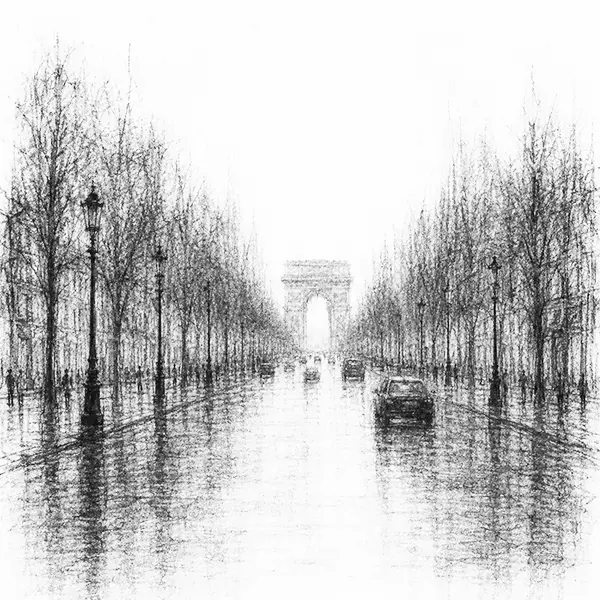
I know the grand version too, of course — the great straight avenue rising to its arch, the formal vistas, the whole imperial geometry of the place, a city laid out to impress you from a distance and keep impressing you as you walk. I admire it the way you admire a thing built by people very sure of themselves, and I am not quite sure I trust it. The grandeur is the part everyone reproduces; it is the part I feel I have already had. It is the smaller things — the chair, the bridge, the boxes of old paper — that I have not had and want.
On the inside of a Paris window
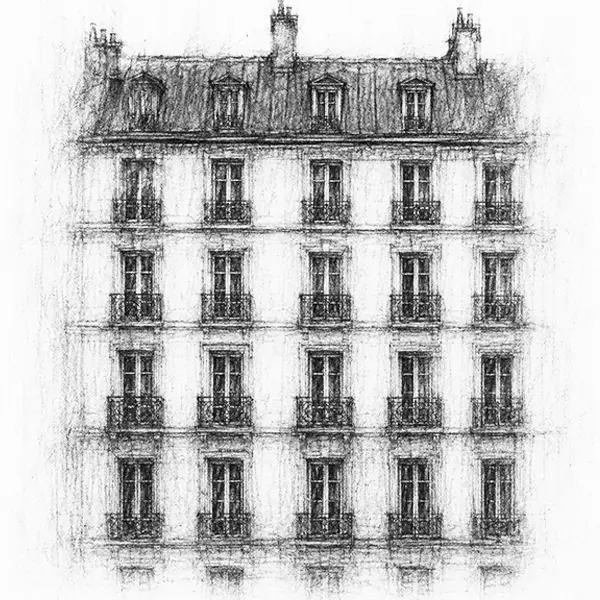
And the buildings themselves, those long pale fronts of identical height, tall windows and little iron balconies and grey roofs, repeating block after block with a regularity that should be dull and somehow is not. I have looked up at them in a thousand films, the lit windows at night, the lives behind them I will never know. There is a particular ache in an ordinary apartment window in a city you have never been to — the sense of an entirely unremarkable life being lived, the dinner and the lamp and the figure crossing the room, in a place that is to you nothing but a backdrop. I would like, once, to be on the inside of one of those windows, being the ordinary life rather than the man imagining it.
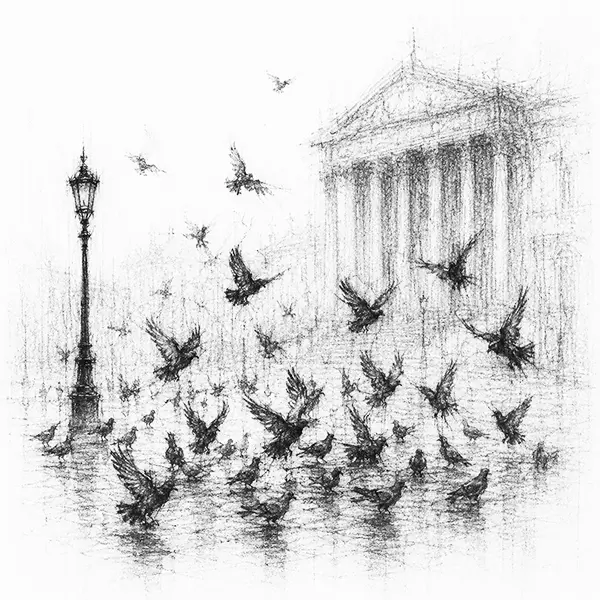
The rest I have in the usual heap — the great museums I would dutifully queue for and probably tire of, the pigeons going up off a stone square all at once, the gardens with their raked gravel and their iron chairs, the food I would eat too much of, being who I am. I can assemble the whole day in my head, hour by hour, so completely that the assembling has become a substitute for the going. That is the danger of a place you have been given too freely: you can wear it out in imagination, visit it so many times in your chair that the real trip starts to feel redundant, a thing you have somehow already done.
So Paris sits in an odd corner of this collection — not unreachable, not unseen, but over-seen, a city I have been handed so many times that I have half-convinced myself the handling was the having. It is a long flight and a fare and a visa like everywhere abroad, and — if I am honest — no real obstacle in the end but myself. The only thing standing between me and the actual stone is the strange, slightly shaming suspicion that I already know exactly what I will find — and a life that has, so far, always found somewhere more urgent to spend the money and the leave. One of these years I should go and let the real city correct me, and discover all the ways the ten thousand pictures got it wrong, and sit at that small round table at last, a man who finally turned up to the feast, grape in hand, and found there was room for him after all. I have never been abroad; the most photographed city on earth is, for me, still only photographs.
“Paris: capital of France, on the river Seine; long a centre of art, learning and fashion, and among the most visited cities in the world.”
— read once off a library shelf and never quite given back

Leave a Reply