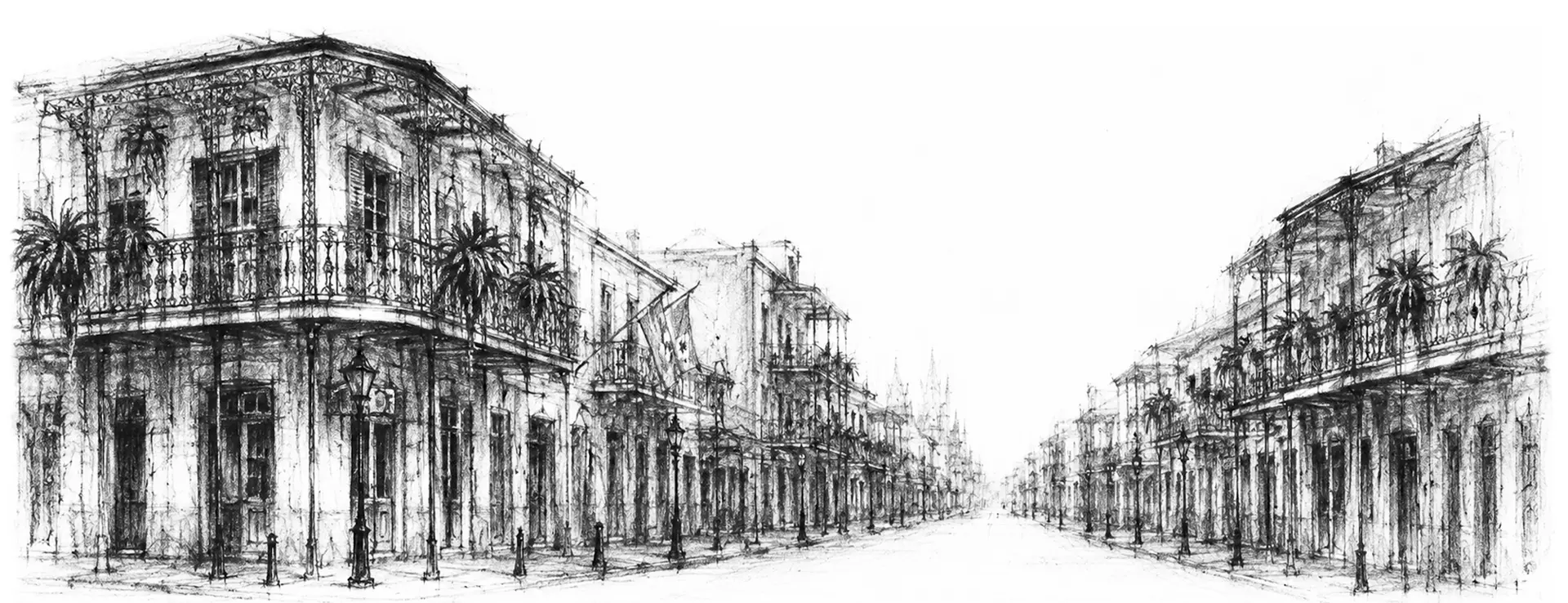
Abroad · never been
New Orleans is the one American city I have never been able to file under America. Everything I have gathered about it argues the other way — that it was French, then Spanish, then bought and sold like a piece of furniture; that its old quarter is built in iron and stucco the way no other town on that continent is; that it sits below the level of the river it lives beside, kept dry by pumps and walls and nerve. I have collected the place for years out of documentaries and other people’s photographs, and what I have built is not a city so much as a mood in the shape of one — hot, low, half-drowned, and playing music over the top of all of it. I recognise the heat. The rest I have had to imagine.
New Orleans behind its iron lace
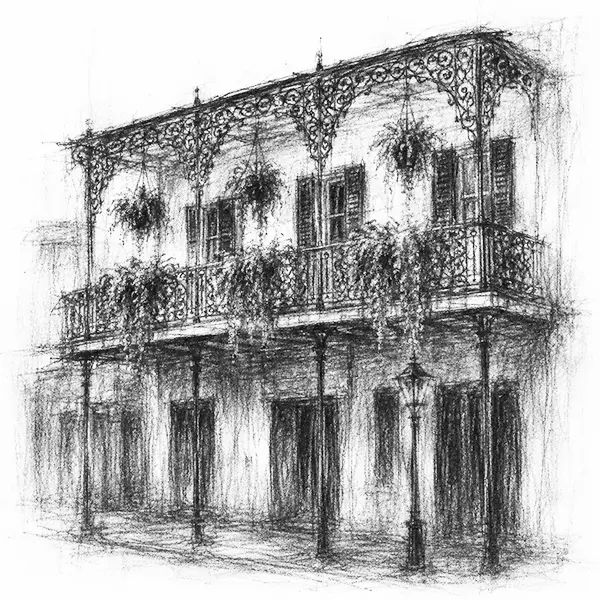
The first thing, the thing on every cover and every postcard, is the ironwork. The old quarter is a grid of low houses, and bolted to the fronts of them, floor above floor, are those wrought-iron galleries — balconies worked into leaves and vines and curls, running the length of the street, and from them hang ferns and baskets of flowers so that the whole façade seems to be quietly returning to plant. Someone explained to me once that the iron was a kind of showing-off, that a family’s standing could be read in the lace over its windows, and that the heavier and greener the growth spilling off it, the older and surer the house. I have never stood under one. I know the particular shade a wrought-iron balcony throws on a hot street, the way the light comes through it in a pattern on the paving. That much a hot city gives you for free, wherever you were born.
A trumpet on the corner
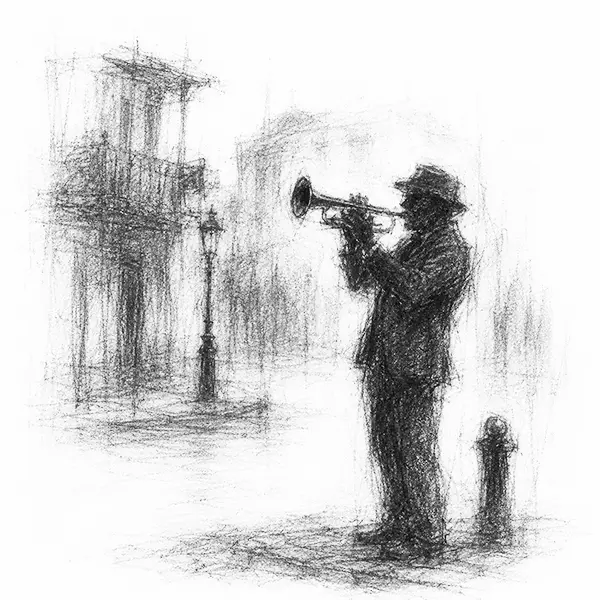
Then the music, which I cannot separate from the place no matter how I try. In all the footage there is always, somewhere, a man on a corner with a brass horn — not on a stage, not announced, simply standing where two streets meet and playing into the heat as though it were the most ordinary thing to be doing at four in the afternoon. I have read that the whole form of it was invented there, in those streets, out of everything that had washed up in the port and had to learn to live together; that it came up out of funerals, of all things, where a band walks a body to its grave playing slow and then turns and plays the crowd home playing fast. A town that answers death by marching away from the graveyard playing dance music has understood something I am still working on. I keep the lone trumpeter more carefully than almost anything else I own of the place.
The old ways still running
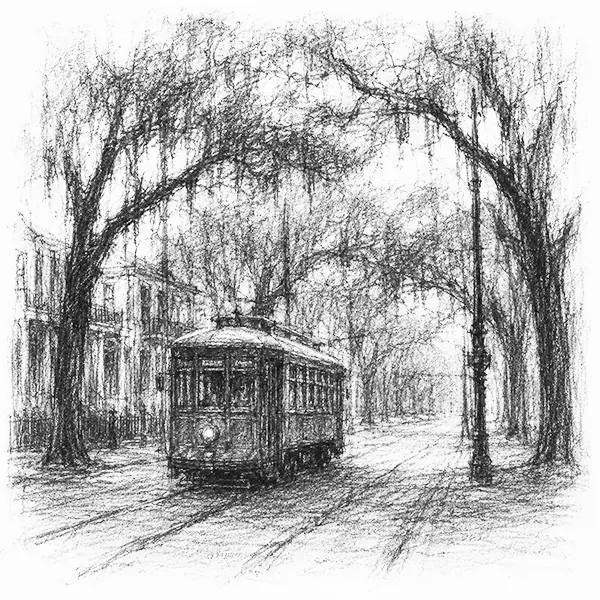
Out of the old quarter there is the streetcar, which I gather is a point of some pride — one of the oldest lines of its kind still running anywhere, a wooden car on a rail that trundles up a long avenue under a roof of enormous old trees, past the tall houses with their columns and porches. It is not kept for the tourists, or not only; people take it to work. I like that. A city that has held on to its slowest way of getting about, that lets an antique rattle down the middle of a working street because it always has, is keeping the same thing Quebec keeps in its wall — the past out in the open, in daily use, not behind glass. I have ridden it in my head down the length of that green avenue more times than I can defend, the fans of light coming through the branches, the car swaying, in no hurry at all.
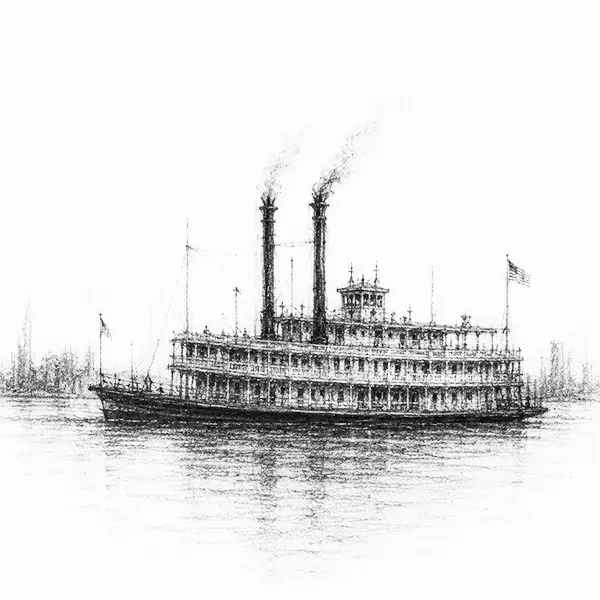
And the river, which is the whole reason the place is there and half the reason it is always in danger. The Mississippi comes past the city enormous and brown and higher, in places, than the streets behind the wall that holds it, so that a ship on the water can ride above the level of the town. On it, still, there are the old paddle-wheel steamboats, white tiered things with a great wheel turning at the stern, kept going now mostly to remind everyone of when the river was the only road and this was the port where it all changed hands. I have seen the same boat in a dozen pictures, the wheel throwing up its slow curtain of water, and thought about a town that lives lower than its own river and has decided to stay anyway, pumping the water out night and day for the privilege of the address. It is a stubbornness I understand better than I would like.
Cities of the dead in New Orleans
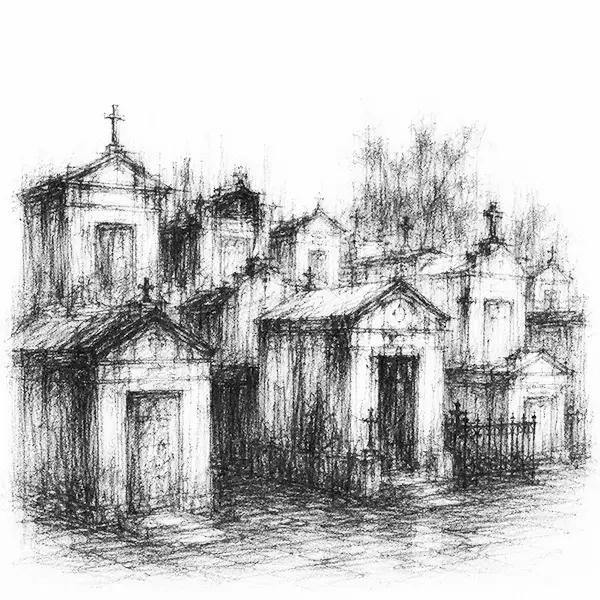
The detail that fixed the place in me for good is the graveyards. Because the ground is so low and so wet — dig a foot down, the encyclopedia says, and you find water — the dead there are not buried but housed, laid in stone tombs above the ground, whole streets of them, little white vaults with roofs and doors and names, so that the cemeteries look like small dense towns of their own. They call them cities of the dead, and mean it fairly literally. I have looked a long time at photographs of those rows, the tombs leaning and streaked and crowded close, and found them less grim than almost any ordinary graveyard I have stood in, because they are so plainly a town — the same low white architecture as the living quarter, the same iron, the same heat. A place where even the dead are given an address in the old style has thought about permanence in a way a sinking city is entitled to.
The cathedral over Jackson Square
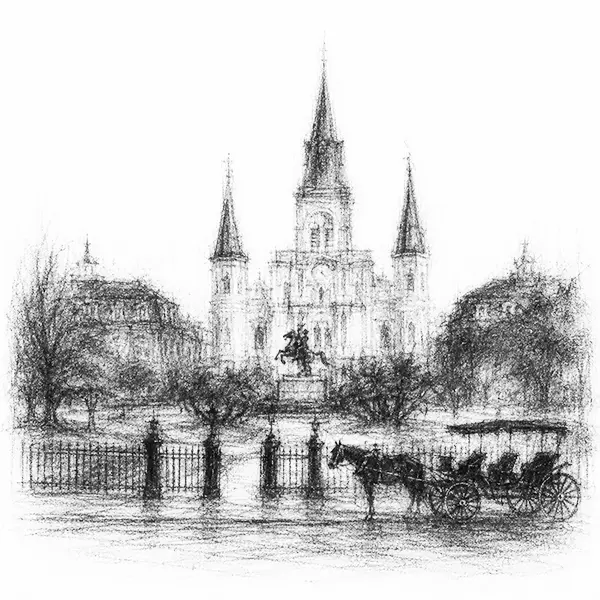
At the very centre of the old quarter, facing the one open square, there is the cathedral. A white church with three tall pointed spires, the oldest of its kind still in use anywhere on the continent, someone told me, standing over a square that has been the heart of the town since there was a town — mule carriages waiting along its edge, painters and fortune-tellers working the iron fence, the pale spires going up above all of it. I have looked at it in a great many photographs and always for the same reason: it is the one still, upright, certain thing in a place I otherwise keep as heat and music and half-drowned motion. A plain white church holding the middle of all that, insisting on the vertical in a New Orleans that lies so low. Every restless place, I have come to think, keeps one thing it will not let move — and in the city below the river, it is this.
Beyond New Orleans, the drowned forest
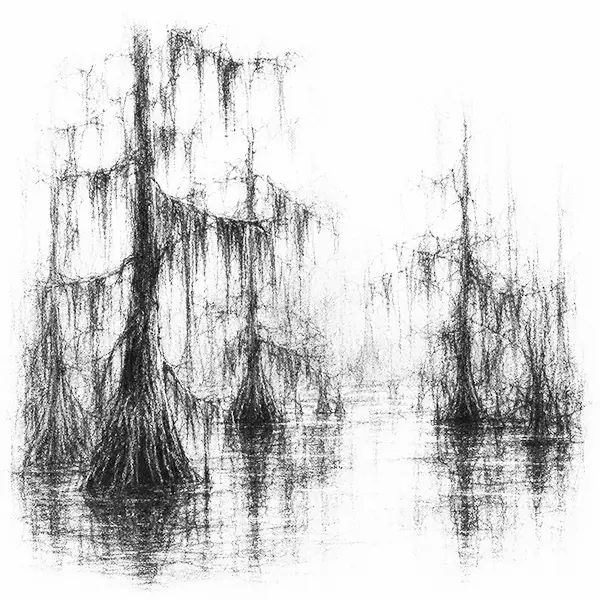
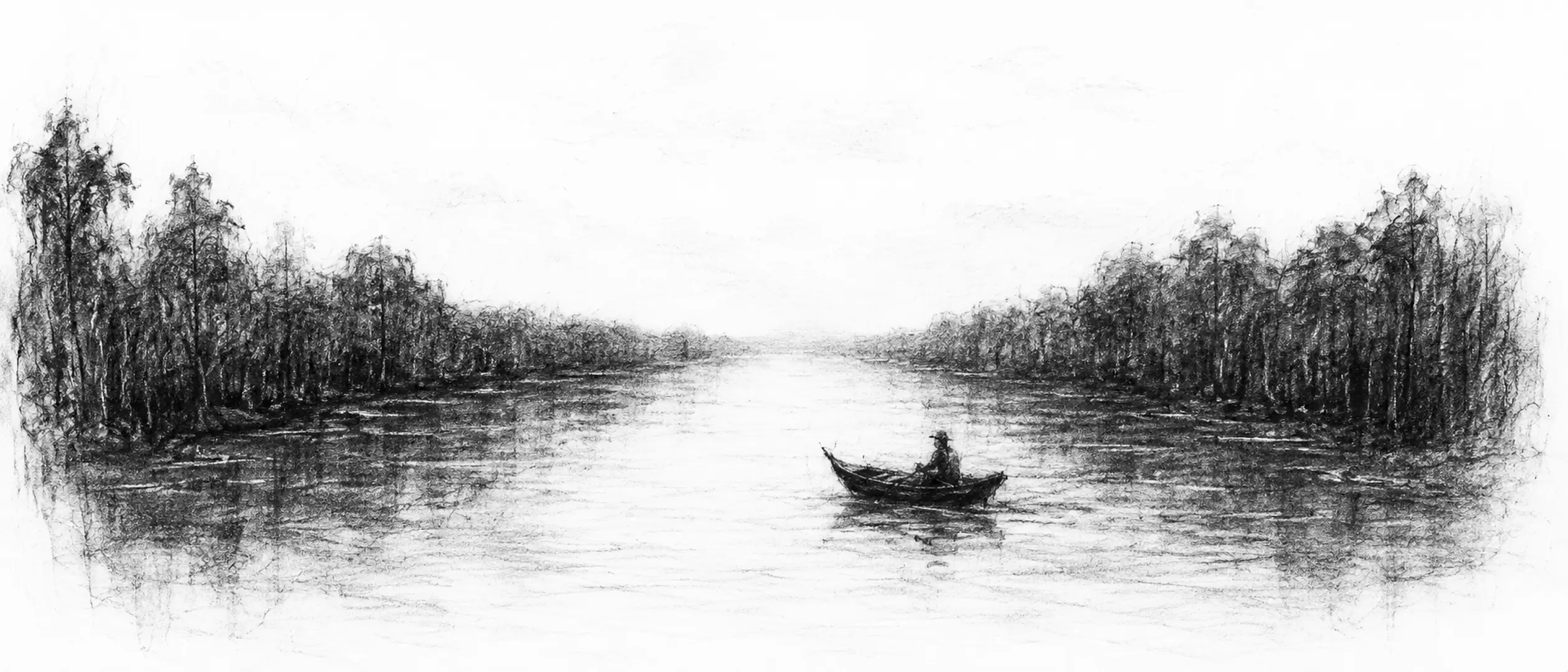
And past the edge of the streets, the water wins. Beyond the town the land gives up being land and becomes swamp — the bayou, slow dark still water standing among cypress trees, and the trees hung all over with long grey trailing moss so that they seem to be dissolving where they stand. I have read that the whole region is really just the river’s slow argument with the sea, delta and marsh, ground that is only borrowing its solidity, and that the city sits in the middle of it like a bet nobody has quite lost yet. There is a stillness in the photographs of that swamp that I find harder to shake than any of the music: the black glass of the water, the moss not moving, the sense of a place patiently waiting to be given back. It is the frame around everything else, the wet green edge the whole bright town is drawn inside.
I could go. You know the confession by now; I make it the same way each time. The passport is in the drawer, on its third renewal, clean as the day it was issued, and New Orleans is a long flight and a stamped visa and a sum of money I keep spending on things closer to home. No one forbids it. There is only the distance, and the cost, and the reliable private failure I dress in a fresh reason every year. And I have begun to suspect I keep the place exactly because I have not gone — that the afternoon I finally stood on the real hot corner under the real iron, with the real horn going somewhere down the block, the low half-drowned New Orleans I have carried would fold itself up and hand me back the ordinary one that every visitor already has.
So I keep it where it is, below its river and above its dead, the iron dripping with ferns, the streetcar under the trees, the steamboat turning its wheel, and the moss hanging still over black water at the edge of town. I have never been abroad; New Orleans is one of the cities I have chosen, for now, to keep rather than to spend.
“New Orleans: city and port, Louisiana, on the Mississippi River near its mouth; much of it lies below sea level, protected by levees and pumps.”
— from a school atlas, in the gazetteer at the back

Leave a Reply