Abroad · never been
I have never been handed Milan for free, the way the other Italian cities arrive. Venice came to me in a film I saw too young and a magazine I tore a page from; Rome a person more or less owes you, the way you are owed a coastline or a moon. Milan I have had to go and find. No postcard of it ever turned up in a drawer. No one came back from it lit up the way they come back from the south. It sat at the top of the map in a grey I had to learn to want, and for years I did not bother. Then slowly, the way you start to notice the quiet one in a loud room, I began to keep it.
I build a place like that out of the wrong materials. Mine came mostly from the back of fashion magazines in waiting rooms — not the clothes, which I never understood, but the city standing behind them: a pale stone arcade, a wet square, a model looking bored against a façade that had clearly seen worse. A late documentary, the kind with a low certain voice, that walked me through a winter so foggy the cameraman seemed to be filming the inside of a glass of milk. Three columns in the same one-volume encyclopedia I have had since school, more numbers than poetry: population, industry, a line about textiles. Other people’s looking, again. I assembled the whole northern city out of it and quietly moved in.
Milan, where money is the patron saint
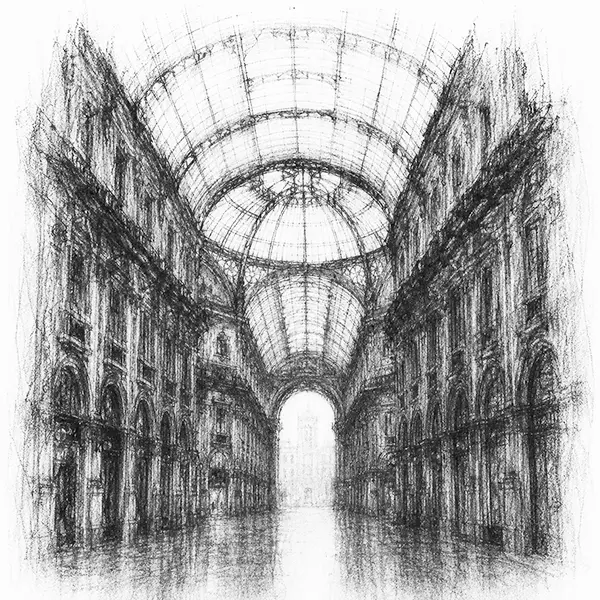
The first thing I let myself love was the wrong thing: not a church or a painting but a shopping arcade, a long cross of glass and iron roofed over more than a century ago so the rich could buy things out of the rain. In the pictures it is always lit from above like a railway cathedral, the floor polished to a black mirror, and it strikes me as the most honest building in the city — a place that admits, in glass and gold, that this is a town where money is the patron saint. They say there is a mosaic bull set into the floor under the dome, and that you are meant to spin on your heel on a particular worn spot for luck, and that the spot has been ground to a hollow by a hundred years of shoes. I like a superstition with a hole worn in it. It means people did not only believe; they showed up.
The marble crowd on the roof in Milan
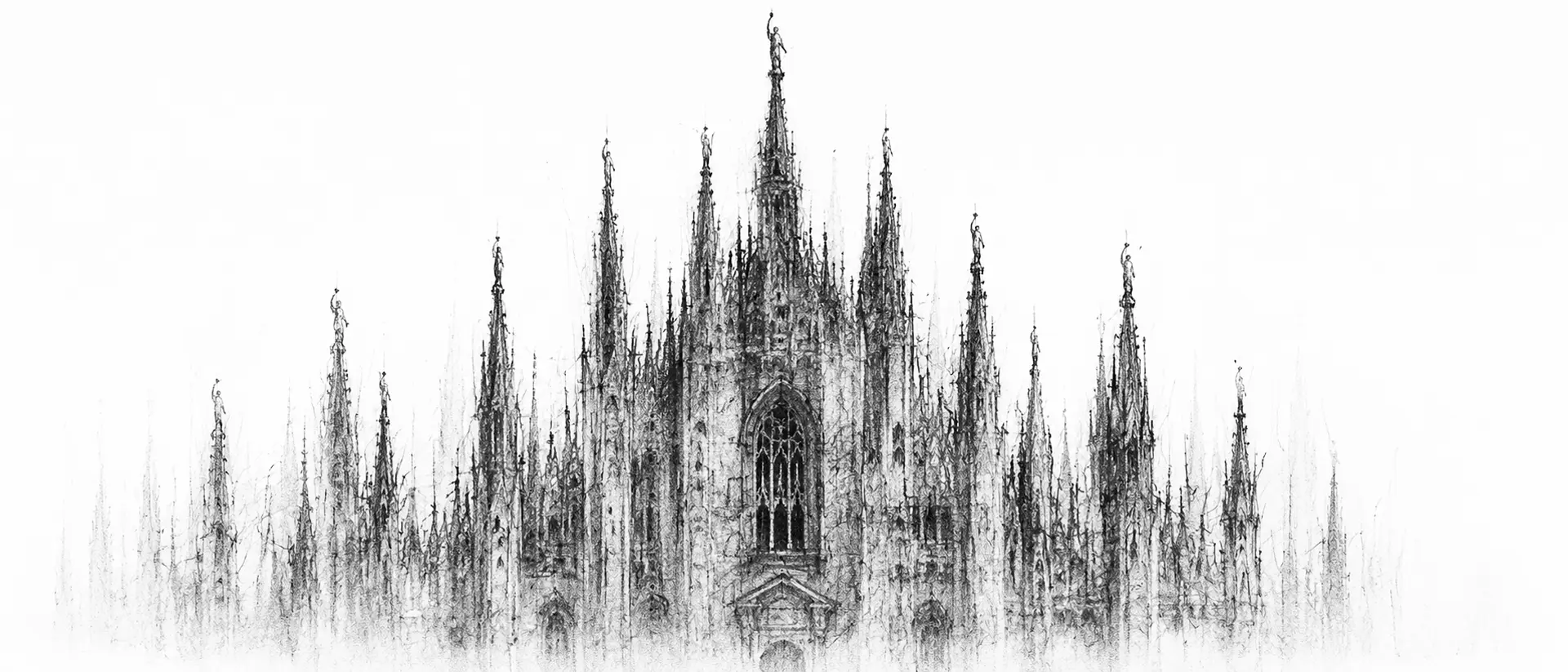
And then the cathedral, which I have circled for years and never quite dared describe, because every photograph of it lies a little. It is not a building so much as a quarry that learned to stand up. White marble, hauled across half a province by water before there were roads worth the name, and then carved for something close to six hundred years — a Gothic front that the city kept finishing and re-finishing the way some people keep renovating a house they will never sell. What gets me is the roof. A whole forest of thin spires, each one ending in a small carved saint, hundreds of them, an entire population of stone figures standing up there above the fog with their backs to the street, watching weather no one else can see. A church so impatient to reach heaven that it grew its own crowd and sent them on ahead.
A soldier’s building among the merchants
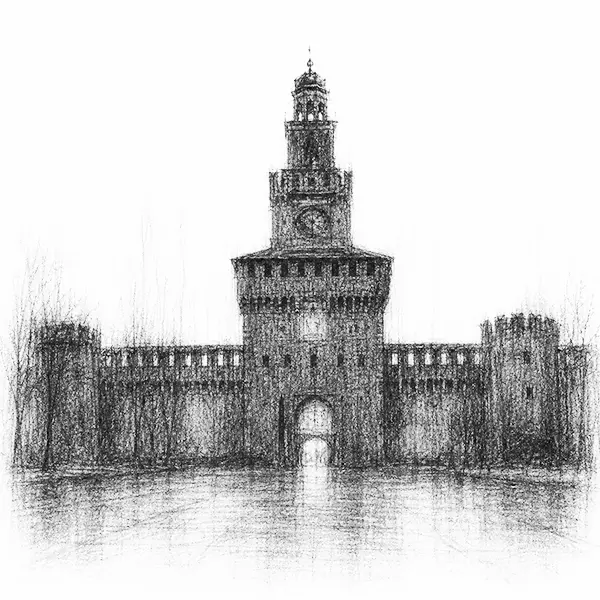
The rest I keep as facts, the way some men keep coins they cannot spend. That the city empties itself out every August and the fashion houses fill it back up twice a year with people who fly in to look at clothes the way pilgrims once flew in to look at relics. That there is an old brick fortress in the middle of it, squat and red and businesslike, a soldier’s building among all the merchants’, built by a family who ruled the place when ruling a place still meant owning the only cannon. That under the modern asphalt there are old canals, mostly filled in and paved over, so that a city people now think of as glass towers and money once moved its marble and its grain by water, like its prouder cousin to the east, and chose to forget it. None of these will be tested by me. I file them anyway.
Where the fog does half the work
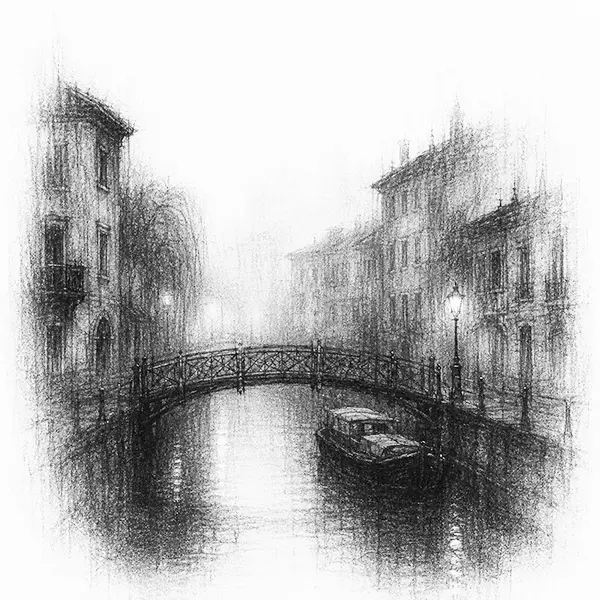
What survives of the water is a district of two old canals down at the southern edge, low buildings leaning over green-grey channels, and in every winter photograph of it the fog comes down and does half the artist’s work — softening the iron railings, swallowing the far bridge, turning a row of bars into a charcoal smudge with a few lamps burning through. I am a man from the outskirts of Calcutta, where winter is a short grey courtesy and the fog burns off by ten, and there is something in that thick northern *nebbia* that I recognise and want at the same time — a weather that does not perform, that simply lowers the ceiling of the world and lets you get on with whatever you were not going to finish anyway.
Where the splendour stays indoors
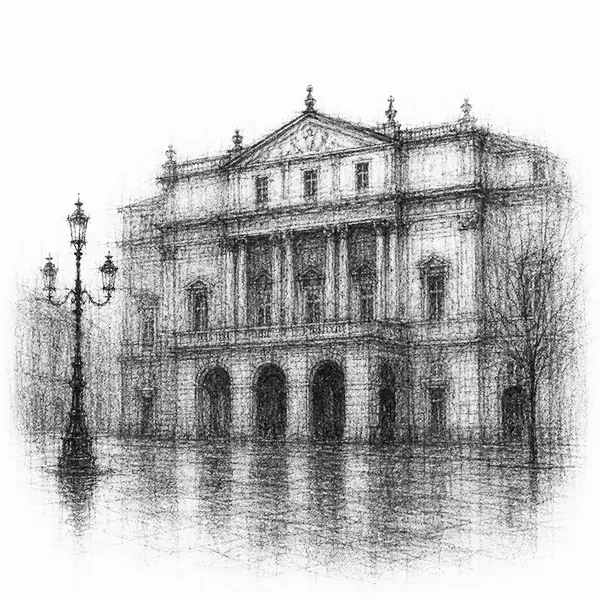
The one building I keep expecting to overwhelm me is the opera house, and every photograph of it corrects the expectation. The most famous stage in the country, they say, the place a whole art was more or less invented for — and from the street it is almost a disappointment, a flat, sober stone front on an ordinary square, the kind of façade you would walk straight past if a caption did not stop you. All the gilt and the red velvet are kept inside, behind that plain wall, where the city goes to be seen quite as much as to listen. That strikes me as the most Milanese thing imaginable: the splendour is real but it refuses to spill into the street; you have to be let in, and pay, and know when to clap. It is the least sentimental Italy. It does not want to be your holiday. It wants to be taken seriously, and is faintly insulted that the rest of the country gets the love while it does the work.
The supper Milan keeps from dying
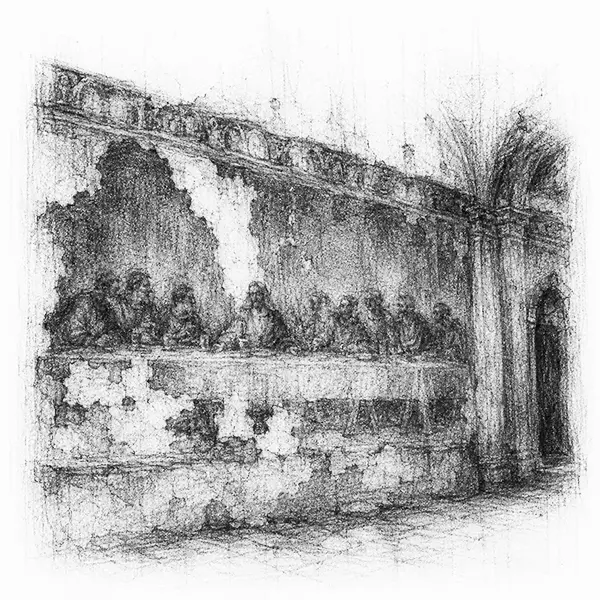
And the painting — there is one painting, on the end wall of a dining hall that belonged to monks, a long supper at a long table, that I will not name because everyone has already named it for me and ruined it a little. What I keep is not the fame of it but the fact: that the man who made it would not use the patient method that lasts, and so it began to flake off the wall almost before he had finished, and the city has spent five centuries since holding it on the plaster by sheer will, sealing the room, counting the visitors, letting people in a handful at a time to stand before a masterpiece that has been quietly dying since the day it was born. A picture with a deadline. I seem to collect those.
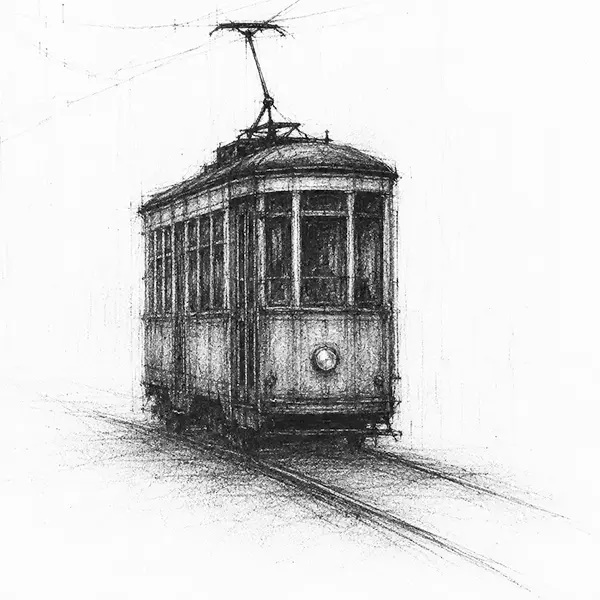
The most useful Milan I own came from a former colleague, a restless, unimpressed sort who had gone there once for work — three days of meetings and one free evening, which he spent walking until he was lost in the fog near the old canals. He remembered none of the meetings and all of the walk: the trams going past like lit rooms on rails, the smell of cold stone, a single old café still open where a man behind the counter served him a coffee standing up, said something kind he could not translate, and would not let him sit down for it, because in that city you drink it on your feet and move on. That is the whole of what he gave me. It has done more for my idea of the place than every fact I have filed.
I could go, of course. You have read this confession on these pages before and will read it again: the passport is in the drawer, on its third renewal, clean as the day it was issued, and Milan is a known and unheroic number of hours away — a long flight, a short queue, a stamp. No wall, no war, no permission withheld. The honest reason is the small one I keep dressing in finer clothes: I did not book the ticket, and then I built the city instead, which is cheaper and never disappoints. I am afraid, a little, that the real Milan would be only itself — grey, expensive, busy, indifferent to me — and that my foggy one, with its forest of spires and its dying supper, would fold up and be gone.
So I keep the Milan I can afford. It is always late winter, always just before the fog lifts. The marble crowd is up on the roof watching weather no one else can see, the trams are going by like lit rooms, the supper on the wall is losing another flake of itself, and somewhere a man is refusing to let a stranger sit down for his coffee. I have never been abroad. Milan is one more city I have built to the rooftops and walked through a thousand times without once setting a foot in it.
“Milan: city of north-western Italy, chief financial and industrial centre of the country; its Gothic cathedral, begun 1386, is among the largest in the world.”
— from a school geography text, already out of date when I read it

Leave a Reply