Abroad · never been
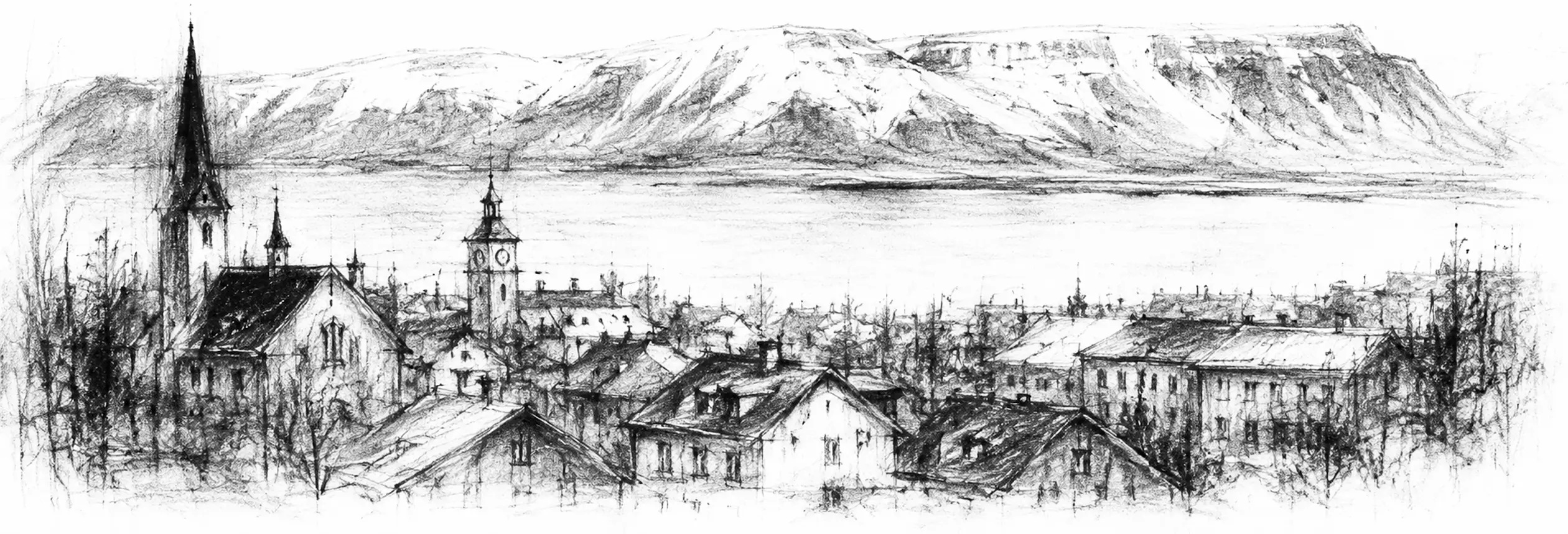
I was born into heat and crowd. The outskirts of Calcutta do not do empty; there is no such thing there as a cold morning or an unpeopled street, no hour when the air is not already full of somebody else’s voice and somebody else’s cooking. I have spent my whole life in the warm press of it, mostly happily, and I think that is exactly why the place I have dreamt of longest is the one with almost nothing in it at all. Reykjavík — a small bright town of coloured tin roofs set down at the very rim of the habitable world, a cold sea on one side and a few hundred empty miles of black rock and ice on the other, under a sky far too large for the handful of people living beneath it. I have wanted, for as long as I can remember, simply to go and stand in all that emptiness for a while.
It is an odd thing to long for. People dream of fuller places — brighter, warmer, more. I find I dream of less. Of a clean cold elsewhere where the land runs out and the weather is the main event and a man could hear himself think for once. I do not entirely trust the impulse. It may only be the ordinary fantasy of the over-crowded, the way a man at a loud party dreams of an empty room. But it has not gone away in forty years, and I have come to take it seriously, the way you take seriously a small persistent ache.
Reykjavík reaches me first as light — the wrong light, doing the wrong thing at the wrong hour. The documentaries showed it to me young: a sun that never climbs more than a hand’s width off the horizon, that lies along the land sideways and turns everything the colour of weak tea and brass. Winter days that barely open before they close again, and summer nights, I am told, that do not close at all. I have lived my whole life inside a sky that behaves itself, twelve hours up and twelve hours down, the equatorial fairness of it. The idea of a place where the light is broken, where it forgets its manners and pours in flat all evening or stays away for weeks, is to me genuinely strange, and I would like to stand inside that strangeness and see what it does to a day.
The one tall thing in Reykjavík
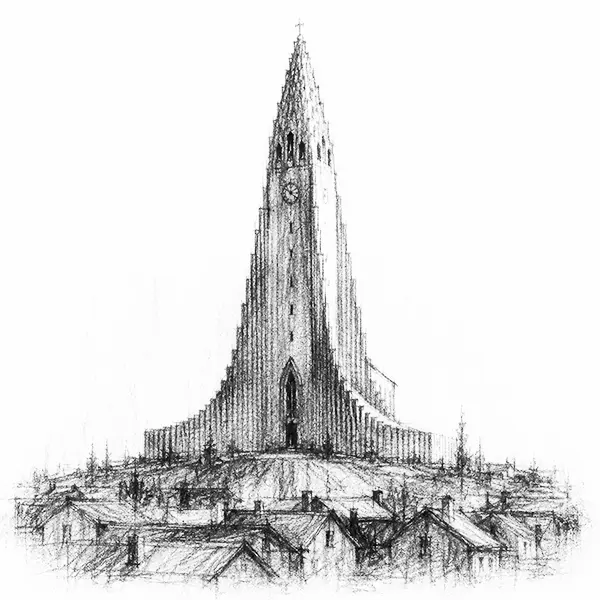
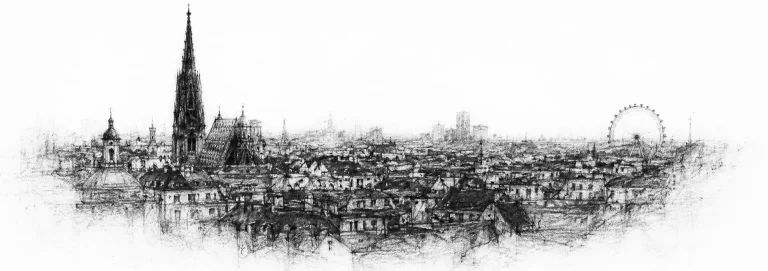
There is one tall thing in Reykjavík, and everyone’s photographs find it: a great pale church on a rise, stepped and ribbed like a rocket on its pad, or an organ stood on end, or — and this is the comparison that stayed with me — like the basalt columns the island makes by itself out on its coasts, as if the building were only the landscape carried indoors and set upright. Everything else is low and coloured and modest, roofs of red and blue and green packed together against the cold, and then this one grey upward thing presiding over them. I have looked at it so many times in other people’s pictures that I could find my way to it, and I have never stood in the small square at its foot.
The country that breathes
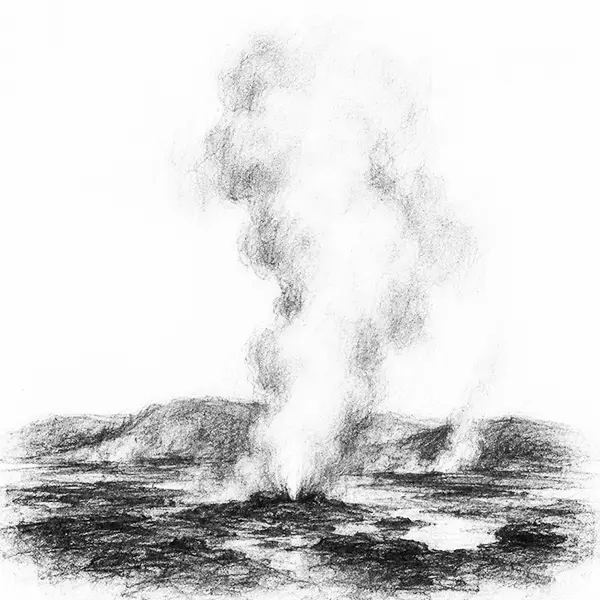
And the steam, which is the thing that undoes me a little. The country breathes. Out on the bare ground, with no chimney and no fire and no one near, the earth simply lets go a slow column of steam into the cold air, because just under the skin of the place there is heat enough to run the whole town’s baths and radiators for nothing. A land warm on the inside and freezing on the surface — the exact inversion of where I come from, which bakes on the outside and stays, somewhere in its crowded heart, cool and old. They heat their houses and their long pale swimming pools straight out of the rock, and sit in the hot water in the snow, steam rising off their shoulders, which strikes me as one of the more sensible things a people has ever worked out to do.
What a beach is, left alone
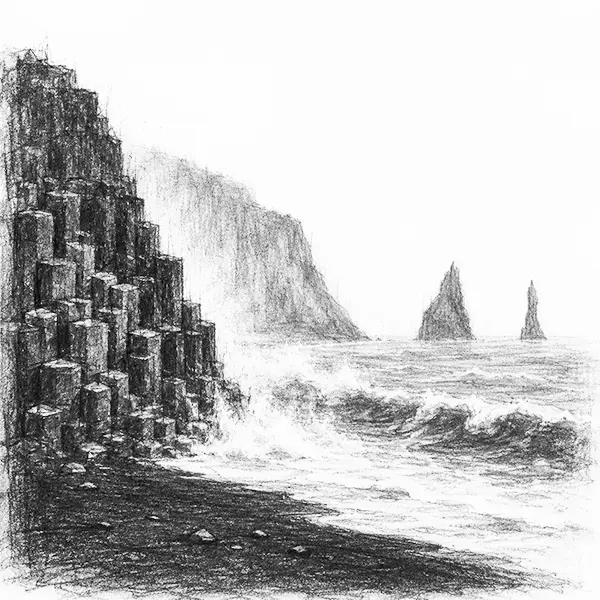
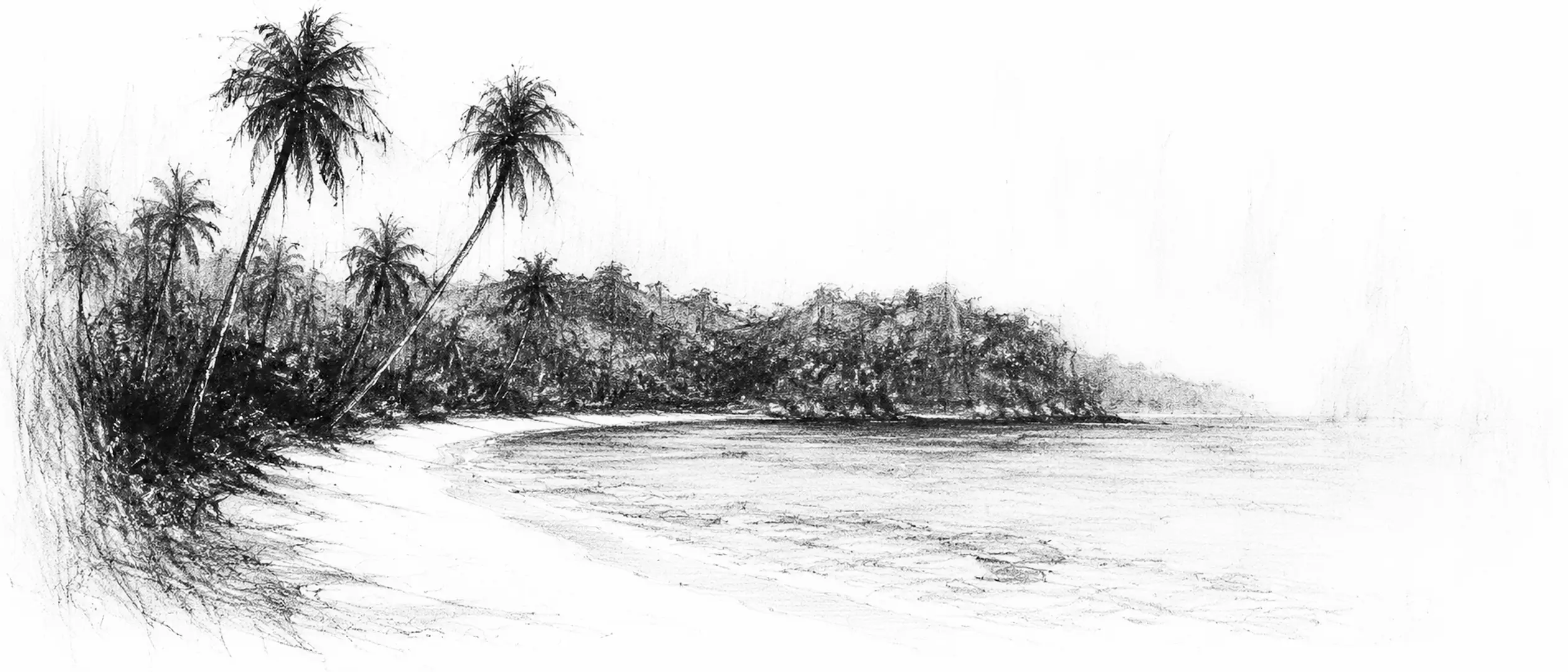
The Reykjavík coast is black, which I still half-refuse to believe. Sand the colour of soot, beaches of it, and behind them cliffs of dark stone broken into neat hexagonal pillars as though some patient giant had stacked them, and a grey sea coming in hard and cold and white-topped over the black. Every shore I have ever stood on has been pale gold and warm underfoot and lined with people. A black beach with the surf crashing and not a soul on it is, to me, almost a contradiction in terms — a beach with all the heat and all the crowd taken out of it, leaving only the bones of the thing, the rock and the water and the cold. I would like to walk the length of one in a thick coat and understand what a beach is when it is finally left alone.
The sky catches silently alight
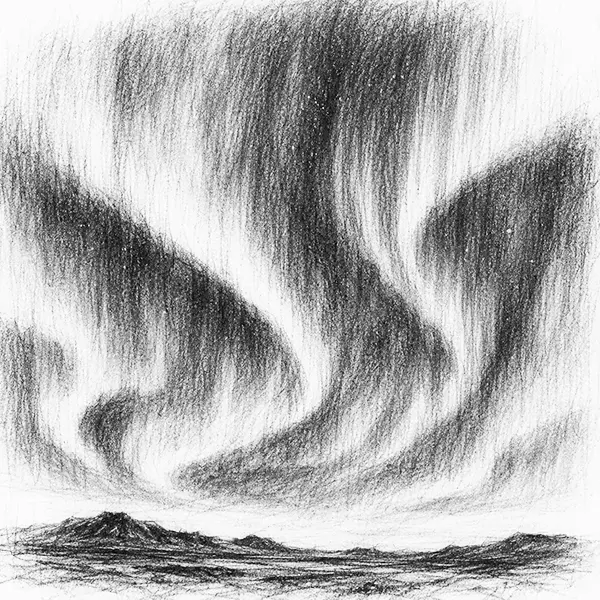
Then the lights, which I do not quite credit even now. Other people’s photographs of the aurora — those green curtains hung and rippling over a black horizon, doubled in the still water below — look to me less like weather than like a special effect, a thing painted on. I have spent my whole life under a sky whose only drama is the monsoon, magnificent in its way but grey and horizontal and businesslike. The notion that the sky itself can catch silently alight, slow green fire with no sound and no heat, and that ordinary people stand in their gardens and watch it the way we watch the first rain — I want to see that with my own unreliable eyes, mostly so I can stop suspecting everyone of having improved the picture.
The patient horses of Reykjavík
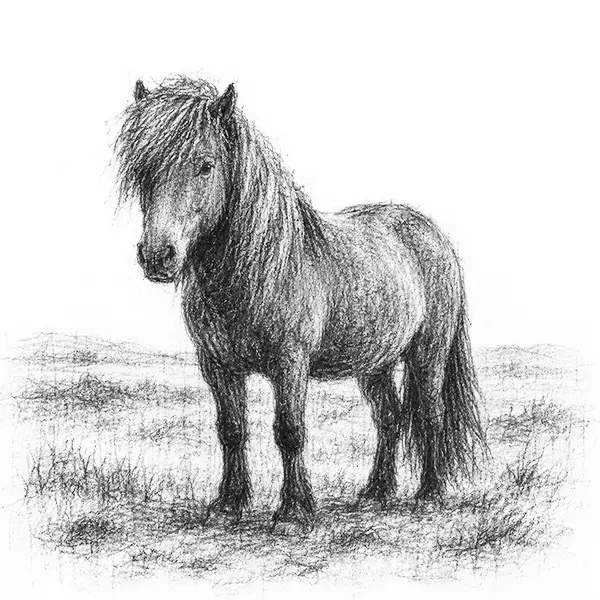
There are Reykjavík horses too, small stocky ones with manes like blown hayricks, standing about in the wind in fields that go on to the edge of sight, looking entirely unbothered by the emptiness, by the cold, by the long dark, by anything. I find them oddly consoling. They are built for the place, low and shaggy and patient, and they have the air of creatures who have made their peace with living somewhere most things would rather not. I think I would like to lean on a fence and look at one for a while, two beings from opposite ends of the weather, and see which of us looked more out of place.
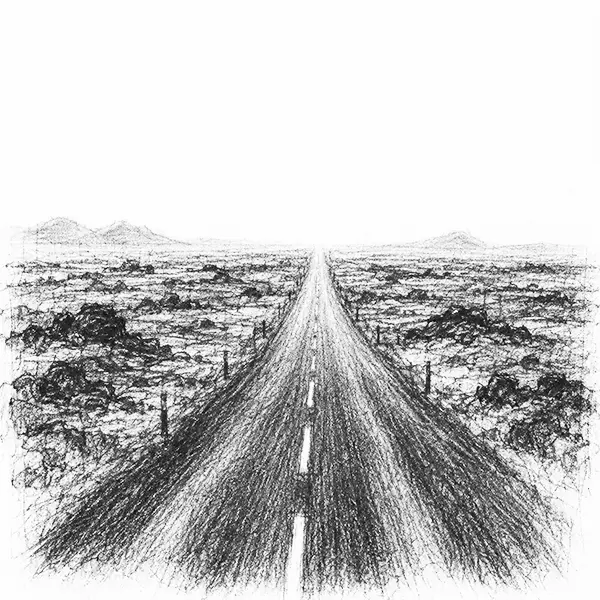
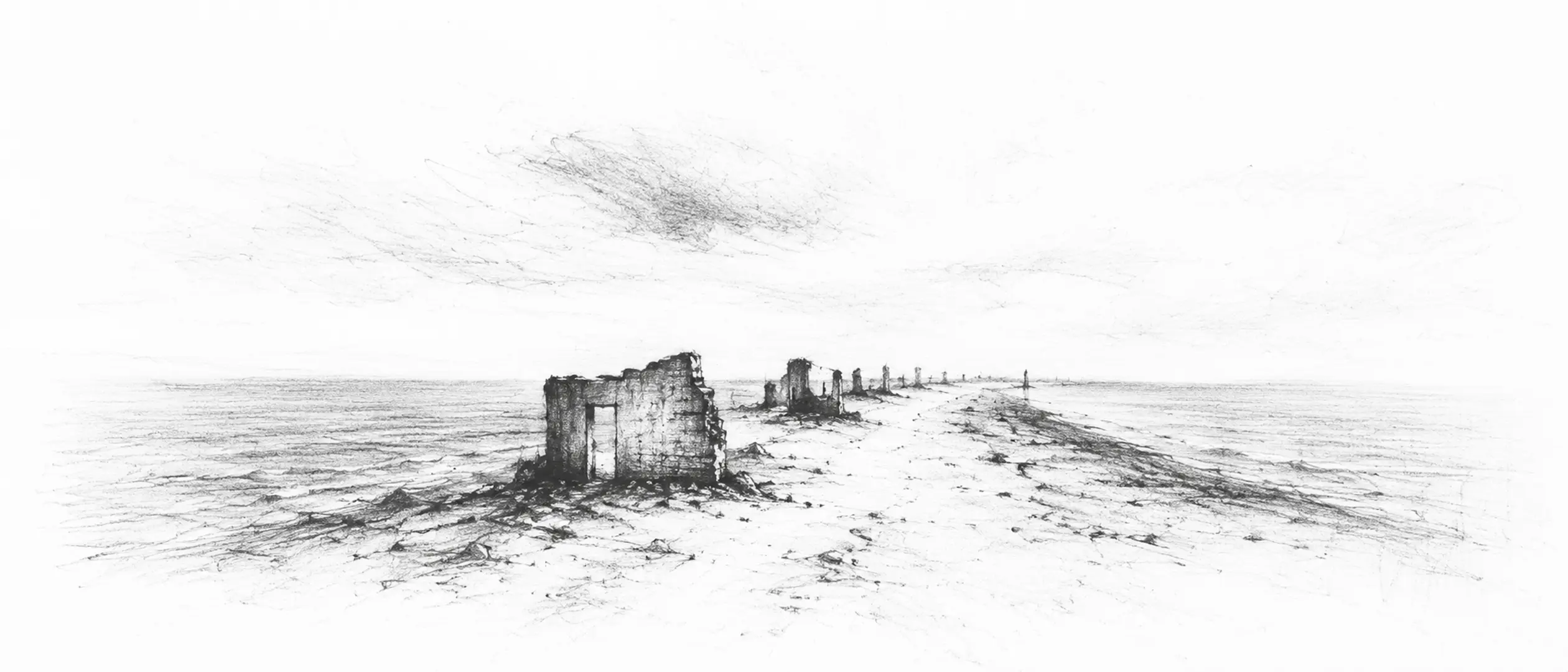
But the picture I keep coming back to has nothing in it. A single road, narrow and very straight, running out across a plain of old black lava under a low pale sky, no house, no tree, no other car, the land just lying there grey-green and rumpled to the horizon where a faint white line of distant ice closes it off. That is the one. Not the church, not the lights, not the food. Just the road and the emptiness and the cold clean enormous quiet of it, and the idea of myself somewhere on that road, a warm crowded man finally out in all that nothing, finding out whether it is peace I have been after all these years or only the idea of peace.
And that, of course, is the catch, and it is the usual one. There is no ocean stopping me here either, not really — it is a flight and a fare and a few cold days, no more impossible than anything else I have failed to do. The obstacle is the one it always is: that I keep meaning to, and the years keep passing in the warm and the crowded, and the empty north stays where it is, breathing its steam into the cold without me, perfectly complete, not waiting. I dream of the emptiest place I can find precisely because my life has been so full; and I have filled even my emptiness with everything except the going. I have never been abroad; I dream of the empty north and stay on in the crowded warm.
“Reykjavík: capital of Iceland and the most northerly capital of any sovereign state, on a volcanic island near the Arctic Circle; warmed by geothermal heat drawn from the rock beneath it, and lying under the path of the aurora borealis.”
— from a guidebook I bought for a journey I never made

Leave a Reply