Abroad · never been
I know Zürich the way you know a word you have read a hundred times and never once heard said aloud — certain of its shape, unsure of its sound.
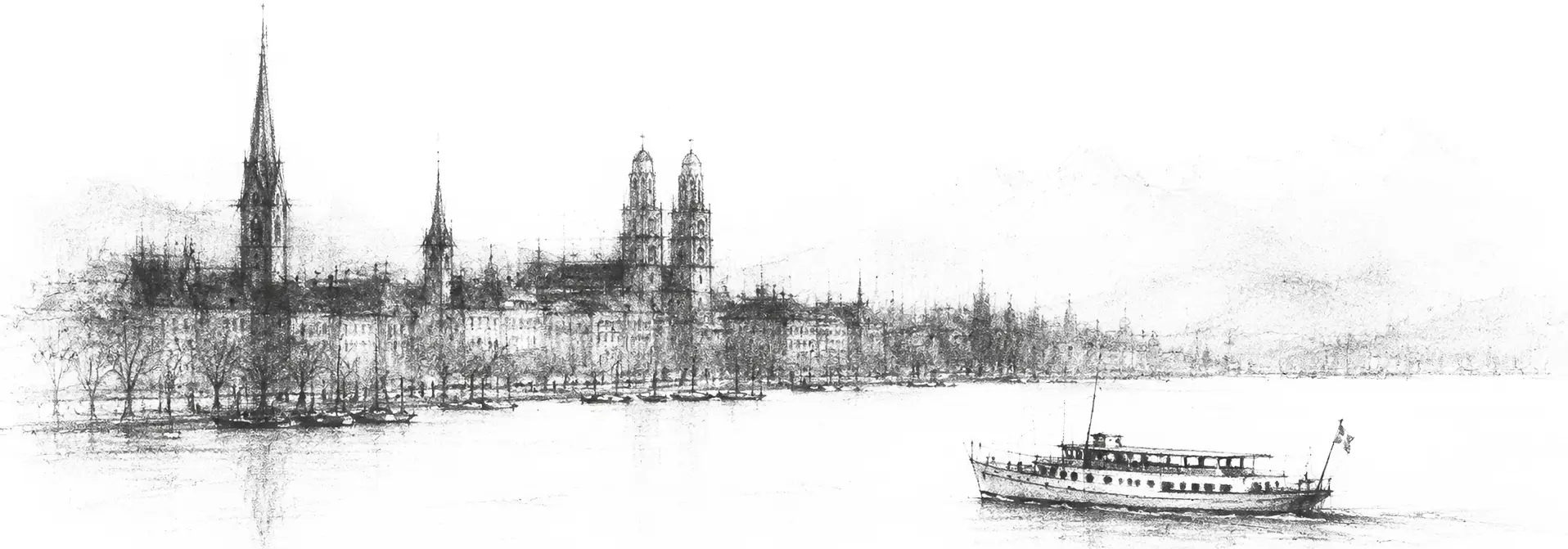
Zürich came to me sideways, the way these places always do. First as a photograph in a magazine in a waiting room: a flat grey lake, a flatter grey sky, a white pleasure-boat going nowhere I could see. I must have been twenty. I tore the page out and kept it for years pressed in the back of a book, the way you keep a thing you cannot yet explain wanting. Then, later, the fact that undid me — that the man who wrote the loudest book of the century lies buried up the hill at Fluntern, beside the zoo, close enough (this was sworn to me once, with great delight, by someone who had stood at the grave) to hear the lions at night. I have never been able to decide whether that is the saddest thing I know about any city or the happiest. I have built most of my Zürich on it.
You furnish a place like that out of scraps and other people’s leftovers. A Sunday documentary with the sound turned low, the camera gliding down a wet, empty street. A postcard someone once sent that I never threw away. Three dry columns in an encyclopedia that has stood on my shelf since school, with a single small grey photograph of a bridge. None of it was ever mine, exactly. I assembled the whole city out of other people’s looking, and then quietly moved in.
Zürich’s gold in the cool dark
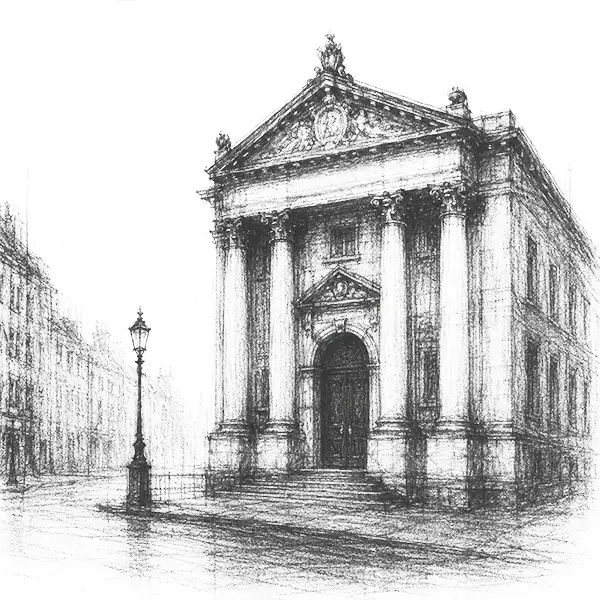
What I have, mostly, is a list of facts kept the way some people keep stamps. That the country runs on a punctuality so absolute it has become a national joke the nation is proud of. That somewhere beneath the streets there is supposed to be more gold than a small country has any business holding, sitting in the cool dark while the trams run overhead. That the lake freezes hard enough to walk on perhaps once in a generation, and when it does the whole city comes down to stand on the water and disbelieve it together. None of these will ever be tested by me. I file them anyway, against a journey I keep meaning to make.
Zürich trams are the colour of a held breath
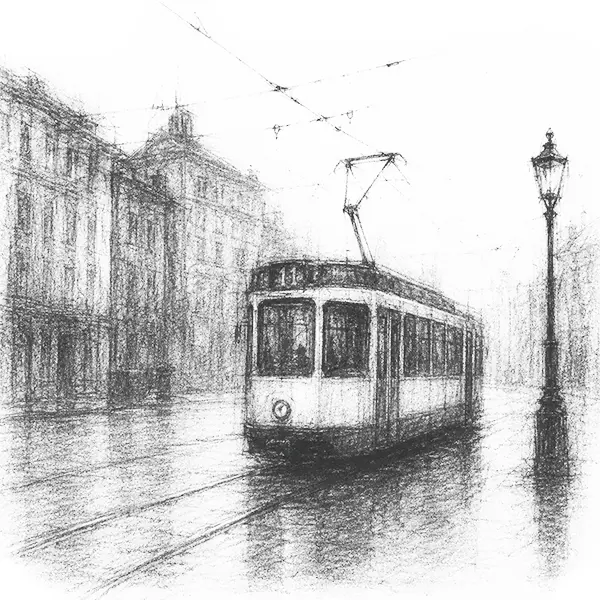
In the Zürich I keep, the trams are always on time and the colour of a held breath, and they make the sound I have decided Swiss trams make, which is none. They come round the corner like a finished thought and stop precisely where the painted line says they will, and the people board without hurry, because hurry has been engineered out of the place. I have watched them do it in footage more often than I will admit — the blue-and-white carriage sliding in, the chime, the doors, the gliding away — a small machine for being on time, in a country that has turned punctuality into something close to faith. Somewhere a clock is keeping far better time than I have ever managed. The whole place has been washed in the night by people I will never meet.
Two towers over the Limmat
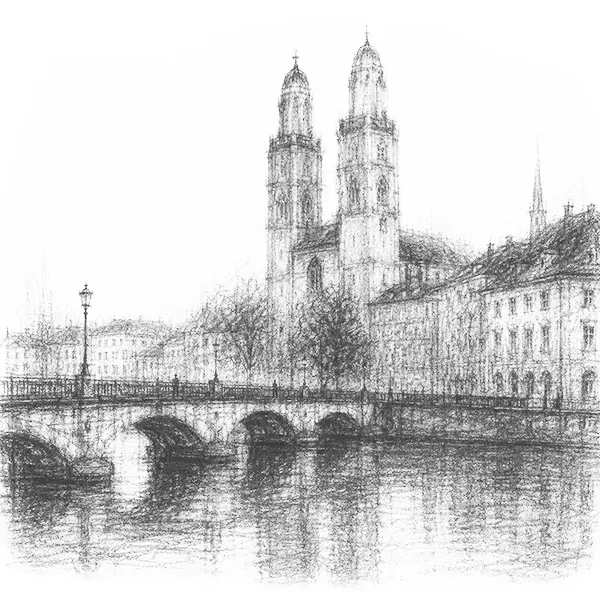
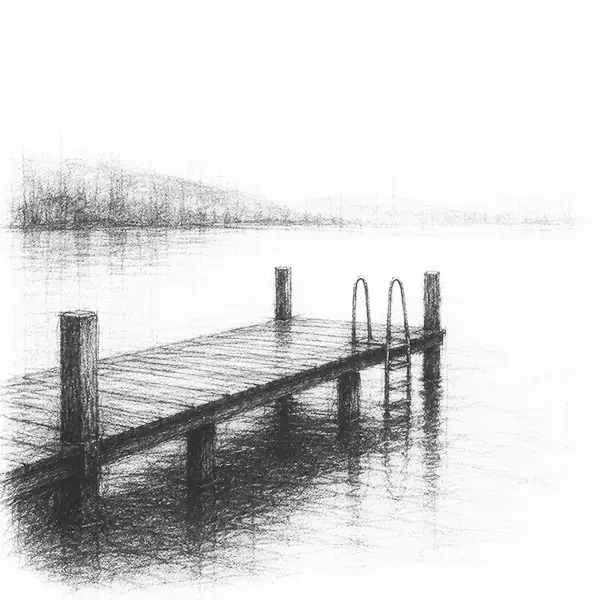
The river — the Limmat, green as a bottle held to the light — runs cold and quick under two stone towers that, in the one photograph I trust, stand like a pair of pencils set on end. There is a low bridge over it, and swans the exact colour of the water, and the old town climbing away on either side in stone the shade of weak tea. They tell me you can see the riverbed in the middle of the city; that the current runs clean and fast enough to swim in; and that on a hot day people do — stepping off a wooden platform into water no one I grew up near would dare to drink, letting the river carry them a little way past the banks and the bridges before they climb out and walk home dripping in the sun.
A vault, a cabaret, one short street
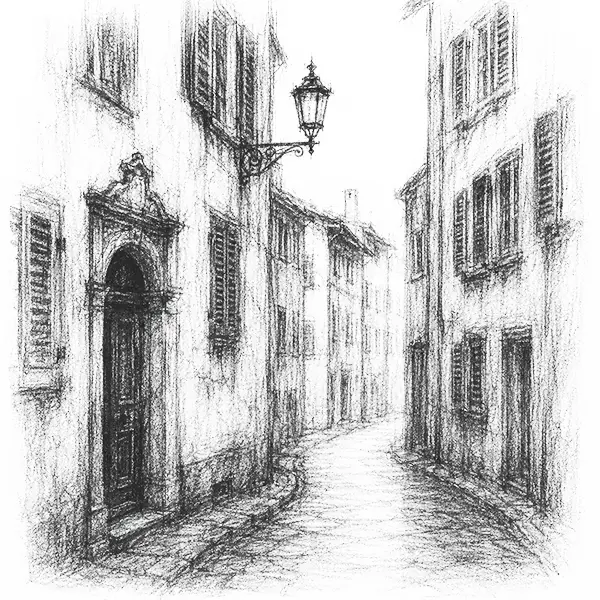
That is the detail I keep coming back to, being a man from Calcutta, where water is a thing you respect and do not enter without a reason. Water clean enough to frighten me. I know the rest the way you know the plot of a book everyone has read but you — that the money there is quiet and enormous, kept behind doors that look like banks pretending to be churches; that in 1916, in a narrow bar on the Spiegelgasse, a handful of people who hated the war stood up and recited nonsense on purpose and called it Dada, while a few doors along a patient man named Lenin sat waiting for his train. It is hard to believe one short street held all of that and still found the time to be tidy. I like that the city of the very richest secrets is also the city where art once decided to make a fool of itself on purpose — that the same square mile can hold a vault and a cabaret and lose its composure over neither.
A good evening, in the Zürich snow
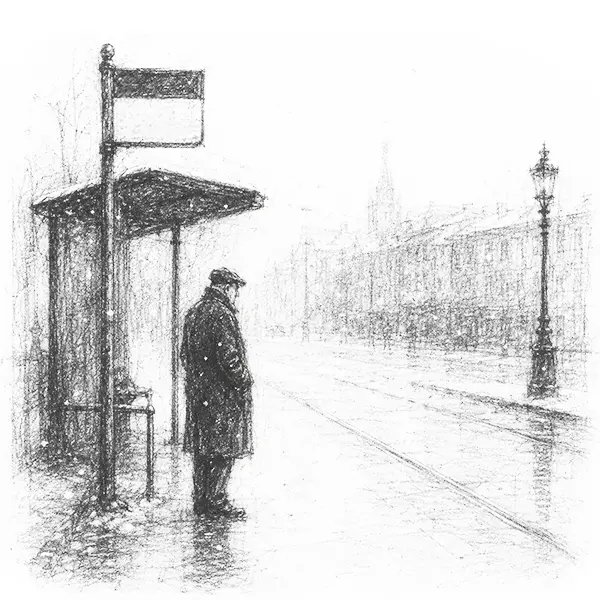
The most particular Zürich I own came from a woman I worked alongside for a year, who had once changed planes there and walked out into the city on a long layover rather than waste the hours in the airport. She remembered almost nothing useful — not a street name, not a single building — only that it had begun, very lightly, to snow, and that an old man at a tram stop had wished her a good evening in a language she did not speak, for no reason, and meant it. That was the whole of it. It has done more for my idea of the place than every fact I have filed away. I have been standing at that imaginary tram stop in the first snow for years now, being wished a good evening by a stranger, and I have never once had to buy a ticket to get there.
Here is the part I do not say at dinner. I could go. The passport is in the drawer, on its third renewal, as clean inside as the day it was issued, and Zürich is a known number of hours away. No wall, no war, no one forbidding it. And still I have not — and the not-going has become a possession of its own. I have started to suspect, and this is the confession, that I keep some of these cities precisely because I have never been to them. That arrival is a kind of spending. That the afternoon I finally stood on the actual Münsterbrücke in the actual cold, my Zürich — the slow grey one, with the lions and the pencils and the bottle-glass river — would fold itself quietly up and be gone, and I would be left with only the real one, which everybody already has.
So I keep it where it is. Somewhere up the hill the lions are saying something, and the man who wrote the loudest book of the century is listening, and the trams are running on time through a city I have decided not to ruin yet. I have never been abroad; this is one of the cities I have kept that way on purpose.
“Dada was born … at the Cabaret Voltaire, Zürich, in February 1916.”
— a history of the avant-garde I borrowed in 2009 and have not yet returned

Leave a Reply