Abroad · never been
I have wanted, for most of my drinking life — tea, I mean — to go and stand on the quays at Colombo, where the leaf that colours my every morning first went down to the sea. The tin in the kitchens of my boyhood said CEYLON, in confident lettering, and I took the word for a kind of tea long before I understood it was a country. It still is a kind of tea. The country renamed itself in 1972 and the leaf simply declined to follow, so that what I have actually swallowed, daily, for forty-odd years, is an island under its former name. I know its taste more exactly than I know the taste of my own city’s water. I have measured it out morning after morning through every house and city and decade of my life. And I have never once been to see it.
And for a stretch of years I did more than drink the island — I worked for it. Never in the country, never that; here, in my own, for the Indian arm of one of the old Sri Lankan houses, the sort that began in tea and spice a century ago and now fills half a supermarket shelf. My work was to get their food onto Indian tables — the frozen things, the tins, the sauces with the island’s name small on the back — and so my days filled with Sri Lankans: colleagues in our offices here, and their counterparts across the water in Colombo, voices on the phone and names down a long chain of emails, a few of whom became, over the years, something close to friends. I came to know whose child was sitting exams, who took sugar, which of them would not be disturbed on a match day. The island itself sat at the far end of it all — the head office across the water, where the seniors sometimes flew and the juniors like me did not. So Colombo stayed what it had always been: a voice on a line, a name at the foot of an email, a place I worked with every day and never once stood in.
The Colombo the traders never took
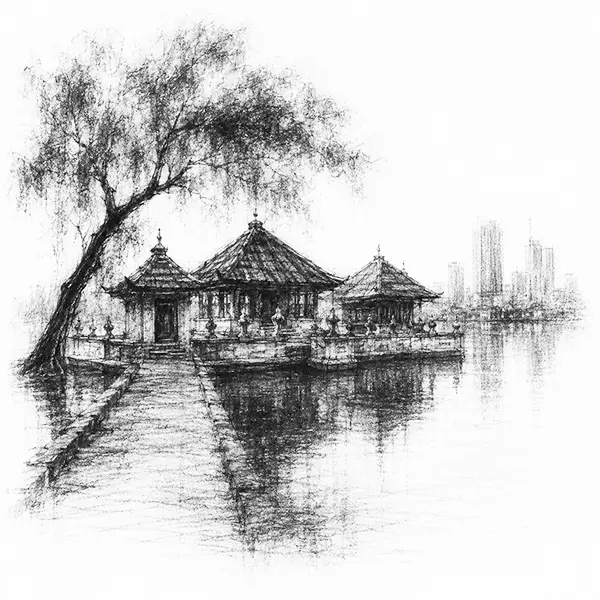
But the port was only ever the part of Colombo that belonged to other people. The island kept its own centre, and the photographs I love best find it out on the water: a temple set on a lake in the middle of the city, low tiered pavilions standing just above the surface, a plain walkway leading out to them, an old tree leaning over the shrine. The island took its Buddhism early, the encyclopedia says, centuries before most of the countries that later came to trade with it existed, and held onto it through every flag that came and went at the harbour. I keep returning to that pairing: a city that spent four hundred years as somebody’s warehouse, and kept, the whole time, a quiet wooden temple floating in its own middle, going on with something none of the visitors had come for and none of them managed to carry away.
What the traders built to stay
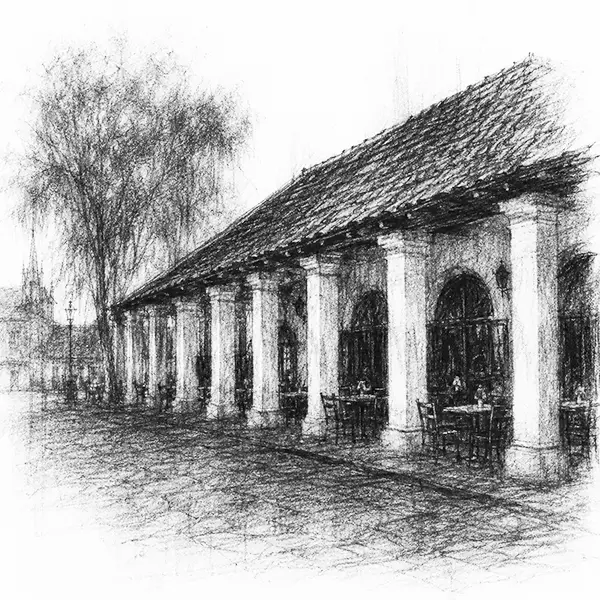
What I had first, though, before I ever thought about the tea, was the oldest building in the city: a long, low, thick-walled thing in the old Fort quarter that the Dutch raised, the encyclopedia says, three and a half centuries ago, as a hospital for the sailors and soldiers of their trading company, come out on the spice ships and sickening in a heat not their own. The Dutch came for cinnamon, the way the Portuguese came before them and the British came after for tea; the island was a thing to be held and worked and shipped from, passed hand to hand down the centuries like a deed. And this heavy building watched the whole succession: it outlasted the company that built it, and the empire after that, and stands now — in the photographs — full of restaurants, tables laid under the same whitewashed arches that once shaded the dying. I keep it because it is the plainest proof of the thing I already knew from my cup: that the island has spent four hundred years being useful to other people, and has quietly outlived every one of them.
How Colombo got itself back
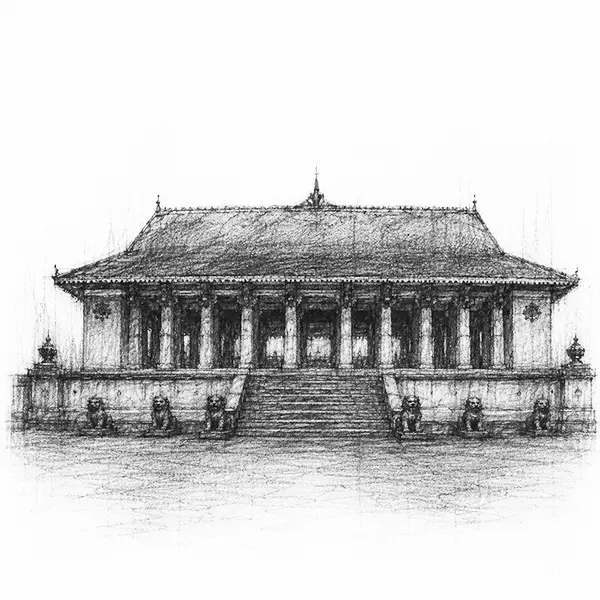
And then the building they raised to mark the end of all that. When the island finally took itself back — 1948, the encyclopedia says, the British handing over what the Portuguese and Dutch had handed on before them — Colombo put up a great open hall of pale stone, a forest of square columns ringed at the base by rows of carved lions. They built it in the manner of the old Kandyan kings’ audience halls, not in the style of any of the people who had just left — a deliberate reach back over four centuries of being run by others, to a time when the island answered only to itself. I keep the hall for a reason that slightly embarrasses me: it is the exact point where the story I drink every morning turns, where the island stops being useful to other people and starts, however unsteadily, being its own.
The headland at Mount Lavinia
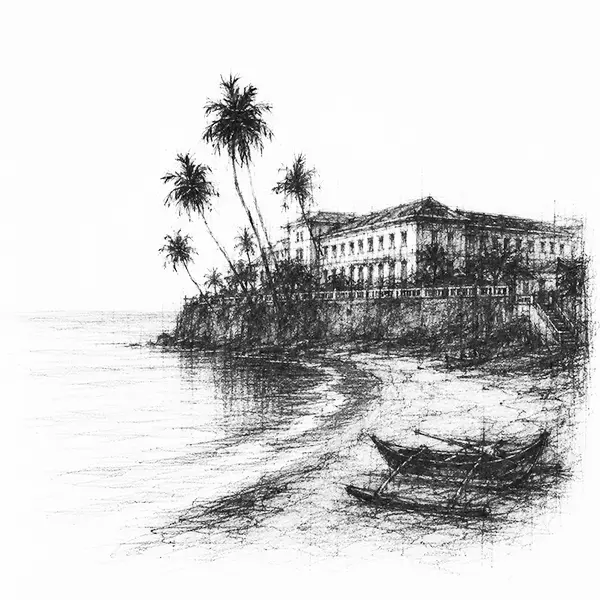
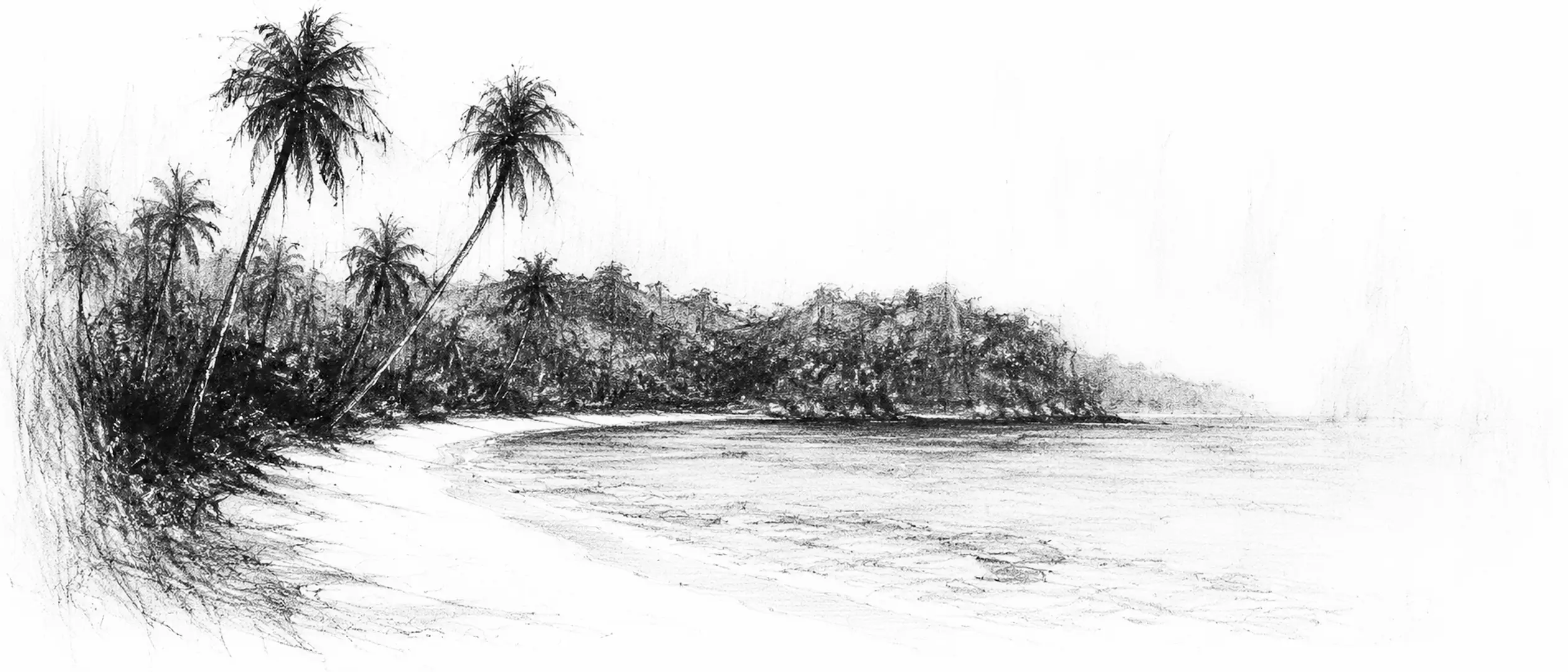
A little south of the city the streets give out and the coast opens into a long curve of sand, and on the headland above it stands a great pale house that was once a governor’s residence and is now, in every photograph, a hotel — verandas turned to the sea, palms leaning off the point, outrigger boats drawn up on the beach below. It is the picture that arrives when I let the dreaming go soft: the edge of the island, where the same ocean that carried the tea away comes back slow and warm against the sand. A former neighbour spent a week down there once and remembered none of the city afterward — only the heat off the sea at night and a fish grilled on the beach in the dark. That is allowed to be my Colombo too: the point where the working island runs out and becomes, for one warm mile, a place to sit and face the water.
The lighthouse the city outgrew
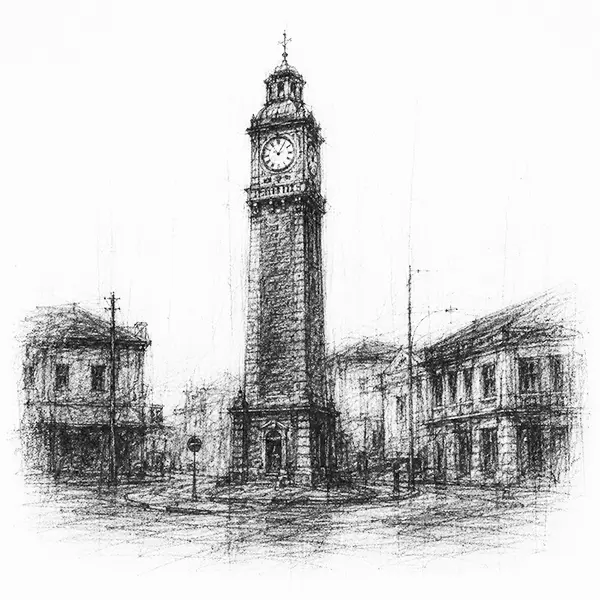
Then the tower, the fact I cannot let go of. In the old fort quarter of Colombo stands a colonial clock tower that was a lighthouse first — built to throw a light over the water for ships, until the city grew up in front of it and the buildings stood between the lamp and the sea, and the light had nothing left to reach. The lamp was retired and the tower carried on as a clock: a lighthouse marooned inland, keeping time for the traffic where it once kept watch for the ocean. I understood it completely, and not in a way I enjoy. I have a drawer full of instruments meant for journeys — a passport chief among them, on its third renewal — kept, in the end, for the time they tell rather than the crossings they were bought for.
Colombo at the sea wall
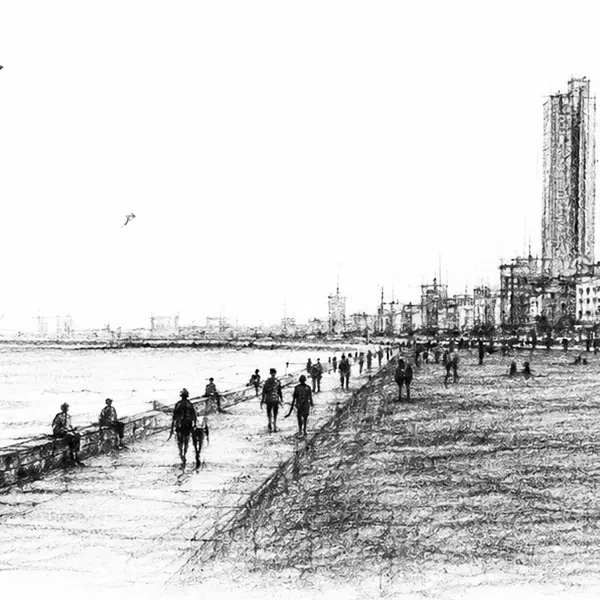
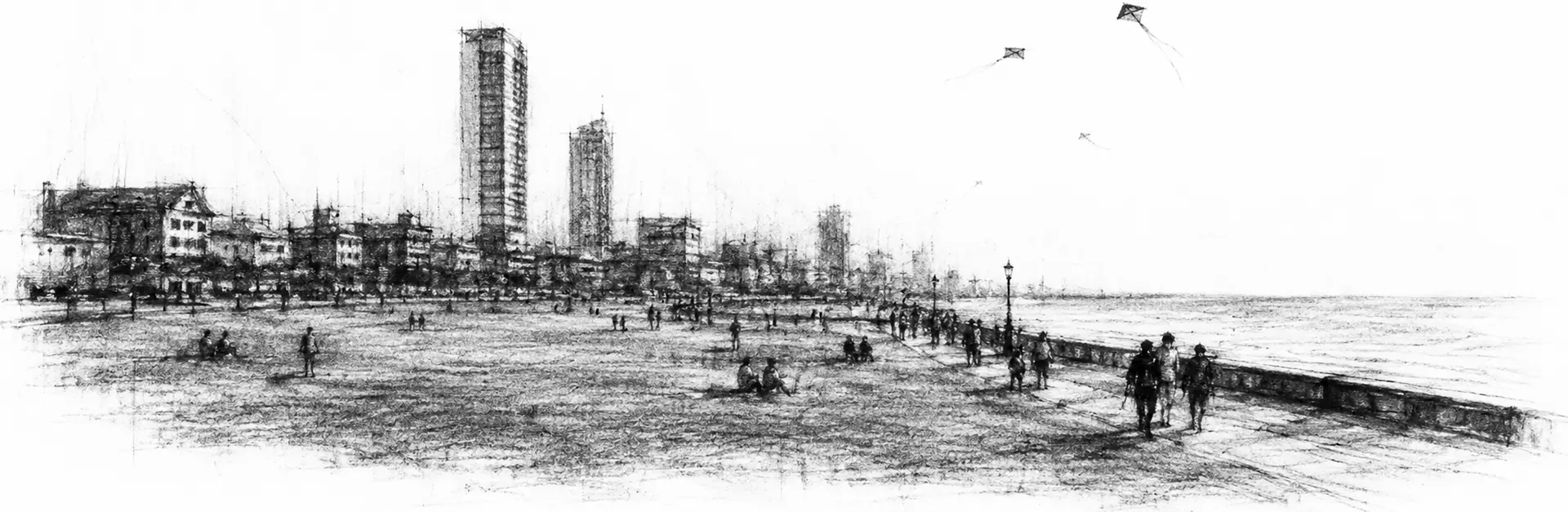
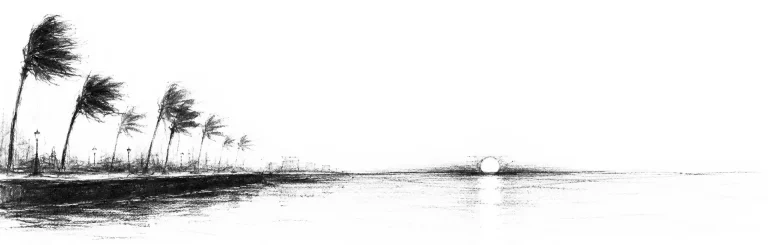
But the picture I return to is the flat green strip along the sea at dusk. A long open common between Colombo and the water, a low wall holding the ocean off, and in the evening — the photographs are unanimous — the whole town comes out onto it: families on the grass, carts selling fried things, and over it all a sky full of kites hauled into the sea wind by children and by grown men who should know better. I have looked at that scene until I could walk it: the kites black against the long light, the wall wet where the bigger waves come over, everyone facing the same way out of habit, out at the last of the sun going into the sea the island sits in.
Could I go? A flight, a visa, a fare — the usual toll, and I have paid heavier ones without flinching for duller journeys inside my own country. No, the obstacle is the old one, me; but for Colombo it wears a particular disguise, which is familiarity. The place never felt like a trip to plan because it was already in the house — in the morning cup, on the supermarket shelf, on the letterhead I worked under for years, in the voices of people over there I had come to count as friends. You do not book a journey to somewhere already this far inside your ordinary day. The abroad I know best — by tongue, by trade, by a handful of friendships — is the one I never thought to go and know by eye. That is not geography’s fault. It is mine.
So the island stays where it has always kept itself: in the kitchen. Tomorrow, before I am properly awake, I will pour out another inch of it, brewed dark the way my city likes it — which is a strange daily intimacy for a man who has never been abroad. By evening the kites will be up over Galle Face Green, the old Dutch arches will be filling with diners where the company’s sailors once lay, and somewhere in Colombo another season’s chests will be going under the hammer with the old name on the wood. I have drunk that harvest for forty years. One of these mornings I mean to go and stand where it is weighed.
“Colombo: chief city and commercial capital of Sri Lanka, on the island’s west coast; a harbour known in turn to Arab, Portuguese, Dutch and British traders, and long the world’s great mart of tea.”
— from an old gazetteer of the eastern seas

Leave a Reply