Abroad · never been
I have never stood in Manila, but it reached me the way weather reaches you through a shut window — a pressure, a colour of light, a sense that something enormous was going on just out of reach. I have been standing near it, the way I stand near all my far cities, for most of my life.
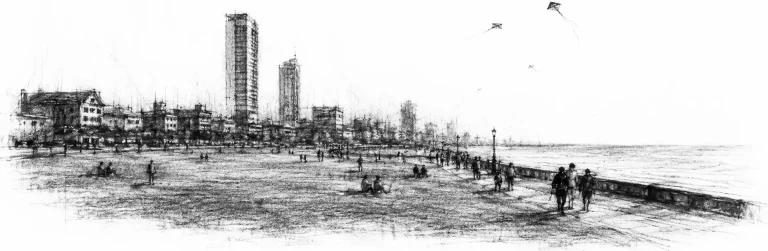
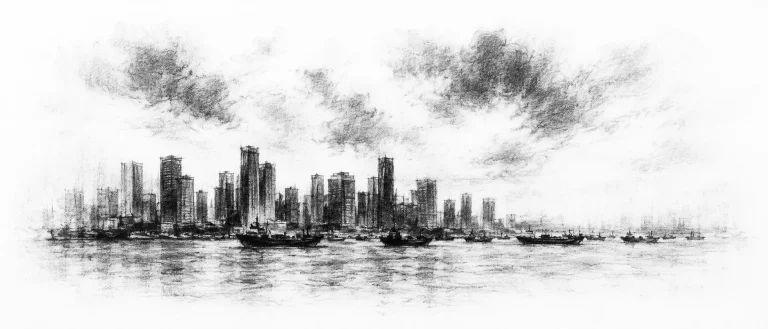
Manila, and the sea at the end of the street
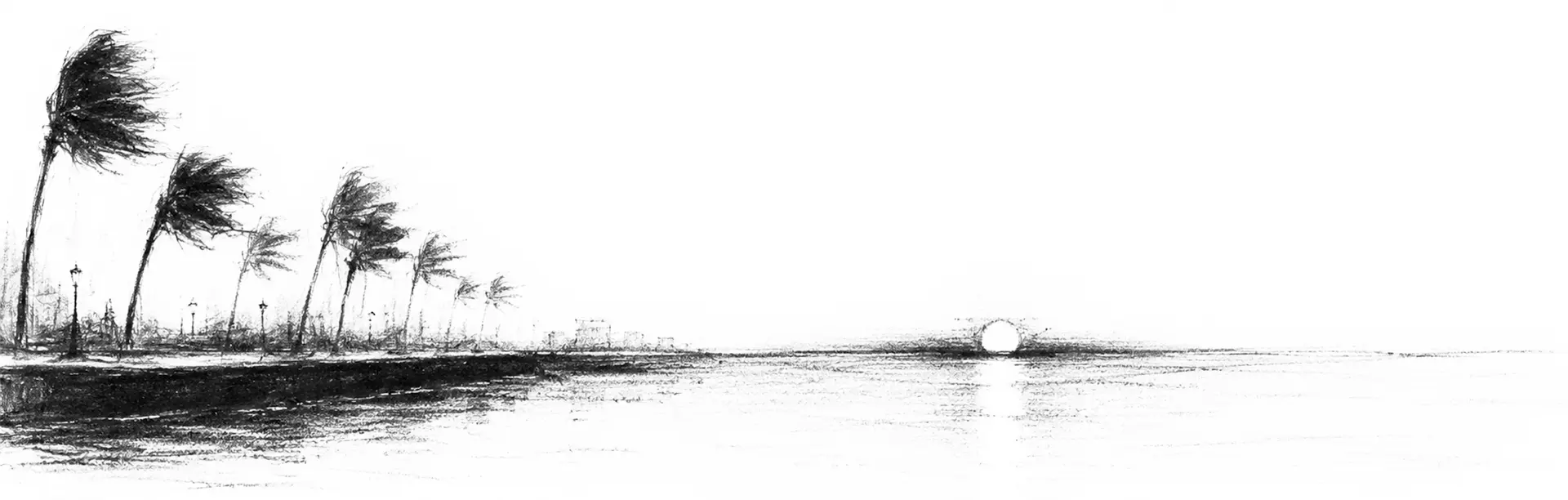
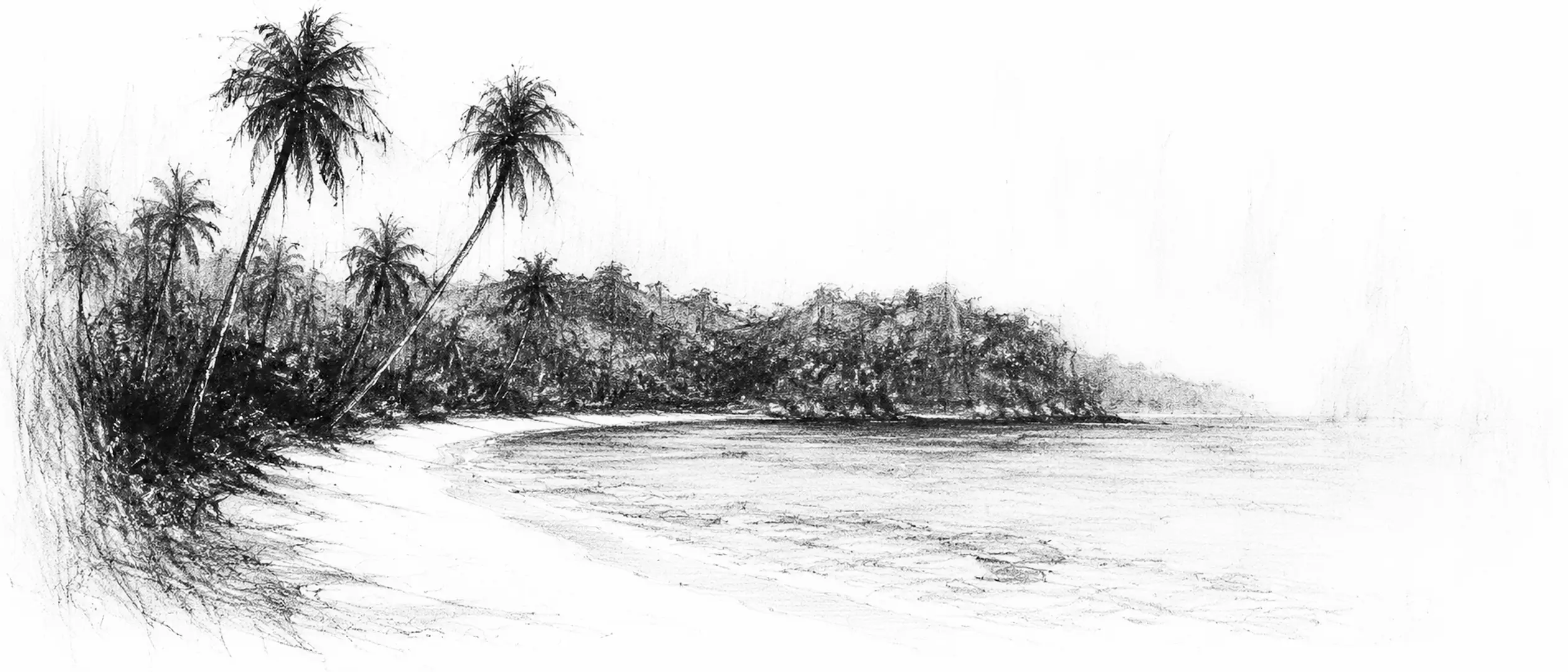
It came in pieces, as these places do, and most of the early pieces were about the sea. A magazine photograph in a waiting room, the same flat sunset everyone there seems to keep — the sun pressed down onto the bay like a coin onto wax, the water gone the colour of weak tea, a row of palms along a seawall all leaning the same tired way. Later a documentary I watched with the sound low, a slow camera going down wet streets at evening. Three columns in the one-volume encyclopedia that has stood on my shelf since school, with a single grey photograph of a stone church and a fact I kept: that the city had been a Spanish town for more than three hundred years before it was anything else, run from across an ocean by men who had never been there either. I liked that immediately, for reasons I did not examine.
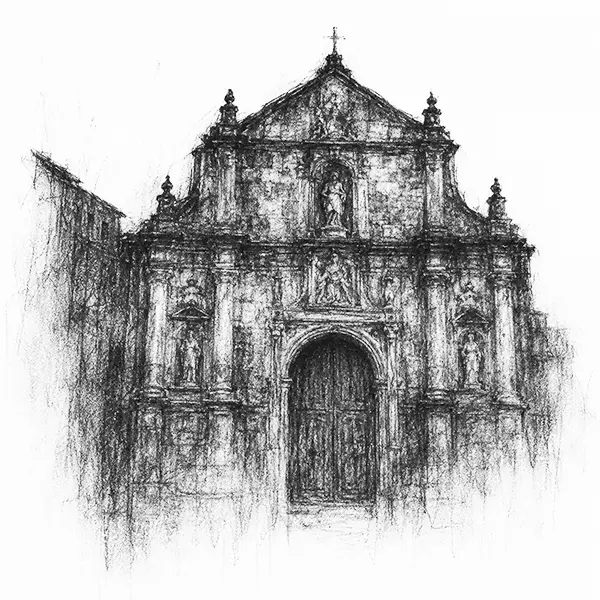
You furnish a place like this out of contradictions and let them sit. Inside the old walls there is a district the colour of bone, all carved stone and Catholic weight — a baroque church that somehow stood through every disaster the centuries threw at it, its façade thick with saints worn smooth, its great wooden doors built for a procession. A piece of southern Europe set down in the wet tropics, four hundred years off course, kept alive by heat and faith and habit. I have never been able to decide whether that is the strangest thing I know about the city or the most ordinary. Half the world is some other half of the world, dropped where it does not belong and told to grow.
Cathedrals on wheels
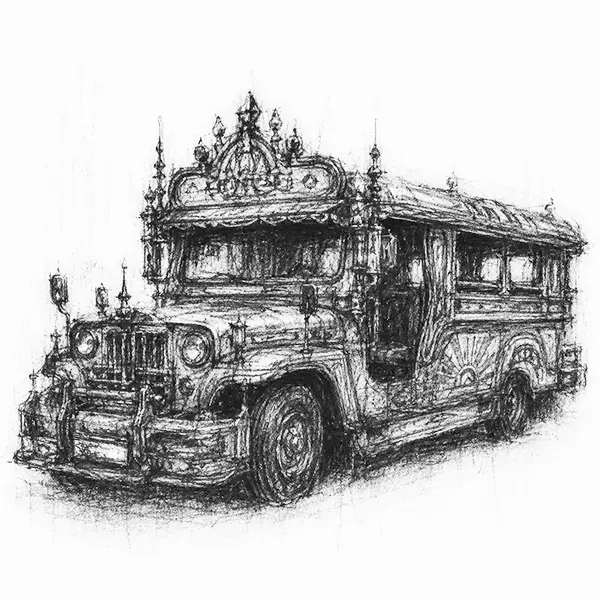
Then there is the thing the city made out of what was left to it. When one army finished with the place it left behind a heap of surplus jeeps, and instead of scrapping them the city stretched them, roofed them, lined them with benches, and turned them into the loudest public transport I have ever seen photographed — long low buses crusted in chrome and hand-painted to within an inch of their lives, hung with mottoes and saints and the names of children, no two alike, each one a small cathedral on wheels going nowhere holy. I have watched footage of them queued nose to tail in traffic, blaring, gorgeous, absurd, and felt something close to envy. A people handed the junk of an empire and deciding, against all advice, to make it beautiful. I file that away too.
What the last war left standing in Manila
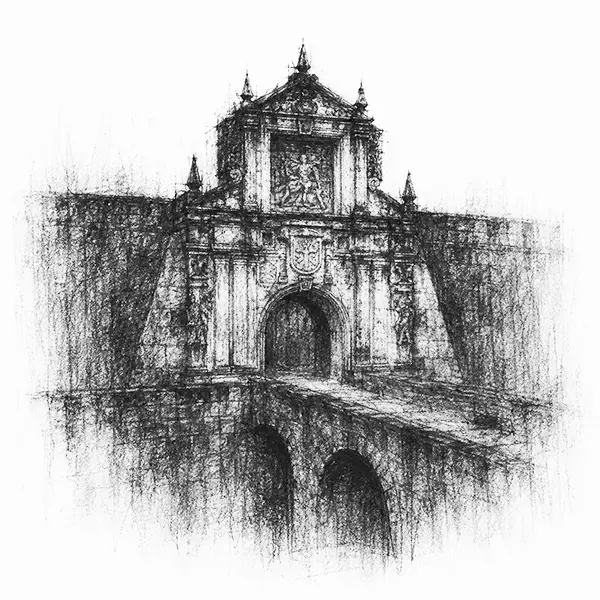
What I know of the harder layers I know the way you know a thing everyone has read but you. That the walled town has a fort at its river mouth with a stone gate I have seen in a dozen pictures — an arch in a wall thick enough to argue with the sea, a dry moat, the weight of three flags it served in turn. That below that gate, in the last bad year of the last big war, men were kept in cells that the tide came into, and the city above them was fought over street by street until almost nothing of the old town was left standing but that church and those walls. They say it was among the most thoroughly wrecked cities of that whole war, second to one famous European capital and almost never mentioned in the same breath. I had to be told this twice before I believed it, and I have not forgotten it since. A place can carry that and still send out postcards of its sunset.
A low ceiling of wire
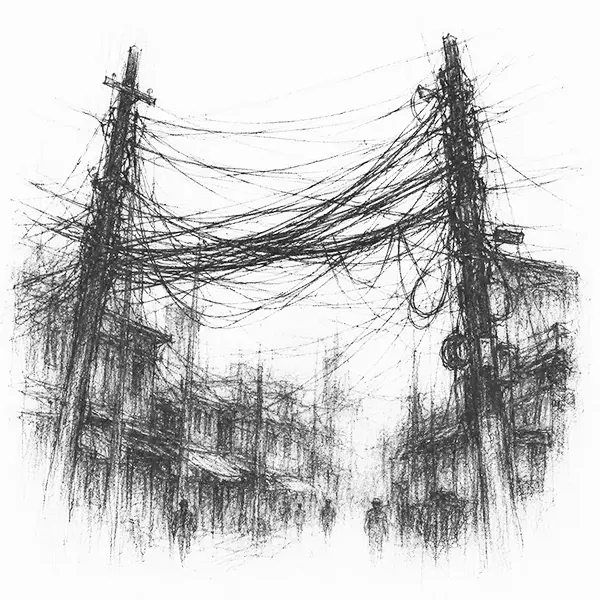
The Manila I keep is not, if I am honest, the heritage one. It is the ordinary overhead tangle that shows up at the edge of every photograph and that no one means to include — the wires. Great black snarls of them looping pole to leaning pole above the narrow streets, knotted and re-knotted and abandoned and added to until they hang like something the city grew rather than built, a low ceiling of cable you could almost touch from a high window. I find I trust a city more when I can see its wiring. It tells me the place is being lived in faster than it can be tidied. I grew up under exactly that sky of wires, in a city on the other side of this same warm sea, and I recognise it the way you recognise a relative’s hands.
Where nobody looks up at the rain
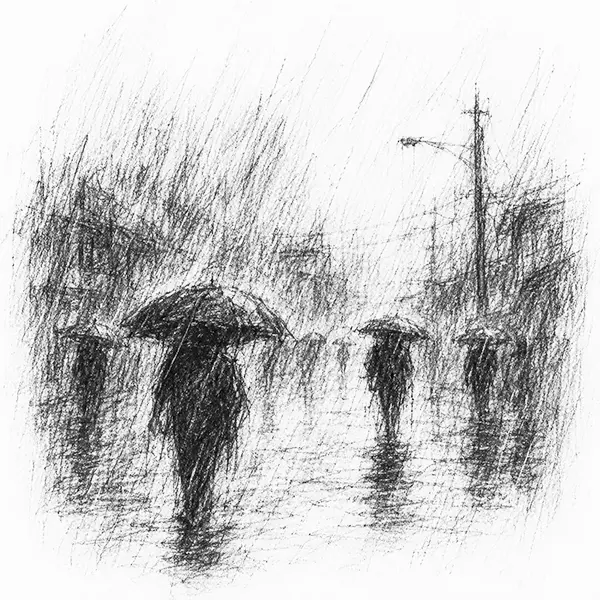
And the rain. Everything I have ever read about the place comes back, sooner or later, to water falling out of the sky in quantities that have to be seen to be argued with. The storms have names and arrive on a schedule the city has stopped pretending to be surprised by; a street can be dry and ordinary one minute and a brown river the next, the traffic stalled to the axles, everyone simply carrying on through it because there is no version of the day in which the rain wins by being acknowledged. In one clip I have gone back to more than I will admit, a whole crowded thoroughfare keeps moving under a downpour you can barely see through — umbrellas, hunched shoulders, a jeepney throwing a wave off its front wheels — and nobody looks up. That is the gesture I keep. Not the sunset. The not-looking-up.
The shell windows of Manila
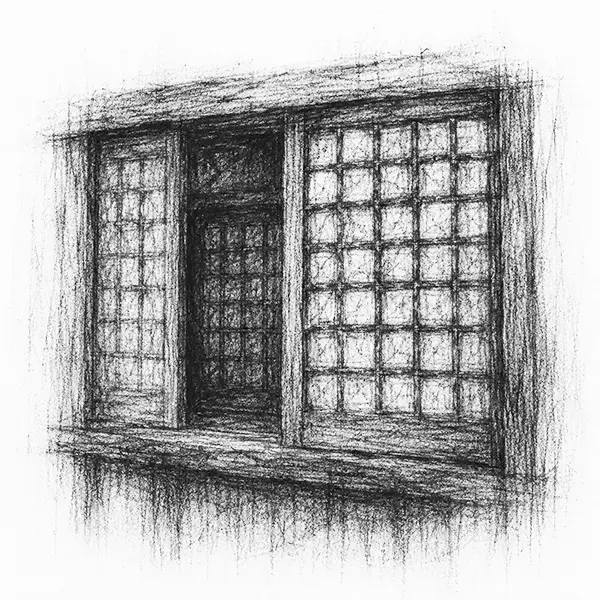
The most particular thing I own about the city came from a former colleague who had changed planes there once and gone out for a night rather than sleep in the airport. He remembered almost nothing I could use — not a street, not a meal — only that he had taken shelter from a sudden squall in the doorway of an old house, and that its windows were not made of glass at all but of small flat shells set into a wooden lattice, sliding panes the colour of weak milk that turned the storm-light soft and underwater. He said the rain came down like the end of the world and the room behind those shell windows was the calmest place he had ever stood. He could not tell me the name of the street. It has done more for my idea of the city than every fact I have filed. I have been standing in that shell-lit room, in someone else’s borrowed memory, through a storm I will never get wet in.
Here is the part I keep to myself. I could go. The passport is in the drawer, on its third renewal, clean as the day they issued it, and the city is a known and unromantic number of hours away over the water — a long flight, a visa form, a sum of money I have each year decided to spend nearer home instead. No wall, no war, no one refusing me. And still I have not, and the not-going has quietly become a thing I own outright. I have started to suspect I keep some of these places precisely because I have never walked into them; that the afternoon I finally stood in the actual rain under the actual wires, the Manila I have built — the sea at the end of the street, the shell windows, the jeepney like a cathedral in traffic — would fold itself up and hand me back the real one, which everybody already has.
So I leave it where it is, just before the rain, just after the sun has touched the bay. The wires are full of birds I will never identify, the church has stood through one more century, the painted buses are stuck in their beautiful traffic, and a squall is gathering out over a sea I have never smelled. I have never been abroad; Manila is one of the cities I have decided, for now, not to spend.
“Manila: capital of the Philippines, on Manila Bay, on the island of Luzon; founded as a Spanish walled city in 1571 and the western terminus of the Acapulco galleon trade for two and a half centuries.”
— read once off a library shelf and never quite given back

Leave a Reply