Abroad · never been
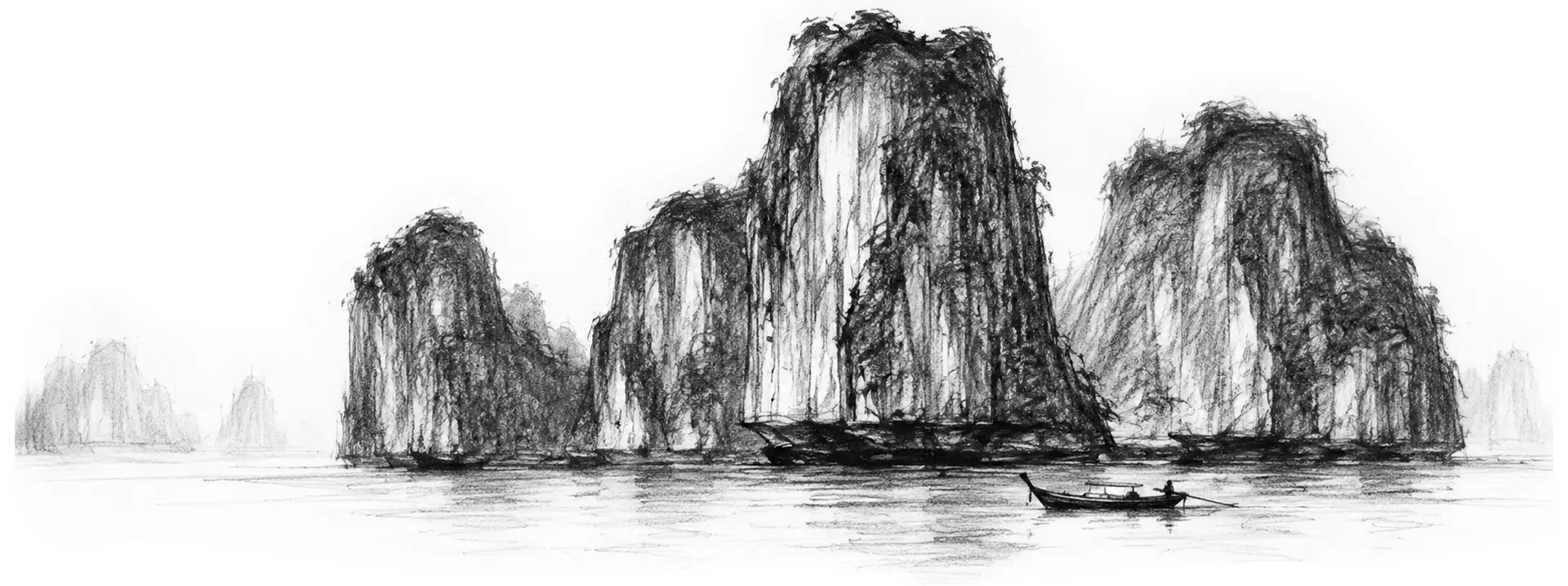
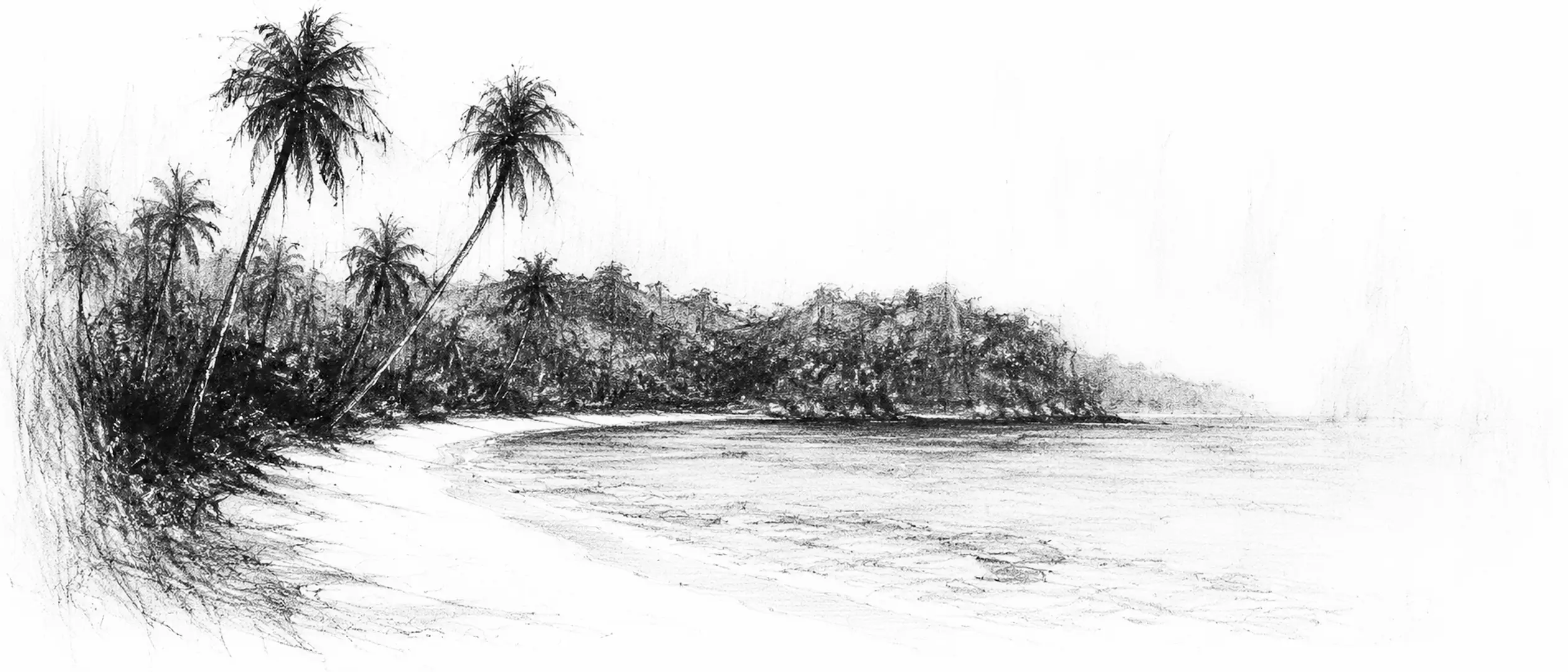
Phuket is the abroad other people bring back. Of all the cities I keep, it is the one my acquaintances have actually been to — a beach, a week, a sunburn, a phone full of the same blue water — so that I have had to build my own out of the pieces they could not be bothered to notice while they were busy relaxing. What caught me was never the beach. It was the rocks: those sheer islands of grey limestone that stand straight up out of the sea like the tops of drowned mountains, which is more or less what the encyclopedia says they are. A coast where the land comes up out of the water at the wrong angle, vertical, forested at the summit and undercut at the waterline. I have kept the rocks and quietly mislaid the beach.
Phuket and its long-tail boats
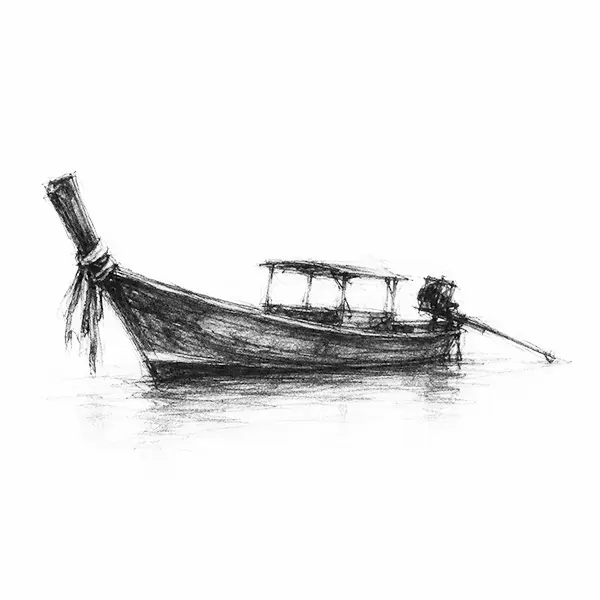
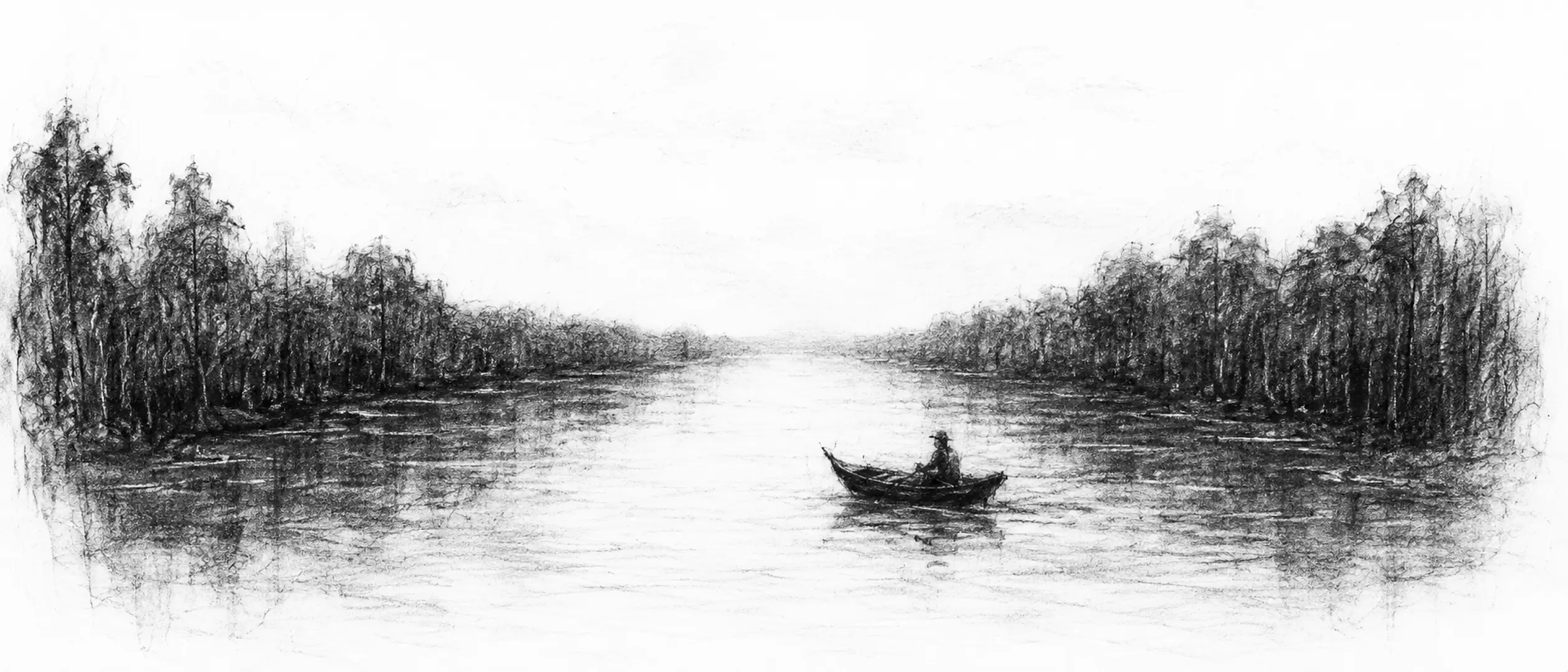
The boat came first, in the footage. A long narrow wooden craft, low in the water, a car engine bolted to a pivot at the stern and a bare propeller on the end of a long shaft the boatman swings around by hand to steer — a whole marine engineering solved with a stick. And at the bow, always, a bundle of coloured ribbons and cloth tied around the prow, faded by salt: an offering, someone explained to me, to the spirit of the boat, so that the sea will let it come back. I have never been able to improve on that. A working boat made half of a scrapped engine and half of a prayer, the practical and the devotional lashed to the same hull, going out past the rocks before the light is properly up. I have watched them do it so many times I have stopped noticing I am not aboard.
The white figure on the hill
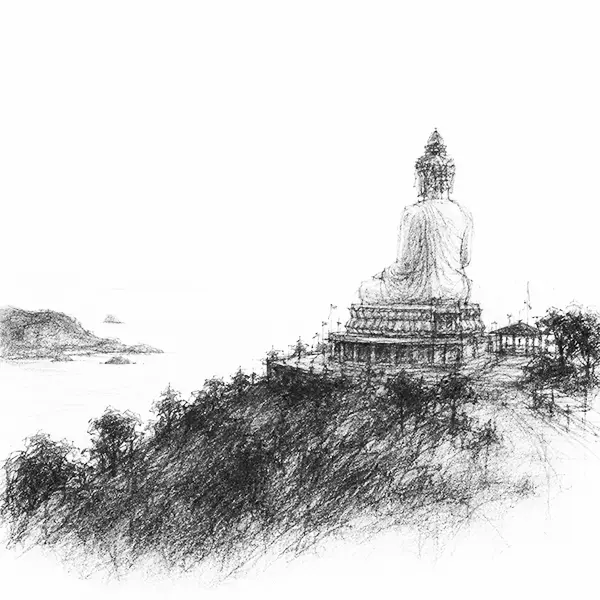
On one of the high green hills over the island there is a great white figure seated, visible — the guides all say the same thing — from most of the south of the island, a huge Buddha faced in pale marble that catches the light and can be picked out from the beaches far below. Built recently, as these things go, out of the offerings of people climbing up to leave them. I have looked at it mostly from a distance, in the photographs, a small white seated shape on a green summit with the sea going out flat and bright behind it. A figure raised high and pale specifically to be seen from everywhere at once, so that Phuket can look up from whatever it is doing on the sand and find it there, calm about the whole business.
The painted shophouses of old Phuket
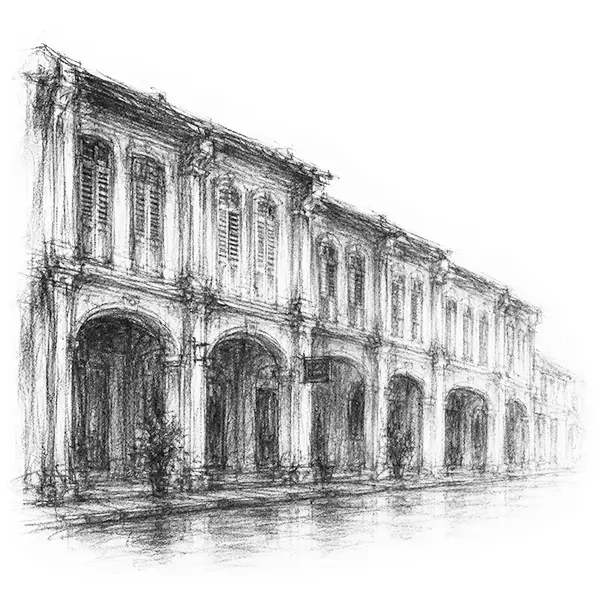
Away from the water there is a town that has nothing to do with the beach at all, and it is the part of Phuket I keep best. A few streets of old two-storey shophouses, put up when the island grew rich on tin, in a style the encyclopedia calls Sino-Portuguese — Chinese merchants building in a European colonial manner and arriving at something that belongs to neither: louvred shutters, arched arcades along the pavement to walk under out of the sun or the rain, façades in faded pastel, one running into the next down the whole street. A town built by traders from one place, in the manner of traders from another, on an island belonging to a third. I recognise the confusion. It is close to the only kind of city I have ever really trusted.
A roof turned up at the corners
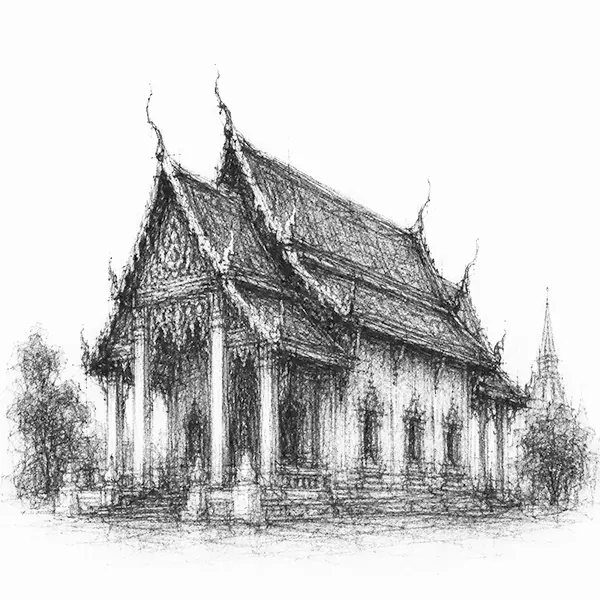
Then the temple. Somewhere among the shophouses and up the hill roads there are the Buddhist temples, and it is always the roof the camera and I fix on: steep, tiled in gold and red and green, the ridge-ends drawn out into long thin flames of gilded wood that curl up off the corners into the sky, sharp as horns. Someone told me the upturned points are there to catch and turn away any bad spirit sliding down the roof — that the whole gorgeous line of it is, at bottom, a defence. I keep coming back to that. A roof made beautiful for a practical and superstitious reason, so that its beauty is a side effect of an old fear, and works anyway on people who have forgotten what it was afraid of.
The cliffs that stand off Phuket
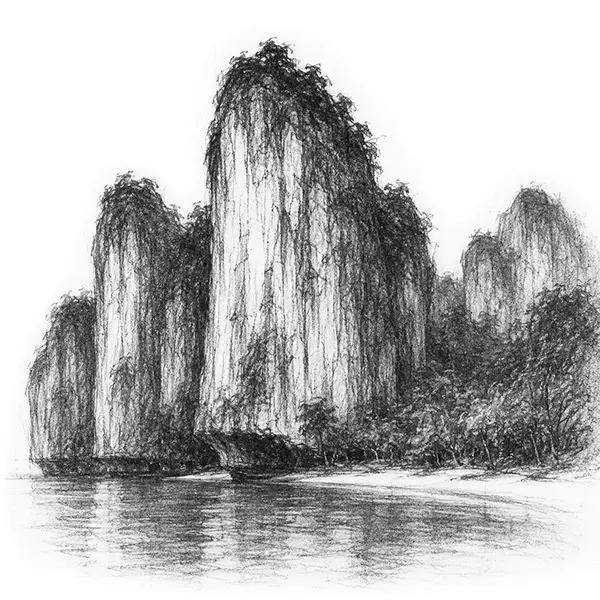
But it is the rocks I return to. Out in the bay off the coast the sheer limestone islands stand up out of the calm green water one after another, undercut at the base where the sea has been eating into them for a few million years, hung with forest at the top, some of them hollow, the documentaries say, with caves and hidden lagoons you can only get into at the right tide through a gap you have to lie flat in the boat to pass. I have watched the long-tail boats go in among them until the water turns to a still green corridor between vertical walls of grey stone. This is the one landscape in my whole collection I am least sure I could bear to see in person, because I am fairly certain it is exactly as good as it looks, and I would rather not have that confirmed and used up.
And here, of all my cities, the excuse wears thinnest. Phuket is a short flight and a stamp given at the airport gate, a place half the people I know have gone to on a whim and a long weekend. The sea that stands those rocks up out of the water is the same sea that touches my own country’s furthest islands; the crossing is nothing. I have simply never made it. I have let the near warm abroad go by, year after year, the way I have let the far cold ones go by, which has taught me the thing I keep relearning: it was never the distance. The distance was only ever the excuse I could say out loud.
So I keep it where it is, out past the ribboned prow of the long-tail boat. The white figure is seated on its hill, the painted shophouses are shuttering for the evening, the gilded roof is turning its corners up against the spirits, and the drowned mountains are standing in the green water with the caves in them the tide keeps. I have never been abroad; Phuket is the easy crossing I have spent a lifetime not making, the postcard everyone I know already owns and I have chosen, for now, to keep unsent.
“Phuket: the largest island of Thailand, in the Andaman Sea off the country’s west coast, joined to the mainland by a causeway; formerly wealthy from tin, its coast noted for limestone sea-stacks.”
— from an old mariner’s guide to the eastern coasts

Leave a Reply